
Polyvinyl Chloride (PVC) is one of the most versatile and cost-effective materials in the plastics industry. In PVC injection molding, manufacturers can create a wide range of custom plastic parts with varying hardness, flexibility, and durability.
For companies seeking both performance and cost efficiency, PVC injection molding stands out as a practical solution for turning innovative designs into reliable end products. In this blog, TLD Vietnam shares technical insights, material considerations, and process expertise to help you optimize your PVC injection molding projects.

What Is PVC Injection Molding?
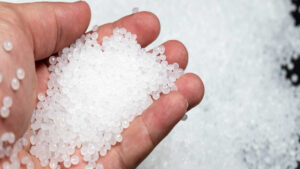
PVC injection molding is a process in which melted polyvinyl chloride is injected into molds under high pressure to form precise and complex shapes. The process begins with heating PVC pellets or powder until they liquefy. The molten material is then injected into temperature-controlled molds, where it cools and solidifies into the desired part. After cooling, the molded component is ejected from the mold, completing one production cycle. This process allows for high-volume mass production with excellent repeatability and tight tolerances.
PVC injection molding differs from other molding techniques in its sensitivity to temperature and shear forces, necessitating precise control throughout to prevent degradation and maintain product quality.
Why Choose PVC Plastic As An Injection Molding Material?

PVC is a thermoplastic polymer widely used in injection molding due to its unique balance of cost, durability, and versatility. In manufacturing custom plastic parts, two main categories of PVC are used: rigid PVC and flexible PVC.
Rigid PVC (uPVC) offers exceptional mechanical strength, dimensional stability, and resistance to chemical corrosion. It is often selected for products that require structural integrity, such as electrical junction boxes, appliance housings, industrial valves, and water pipe fittings. The material’s hardness makes it suitable for high-precision molding in a PVC mold, ensuring consistent dimensions even in high-volume production.
Flexible PVC, on the other hand, contains plasticizers that enhance its elasticity and softness, making it suitable for applications where flexibility is critical, such as gaskets, tubing, protective caps, and wire insulation. The degree of softness can be controlled by adjusting the plasticizer content, allowing manufacturers to customize the material’s hardness for specific applications.
When selecting the right PVC formulation for injection molding, manufacturers must consider:
- Melt flow characteristics: PVC’s relatively low melt flow index requires careful control of injection speed and pressure.
- Shrinkage behavior: Although PVC has low shrinkage compared to many plastics, precise PVC mold design is essential to maintain dimensional accuracy.
- Additives and stabilizers: Heat stabilizers, UV resistance agents, flame retardants, and color pigments can be incorporated to meet functional and aesthetic requirements.
- End-use environment: Exposure to chemicals, temperature extremes, or sunlight can influence the choice between rigid and flexible PVC.
Understanding these PVC material variations and their processing behavior ensures that PVC moulding process projects achieve optimal performance, consistent quality, and cost efficiency, especially when working with a manufacturer experienced in both material science and mold engineering.
The PVC Injection Molding Process
While the fundamentals of PVC injection molding are similar to other thermoplastics, PVC’s unique material properties require special handling, precise process control, and optimized mold design to ensure consistent quality. Here’s a step-by-step look at the process and how TLD Vietnam ensures success in every project.
Material preparation
PVC is heat-sensitive, meaning it can degrade and release hydrochloric acid if overheated. Before molding, raw PVC pellets (rigid or flexible) are often pre-mixed with additives such as heat stabilizers, lubricants, and impact modifiers.
Mold design considerations
A high-quality PVC mold must account for the material’s low melt flow and tendency to degrade under excessive shear. This includes:
- Generous gating and runner sizes for smooth material flow
- Minimal sharp corners to reduce stress concentrations
- Proper venting to avoid trapped air and burn marks
- Optimized cooling channels for uniform temperature control
Injection Molding Machine Settings
PVC processing requires lower barrel temperatures compared to other plastics, typically between 160°C and 200°C for rigid PVC. We use dedicated injection molding machines equipped with temperature monitoring systems and screws designed for PVC to avoid excessive shear heating. Our process engineers carefully set injection pressures and holding times to ensure dimensional stability and excellent surface finish.
Injection and Packing
Material is injected at a controlled speed to prevent burning, followed by a packing phase to ensure the cavity is completely filled. The process control system automatically adjusts packing pressure based on real-time cavity pressure readings, which reduces defects such as voids or sink marks in custom plastic parts.
Cooling and Ejection
Uniform cooling is essential for PVC parts to avoid warping. Our molds are equipped with optimized cooling channels designed in-house to shorten cycle times without compromising part quality. Ejector systems are precision-engineered to avoid deformation, especially for flexible PVC components.
Post-Molding Processes
Depending on the product, secondary operations such as trimming, deburring, printing, or assembly may be required.
Advantages Of PVC Injection Molding
- Cost-Effectiveness: PVC’s low material cost and minimal waste make it economical for high-volume production. Economies of scale further reduce per-unit costs.
- Versatile Finishing: PVC supports finishes like mirror polish, texturing, or engraving, enhancing aesthetic appeal for consumer goods.
- Material Versatility: Customizable rigid or flexible formulations for varied applications.
Disadvantages Of PVC Injection Molding
- Low Heat Resistance: PVC degrades at temperatures above 60°C-82°C, limiting its use in high-temperature environments like automotive under-hood components.
- Harmful Gas Release: Overheating during the PVC moulding process can release hydrochloric acid or dioxins, requiring stringent safety protocols.
- High Tooling Costs: Initial mold fabrication is high, with lead times of 5-12 weeks, posing barriers for low-volume projects.
- Environmental Concerns: While recyclable, PVC is not biodegradable, creating disposal challenges if not properly managed.
Applications Of PVC Injection Molding
Consumer Goods
The flexibility and durability of PVC make it an ideal choice for items that require both aesthetic appeal and functional resilience. Whether it’s colorful kitchen utensils or intricate decorative pieces, the capability of PVC molding allows manufacturers to create diverse designs while maintaining cost-effectiveness.

Moreover, the ease of customization in PVC molding enables brands to cater to specific market demands quickly. This adaptability not only enhances product variety but also meets consumer expectations for quality and design. As a result, many companies are turning towards PVC injection molding as their go-to solution for creating high-demand consumer goods.
Automotive Parts
In the automotive industry, understanding what PVC injection is for can significantly impact vehicle performance and safety features. Many automotive parts, such as dashboards, paneling, and even wiring insulation, utilize PVC.

Additionally, the cost-effectiveness of using PVC means that manufacturers can produce high-quality parts without breaking the bank, allowing them to pass savings onto consumers while maintaining safety standards. As vehicles continue evolving toward advanced technology integration, the role of PVC molded components becomes increasingly crucial in enhancing functionality without compromising on quality.
Construction and Infrastructure
The construction sector has embraced what is PVC injection by utilizing this method for pipes, fittings, and various building materials essential for infrastructure development. The inherent strength and resistance properties of PVC make it perfect for applications where durability is paramount, such as plumbing systems or electrical conduits that need longevity under pressure or harsh conditions.

Moreover, with growing environmental concerns regarding traditional materials like metal or wood, using PVC offers an eco-friendlier alternative that still meets rigorous building codes and standards. As urbanization continues globally, relying on innovative solutions like PVC injection molding helps ensure sustainable growth while addressing infrastructure needs effectively process supports diverse industries.
Challenges and Solutions
PVC’s heat sensitivity is a primary challenge in the PVC moulding process. Overheating above 390°F (200°C) can lead to thermal degradation, releasing harmful gases like HCl, which poses risks to operators and equipment. To mitigate this, use precise temperature controls and corrosion-resistant molds (stainless steel or chrome-plated). A poorly maintained machine can prevent issues, so regular checks of screw geometry, nozzle condition, and barrel cleanliness are essential. Optimize injection speed and pressure to avoid shear stress, and ensure proper venting to prevent defects like flash or short shots.