
Plastics have become essential in the manufacturing industry. In sectors ranging from automotive to consumer electronics, plastics increasingly replace traditional metals and ceramics as they enable flexible design options and efficient production processes. This blog of TLD Vietnam examines the classification of plastic materials, their key characteristics, with a focus on plastics for electrical applications.

Why Plastics Are Widely Used In Electrical Applications
Plastics offer several advantages in electrical and electronic systems, where safety, reliability, and performance under various conditions are critical. The value of plastics for electrical applications comes from how well they can combine electrical isolation, compliance options, and mechanical protection in parts that are easy to mold and assemble.
Thermal response and stability
Plastics exhibit distinct thermal behaviors when exposed to heat. Many have relatively low melting points, facilitating molding into complex shapes. However, excessive heat can cause deformation or loss of structural integrity in some types. For plastics for electrical applications, grades with higher resistance to thermal aging are often prioritized, especially when components operate near heat sources or under continuous load.
Electrical insulation properties
Electrical insulation prevents unwanted conductivity, protecting against short circuits and shocks. Plastics generally show high resistivity, meaning they resist electrical current flow effectively. This property reduces risks in components like enclosures, where users may come into contact with surfaces. High volume resistivity (often in the range of 10¹² to 10¹⁶ ohm-cm for many engineering plastics) and good dielectric strength ensure reliable isolation of conductive elements.
Flame resistance
Electrical fires can arise from faulty wiring, overloads, or malfunctions. Flame-retardant plastics mitigate these risks by self-extinguishing or limiting flame spread. Standards such as UL 94 classify flammability: V-0 indicates the highest performance in vertical burn tests, with self-extinguishing within 10 seconds and no flaming drips; V-1 and V-2 allow longer burn times or drips in some cases; HB represents slower horizontal burning. Many electrical components require at least V-0 or V-1 ratings for compliance in enclosures, connectors, and wiring insulation.
Resistance to chemicals and moisture
Chemicals, solvents, and moisture can corrode components, disrupt conductivity, or cause failures like insulation breakdown. Plastics are often inherently resistant due to their molecular structure, with hydrophobic properties that repel water. Additives enhance this resistance for demanding environments. Unlike absorbent materials, plastics prevent condensation-related issues, making them suitable for applications exposed to humidity or liquids, which strengthens the case for plastics for electrical applications.
Mechanical durability and resilience
Electrical components face vibrations, impacts, and temperature fluctuations. Plastics provide robustness, resisting deformation under load and maintaining integrity. Impact-resistant grades protect fragile internals, while dimensional stability ensures consistent performance over time.
Key Plastic Materials For Electrical And Electronics Use
Several thermoplastics and thermosets are commonly employed in electrical applications.

The following sections describe prominent materials, including typical properties and uses.
Polyvinyl Chloride (PVC)
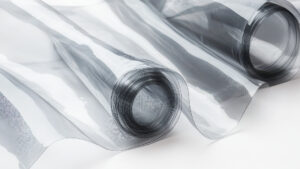
PVC ranks among the most widely used thermoplastics in electrical systems and is widely recognized among plastics for electrical applications. It offers excellent electrical insulation, with high dielectric strength and volume resistivity. PVC resists moisture, chemicals, and weathering, making it suitable for outdoor uses. Flame-retardant formulations often achieve UL 94 V-0 or V-1 ratings. Primary applications include wire and cable insulation, where it prevents leakage and supports safe power transmission in plastics for electrical applications. Chlorinated variants like CPVC provide higher heat resistance for industrial settings.
Polycarbonate (PC)
Polycarbonate is often selected for housings, protective covers, and parts that need high impact resistance, which is why it is common in plastics for electrical applications. Certain grades also support optical clarity, which is useful for covers and indicators. Flame-retardant polycarbonate grades are widely used in electrical enclosures and components, especially when a balance of toughness and compliance is required in plastics for electrical applications. Designers should still check the grade’s long-term heat performance and chemical exposure limits, since PC can be sensitive to certain cleaners or solvents depending on the environment.
Polyethylene (PE)
Polyethylene is widely used in cable and wire applications, as well as components where consistent insulation and moisture resistance are needed. It is commonly valued for stable electrical behavior in many environments and strong resistance to water. Higher-density grades can provide additional rigidity for certain electrical parts.
PE is typically not the first option when high operating temperatures or stringent flame-retardant requirements dominate the design, unless specialized compounds are used.
Acrylonitrile Butadiene Styrene (ABS)
ABS is widely used for consumer electronics housings and structural parts because it is easy to process, offers good impact performance, and supports a stable appearance. For electrical applications, flame-retardant ABS grades are commonly used in enclosures and internal components where compliance is required alongside toughness in plastics for electrical applications. As with many housing materials, the selection often comes down to surface requirements, impact needs, and the specific compliance targets for the end market when choosing plastics for electrical applications.
As with many housing materials, the selection often comes down to surface requirements, impact needs, and the specific compliance targets for the end market.
Polypropylene (PP)
Polypropylene is used across electrical products where low moisture uptake, chemical resistance, and stable insulation are important. It is found in components such as capacitor parts, battery-related applications, and various housings and internal structures, depending on the grade. PP can be an attractive option where cost and chemical exposure matter, while still supporting reliable electrical insulation.
For applications with demanding flame requirements, designers typically rely on flame-retardant PP grades and validate performance at the target wall thickness.
Phenolic Resins
Phenolics are thermoset materials formed from resin systems, often as laminates. They deliver strong bonding, high heat resistance, and superior insulation. These properties make them ideal for connectors, switches, and components exposed to elevated temperatures, where rigidity and thermal endurance matter.
Polytetrafluoroethylene (PTFE)
Known as Teflon®, PTFE stands out for exceptional electrical insulation, thermal stability, and resistance to heat, moisture, and chemicals. It has one of the highest dielectric strengths among plastics and low friction. Applications involve high-temperature wiring, connectors, and sockets requiring reliability in extreme conditions.
Polyamide (PA, Nylon)
PA offers excellent mechanical strength and heat resistance. It withstands mechanical stress and high temperatures while providing good insulation. Grades resist deformation in demanding settings. Typical uses include insulating connectors, switches, and circuit breakers.
Conclusion
Plastic materials contribute significantly to manufacturing through their diverse properties and processing advantages. Selection involves balancing performance requirements, cost, and factors like environmental compliance (e.g., RoHS for restricted substances). In electrical and electronics applications, priorities include insulation effectiveness, flame retardancy per standards like UL 94, thermal stability, and resistance to environmental stressors. Proper material choice enhances product safety, reliability, and efficiency across industries when specifying plastics for electrical applications.
If your business requires reliable plastics for electrical applications, TLD Vietnam provides a diverse supply of plastic resins, such as PP, PVC, PET, PS, and PE resins, to support various manufacturing needs. With strong market knowledge and stable supply capability from over 100 supplier partners, TLD Vietnam supports customers in selecting suitable plastics for production requirements.