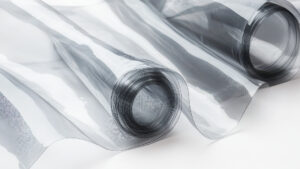

PET sheets find applications in various industries. In this guide, TLD Vietnam delves into the detailed sequential stages of extrusion, along with the features, innovations, and trends that will shape the industry’s future.

What Is PET Sheet Extrusion?
PET sheet extrusion refers to the production of PET (Polyethylene Terephthalate) sheets through a thermoplastic extrusion process, in which PET resin is melted and shaped into flat sheets by passing through a die. The extruded sheets are subsequently cooled, trimmed, and cut to specified dimensions. Owing to the automated and continuous nature of the extrusion process, consistent thickness and stable product quality can be achieved at an industrial production scale.
Different PET sheet applications require consistent resin quality, stable intrinsic viscosity (IV), and effective moisture control parameters that originate from proper resin selection. For resin distributors, a clear understanding of these requirements is critical to supporting downstream sheet extrusion and thermoforming performance.
Step-By-Step PET Sheet Extrusion Process
The PET sheet extrusion process consists of several critical stages, each playing a role in achieving consistent sheet quality and stable production performance. From raw material preparation to final winding, every step is controlled to ensure dimensional accuracy, process stability, and reliable output. The following section outlines the key stages involved in PET sheet extrusion.

Raw material preparation
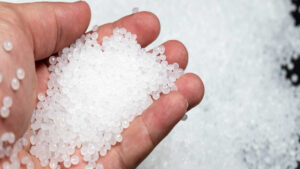
Proper preparation of PET resin is a fundamental requirement to prevent material degradation during extrusion. PET is a hygroscopic polymer, meaning it readily absorbs moisture from the surrounding environment. If moisture is not adequately removed prior to processing, hydrolytic degradation can occur during melting, leading to reduced mechanical strength and compromised sheet quality. To mitigate this risk, PET resin is typically dried in a dehumidifying dryer at temperatures ranging from 160°C to 180°C for a duration of approximately 4-6 hours. This drying step ensures low moisture content and stable resin conditions before extrusion.
Extrusion
The extrusion process begins with feeding the dried PET resin into an extruder, where it is melted and homogenized. There are two main types of extruders used in PET sheet production:
Single-Screw Extruders:
-
- Pros: Simple design, lower cost, and easier maintenance.
- Cons: Limited mixing capability, less suitable for processing recycled PET or blends.
Twin-Screw Extruders:
- Pros: Superior mixing and homogenization, ideal for processing RPET or adding functional additives.
- Cons: Higher cost and more complex operation.
The choice between single-screw and twin-screw extruders depends on the specific requirements of the application, such as the type of PET used and the desired sheet properties.
Filtration
Before the molten PET is formed into flat sheets, it passes through a filtration system designed to remove impurities and solid contaminants. This step is essential to minimize defects such as black specks, gels, or inclusions that may negatively affect sheet appearance and end-use performance. Filtration is commonly achieved through fine mesh screen packs or melt filtration systems, which retain unwanted particles while allowing the polymer melt to flow continuously.
Sheet forming
After filtration, the molten PET is delivered to a T-die, which plays a critical role in shaping the material into a flat sheet. The T-die distributes the polymer melt evenly across the die width, enabling uniform sheet thickness and dimensional consistency. Accurate die design and precise temperature control are key factors in achieving stable flow and minimizing thickness variation in the finished PET sheet.
Calendaring
The PET sheet is conveyed through a series of calendaring rolls. This stage is critical for controlling sheet thickness, surface smoothness, and optical clarity. The rolls are precisely temperature-controlled and mechanically adjusted to achieve the required surface finish and transparency. In addition to dimensional control, the calendaring process also facilitates controlled cooling and solidification of the sheet, preparing it for subsequent downstream operations.
Trimming and Winding
In the final stage, the edges of the PET sheet are trimmed to remove excess or uneven material, resulting in a clean and dimensionally consistent product. The sheet is then wound into rolls to facilitate handling, storage, and transportation. These finished rolls are suitable for subsequent downstream processes such as thermoforming, printing, or cutting, depending on specific application requirements.
Through proper control of each processing stage, PET sheet extrusion can deliver sheets that meet the performance and quality standards required across a wide range of industries, including packaging and construction. Process stability and consistency throughout the extrusion line are essential to achieving reliable product performance in end-use applications.
Primary Attributes And Benefits Of PET Sheets

The properties of PET sheets make them widely applied across multiple industrial sectors. The following sections outline the key attributes and functional advantages of PET sheets.
High transparency and optical clarity
PET sheets are characterized by high transparency and excellent optical clarity, distinguishing them from many alternative plastic materials. This property is particularly important in applications where product visibility and appearance are critical, such as food packaging, display packaging, and protective covers. Clear packaging also supports product presentation and enables visual inspection, contributing to improved consumer confidence in retail environments.
Food safety and regulatory compliance
PET sheets are well-suited for packaging applications due to their compliance with food safety regulations. When manufactured in accordance with applicable standards, PET is approved for direct contact with food and does not adversely affect the quality or safety of packaged products. As a result, PET sheets are widely used in food and beverage packaging applications where material safety and regulatory conformity are critical.
Sustainability and recyclability
In response to increasing environmental awareness, PET sheets are recognized for their recyclability and contribution to more sustainable material systems. PET can be recycled multiple times with minimal loss of performance, supporting circular economy models. In addition, the use of RPET (recycled PET) in sheet production helps reduce plastic waste and lower reliance on virgin raw materials. These sustainability characteristics make PET sheets a practical option for businesses seeking to align with environmental and responsible sourcing objectives.
Mechanical strength and impact resistance
PET exhibits strong mechanical properties and good impact resistance, enabling it to withstand mechanical stress without cracking or fracturing. This level of durability supports reliable performance in applications where materials are subject to handling, load, or external forces. Such characteristics are particularly relevant in sectors such as automotive and construction, where consistent mechanical performance and long service life are required.
Barrier properties for food preservation
PET sheets provide effective barrier protection against moisture, oxygen, and other external factors that may compromise product quality. These barrier properties help preserve freshness and extend the shelf life of packaged food products. As a result, PET sheets are widely used in food packaging applications where hygiene, product protection, and quality retention during storage and distribution are essential.
Uses Of PET Sheets
PET sheets are used in various professions and industries owing to their unique features such as clarity, strength, and recyclability. In the following section, we will review the uses of PET sheets in different industries and explore why they are useful.
Food industry
In the food packaging sector, maintaining high standards of hygiene and product safety is a primary requirement. PET sheets are widely used for these applications due to their clarity, strength, and regulatory compliance. They are commonly thermoformed into clamshells and trays used for fresh produce and bakery items. In addition to providing good visibility and structural integrity, PET sheets offer effective barrier protection against moisture and oxygen, helping preserve product freshness. Their approval for direct food contact and recyclability further aligns PET sheets with current requirements for safe and environmentally responsible packaging.
Medical Packaging
PET sheets are also widely applied in medical and pharmaceutical packaging. In pharmaceutical applications, PET sheets are used for blister packaging to protect medications from contamination. They are also used as protective covers and trays for medical devices, allowing clear visual inspection of contents. The combination of impact resistance, dimensional stability, and suitability for sterilization makes PET sheets well-suited for medical packaging applications.
Thermoformed Products
PET sheets are commonly used in the production of thermoformed products such as cups, plates, and disposable containers. Their favorable thermoforming behavior allows efficient processing across both industrial and consumer applications. Products formed from PET sheets are lightweight, mechanically robust, and easy to handle. In addition, the recyclability of PET supports more sustainable material use within the disposable products sector.
Printing Industry
In the printing industry, PET sheets are used as substrates due to their smooth surface and high optical clarity. These characteristics support high-quality printing for applications such as signage, labels, and promotional materials. PET sheets are compatible with various printing methods, including screen printing, digital printing, and offset printing. Their dimensional stability and resistance to environmental stress help maintain print quality over time.
Electronics
Within the electronics sector, PET sheets are used as protective and insulating films for applications such as display components, circuit boards, and cable insulation. Their electrical insulating properties, combined with mechanical strength and flexibility, make them suitable for cable wraps, screen protection, and component insulation. PET sheets help protect sensitive electronic components from dust, moisture, and mechanical damage.
Comparison Of PET Sheets With Other Plastic Sheet Materials
When selecting plastic sheet materials for specific applications, it is important to evaluate how PET sheets compare with other commonly used alternatives. Each material presents distinct characteristics, and material selection typically depends on factors such as environmental considerations, optical performance, mechanical properties, and application-specific requirements. The following comparison outlines key differences between PET sheets and PVC, PS, and PP sheets.
PET vs. PVC
PET sheets and PVC (polyvinyl chloride) sheets differ notably in terms of environmental impact and material safety. PET is generally regarded as a more sustainable option due to its recyclability and comparatively lower environmental footprint. PET sheets can be recycled multiple times with limited performance degradation, supporting more sustainable manufacturing systems. In contrast, PVC is more challenging to recycle.
From a safety standpoint, PET is approved for food-contact applications when produced in compliance with relevant regulations, as it does not release harmful substances into packaged products. PVC materials, however, may contain plasticizers and stabilizing additives that can present risks in certain applications, particularly those involving food contact. These differences make PET a preferred material in applications where safety and environmental responsibility are key considerations.
PET vs. PS
In comparisons between PET sheets and PS (polystyrene) sheets, optical clarity and impact resistance are the primary differentiating factors. PET sheets provide high optical clarity, making them suitable for applications where transparency and visual presentation are important, such as food packaging and display products. While PS also offers acceptable clarity, it typically exhibits lower mechanical toughness and is more susceptible to cracking under mechanical stress.
PET vs. PP
PET and PP (polypropylene) sheets are often evaluated based on rigidity, transparency, and barrier characteristics. PET sheets exhibit higher rigidity and superior optical clarity, making them suitable for applications that require structural stability combined with visual transparency. PP sheets, while more flexible, generally provide lower transparency, which can limit their use in appearance-sensitive applications.
In terms of barrier performance, PET sheets offer effective resistance to moisture, oxygen, and other environmental influences, supporting product protection and shelf-life extension in packaging applications. PP sheets provide reasonable moisture resistance but typically offer lower gas barrier performance compared to PET. Consequently, PET is often selected for applications where product integrity and extended shelf life are critical requirements.
Future Trends In PET Sheet Extrusion
The PET sheet extrusion industry continues to evolve in response to technological progress, sustainability requirements, and changing market expectations. These developments are driving improvements in efficiency, material utilization, and process control across the industry.

Sustainable packaging and increased use of RPET
Growing emphasis on sustainable packaging is accelerating the adoption of PET sheets with recycled content. The increased use of RPET helps reduce dependence on virgin materials while supporting circular economy objectives. At the same time, the ongoing development of bio-based PET and sustainability-focused additives is contributing to lower environmental impact across packaging applications.
Advancements in PET recycling technologies
Improvements in mechanical and chemical recycling technologies are enabling higher-quality recycled PET with more consistent performance. Enhanced sorting and purification systems improve material reliability, allowing RPET to be more effectively integrated into PET sheet extrusion while meeting regulatory and quality requirements.
Digitalization and intelligent process control
The integration of digital technologies, including AI-driven control systems and IoT-based monitoring, is improving process stability and operational efficiency in PET sheet extrusion. Real-time data monitoring supports better control of key parameters, reduces material waste, and enables predictive maintenance, helping manufacturers respond more efficiently to production and market demands.
By aligning with these trends, the PET sheet extrusion industry is strengthening the ability to deliver consistent product quality while advancing sustainability and operational performance.
Conclusion
With advantages in transparency, mechanical performance, and sustainability, PET sheets continue to outperform many alternative materials. As innovations in RPET usage, recycling technologies, and intelligent process control advance, PET sheet extrusion is set to play an increasingly important role in supporting high-performance and environmentally responsible material solutions across a wide range of industrial applications.