
Polyvinyl Chloride (PVC) is among the most widely utilized thermoplastic polymers in modern manufacturing systems. Its adaptability to different formulations, processing techniques, and performance requirements has positioned PVC as a foundational material across construction, infrastructure, electrical, automotive, and industrial sectors. Within the broad family of PVC-based products, PVC extruded profiles represent a particularly important category, combining dimensional precision, long-term stability, and cost efficiency within engineered applications.
This article from TLD Vietnam provides a comprehensive, material-focused examination of PVC extruded profiles. It explains their fundamental definition, material composition, extrusion principles, performance characteristics, application scope, and future development trends in the Indian industrial context. The discussion is framed from a technical and engineering perspective, avoiding promotional narratives and emphasizing material science and functional performance.

Understanding PVC Extruded Profiles
PVC extruded profiles are continuous, custom-shaped sections produced through a controlled extrusion process in which softened PVC compound is forced through a shaped die. Once formed, the profile retains a consistent cross-sectional geometry along its length, allowing it to meet precise dimensional and functional requirements.
From a material engineering standpoint, an extruded profile is defined by its constant cross-section, which may be solid, hollow, multi-chambered, or co-extruded with multiple material layers. PVC profiles can be rigid, semi-rigid, or flexible depending on formulation, plasticizer content, and additive selection. Transparency, opacity, color stability, and surface finish are also adjustable parameters within PVC extrusion.
The consistency achieved through extrusion allows PVC profiles to function not only as decorative elements but also as load-bearing or protective components in various assemblies. This dimensional uniformity is essential for applications requiring tight tolerances, repeatability, and compatibility with other materials.
Material Composition And Formulation Of PVC Profiles
The performance of a PVC extruded profile is determined primarily by its formulation rather than by the polymer alone. PVC, in its pure form, is rarely processed without additives.
Core polymer matrix
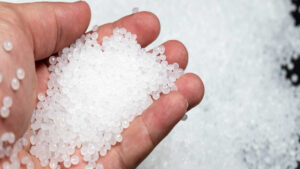
PVC is a vinyl polymer derived from polymerized vinyl chloride monomer. It exhibits inherent flame retardancy, good chemical resistance, and strong dielectric properties. However, the base resin must be modified to achieve processability and long-term performance stability.
Role of additives in profile performance
Stabilizers are introduced to prevent thermal degradation during processing and service life. Fillers may be incorporated to improve stiffness, dimensional stability, or cost structure, while impact modifiers are used to enhance toughness under mechanical stress. Lubricants assist melt flow and surface quality, whereas pigments and UV stabilizers control appearance and outdoor durability.
The balance of these components defines whether a profile is suited for structural use, sealing functions, decorative purposes, or exposure to aggressive environments. For this reason, PVC extruded profiles are best understood as engineered composite systems rather than single-material products.
Extrusion Process For PVC Profiles
The extrusion process is central to achieving the functional consistency expected from PVC profiles. Although the process appears continuous and linear, it requires precise control over multiple variables.
Compounding and material preparation
Before extrusion, PVC resin and additives are compounded to achieve uniform dispersion and predictable melt behavior. This stage influences melt viscosity, fusion characteristics, and final mechanical performance.
Profile extrusion and die design
During extrusion, the compounded PVC is heated to a viscoelastic state and pushed through a die that defines the profile geometry. Die design plays a decisive role in wall thickness distribution, internal stresses, and surface finish. Any imbalance at this stage may lead to warpage or dimensional inconsistency.
Cooling, calibration, and dimensional control
Once the profile exits the die, it passes through calibration tooling and controlled cooling systems, often water-based, to lock in shape and dimensions. Controlled cooling is essential to prevent internal stress buildup, which may affect long-term dimensional stability.
Cutting and post-processing
The extruded profile is then cut to specified lengths. Additional finishing operations such as surface embossing, lamination, or secondary machining may be applied depending on application requirements.
Mechanical And Physical Properties Of PVC Extruded Profiles
PVC extruded profiles are selected primarily for their balanced combination of mechanical strength, environmental resistance, and processing flexibility.

Durability and long-term stability
PVC exhibits strong resistance to corrosion, moisture, and many chemical agents. Unlike metals, it does not rust, and unlike wood, it does not rot or absorb moisture. These properties allow PVC profiles to maintain structural integrity over extended service periods with minimal maintenance.
Strength-to-weight ratio
Although lightweight, rigid PVC profiles offer sufficient stiffness and load-bearing capability for many structural and semi-structural applications. This favorable strength-to-weight ratio simplifies handling, transportation, and installation.
Weathering and UV resistance
When formulated with appropriate UV stabilizers, PVC profiles retain color, mechanical properties, and surface quality under prolonged outdoor exposure. This characteristic is critical for building components and infrastructure elements installed in variable climatic conditions.
Fire performance and electrical insulation
PVC is inherently self-extinguishing and exhibits excellent electrical insulation properties. These features explain its widespread use in electrical enclosures, cable management systems, and building interiors where fire safety standards apply.
Classification Of PVC Extruded Profiles
PVC extruded profiles are categorized according to mechanical behavior, formulation, and functional design.
Rigid PVC Profiles
Rigid PVC profiles are characterized by high modulus and dimensional stability. They are widely used in window frames, door systems, wall panels, and structural trims where shape retention and mechanical strength are critical.
Flexible PVC Profiles
Flexible profiles contain plasticizers that impart elasticity and sealing capability. These profiles are commonly applied in gaskets, edge trims, weather seals, and vibration-damping components.
Co-Extruded PVC Profiles
Co-extrusion allows two or more PVC formulations to be combined within a single profile. This technique enables functional layering, such as a rigid core with a flexible sealing edge or dual-color decorative designs, while maintaining structural coherence.
Transparent and Specialty Profiles
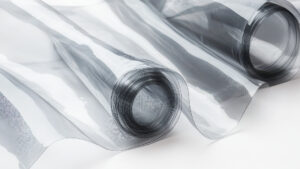
Transparent PVC profiles are employed in protective covers, display systems, and light-transmitting applications. Specialty profiles may include anti-static, flame-retardant-enhanced, or chemically resistant formulations tailored to specific environments.
Industrial Applications Of PVC Extruded Profiles
The versatility of PVC extruded profiles is evident across multiple industrial sectors, where they function as both structural and auxiliary components.
Construction and Building systems
In the construction sector, PVC profiles are used extensively in window and door systems, cable trunking, wall cladding, skirting boards, and finishing trims. Their dimensional consistency supports modular construction practices, while their resistance to moisture and corrosion supports long-term building performance.
Automotive and Transportation
Automotive interiors and exterior components rely on PVC profiles for seals, trims, protective edging, and cable routing. Their vibration-damping behavior and resistance to automotive fluids support durability under dynamic operating conditions.
Electrical and Electronics
PVC extruded profiles serve as insulation channels, wire ducts, panel separators, and protective housings in electrical systems. Their dielectric strength and flame-retardant nature align with electrical safety requirements.
Furniture and Interior Applications
In furniture manufacturing, PVC profiles are used for edge banding, drawer systems, decorative trims, and modular fittings. Their surface finish consistency and color stability support both functional and aesthetic objectives.
Agricultural and Industrial Uses
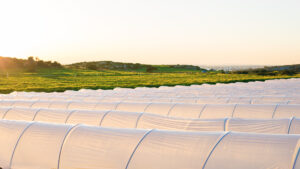
Agricultural structures employ PVC profiles in greenhouse frameworks, irrigation components, and protective channels. In industrial environments, PVC profiles function as machine guards, conveyor guides, and wear-resistant protective elements.
Criteria For Selecting PVC Extruded Profiles
Selecting the appropriate PVC profile requires evaluation beyond basic geometry.
Material grade and formulation integrity
Profiles produced from high-grade or virgin PVC formulations generally exhibit superior mechanical stability and longer service life. Recycled content may be suitable for non-critical applications when properly controlled.
Dimensional precision and surface quality
Uniform wall thickness, smooth surfaces, and tight tolerances indicate effective extrusion control and die design. These factors influence assembly compatibility and long-term performance.
Environmental exposure requirements
Applications involving outdoor exposure, chemical contact, or temperature fluctuations require formulations optimized for weathering resistance and thermal stability.
Compliance and standardization
Profiles intended for regulated applications should comply with relevant national and international standards covering fire behavior, electrical insulation, and mechanical performance.
Technological Developments And Future Outlook
The rapid industrialization and infrastructure expansion continue to generate demand for engineered polymer solutions. PVC extruded profiles are increasingly integrated into modern construction systems, electrical networks, and industrial installations.
Advancements in material engineering
Recent developments focus on improved stabilizer systems, environmentally optimized formulations, and enhanced recyclability. Multi-layer co-extrusion and precision tooling are enabling profiles with improved functional integration.
Sustainability and circular economy considerations
Recycling-compatible PVC formulations and improved process efficiency are supporting sustainability objectives. While PVC recycling presents technical challenges, advances in sorting and reprocessing technologies are gradually improving material recovery rates.
Long-term industry outlook
The future of PVC extruded profiles in is closely linked to urban development, infrastructure modernization, and industrial diversification. Continued innovation in material science and processing technology is expected to expand application boundaries while maintaining cost efficiency.
Conclusion
PVC extruded profiles represent a mature yet continuously evolving category of engineered polymer products. Their combination of dimensional precision, mechanical reliability, environmental resistance, and formulation flexibility supports a wide spectrum of industrial and construction applications. Viewed from a material science perspective, PVC profiles function as engineered systems rather than simple plastic components.
As industries increasingly prioritize durability, performance consistency, and lifecycle efficiency, PVC extruded profiles are expected to remain integral to modern manufacturing and infrastructure development.