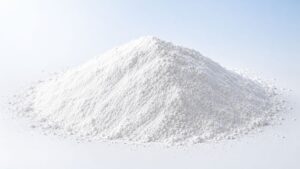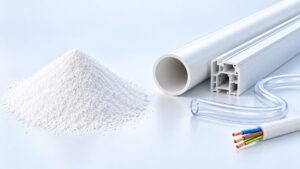

Titanium dioxide (TiO₂) is one of the most important white pigments used in the plastics industry. In white masterbatch, however, TiO₂ content alone does not determine the final optical performance. How effectively the pigment is dispersed throughout the polymer matrix is equally important.
TiO₂ dispersion in masterbatch determines how efficiently individual pigment particles interact with light and how uniformly they are distributed throughout the final plastic product. Poor dispersion can cause pigment agglomeration, uneven whiteness, surface defects, increased filtration pressure, and inefficient use of TiO₂. Understanding the factors controlling dispersion is therefore essential for designing and processing high-quality white masterbatch. Read the full article by TLD Vietnam to explore the key factors affecting TiO₂ dispersion in masterbatch.
What Is TiO₂ And Why Is It Used In Masterbatch?
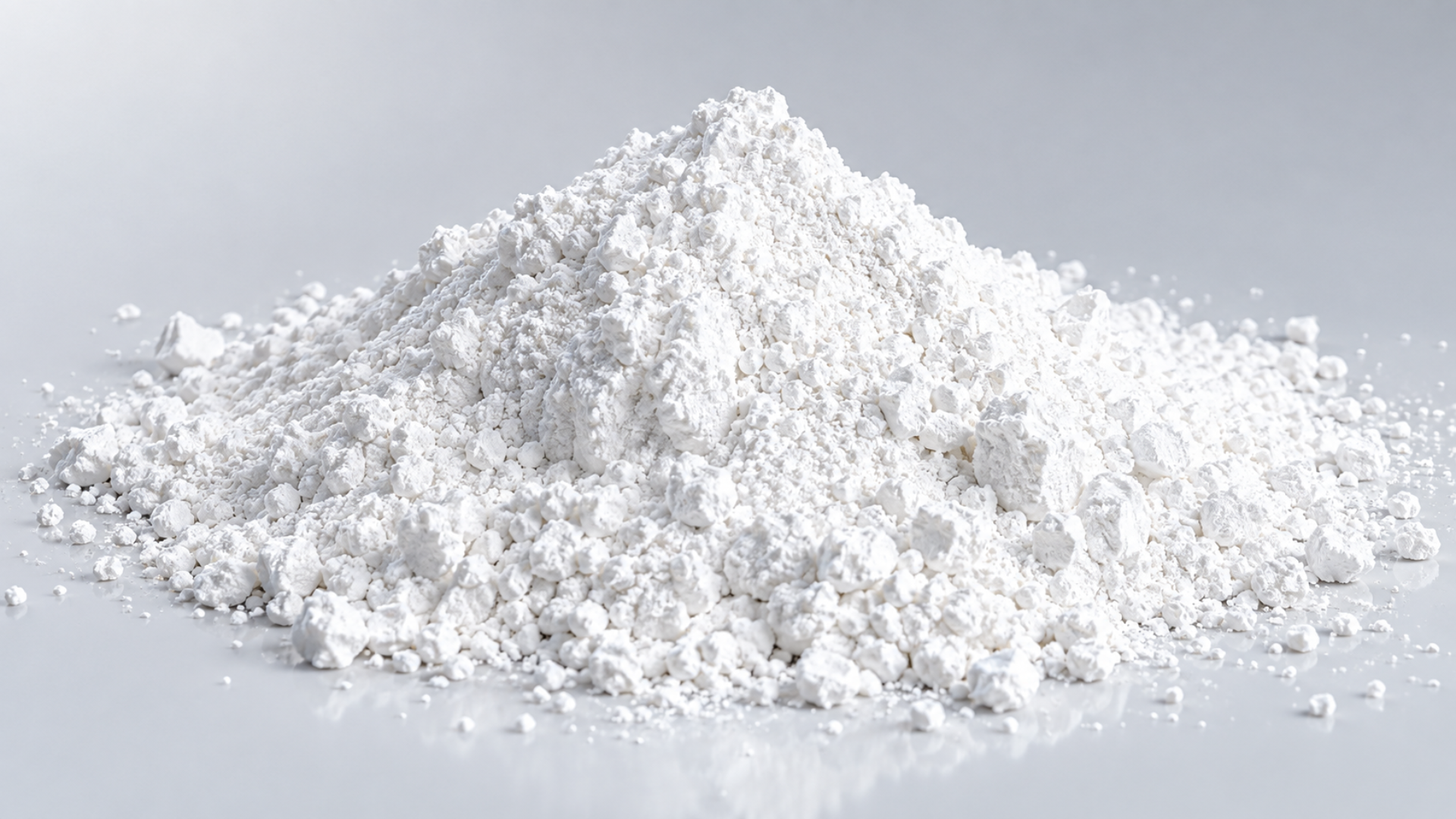
TiO₂ is an inorganic compound with the chemical formula TiO₂. Commercial pigment-grade TiO₂ is mainly produced in two crystalline forms: rutile and anatase. Rutile has a higher refractive index and is generally preferred for demanding plastic applications requiring strong opacity, weather resistance, and durability, while anatase is used in selected applications where different optical or performance characteristics are required.
The effectiveness of TiO₂ as a white pigment originates primarily from the difference between its refractive index and that of the surrounding polymer. When light reaches properly dispersed TiO₂ particles, it is strongly scattered. This scattering produces the whiteness and hiding power associated with TiO₂-containing plastics. Particle size and particle-size distribution therefore have a major influence on pigment performance.
Commercial pigment-grade TiO₂ is not simply untreated TiO₂ powder. Depending on the grade and intended application, manufacturers may apply inorganic surface treatments, such as silica or alumina, as well as organic treatments. These treatments can influence weather resistance, surface chemistry, compatibility with polymers, moisture behavior and dispersibility during masterbatch production.
For this reason, two TiO₂ grades with similar nominal TiO₂ content may behave differently during compounding. Their particle-size distribution, surface treatment, surface chemistry and interaction with the polymer system can result in significant differences in TiO₂ dispersion in masterbatch and final application performance.
What Is TiO₂ Dispersion In Masterbatch?
TiO₂ dispersion in masterbatch refers to the process and resulting state in which TiO₂ pigment is broken down from larger agglomerates and distributed throughout the polymer carrier at an appropriate microscopic scale. Effective dispersion requires sufficient wetting of the pigment surface by the polymer or dispersing system and sufficient mechanical energy to reduce loosely bound agglomerates.
It is important to distinguish dispersion from distribution. Distribution describes how uniformly pigment is located throughout the bulk material, while dispersion describes how effectively pigment agglomerates have been broken down into smaller units. A masterbatch may appear macroscopically uniform while still containing poorly dispersed microscopic agglomerates.
What Does Good TiO₂ Dispersion Actually Mean?
TiO₂ pigment exists at several structural levels. Primary particles are the fundamental pigment particles formed during manufacture. Aggregates are strongly bonded groups of primary particles, while agglomerates are larger, more loosely associated clusters created through particle-to-particle attraction and handling.
Masterbatch processing generally aims to wet the pigment effectively and break down undesirable agglomerates to an appropriate level rather than literally separating every pigment structure into isolated primary particles. Good TiO₂ dispersion in masterbatch therefore means that large agglomerates are minimized and the pigment is distributed sufficiently uniformly to deliver consistent optical and processing performance.
This distinction is important because simply seeing TiO₂ distributed throughout a polymer does not demonstrate good dispersion. Microscopic agglomerates can remain and later appear as visible defects, particularly in thin films or other applications with strict surface-quality requirements.
Why Does TiO₂ Tend To Agglomerate?
Pigment-grade TiO₂ consists of very small particles with high specific surface area. Surface forces between neighboring particles encourage them to associate into larger structures. During storage, transportation, mixing and feeding, these interactions can promote agglomeration.
The challenge becomes greater at high pigment concentrations because the distance between particles decreases and particle-to-particle interactions become more frequent. The polymer melt must wet the TiO₂ surface effectively while the extrusion system supplies sufficient shear to break down undesirable agglomerates.
Surface treatment, polymer compatibility, viscosity, dispersants and processing conditions all influence this process. TiO₂ dispersion in masterbatch is therefore the result of interactions between the pigment, formulation and processing system rather than a property controlled by TiO₂ alone.
Why Is TiO₂ Dispersion Important In White Masterbatch?
The optical performance of TiO₂ depends on its interaction with incoming light. Large agglomerates do not necessarily scatter light as efficiently as appropriately dispersed pigment structures. Poor dispersion can therefore prevent part of the TiO₂ in a formulation from contributing effectively to the desired optical performance.
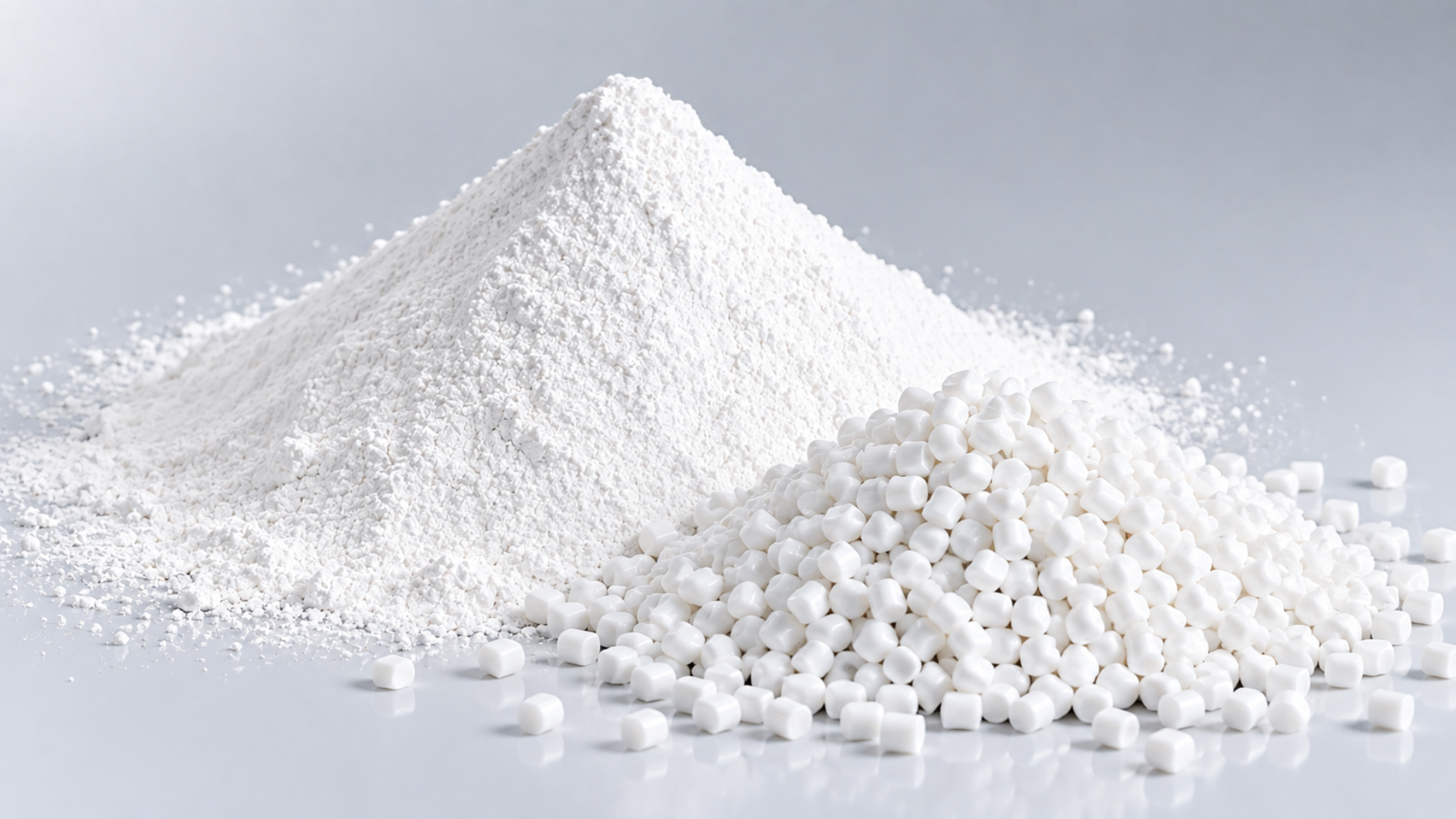
Dispersion also affects processing behavior. Large pigment agglomerates may create localized defects, interfere with filtration and reduce consistency during downstream processing. The importance of TiO₂ dispersion in masterbatch therefore extends beyond whiteness and includes both product appearance and processability.
Effect On Whiteness And Brightness
Uniform pigment dispersion helps produce a consistent visual appearance across the finished plastic product. Poorly dispersed TiO₂ can create localized differences in pigment concentration, resulting in uneven whiteness or visible specks.
Whiteness should nevertheless not be treated as a direct measurement of dispersion alone. TiO₂ grade, undertone, concentration, polymer type and other additives also affect measured and perceived whiteness.
Effect On Opacity And Hiding Power
TiO₂ provides opacity mainly by scattering visible light. Its effectiveness depends strongly on particle characteristics and the spatial arrangement of pigment within the polymer matrix.
When excessive agglomeration occurs, the effective light-scattering efficiency of the pigment system can decline. Good TiO₂ dispersion in masterbatch helps the formulation make more effective use of the available pigment and achieve more uniform hiding performance.
Effect On Tinting Strength
Tinting strength describes the ability of a white pigment to lighten a colored system under defined conditions. Particle characteristics and dispersion influence this property because poorly dispersed pigment cannot interact with light as effectively or consistently.
For this reason, TiO₂ concentration should not be considered independently from dispersion quality when comparing masterbatch formulations.
Effect On Surface Quality And Appearance
Large pigment agglomerates may become visible as white specks, rough areas or other surface imperfections. These defects become particularly important in films, fibers and thin-wall products where even relatively small agglomerates can become noticeable.
Uniform TiO₂ dispersion in masterbatch helps reduce these localized defects and improves consistency in the appearance of the final product.
Effect On Processing Stability And Filter Pressure
Poorly dispersed pigment can contribute to material retained by screens or filters during extrusion. Depending on the formulation and test conditions, this may increase pressure across the filtration system and indicate the presence of larger particles or agglomerates.
Dispersion quality is therefore often evaluated not only through optical properties but also through processing-related tests designed to identify oversized pigment structures.
TiO₂ Loading Vs Dispersion: More TiO₂ Does Not Always Mean Better Performance
Increasing TiO₂ concentration generally increases the amount of white pigment available in the masterbatch. However, pigment loading and pigment efficiency are not the same thing. As concentration rises, maintaining effective wetting and dispersion becomes progressively more demanding.
A high-loading formulation with inadequate dispersion may therefore fail to obtain the expected increase in optical performance. The relationship between TiO₂ concentration and final properties is not indefinitely linear because particle spacing, agglomeration and formulation interactions become increasingly important.
What Happens When TiO₂ Loading Increases?
Higher pigment loading increases particle-to-particle contact while reducing the relative amount of polymer available to wet the pigment surface. Melt viscosity and processing behavior may also change substantially.
The extrusion system must consequently provide sufficient distributive and dispersive mixing without causing undesirable thermal or mechanical effects. Formulations designed for lower TiO₂ concentrations cannot always be transferred directly to much higher pigment loadings.
Why Poor Dispersion Can Reduce TiO₂ Efficiency
When TiO₂ forms large agglomerates, multiple particles effectively behave as a larger optical structure rather than as efficiently separated scattering centers. Part of the theoretical benefit of adding more pigment can therefore be lost.
This is why TiO₂ dispersion in masterbatch must be considered when comparing two products with different TiO₂ concentrations. A higher nominal pigment percentage does not by itself establish superior optical performance.
TiO₂ Concentration Vs Effective Optical Performance
The practical objective is not simply to maximize pigment concentration but to obtain the required opacity, whiteness and processing performance at the intended masterbatch addition rate. TiO₂ grade, dispersion quality, carrier system and final application must all be evaluated together.
Performance should ideally be assessed in the actual or representative end-use polymer rather than inferred solely from the composition of the masterbatch.
Finding The Right Balance Between TiO₂ Loading And Dispersion
The optimum TiO₂ loading depends on the required let-down ratio, application, processing equipment and desired optical properties. Higher loading can be useful because it allows more pigment to be delivered with less masterbatch, but it also makes dispersion increasingly difficult.
The appropriate formulation is therefore the one that achieves the required final performance while maintaining adequate dispersion and processing stability, rather than simply maximizing TiO₂ percentage.
Key Factors Affecting TiO₂ Dispersion In Masterbatch
TiO₂ dispersion in masterbatch results from the combined effects of pigment characteristics, carrier resin, additives and processing conditions. Changes in any one of these variables can influence the overall dispersion state.
Understanding these factors is particularly important when transferring a formulation between different TiO₂ grades, extrusion lines or carrier polymers.
TiO₂ Particle Size And Particle-Size Distribution
Particle size is fundamental to the optical behavior of TiO₂. Pigment manufacturers carefully control particle characteristics to optimize visible-light scattering while maintaining acceptable processing properties.
The particle-size distribution also matters because oversized particles or agglomerates can create defects even when the average particle size appears suitable. Particle-size data should therefore be interpreted together with dispersion and application tests.
TiO₂ Surface Treatment
Commercial TiO₂ pigments are commonly surface treated to modify properties such as durability, surface chemistry and interaction with the surrounding medium. Inorganic treatments can include oxides such as alumina and silica, depending on the grade.
These coatings affect the surface that interacts directly with the masterbatch formulation. Consequently, surface treatment can significantly influence TiO₂ dispersion in masterbatch even when the underlying TiO₂ crystal structure is similar.
Compatibility Between TiO₂ And Carrier Resin
The carrier resin must wet the pigment sufficiently during melt processing. Polymer chemistry, melt viscosity and processing temperature all influence the effectiveness of this wetting process.
PE- and PP-based systems, for example, can behave differently depending on resin grade and rheological characteristics. A carrier should therefore be selected based on both downstream compatibility and its ability to support effective pigment processing.
TiO₂ Loading Level
As TiO₂ concentration increases, the amount of pigment surface that must be wetted also increases. At the same time, the proportion of carrier resin available to separate and transport pigment particles decreases.
High-loading masterbatch therefore places greater demands on raw-material selection, formulation design and extrusion conditions.
Extrusion Temperature And Melt Viscosity
Temperature influences polymer viscosity and consequently affects both pigment wetting and shear generation. If viscosity is too high, wetting and material flow may be inadequate; if viscosity becomes too low, the shear stress available for dispersive mixing may decrease.
The optimum temperature profile is therefore formulation- and equipment-dependent rather than a single universal setting.
Screw Design, Shear And Residence Time
Masterbatch extrusion requires both distributive mixing, which spreads pigment throughout the melt, and dispersive mixing, which applies stresses capable of breaking down agglomerates. Screw geometry and operating conditions determine the balance between these mechanisms.
Insufficient mixing can leave large agglomerates, while excessive shear or residence time can create unnecessary thermal and mechanical stress. Effective TiO₂ dispersion in masterbatch requires an appropriate processing window rather than maximum shear alone.
Feeding And Premixing Conditions
Dispersion begins before the material enters the extruder. Uniform feeding and appropriate premixing help maintain a stable ratio between pigment, polymer and additives.
Poor feeding consistency can create local concentration differences that are difficult for the extrusion process to correct completely, particularly in highly filled formulations.
How TiO₂ Grade Selection Affects Dispersion
Selecting TiO₂ solely according to pigment content or crystal type provides an incomplete basis for masterbatch formulation. Commercial grades are engineered differently in terms of particle characteristics, inorganic coatings, organic treatments and intended applications.
A grade designed for coatings, for example, may not provide the same processing behavior as a grade specifically optimized for plastics.
Rutile Vs Anatase TiO₂
Rutile and anatase are two important crystalline forms of TiO₂. Rutile has a higher refractive index and is widely used in plastic applications requiring high opacity and durability.
However, crystal structure alone does not determine TiO₂ dispersion in masterbatch. Surface treatment, particle characteristics and compatibility with the polymer system must also be considered before comparing individual grades.
Inorganic Surface Treatment Of TiO₂
Inorganic surface treatments are used to modify pigment properties, particularly durability and surface characteristics. Alumina, silica and other inorganic treatments may be applied in different combinations depending on the intended performance profile.
Because these treatments change the outer surface of the pigment, they also influence how the pigment interacts with polymers and additives during compounding.
Organic Surface Treatment And Polymer Compatibility
Organic treatments can modify surface energy and improve handling or compatibility with selected polymer systems. This can influence wetting and dispersion during extrusion.
The effectiveness of an organic treatment nevertheless depends on the carrier resin and overall formulation. A surface treatment advantageous in one polymer system may not produce identical results in another.
Why Two TiO₂ Grades With Similar TiO₂ Content Can Perform Differently
Nominal TiO₂ percentage provides only limited information about pigment performance. Two grades with similar TiO₂ content can differ in particle-size distribution, surface coating, organic treatment, moisture behavior and dispersibility.
These differences explain why practical masterbatch trials remain important when changing pigment suppliers or grades.
Common Problems Caused By Poor TiO₂ Dispersion
Poor TiO₂ dispersion can appear as both visual and processing defects. The exact symptoms depend on pigment concentration, application thickness, processing conditions and the sensitivity of the final product.
Identifying the type of defect is important because similar symptoms may also originate from contamination, incompatible additives or polymer degradation rather than TiO₂ alone.
White Specks And Pigment Agglomerates
Visible white specks are one of the clearest indications of oversized pigment-rich structures. They may originate from insufficient pigment wetting, inadequate mixing or agglomeration occurring before extrusion.
Microscopic or filtration analysis can help determine whether these defects are actually TiO₂ agglomerates or another type of contamination.
Uneven Color And Whiteness
Poor distribution or dispersion can create areas with different local pigment concentrations. This may result in inconsistent whiteness or appearance across the final product.
The problem becomes more noticeable in products where visual uniformity is critical or where the masterbatch is used at a relatively low addition rate.
Reduced Hiding Power
Agglomeration can reduce the efficiency with which TiO₂ scatters light. Consequently, increasing pigment concentration may produce less improvement in hiding power than expected.
Evaluating TiO₂ dispersion in masterbatch alongside opacity measurements provides a more meaningful assessment than pigment percentage alone.
Rough Surface And Poor Appearance
Oversized pigment structures can disturb the surface of films, sheets and molded products. Depending on the application, this may appear as roughness, specks or localized surface irregularities.
Thin products are generally more sensitive because an agglomerate represents a larger proportion of the total product thickness.
Screen Or Filter Blocking And Increased Pressure
Large agglomerates or other poorly dispersed components may be retained by fine filtration systems during processing. Accumulation can increase pressure and reduce process stability.
However, increased filter pressure should not automatically be attributed to TiO₂. Other additives, contamination and degraded polymer can produce similar effects and should be investigated during root-cause analysis.
TiO₂ Dispersion Requirements By Application
There is no single dispersion requirement suitable for every plastic application. The acceptable level depends on product thickness, processing method, filtration system, surface requirements and final optical specifications.
Masterbatch should therefore be evaluated under conditions representative of its intended use rather than through pigment concentration alone.
Blown Film And Thin Film
Blown film is particularly sensitive to pigment agglomerates because of its low thickness and large visible surface area. Oversized particles can produce specks, surface irregularities and other localized defects.
High and consistent TiO₂ dispersion in masterbatch is therefore especially important for thin-film applications, together with appropriate compatibility between the masterbatch carrier and the film resin.
Injection Molding
Injection-molded products are generally thicker than films, which can make them less sensitive to very small pigment agglomerates. Nevertheless, poor dispersion can still cause uneven color, surface defects and inconsistent appearance.
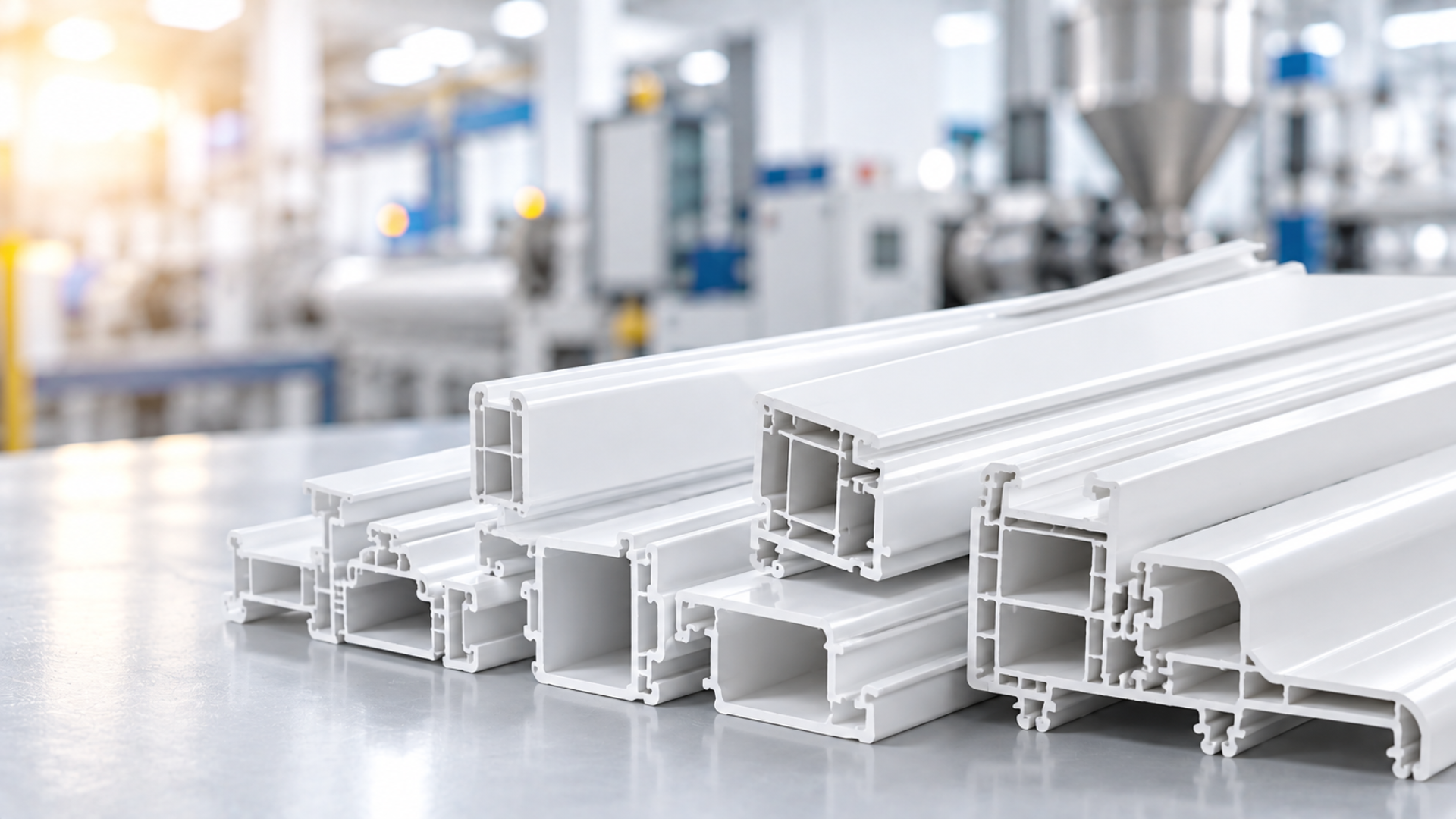
The required dispersion level depends strongly on part geometry, surface finish and visual specifications.
Blow Molding
Blow-molded products require uniform pigment distribution throughout the wall of the container or component. Poor dispersion can produce local variations in opacity and appearance.
Masterbatch compatibility with the base resin and stable processing behavior are therefore important alongside optical properties.
Extrusion And Sheet
Sheet extrusion requires consistent pigment distribution over a relatively large surface area. Agglomerates may become visible as localized defects and can affect appearance, particularly in smooth or glossy products.
Stable melt flow and adequate distributive mixing are important for maintaining uniform optical performance across the sheet.
Nonwoven Applications
Nonwoven production can place demanding requirements on pigment dispersion because the polymer is processed into fine fibers. Large pigment agglomerates can interfere with consistent processing and may contribute to defects depending on the fiber-forming process and filtration system.
For white masterbatch intended for nonwoven applications, TiO₂ dispersion in masterbatch should therefore be evaluated together with filtration behavior, carrier compatibility and actual spinning performance.
Conclusion
Effective TiO₂ dispersion in masterbatch depends on the interaction between pigment characteristics, carrier compatibility, wetting, dispersing aids, and processing conditions. Higher TiO₂ loading does not necessarily deliver better whiteness or opacity; the objective is to achieve the required optical performance at the target let-down ratio while minimizing agglomeration and processing issues. Dispersion should therefore be evaluated according to the end application, together with optical properties and relevant processing tests, to ensure consistent white masterbatch performance.