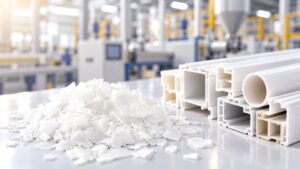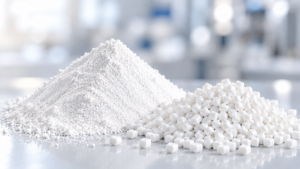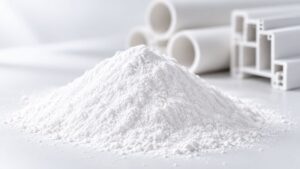

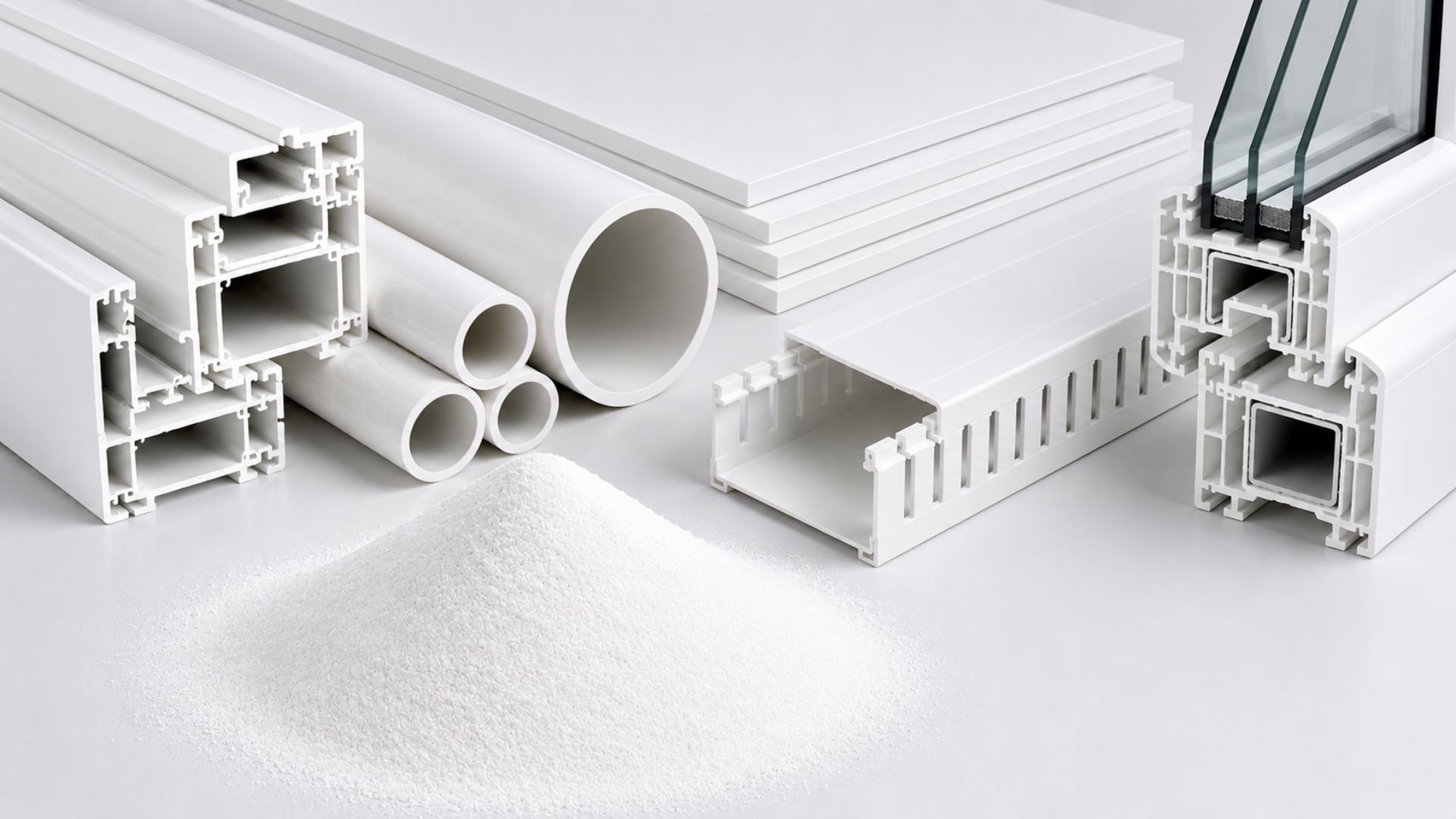
Rigid PVC is widely used in pipes, fittings, window profiles, sheets, wall panels, and many other construction and industrial applications. However, PVC has limited thermal stability and requires proper formulation to ensure efficient processing and consistent product quality.
Among the most important additives in rigid PVC are CPE and ACR. Understanding the role of CPE and ACR in PVC formulations is essential for optimizing processing efficiency, product performance, and formulation costs. Read the full blog from TLD Vietnam to explore how these additives work and how to choose the right solution for your PVC applications.
Processing Challenges Of Rigid PVC
Rigid PVC processing requires a balance between resin, stabilizer, lubricant, filler, pigment and functional additives. Unlike some polymers that melt easily and flow smoothly, PVC needs a controlled fusion process. During processing, PVC particles gradually absorb heat and shear, break down their particle structure, and form a homogeneous melt.
If the formulation is not well-balanced, several problems may occur. One common issue is slow fusion. When PVC fusion takes too long, processors may need to increase temperature or residence time, which can create a higher risk of thermal degradation. Another common issue is incomplete fusion, where PVC particles do not fully combine into a uniform melt. This can lead to poor impact strength, rough surface, internal weakness, and unstable product quality.
Rigid PVC also has a relatively narrow processing window. If the temperature is too low, fusion may be insufficient. If the temperature is too high, PVC can degrade, causing discoloration, black spots, a burning smell or loss of mechanical properties. This makes PVC processing highly sensitive to formulation design and operating conditions.
In extrusion applications, such as PVC pipes and profiles, melt strength is also very important. The melt must be strong enough to maintain its shape after leaving the die. Poor melt strength can cause deformation, unstable dimensions, surface defects, and difficulty in maintaining production speed.
Common processing challenges in rigid PVC include slow fusion behavior, narrow processing window, poor melt strength, low impact resistance, surface roughness, flow marks, poor gloss, dimensional instability, and high sensitivity to filler loading or lubrication balance. These challenges become even more obvious in high-output extrusion lines and highly filled PVC formulations.
To solve these problems, PVC processors usually incorporate processing aids and impact modifiers. CPE and ACR in PVC formulations are two of the most important additive groups used to overcome these processing challenges.
What Is CPE?
CPE, or Chlorinated Polyethylene, is a chlorinated polymer widely used in PVC formulations. In rigid PVC, CPE is primarily used as an impact modifier. Its main function is to improve toughness and help PVC products resist cracking or breaking when exposed to mechanical impact.
Main Benefits Of CPE In PVC Formulations
CPE is a highly effective impact modifier and processing aid widely used in PVC formulations. It significantly improves impact strength and toughness, making PVC products more resistant to cracking under stress. CPE also enhances flexibility and elasticity, allowing finished products to withstand repeated deformation without losing performance.
With high chlorine content, it provides excellent flame-retardant properties while maintaining strong resistance to oils, acids, alkalis, and other chemicals. In addition, CPE improves weatherability and UV resistance, helping PVC products retain their mechanical properties and extend their service life in demanding outdoor environments.
What Is ACR?
As another key component of CPE and ACR in PVC formulations, ACR is a group of acrylic-based additives used to improve processing or impact performance, depending on the grade. Unlike CPE, ACR can serve different functions depending on its molecular structure and composition. In general, ACR additives can be divided into two main categories: ACR processing aid and ACR impact modifier.
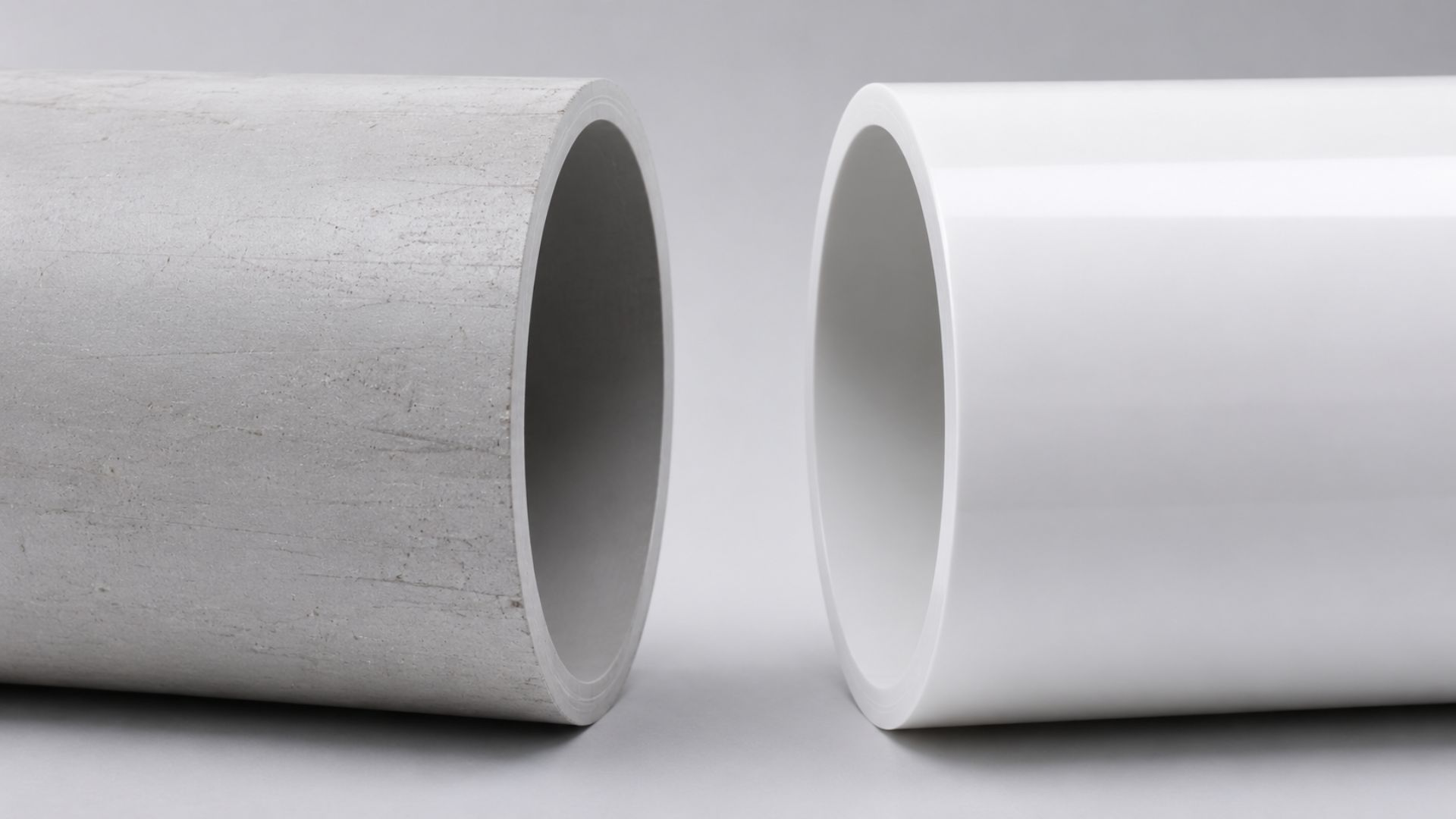
This distinction is very important. Some manufacturers simply refer to ACR as one product group, but different ACR grades may perform very different roles in PVC formulations. ACR processing aid is mainly used to improve fusion and melt behavior, while ACR impact modifier is designed to improve impact resistance and toughness.
ACR Processing Aid
ACR Impact Modifier
ACR impact modifiers are widely used to enhance the mechanical performance of rigid PVC while maintaining its aesthetic quality. They provide outstanding impact resistance, particularly at low temperatures, helping prevent brittle failure under demanding conditions.
Unlike many other impact modifiers, acrylic modifiers offer excellent heat resistance and superior weatherability, ensuring long-term performance under UV exposure and outdoor environments. Their refractive index is close to that of PVC, allowing finished products to maintain high transparency and an excellent surface gloss.
Although ACR impact modifiers are generally more expensive than alternatives such as CPE and may slightly reduce transparency at higher loading levels, they are often the preferred choice for premium PVC applications requiring durability, appearance, and long-term weather resistance.
Different Roles Of CPE And ACR In PVC Formulations
When discussing CPE and ACR in PVC, it is important to understand that these additives perform different functions despite being used in the same formulation.
CPE is mainly used to improve impact strength and toughness. It helps rigid PVC absorb mechanical stress and reduce brittleness. It is widely used in PVC pipes, fittings and rigid products where impact resistance is required.
ACR processing aid is mainly used to improve fusion, melt strength, surface quality and processing stability. It is especially useful when the formulation has slow fusion, unstable extrusion or poor surface finish.
ACR impact modifier, on the other hand, improves impact strength like CPE, but it is often selected when the product also requires excellent surface gloss, good weatherability and better appearance retention.
In practical formulation design, the choice between CPE, ACR processing aid and ACR impact modifier depends on the end-use application and performance requirements. For example, a PVC pipe formulation may prioritize impact strength, pressure resistance and cost efficiency, so CPE may be commonly used. A PVC profile formulation may require smooth surface, dimensional stability, weather resistance and good impact strength, so ACR processing aid or ACR impact modifier may be more suitable.
Why CPE And ACR Are Often Used Together
In many rigid PVC formulations, CPE and ACR are used together to achieve a better balance between processing performance and mechanical properties.
CPE improves impact strength and toughness, while ACR processing aid improves fusion and melt strength. When used together properly, they can help processors achieve more stable extrusion, smoother surface, better dimensional control and stronger final products.
The combination of CPE and ACR in PVC is especially valuable in highly filled formulations. Calcium carbonate is widely used in PVC products to reduce cost, improve stiffness and support dimensional stability. However, high filler loading can make PVC more difficult to process. It may slow down fusion, reduce melt strength and lower impact resistance.
In such cases, ACR processing aid can help improve fusion and melt uniformity, while CPE can help recover impact strength. The result is a more balanced formulation that can maintain both cost efficiency and product performance.
However, using both additives does not automatically guarantee better results. The dosage must be carefully optimized. Too little additive may not deliver the required performance, while too much additive may increase cost or create processing imbalance. The best formulation depends on resin type, filler level, lubricant system, stabilizer system, equipment design and production conditions.
The Role Of Filler Loading In Additive Selection
The effectiveness of CPE and ACR in PVC formulations is strongly influenced by filler loading. Filler loading is one of the most important factors affecting the selection of CPE and ACR. Many PVC manufacturers use calcium carbonate to reduce raw material cost and improve certain physical properties. In rigid PVC products, calcium carbonate can improve stiffness, dimensional stability and surface hardness. However, when the filler content becomes too high, it may negatively affect impact strength and processing behavior.
High filler loading can reduce the flexibility of the PVC matrix and make the product more brittle. It can also affect melt flow and fusion behavior. If the formulation is not adjusted properly, the finished product may show poor impact resistance, rough surface or unstable extrusion.
For this reason, highly filled PVC formulations often require stronger additive support. CPE can improve toughness and reduce brittleness caused by filler addition. ACR processing aid can help improve fusion and melt strength, making the formulation easier to process. In some applications, ACR impact modifier may also be used to improve toughness while maintaining good surface appearance.
The right balance between filler, CPE, ACR, lubricant and stabilizer is essential. A formulation with high filler content but insufficient processing aid may have poor fusion. A formulation with enough impact modifier but poor lubrication balance may still face processing instability. Therefore, additive selection should always be considered as part of the complete formulation system.
For this reason, optimizing CPE and ACR in PVC should always be considered together with filler selection and the overall formulation design.
Application-Based Selection
Selecting CPE and ACR in PVC depends largely on the final application and required product performance.
For PVC pipes, the main requirements are impact resistance, pressure performance, dimensional stability, and cost efficiency. CPE is commonly used to improve toughness, especially in pipe formulations containing calcium carbonate. ACR processing aid may also be used when better fusion, smoother surface, or more stable extrusion is required.
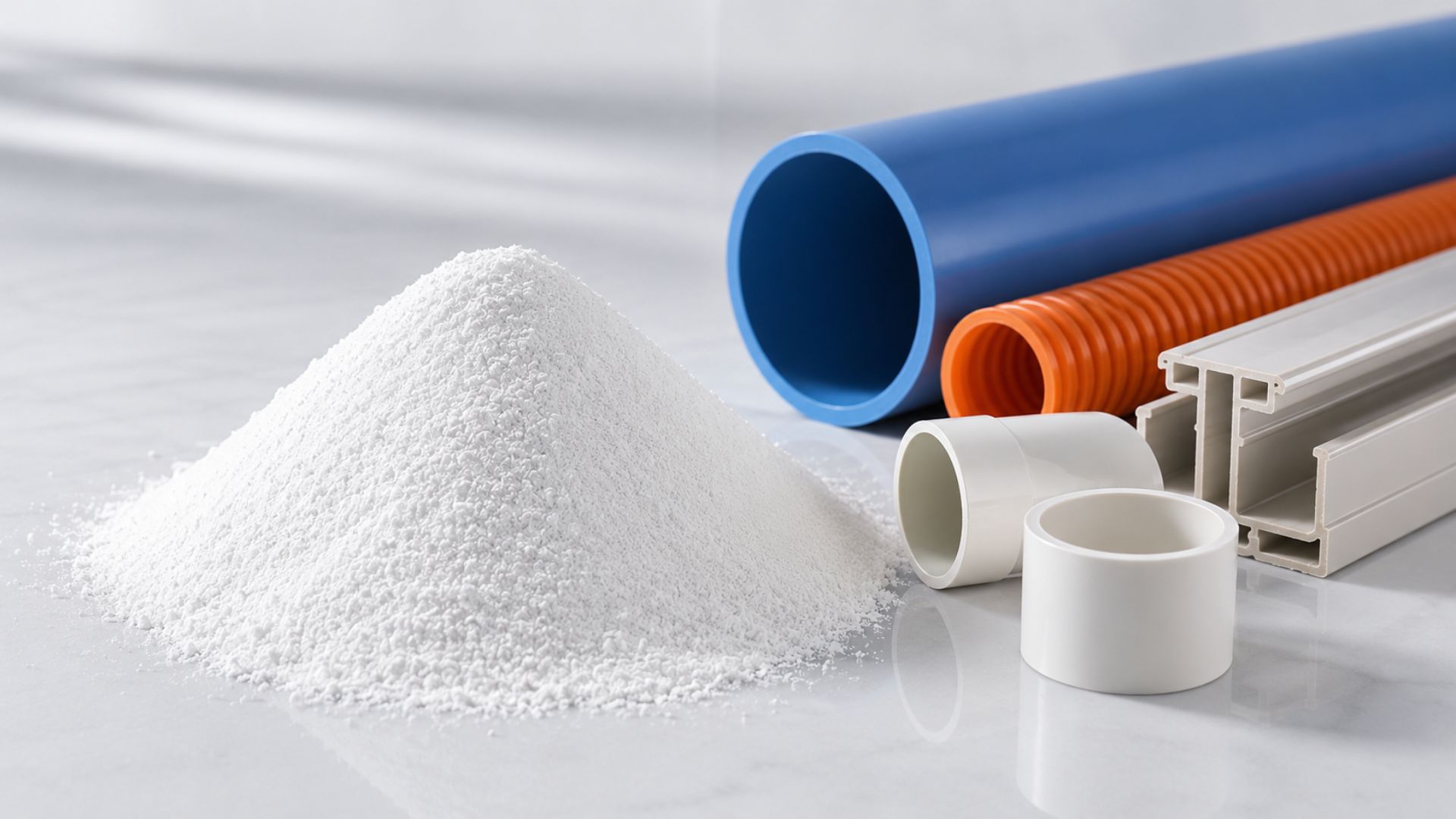
For PVC fittings, impact strength and processing flow are important. Since fittings are often produced by injection molding, the formulation must have suitable flow behavior and mechanical performance. CPE or ACR impact modifier may be selected depending on performance targets.
For PVC profiles, surface finish, gloss, weather resistance and dimensional stability are highly important. ACR processing aid is often used to improve fusion and surface appearance. ACR impact modifier may be preferred when high impact strength and outdoor durability are required.
For PVC sheets and panels, smooth surface, melt strength and consistent thickness are key factors. ACR processing aid can help improve processing stability and product appearance. If the sheet requires higher toughness, impact modifiers may also be added.
For outdoor PVC products, weatherability becomes a major consideration. In these applications, both CPE and acrylic modifiers can be used depending on the target balance between cost, impact strength and long-term appearance.
How To Optimize Dosage
The optimum dosage of CPE and ACR in PVC formulations depends on product type, filler loading, processing equipment, and target properties.
If the goal is mainly to improve impact strength, CPE or ACR impact modifiers should be considered. If the problem is slow fusion, poor melt strength, or rough surface, ACR processing aid is usually more suitable. If the formulation has both poor impact strength and processing instability, a combination of CPE and ACR processing aid may be needed.
Manufacturers should also evaluate processing temperature, screw speed, torque, output rate, surface quality, dimensional stability, and final mechanical performance during trials. Laboratory testing and production-line trials are important because the same additive package may perform differently under different processing conditions.
Optimizing CPE and ACR in PVC is not about using the highest dosage but about achieving the best balance between processing efficiency, product performance, and formulation cost.
Conclusion
Understanding the different roles of CPE and ACR in PVC enables manufacturers to build formulations that deliver both efficient processing and reliable product performance. In many PVC formulations, especially highly filled systems, a balanced combination of CPE and ACR can significantly improve processing efficiency and mechanical properties.