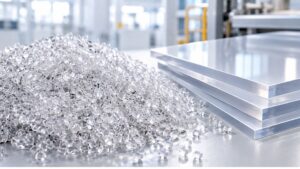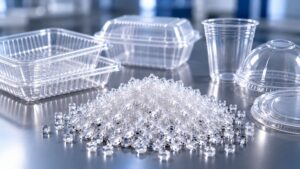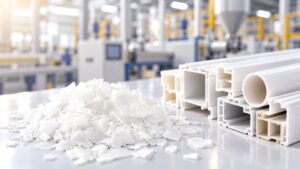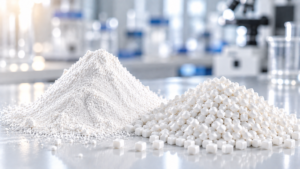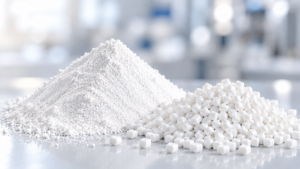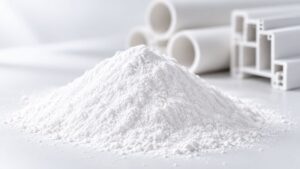

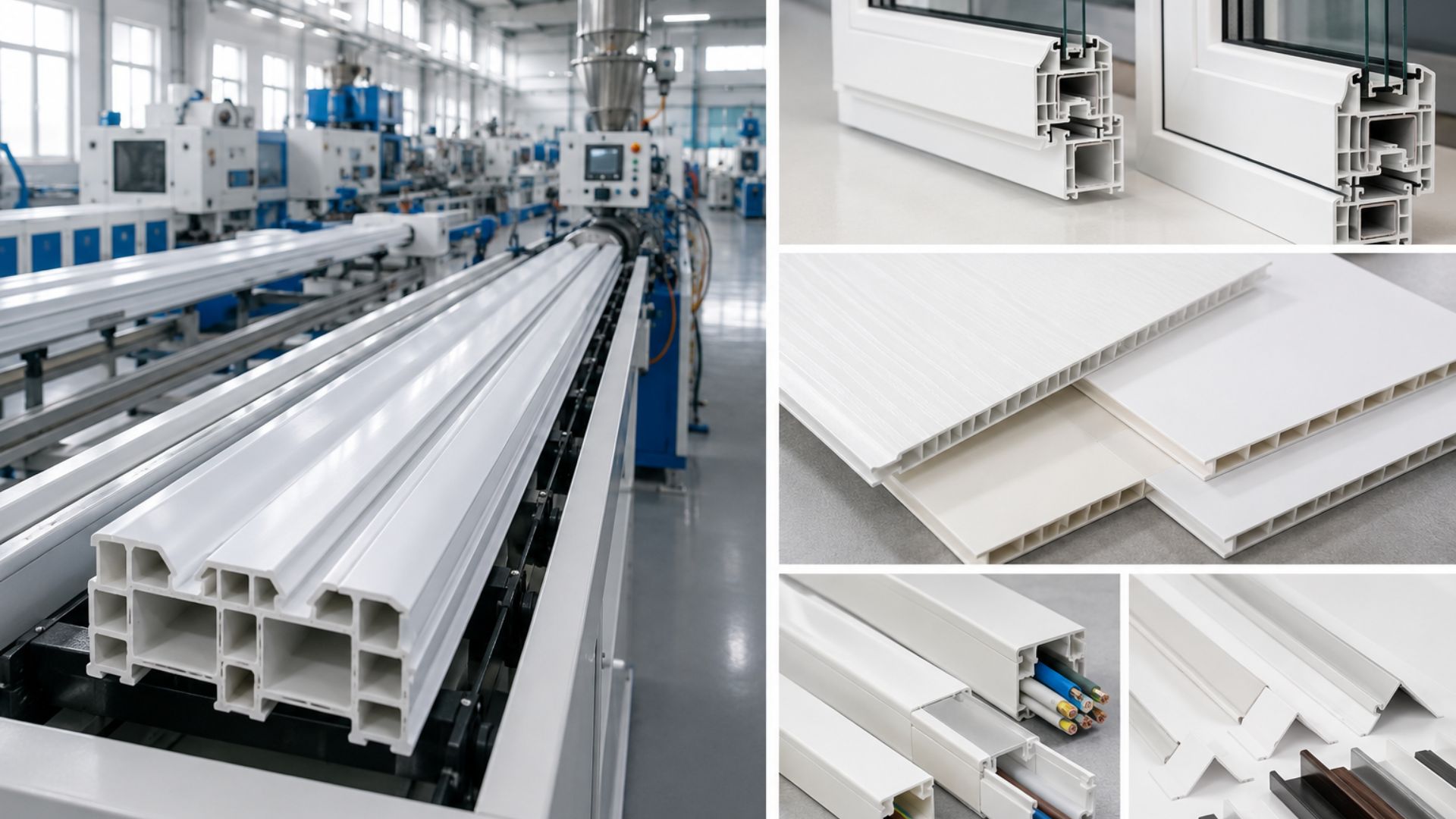
PVC profiles are continuous rigid-polyvinyl-chloride products formed through a shaped die. They are used in window and door frames, wall panels, trims, cable trunking, furniture parts, and technical applications. A profile must keep the same cross section throughout long production runs while meeting requirements for stiffness, dimensional accuracy, appearance, and durability.
Ground calcium carbonate for PVC profiles is widely used because it affects more than the formulation cost. A suitable grade can improve rigidity, reduce dimensional movement, support stable extrusion, and help create a smoother surface. These effects depend on particle size, particle-size distribution, purity, whiteness, moisture, coating quality, and compatibility with the additive package.
Ground calcium carbonate should therefore be seen as a functional mineral. Ground calcium carbonate for PVC profiles changes the structure, heat transfer, flow behavior, and final properties of the compound, so it must be selected as part of the complete formulation. Read the full blog from TLD Vietnam to explore the complete technical guide.
What Are PVC Profiles?
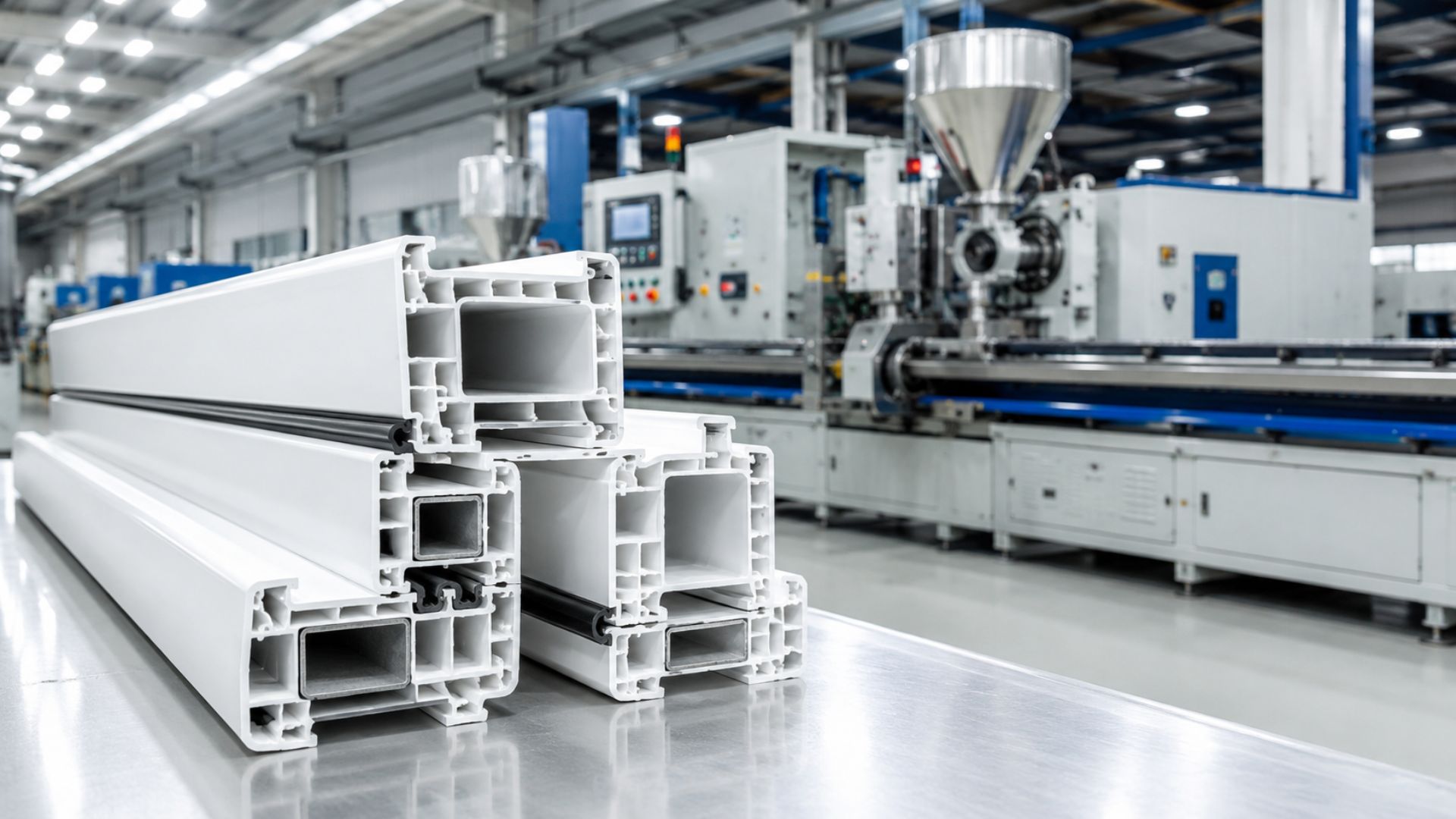
PVC profiles are produced by feeding a dry blend or pelletized compound into an extruder. Heat and shear fuse the material before it passes through a die, calibration and cooling units, and then pulling and cutting equipment.
Window and door profiles must support glass, hardware, seals, and repeated use while maintaining stiffness, weld strength, weather resistance, and stable color. Wall panels and trims need smooth surfaces and accurate geometry. Cable trunking must retain dimensions so that its parts fit correctly, while industrial profiles may serve as rails, channels, supports, or custom technical sections.
Despite their different shapes, these products must resist bending, retain dimensions, maintain an acceptable surface, and run continuously without unstable pressure or output. Ground calcium carbonate for PVC profiles can contribute to each of these requirements when its properties match the application.
Why Ground Calcium Carbonate Is Used In PVC Profiles
Increasing Rigidity
Rigid PVC already has a relatively high modulus, but Ground calcium carbonate can increase stiffness further. Calcium carbonate particles are less deformable than the polymer matrix. When they are well dispersed, they restrict movement within the PVC structure under load, increasing modulus and reducing bending.
This is useful in profiles that must keep their shape. However, excessive filler, coarse particles, or poor dispersion may create stress concentration points and reduce impact resistance.
Ground calcium carbonate for PVC profiles should therefore provide the required increase in rigidity without causing an unacceptable loss of toughness. This normally requires controlled particle size, low coarse-particle content, effective dispersion, and a suitable impact modifier.
Improving Dimensional Stability
PVC contracts as it cools after extrusion and changes dimension as service temperature varies. Mineral-filled compounds generally show lower thermal expansion because the mineral phase responds less to heat than the polymer.
Ground calcium carbonate can reduce shrinkage and help the profile retain its intended geometry. This is important for multi-chamber sections, snap-fit parts, and products with tight tolerances. It may also limit warpage, although die design, calibration, and cooling remain essential.
The benefit depends on uniform filler distribution. Agglomerates or unstable feeding can create local differences in flow and shrinkage. Ground calcium carbonate for PVC profiles must therefore have consistent bulk density, flow behavior, and particle properties from batch to batch.
Improving Extrusion Stability
Calcium carbonate transfers heat more effectively than PVC. It changes how heat moves through the dry blend and melts during mixing, fusion, extrusion, calibration, and cooling. In a balanced formulation, this can support a more uniform melt temperature and controlled cooling.
Ground calcium carbonate also affects fusion time, torque, melt viscosity, die pressure, and lubrication. A very fine grade has a large surface area and interacts strongly with the polymer and additives. A coated grade may reduce friction and shift the fusion behavior.
Ground calcium carbonate for PVC profiles does not improve extrusion automatically. The benefit appears only when the mineral grade, coating level, lubricants, stabilizer, processing aid, and operating conditions are adjusted together. When this balance is correct, pressure and output can become more consistent and the process window easier to control.
Improving Surface Finish
Profile appearance depends on melt homogeneity, die condition, fusion, lubrication, dispersion, and cooling. Fine Ground calcium carbonate with few oversized particles can support a smoother surface.
Poor-quality material may cause scratches, flow lines, pinholes, surface bumps, or irregular gloss. A grade with an acceptable median particle size can still create defects if it contains a small amount of very coarse particles. The top-cut value is therefore especially important for glossy and thin-wall profiles.
Ground calcium carbonate for PVC profiles can also influence gloss level. Fine, well-dispersed particles often support a smooth appearance, while larger particles or a broad size distribution may produce a more matte surface. The final effect still depends on the die temperature and melt condition.
Reducing Production Cost
Ground calcium carbonate can replace part of the PVC resin, reducing raw-material cost per kilogram of compound. However, a correct cost analysis must consider more than the purchase price of resin and filler.
Calcium carbonate has a higher density than PVC, so a filled compound weighs more per unit volume. For profiles sold by meter or by piece, the producer must consider product density, cross-sectional area, output, scrap, energy use, and mechanical performance.
A suitable grade may also improve feeding consistency and reduce interruptions. Ground calcium carbonate for PVC profiles should therefore optimize total cost and performance, not simply maximize filler content.
How Ground Calcium Carbonate Influences PVC Profile Performance
Particle Size
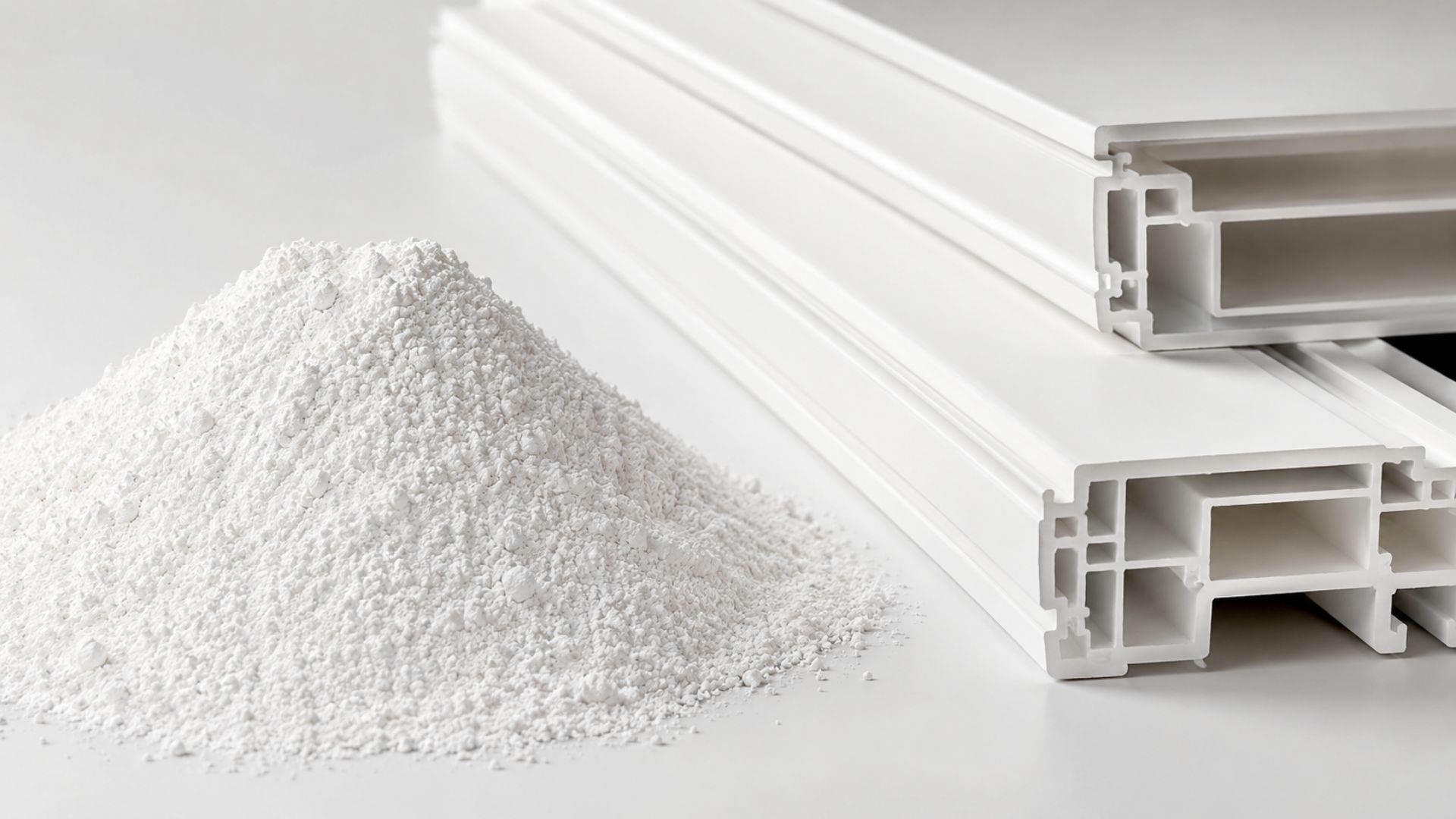
Particle size affects dispersion, stiffness, impact strength, surface smoothness, melt behavior, and additive demand. Fine particles can distribute more evenly and create a smoother surface, but their larger total surface area makes them more difficult to wet and disperse.
Very fine particles may form agglomerates that behave like much larger particles if mixing cannot separate them. Coarse particles are easier to handle but can create visible defects and weak points under impact.
For Ground calcium carbonate for PVC profiles, medium size should always be considered together with the top cut and the proportion of oversized particles.
Particle Size Distribution
Particle-size distribution determines how efficiently the mineral particles pack together. A controlled distribution allows smaller particles to fill spaces between larger particles, which can improve packing density and compound uniformity.
A broad distribution may contain coarse particles that damage appearance or impact performance, while a very narrow distribution may reduce packing efficiency and increase surface-wetting demand.
The preferred distribution depends on the product. High-gloss windows and decorative profiles normally require stricter control than less surface-sensitive industrial sections.
Whiteness and Brightness
Whiteness is important in white and light-colored profiles. A clean Ground calcium carbonate grade supports a neutral base color and reduces unwanted grey, yellow, or brown tones.
Ground calcium carbonate is not a direct replacement for titanium dioxide. TiO₂ has a much higher refractive index and provides opacity and hiding power. Ground calcium carbonate mainly affects the mineral structure, brightness balance, and cleanliness of the base compound.
A bright, consistent Ground calcium carbonate can help the producer use TiO₂ more efficiently, while a variable or contaminated grade may require more pigment to reach the same color target.
Purity
Purity affects appearance, equipment wear, thermal stability, and long-term performance. Iron-bearing minerals can create grey, yellow, or brown tones. Dark impurities may appear as black specks, while silica and other hard minerals can accelerate wear of mixers, screws, barrels, dies, and cutting equipment.
Clay, organic matter, and unstable mineral composition may affect processing and weather resistance. Outdoor white profiles require especially strict impurity control.
Moisture
Excess moisture can create bubbles, pinholes, internal voids, unstable pressure, and surface marks during extrusion. Water may enter through Ground calcium carbonate, recycled PVC, other additives, or poor storage.
Moisture should remain low and consistent. Sealed packaging, dry storage, and controlled handling are essential because powder can absorb water in humid conditions.
Surface Treatment
Ground calcium carbonate may be supplied uncoated or treated with fatty acids, commonly stearic acid or stearate-based systems. Surface treatment reduces mineral polarity, improves flow, lowers moisture sensitivity, and can improve dispersion in the polymer phase.
In rigid PVC, coating also becomes part of the total lubrication balance. Too much treatment can delay fusion, reduce melt strength, or create an over-lubricated compound. Too little treatment can increase friction, torque, and agglomeration.
Ground calcium carbonate for PVC profiles may therefore be coated or uncoated, depending on the formulation. The correct option should be confirmed through dry-blend and extrusion trials.
Choosing The Right Ground Calcium Carbonate Grade For PVC Profiles
Ground calcium carbonate for PVC profiles should be selected according to profile geometry, wall thickness, loading level, surface target, weathering requirement, impact performance, production speed, and additive system.
| Property | Why It Matters |
| Particle size | Affects dispersion, stiffness, impact behavior, and surface smoothness |
| Coarse-particle control | Reduces scratches, bumps, weak points, and visible defects |
| Particle-size distribution | Influences packing, resin demand, and processing stability |
| Whiteness and brightness | Supports clean white profiles and stable color |
| Moisture | Reduces bubbles, porosity, and pressure fluctuation |
| Purity | Limits contamination, discoloration, and equipment wear |
| Surface treatment | Influences dispersion, fusion, torque, and lubrication |
| Bulk density | Affects dosing, hopper flow, and feeding consistency |
| Batch consistency | Supports repeatable extrusion and product quality |
No single value is sufficient. A suitable median size may hide excessive coarse particles, while high whiteness does not guarantee low moisture or low silica. Final approval should include technical-data review, production trials, dimensional checks, surface inspection, and mechanical testing.
Typical Loading Levels
Ground calcium carbonate loading is commonly expressed in parts per hundred resin, or phr. For example, 20 phr means 20 parts of Ground calcium carbonate per 100 parts of PVC resin by weight.
Low Loading: 5-15 phr
At low loading, Ground calcium carbonate can improve stiffness and dimensional control while limiting the loss of impact strength. This range suits demanding profiles where toughness, weld strength, or thin-wall performance is important.
The cost reduction is moderate, but the formulation usually has a wider processing window. Fine, high-purity material with strict coarse-particle control is preferred when appearance is critical.
Medium Loading: 15-25 phr
This range provides a stronger balance between rigidity, dimensional stability, surface quality, and cost. It is suitable for many construction profiles, cable-management products, trims, and general rigid sections.
At this level, fusion and lubrication become more sensitive, so stabilizers, processing aids, impact modifiers, and lubricants may require adjustment. Ground calcium carbonate for PVC profiles at medium loading should provide stable feeding and repeatable extrusion, not only acceptable laboratory data.
High Loading: 25-40 phr
High loading can significantly reduce resin content and increase stiffness, but it also raises compound density and may reduce impact strength, elongation, weld strength, and resistance to crack growth.
The process becomes more sensitive to powder quality, mixing, feeding, and lubrication. This range may suit wall panels and lower-impact sections, but it may be unsuitable for severe-impact or demanding outdoor products.
Processing Considerations
Stabilizer System
PVC can degrade under heat during mixing and extrusion. The stabilizer protects against discoloration and property loss. Because Ground calcium carbonate changes heat transfer and can interact with stabilizer components, stabilizer level and type should be checked whenever the mineral grade or loading changes.
Lubricant Balance
Internal lubricants support flow within the melt, while external lubricants reduce adhesion between the compound and metal surfaces. Coated Ground calcium carbonate contributes to the total lubrication effect.
Replacing uncoated material with coated material without adjusting the lubricant package may delay fusion or reduce melt strength. The opposite change may increase torque, pressure, and die sticking. Ground calcium carbonate for PVC profiles must therefore be assessed together with waxes, stearates, fatty acids, and other lubricants as one system.
ACR and Impact Modifiers
ACR processing aids support fusion, melt strength, surface quality, and stable extrusion, especially in highly filled, thin-wall, or complex profiles.
Impact modifiers such as CPE or acrylic systems help restore toughness. Their required level depends on filler content, particle size, service temperature, profile geometry, and weathering requirements.
Titanium Dioxide
TiO₂ provides whiteness, opacity, and, in suitable grades, outdoor durability. Ground calcium carbonate affects the optical background but does not provide the same hiding power. Poor Ground calcium carbonate whiteness or contamination may increase TiO₂ demand, while a clean and stable mineral supports more consistent color.
Processing Temperature and Screw Design
Temperature controls fusion, viscosity, surface quality, degradation, and output. Ground calcium carbonate changes heat transfer, so barrel and die settings should be optimized according to actual melt behavior rather than copied from an unfilled formulation.
Screw compression, mixing intensity, die geometry, calibration, and cooling also affect performance. Insufficient mixing may leave agglomerates, while excessive shear can overheat PVC.
Common Challenges
Poor Dispersion
Poor dispersion can create flow lines, roughness, white spots, pinholes, and irregular gloss. Causes include agglomeration, unsuitable coating, moisture, weak mixing, or poor dry-blend control.
The solution should begin with material and process checks. Increasing shear alone may not solve the problem and can cause overheating.
Excessive Ground Calcium Carbonate
When filler content is too high, the polymer matrix has less capacity to absorb impact energy. The particles also become closer together, making crack growth easier.
Corrections may include reducing loading, improving top-cut control and dispersion, increasing impact modifier, or changing profile geometry.
High Moisture
Moisture can form vapor during extrusion and create bubbles, porosity, or unstable surface marks. The producer should check Ground calcium carbonate moisture, storage conditions, recycled material, mixer ventilation, and material handling. Preventing moisture absorption is usually more reliable than trying to remove it later.
Wrong Particle Size
Coarse particles can cause rough surfaces and visible defects. Extremely fine particles can also create problems if they agglomerate or increase additive demand.
The best choice is not simply the smallest grade. Ground calcium carbonate for PVC profiles should have a controlled distribution, low coarse-particle content, suitable surface treatment, and proven compatibility with the formulation.
Conclusion
Ground calcium carbonate for PVC profiles is not only a low-cost filler. It is a functional mineral that can influence rigidity, dimensional stability, heat transfer, extrusion consistency, surface appearance, and total production cost.
Its performance depends on particle size, particle-size distribution, purity, whiteness, moisture, bulk density, coating, and compatibility with the full additive system. The correct grade for a window profile may not be suitable for a wall panel, cable trunking, decorative trim, or industrial section.
When the mineral specification, loading level, additives, and extrusion conditions are properly matched, Ground calcium carbonate can help produce rigid PVC profiles with stable dimensions, controlled stiffness, smooth surfaces, consistent output, and reliable quality.