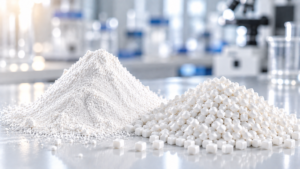

Suspension PVC is a major raw material for rigid and flexible products, with resin characteristics directly influencing processing stability and finished-product performance. Understanding the relationship between molecular weight, particle structure, and additive absorption provides a technical basis for grade selection and formulation development. This TLD Vietnam blog examines these properties, their implications for manufacturing, and the criteria for selecting resin by application.
What Is Suspension PVC Resin?
Definition And Main Characteristics
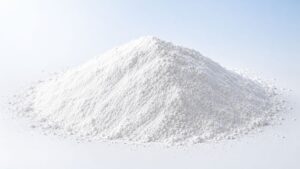
Suspension PVC is Polyvinyl chloride produced by suspension polymerization of vinyl chloride monomer in water. Commonly abbreviated as S-PVC, it is supplied as a white powder consisting of grains with an internal particle structure. Manufacturers combine this resin with additives to obtain the processing behavior and properties required for the finished product.
The term describes the production method rather than the hardness of the material. Depending on its formulation, the same resin family can produce rigid construction products or flexible tubing. This distinction is important because resin type, molecular weight, and plasticizer content represent different aspects of material selection.
How Suspension Polymerization Works
During the production of suspension PVC, vinyl chloride is dispersed as droplets in water through agitation and suspending agents. Monomer-soluble initiators start polymerization within these droplets. Reaction temperature, mixing conditions, and the suspension system influence molecular weight and the structure of the resulting grains.
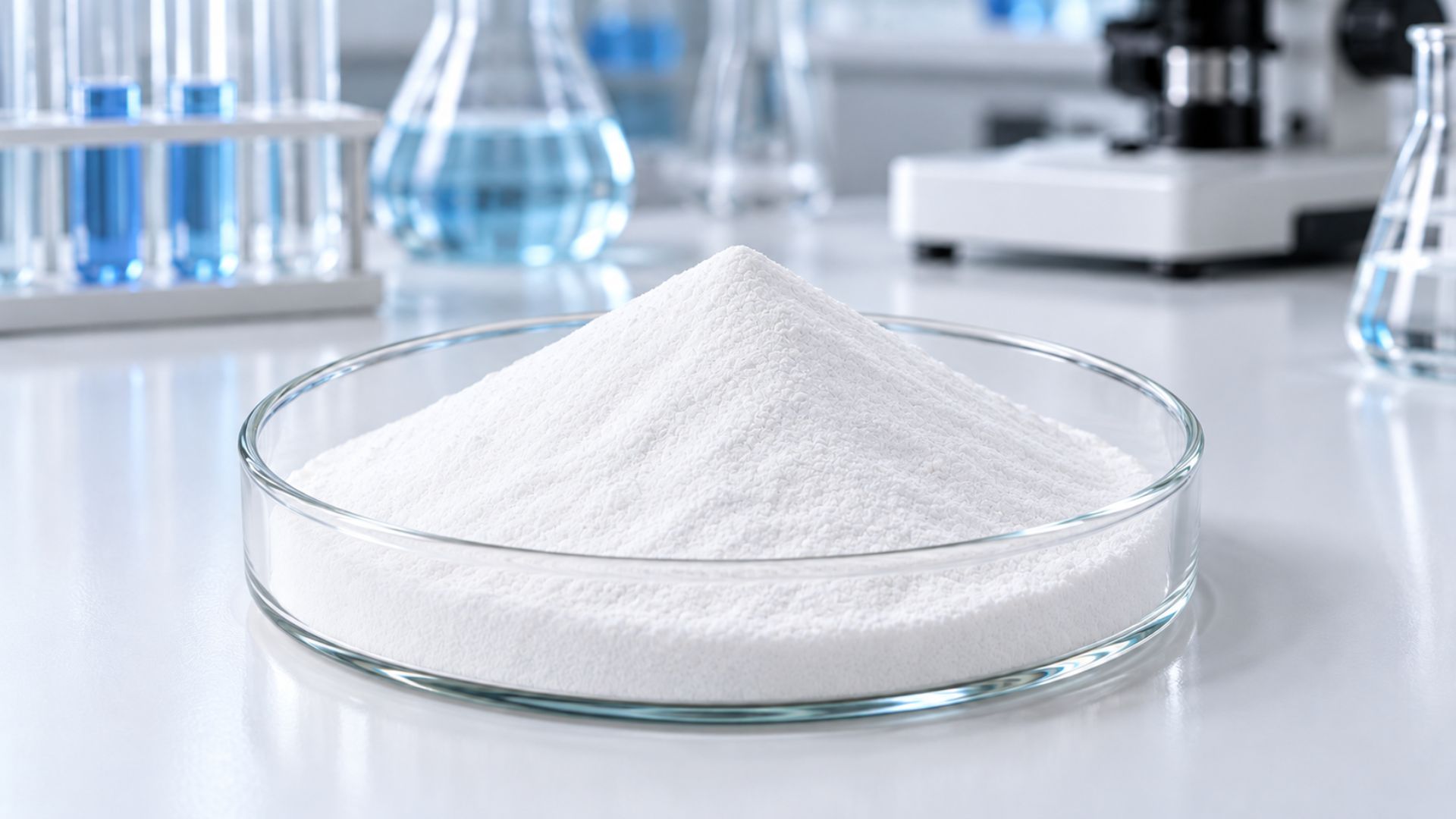
After polymerization, unreacted monomer is recovered, and the resin slurry undergoes stripping, water separation, and drying. The powder is then screened and checked against product specifications. These stages help control residual monomer, moisture, and powder consistency before delivery to processors.
Particle Structure And Resin Properties
Particle Size And Distribution
The grains of suspension PVC contain smaller primary particles and internal pores. Grain size and its distribution influence powder handling, mixing, and interaction with additives. Excessive fines or coarse particles can change handling behavior, so consistency matters alongside the average particle size.
Particle size should also be distinguished from molecular weight. A larger grain does not necessarily contain longer polymer chains. These characteristics are controlled through different aspects of production and must be evaluated separately when comparing resin grades.
Porosity And Plasticizer Absorption
Porosity is particularly important when suspension PVC is used in flexible compounds. Internal pores allow liquid plasticizer to enter the grains during mixing. Suitable absorption behavior helps produce a dry blend that can be handled and fed consistently before subsequent thermal processing.
High porosity alone does not guarantee the best result for every application. Absorption rate also depends on grain structure, plasticizer characteristics, and mixing conditions. Flexible formulations therefore require a grade whose absorption behavior matches the intended plasticizer loading and blending process.
Bulk Density And Powder Flow
Bulk density describes the mass of powder occupying a given volume, including the spaces between grains. It differs from the density of solid PVC. For suspension PVC, this property influences storage capacity, material dosing, and the amount of powder entering processing equipment.
Powder flow also depends on grain shape, particle-size distribution, and the formulation. Two grades with similar bulk density may feed differently. Stable feeding should therefore be assessed under actual operating conditions rather than predicted from one data-sheet value.
Key Parameters For Grade Selection
K-Value And Molecular Weight
K-value is a dimensionless index derived from dilute-solution viscosity and used as an indirect indicator of molecular weight. In suspension PVC, higher K-values generally indicate longer molecular chains and greater resistance to melt flow under comparable conditions. Lower values generally support easier flow during processing.
Grades around K65–68 are commonly considered for rigid extrusion, while higher-K grades are often used in demanding flexible applications. These ranges are starting points rather than fixed application rules. ISO 1628-2 provides a method for determining reduced viscosity and K-value in PVC resins.
Volatile Content And Residual Monomer
Volatile content indicates material lost under specified test conditions and may include moisture and other volatile substances. Excessive levels can contribute to processing defects, depending on equipment and operating conditions. The reported result must therefore be interpreted together with the test method.
Residual vinyl chloride monomer is a separate specification and should not be inferred from total volatile content. When evaluating suspension PVC, buyers should review both parameters independently. Application-specific requirements may also call for additional documentation or testing.
Purity And Foreign Particles
Foreign particles, contamination, and poorly dispersing material can affect surface appearance and product consistency. Their significance is especially high in transparent films, thin sheets, and products with demanding visual requirements. Acceptable levels depend on the intended article and the agreed inspection method.
Resin cleanliness does not eliminate contamination introduced during transport, storage, or processing. Material handling and equipment cleaning remain important. Defect investigations should therefore examine the complete production route rather than attribute every visible imperfection to the resin.
How Suspension PVC Resin Is Processed
Dry Blending And Additive Incorporation
Processing suspension PVC usually begins with blending the powder and selected additives. Heating during mixing helps distribute ingredients and, in plasticized formulations, promotes plasticizer absorption. Cooling then prepares the blend for storage or feeding while reducing the risk of unwanted agglomeration.
The required mixing sequence depends on the ingredients and equipment. A blend that appears uniform may still behave inconsistently if absorption or additive distribution is inadequate. Mixing quality must therefore be assessed through handling behavior and subsequent processing performance.
Gelation And Fusion
During thermal processing, suspension PVC grains progressively break down and develop into a cohesive material through heat and shear. Molecular interaction between the original particles increases as fusion develops. Insufficient fusion can leave weak interfaces and reduce mechanical performance.
Fusion depends on particle structure, molecular weight, lubrication, processing aids, and operating conditions. K-value alone cannot predict fusion time. Torque rheometry can help compare formulations by measuring changes in torque during mixing and fusion under controlled conditions.
Extrusion, Injection Molding And Calendering
Extrusion shapes the compound continuously through a die, while injection molding fills a closed mold. Calendering forms films or sheets between rotating rolls. Each method places different demands on flow, fusion, thermal stability, and the ability to maintain consistent dimensions.
Although suspension PVC supports all these processing routes, one grade is not automatically suitable for every method. Equipment capacity and formulation must match the resin. Supplier recommendations help narrow the choice before laboratory evaluation and production trials.
Formulating Rigid And Flexible PVC
Stabilizers And Lubricants
Heat stabilizers limit degradation during processing and help preserve material properties. Lubricants control friction and influence the interaction between the compound and metal surfaces. Their balance affects fusion, material flow, and release from processing equipment.
For suspension PVC compounds, excessive or insufficient lubrication can disturb processing stability. Increasing lubricant content is therefore not a universal solution to high torque. The cause should be assessed together with fusion behavior, temperature, and the complete formulation.
Plasticizers For Flexible Compounds
Plasticizers increase chain mobility, allowing PVC to become softer and more flexible. Their type and concentration influence hardness, low-temperature behavior, migration, and processing. A flexible compound must therefore be designed around service requirements as well as the desired initial softness.
Plasticizer loading is commonly expressed in parts per hundred resin, or phr. For example, 40 phr means 40 mass units of plasticizer per 100 mass units of resin. This differs from its percentage in the complete compound, which also includes other ingredients.
Fillers And Performance Modifiers
Fillers can adjust cost, stiffness, density, and other properties, depending on their characteristics and loading. Processing aids modify fusion and rheological behavior, while impact modifiers improve resistance to fracture under selected conditions. Each additive performs a different function.
In suspension PVC formulations, these ingredients must be balanced rather than considered independently. A filler change, for example, may alter lubrication demand and mechanical performance. Formula adjustments should therefore be supported by processing observations and finished-product testing.
Main Applications Of PVC
Rigid Pipes And Profiles
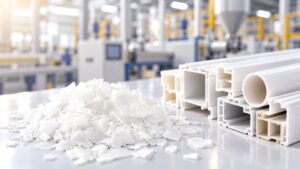
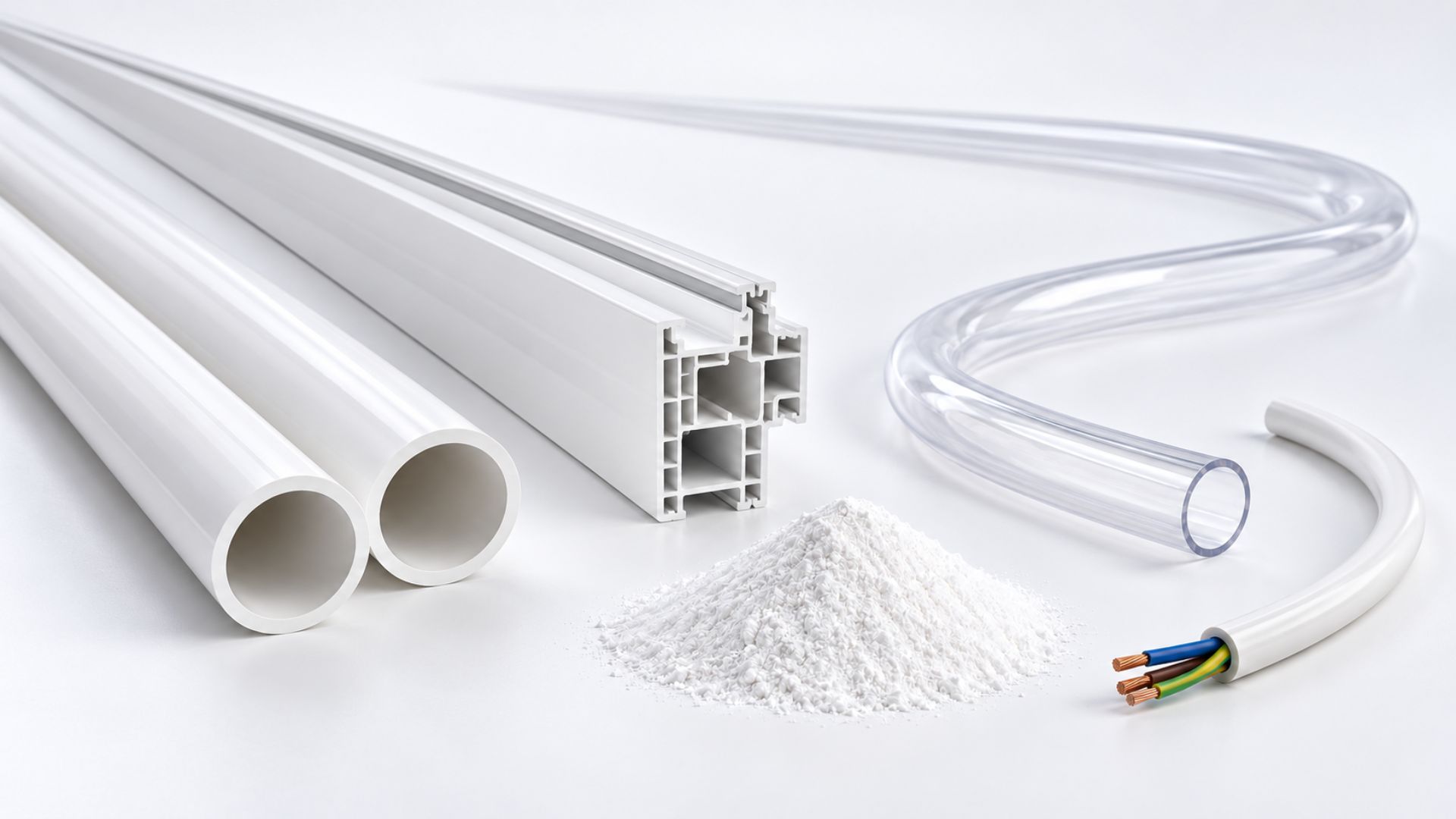
Rigid pipes and profiles require stable processing, dimensional consistency, and mechanical properties appropriate to their service conditions. Medium-K grades are widely used in these applications. Westlake Vinnolit’s K68 S 3268, for example, is recommended for rigid profile, sheet, and pipe extrusion.
Selecting suspension PVC for pressure pipes involves different priorities from selecting resin for decorative profiles. Long-term loading, impact performance, or weather exposure may be relevant. The finished product must meet its application requirements; the resin specification alone cannot establish suitability.
Films, Sheets And Bottles
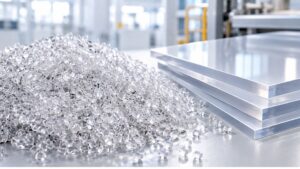
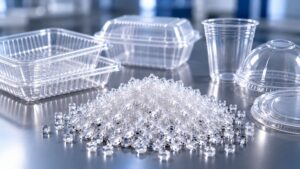
Films and sheets may be rigid or plasticized, with different requirements for clarity, strength, flexibility, and forming behavior. Bottle production also requires a balance between flow and material strength during shaping. These applications therefore cannot be assigned one universal K-value.
For suspension PVC used in thin or transparent articles, cleanliness and uniform processing are particularly important. Poorly fused material and contamination can become visible defects. Resin selection should consider both the forming process and the appearance expected in the finished article.
Flexible Tubing, Wire And Cable
Flexible tubing and cable compounds require suitable plasticizer absorption, stable processing, and mechanical performance after formulation. Depending on the application, aging, electrical properties, or low-temperature flexibility may also matter. Higher molecular weight can be useful, but it does not independently establish these properties.
A porous suspension grade may therefore be more suitable than a rigid-processing grade with a similar K-value. Westlake Vinnolit’s K70 S 4170 illustrates this distinction: it is recommended for flexible extrusion, calendering, and injection molding.
Suspension PVC Vs Emulsion PVC
The main differences involve production method, particle structure, and processing behavior. Conventional suspension grades are generally used in dry blending and thermoplastic processing. Many emulsion grades are designed to disperse in liquid plasticizer, forming a paste known as a plastisol.
These materials should not be treated as direct substitutes solely because their K-values are similar. Paste viscosity and coating behavior depend strongly on particle characteristics. Selecting between the two families should begin with the intended processing route and the supplier’s grade recommendations.
How To Select The Right Grade
Selecting suspension PVC begins with defining the finished product, processing method, and required performance. K-value, porosity, bulk density, particle-size distribution, and cleanliness should then be reviewed together. Comparing the complete specification provides a more useful assessment than choosing by a single parameter.
A controlled trial should confirm feeding stability, fusion behavior, surface quality, and relevant product properties. Processing conditions and formulation should be recorded so that comparisons remain meaningful. The appropriate grade is one that consistently meets product requirements within the capabilities of the production line.
Conclusion
Suspension PVC provides a versatile base resin for rigid and flexible products, but its suitability depends on more than K-value. Molecular weight influences flow and mechanical behavior, while particle structure, porosity, and bulk density affect blending, additive absorption, and feeding. These properties must be considered together with the formulation and processing method.
Effective grade selection connects resin specifications with measurable production and product requirements. Data-sheet comparisons help narrow the options, while controlled trials establish whether a grade delivers consistent fusion, stable processing, and the required finished-product properties. This approach provides a sound technical basis for selecting suspension PVC for a particular application.
FAQs
1. Is Suspension PVC Rigid Or Flexible?
Suspension PVC can produce both rigid and flexible products. Final hardness depends mainly on the formulation, particularly plasticizer content.
2. Does A Higher K-Value Mean Better Resin?
No. Higher K-value generally indicates higher molecular weight and melt viscosity. The appropriate value depends on processing conditions and product requirements.
3. Can Grades With The Same K-Value Be Used Interchangeably?
Not automatically. Differences in particle structure, porosity, and additive absorption require specification review and processing trials.
4. Why Is Porosity Important In Flexible PVC Compounds?
Porosity influences plasticizer absorption during mixing, helping produce a uniform, free-flowing dry blend.