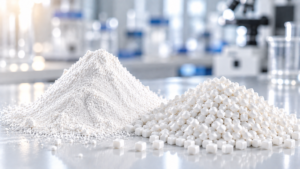

Emulsion PVC is a fine-particle Polyvinyl chloride resin whose particle-size distribution and surface characteristics influence its interaction with plasticizers. In paste formulations, these interactions govern viscosity, storage stability, and the development of a fused structure during heating. Understanding how resin properties affect each stage provides a technical basis for controlling coating thickness, processing consistency, and finished-product performance. Read this TLD Vietnam blog to examine these relationships and the criteria for selecting suitable grades for applications.
What Is Emulsion PVC?
Definition And Main Characteristics
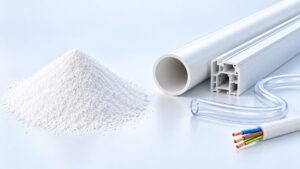
Emulsion PVC is Polyvinyl chloride produced through emulsion polymerization of vinyl chloride monomer in water. It is commonly supplied as a fine powder containing primary particles and agglomerates formed during drying. Many grades are designed for dispersion in liquid plasticizers rather than conventional dry blending.
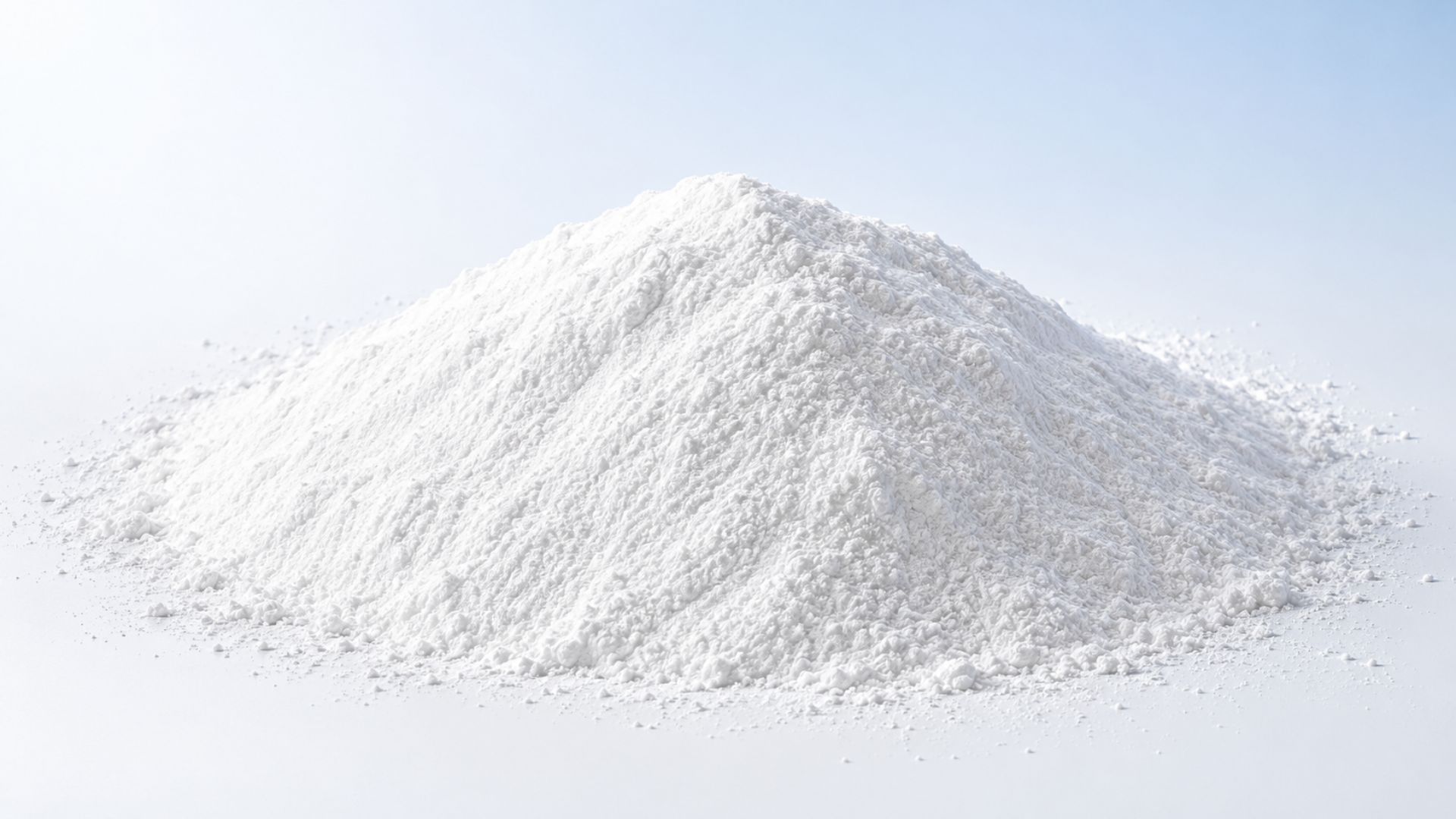
The material is widely associated with paste processing, but its name describes the polymerization route rather than the final product’s hardness. Flexibility, strength, and surface properties depend on the formulation and thermal treatment. Resin selection must therefore consider both the processing method and the intended application.
How Emulsion Polymerization Works
During production, emulsifiers help stabilize the reaction system and the fine polymer particles formed in water. Polymerization produces a latex, which is an aqueous dispersion of PVC particles. After unreacted monomer is removed, the latex is commonly spray-dried to obtain powder suitable for subsequent processing.
The particle population and drying conditions influence how the powder disperses during mixing. Commercial emulsion PVC grades are therefore engineered for different paste characteristics. Their performance cannot be explained by chemical composition alone because particle morphology also plays an important role.
Emulsion PVC And Paste Resin
Paste resin describes PVC intended to form a processable paste with plasticizer. Emulsion polymerization is an important production route, but microsuspension technology also produces paste grades. Consequently, “paste PVC” and “emulsion PVC” are closely related commercial terms, although they are not technically identical.
This distinction matters when comparing suppliers or replacing a material. A paste-grade designation does not establish the precise manufacturing route or rheological behavior. The technical data sheet should identify the resin family, recommended formulation, and processing characteristics.
Key Properties Of Emulsion PVC
Particle Size And Distribution
Particle size affects the surface area available for interaction with plasticizer and the way particles pack within a paste. A mixture of particle sizes may pack differently from a narrow distribution, changing the liquid required for flow. These relationships influence viscosity and formulation flexibility.
For emulsion PVC, it is also necessary to distinguish primary particles from dried agglomerates. A sieve-residue result does not fully describe the particle population dispersed in the plastisol. Research links particle-size distribution and surface characteristics with both initial rheology and viscosity changes during storage.
K-Value And Molecular Weight
K-value is an indirect indicator of molecular weight derived from dilute-solution viscosity. Higher values generally indicate longer molecular chains, which influence the properties of fused PVC. However, K-value does not independently determine the viscosity of an unfused plastisol.
Two emulsion PVC grades with similar K-values can produce different paste viscosities because their particle structures and surface characteristics differ. Grade evaluation should therefore separate molecular-weight information from measured paste behavior. Both are relevant, but they describe different aspects of performance.
Residual Emulsifiers
Emulsifiers used during manufacture can remain associated with the resin particles. Their type and concentration may influence moisture interaction, dispersion behavior, and properties such as water absorption. The significance depends on the grade and the finished product’s service conditions.
These effects should be assessed through product-specific data rather than a general assumption that lower emulsifier content is always preferable. For emulsion PVC, the required balance may differ between indoor coatings, outdoor fabrics, and electrical applications. Finished-compound testing remains necessary.
How Emulsion PVC Forms Plastisols
Dispersion In Liquid Plasticizers
A plastisol is a dispersion of fine PVC particles in liquid plasticizer. At the preparation stage, it is generally a heterogeneous mixture rather than a fully dissolved polymer solution. Suitable resin grades allow the mixture to remain processable until heat converts it into a fused material.
This behavior enables emulsion PVC to be applied as a liquid or paste before forming a solid article. Depending on the formulation, the mixture can be spread, pumped, cast, or used for dipping. Its flow must match the mechanical demands of the selected process.
Plasticizer Selection And Compatibility
Plasticizers influence initial viscosity, gelation, flexibility, and long-term performance. Their effectiveness depends on their interaction with PVC, while their own viscosity also affects paste flow. Selection must balance processing requirements with properties such as migration resistance, low-temperature flexibility, and aging behavior.
Plasticizer loading is commonly expressed in parts per hundred resin, or phr. For example, 50 phr means 50 mass units of plasticizer per 100 mass units of resin. It does not mean that plasticizer represents 50% of the complete formulation.
Mixing And Air Removal
Preparing an emulsion PVC plastisol requires sufficient mixing to distribute particles and additives without excessive heating. Mixing intensity, ingredient sequence, and temperature can affect dispersion and subsequent viscosity. Uncontrolled conditions may make comparisons between resin grades misleading.
Air introduced during mixing can cause bubbles, pinholes, or surface defects after heating. Deaeration may therefore be necessary before application. The appropriate procedure depends on paste viscosity, equipment, and the sensitivity of the finished article to trapped air.
Understanding Plastisol Behavior
Viscosity And Shear Response
Plastisol viscosity may change with the rate at which the material is deformed. Shear-thinning behavior means viscosity decreases as shear rate increases, while shear-thickening behavior means the opposite. Some formulations show different behavior across different shear-rate ranges.
Emulsion PVC grades must therefore be compared under defined measurement conditions. Temperature, instrument settings, plasticizer loading, and time after mixing all matter. Manufacturer data illustrate that some grades are strongly shear-thinning, while others can show shear thickening at higher shear rates.
Storage Stability And Viscosity Changes
Plastisol viscosity can change after preparation as particle–plasticizer interactions and the dispersion structure evolve. The magnitude depends on resin characteristics, plasticizer selection, additives, and storage temperature. A low initial viscosity does not necessarily indicate stable behavior throughout production storage.
When evaluating emulsion PVC, processors should measure paste properties at relevant intervals after mixing. The useful storage period is the time during which the formulation remains within its processing limits. Certain blending resins are specifically designed to reduce viscosity aging and modify flow.
Gelation And Fusion During Heating
Heating promotes plasticizer penetration and particle swelling, progressively reducing the paste’s ability to flow. During subsequent fusion, particle boundaries become less distinct and the material develops a cohesive structure. Cooling then produces the plasticized solid with its final physical properties.
Gelation should not be treated as proof of complete fusion. An article may hold its shape while still lacking the required mechanical properties. The heating cycle must therefore be validated for the formulation, layer thickness, equipment, and finished-product requirements.
Main Processing Methods
Spread Coating And Knife Coating
In spread coating, plastisol is applied to a substrate and metered to the required thickness before heating. The paste must flow under the coating conditions while maintaining sufficient control after application. An unsuitable balance can produce uneven layers, excessive penetration, or poor surface appearance.
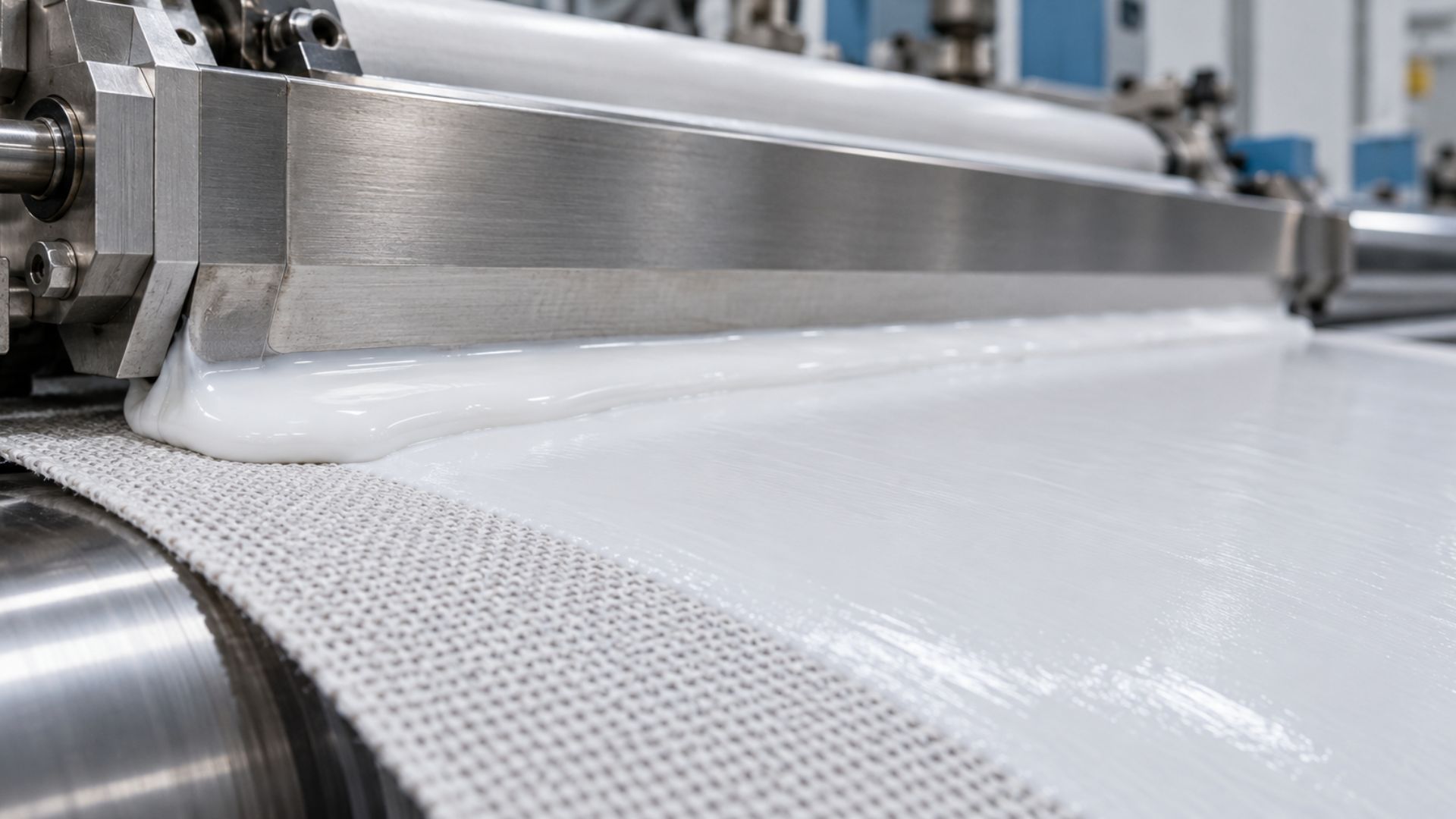
Emulsion PVC selection depends on whether the layer serves as a base coat, foam layer, or protective surface. These functions require different viscosity and performance balances. For example, low-viscosity pastes can help impregnate glass fleece in flooring constructions.
Dip Coating And Dip Molding
Dipping processes form a layer on a substrate or shaped former, often using heat to promote deposition and gelation. Paste viscosity, drainage, bath stability, and thermal conditions influence layer thickness. The deposited material then receives the heating needed to develop its properties.
Emulsion PVC grades for dipping must support consistent coverage without excessive runs or trapped air. Requirements differ between a coating retained on a component and a molded article removed from a former. Supplier recommendations should be checked for the specific process.
Rotational Molding And Slush Molding
Selected paste grades can be used in liquid rotational molding and plastisol slush molding. These processes rely on controlled flow and heat transfer to distribute material over the mold surface. Resin and formulation choices affect coverage, gelation, and thickness consistency.
Plastisol slush molding should be distinguished from powder slush molding, which uses specially formulated powders. The shared process name does not make the feedstocks interchangeable. Material selection must follow the actual equipment and feedstock requirements.
Industrial Applications Of Emulsion PVC
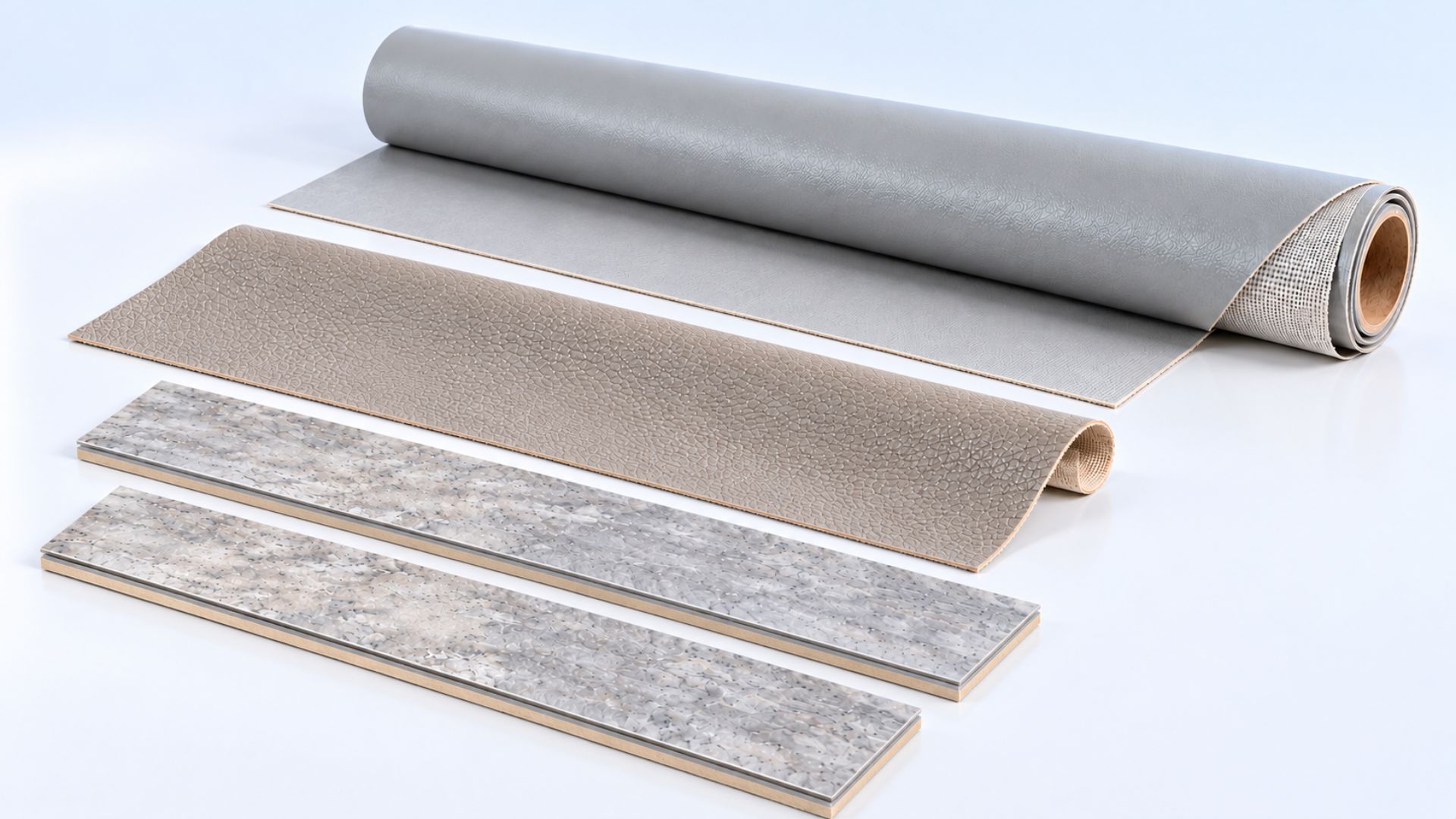
Artificial Leather And Coated Fabrics
Coated fabrics combine a textile substrate with one or more PVC-based layers. The formulation controls flexibility, coating weight, texture, and other performance characteristics. Different layers may require different resins to balance substrate penetration, foam structure, and surface properties.
Emulsion PVC supports these layered constructions through paste processing. Grade selection should consider coating behavior alongside adhesion, abrasion resistance, and aging. These finished-product properties depend on the complete material system rather than the base resin alone.
Flooring And Wall Coverings
Flooring and wall coverings may contain compact, foamed, printed, or protective layers with different functions. Their pastes require suitable coating viscosity and heating behavior. Wear layers additionally place demands on transparency, surface finish, and mechanical performance.
Manufacturers therefore use application-specific paste grades rather than one universal flooring resin. Supplier portfolios distinguish grades for different layers and finishes, including glossy and matt surfaces. This illustrates the connection between resin characteristics and layer function.
Gloves And Automotive Components
Paste PVC is also used in selected glove, dipped-product, and automotive applications. These products may require controlled thickness, flexibility, and acceptable surface quality. Automotive materials can additionally require testing for odor, emissions, aging, and compatibility with adjacent components.
Choosing emulsion PVC for such applications requires evidence that the complete formulation meets the relevant specifications. A recommendation for dipping or molding establishes a processing possibility, not automatic suitability for every end use. Application testing remains the basis for qualification.
Emulsion PVC Vs Suspension PVC
Conventional suspension grades generally have larger grains and are commonly processed through dry blending followed by extrusion, injection molding, or calendering. Paste-forming emulsion grades are designed around fine-particle dispersion and plastisol behavior. These differences determine how the materials are formulated and handled.
They are therefore not direct substitutes based only on K-value. Nevertheless, specially designed suspension blending resins can be added to plastisols to adjust viscosity and other characteristics. Their use is a deliberate formulation choice rather than a general replacement of paste resin.
How To Select The Right Grade
Selection should begin with the application method, required paste behavior, heating conditions, and finished-product specifications. Relevant supplier data include K-value, reference paste viscosity, shear response, storage behavior, and recommended applications. Measurements are most useful when their formulation and test conditions are stated.
Candidate grades should then be compared in a controlled formulation under representative production conditions. Evaluation should cover mixing, air release, application consistency, fusion, and finished-product performance. This connects resin specifications with measurable manufacturing requirements.
Conclusion
Emulsion PVC selection requires an understanding of both resin structure and plastisol behavior. K-value contributes information about molecular weight, while particle characteristics and formulation strongly influence paste viscosity, storage stability, and heating response. Assessing these factors together supports consistent processing and product quality.
The appropriate grade is established through specification review and controlled validation. Reference viscosity alone cannot predict every production outcome. A technically sound selection confirms that the formulation remains processable and develops the required properties within the available manufacturing conditions.
FAQs
1. Is All Paste PVC Produced By Emulsion Polymerization?
No. Paste resins can also be produced by microsuspension technology. Paste PVC describes processing suitability rather than one exclusive polymerization route.
2. Does A Higher K-Value Mean Higher Plastisol Viscosity?
Not necessarily. Plastisol viscosity also depends on particle characteristics, plasticizer selection, concentration, and measurement conditions.
3. Why Does Plastisol Viscosity Change During Storage?
Particle plasticizer interactions and dispersion structure evolve over time. Resin characteristics, additives, and temperature influence the change.
4. Can Emulsion PVC Replace Suspension PVC?
Generally, they are not direct substitutes. Their particle structures and intended processing routes require different formulations and handling conditions.
5. Which Properties Matter Most When Selecting A Grade?
Assess paste viscosity, shear response, storage stability, and fusion behavior alongside K-value. Confirm the relevant properties in the finished product.