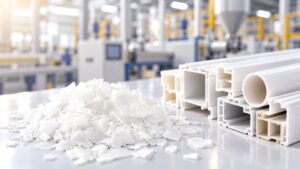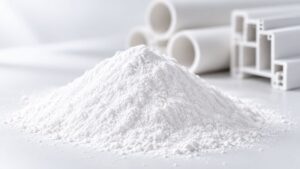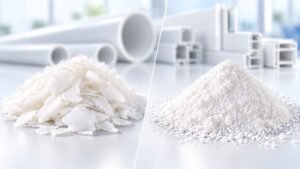

Made primarily from Polyvinyl chloride (PVC), PVC conduit combines electrical insulation, corrosion resistance, relatively low weight, and ease of installation, making it a practical alternative to many traditional metal conduit systems. However, the performance of PVC conduit depends not only on the PVC resin itself but also on formulation, additive selection, processing conditions, wall thickness, and intended application. Different conduit systems may require different levels of impact resistance, stiffness, flame performance, weather resistance, or underground durability.
This article by TLD Vietnam explains what PVC conduit is and several production issues that manufacturers need to consider.
What Is PVC Conduit?
Definition Of PVC Conduit
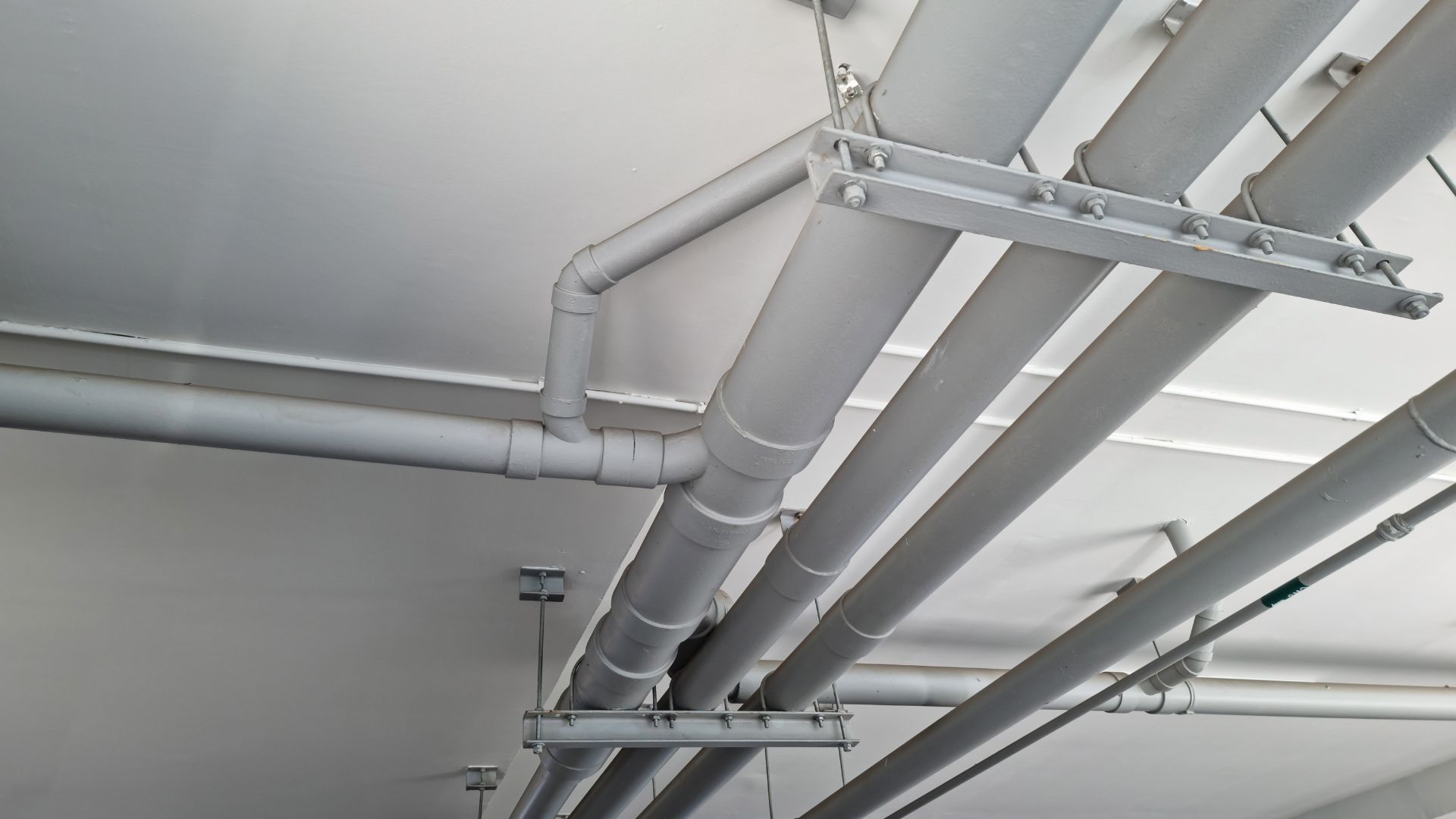
PVC conduit is a tubular system, designed primarily to route and protect electrical wires, power cables, telecommunications cables, and other insulated conductors. Unlike pipes designed to transport water, gas, drainage, or other fluids, conduit is mainly intended to provide mechanical and environmental protection for cables. It helps isolate wiring from moisture, chemicals, physical impact, soil conditions, and other external factors that could damage electrical systems.
Most rigid PVC conduit is manufactured through extrusion. A PVC compound is heated, plasticized, pushed through a die to form a continuous tube, cooled to stabilize its dimensions, and then cut into specified lengths. Depending on the application and applicable standards, manufacturers can adjust formulation and dimensions to produce conduit with different wall thicknesses, impact strengths, stiffness levels, and installation characteristics.
How PVC Conduit Works
The primary function of PVC conduit is to create a protected pathway around electrical cables. The conduit itself normally does not conduct electricity. Instead, its PVC structure acts as an insulating barrier between electrical wiring and the surrounding environment. A properly installed system can help protect cables against:
- Mechanical damage during construction or operation
- Moisture and water exposure
- Corrosive chemicals
- Soil contact in underground installations
- Dust and environmental contamination
- Accidental contact with surrounding materials
PVC conduit can be installed inside walls, above ceilings, underground, inside concrete structures, or outdoors, depending on the conduit specification.
Straight conduit sections are typically connected using fittings such as couplings, bends, elbows, adapters, junction boxes, and connectors. Together, these components form a continuous route through which electrical cables can be pulled.
PVC Conduit vs. PVC Pipe
PVC conduit and PVC pipe can look similar because both are tubular products produced mainly from polyvinyl chloride. Their intended functions, however, are different. PVC pipe is generally designed to transport liquids or handle drainage, water supply, irrigation, sewage, or industrial fluid applications. Its performance requirements therefore often focus on hydrostatic pressure, fluid resistance, joint integrity, and long-term pressure performance.
PVC conduit, by contrast, is designed primarily for cable management and electrical protection. Important characteristics may include electrical insulation, impact resistance, dimensional stability, crush resistance, flame behavior, and ease of cable installation.
For this reason, ordinary PVC plumbing pipe should not automatically be treated as an equivalent substitute for electrical conduit. Products should be selected according to the relevant application requirements and local standards.
Types of PVC Conduit
Different electrical systems require different conduit structures. Although terminology varies among markets and technical standards, several common categories are widely used.
Rigid PVC Conduit
Rigid PVC conduit has a relatively stiff structure and maintains its shape during installation and service. It is commonly used for permanent electrical installations in buildings, industrial facilities, underground systems, and infrastructure projects. Its rigidity provides mechanical protection for electrical wiring while still offering several advantages associated with PVC, including corrosion resistance and lower weight compared with many metallic alternatives.
Manufacturers generally control wall thickness, compound stiffness, impact properties, and dimensional accuracy according to the required product classification.
Flexible PVC Conduit
Flexible PVC conduit is designed to bend more easily than conventional rigid conduit. It is useful in locations where wiring must pass around obstacles, machinery, corners, or equipment where rigid straight sections may be difficult to install. Flexible conduit formulations usually require a different material balance from rigid PVC systems. Flexibility may be achieved through formulation adjustments, including the use of suitable plasticizers and other additives.
Because the mechanical behavior is different, flexible conduit should be selected according to installation conditions rather than being considered a direct replacement for rigid conduit in every application.
Electrical PVC Conduit
Electrical PVC conduit is specifically designed to contain and protect electrical conductors. Depending on the market, products may be manufactured in multiple diameters, wall thicknesses, stiffness levels, and performance classes.
Common applications include electrical wiring in houses, offices, factories, commercial buildings, telecommunications systems, and infrastructure projects. Properties such as dimensional consistency and smooth internal surfaces are particularly important because electrical cables often need to be pulled through long conduit sections without excessive friction.
Heavy-Duty PVC Conduit
Heavy-duty PVC conduit is designed for installations requiring increased mechanical resistance. It may have a thicker wall or a formulation optimized for higher stiffness and impact resistance compared with lighter-duty products. Typical uses can include underground cable protection, industrial environments, exposed installations, and locations where external loads or physical impact are more likely.
The term “heavy-duty” can have different technical meanings in different standards, so manufacturers and buyers should always refer to the applicable specification rather than relying on the description alone.
PVC Materials Used in Conduit Production
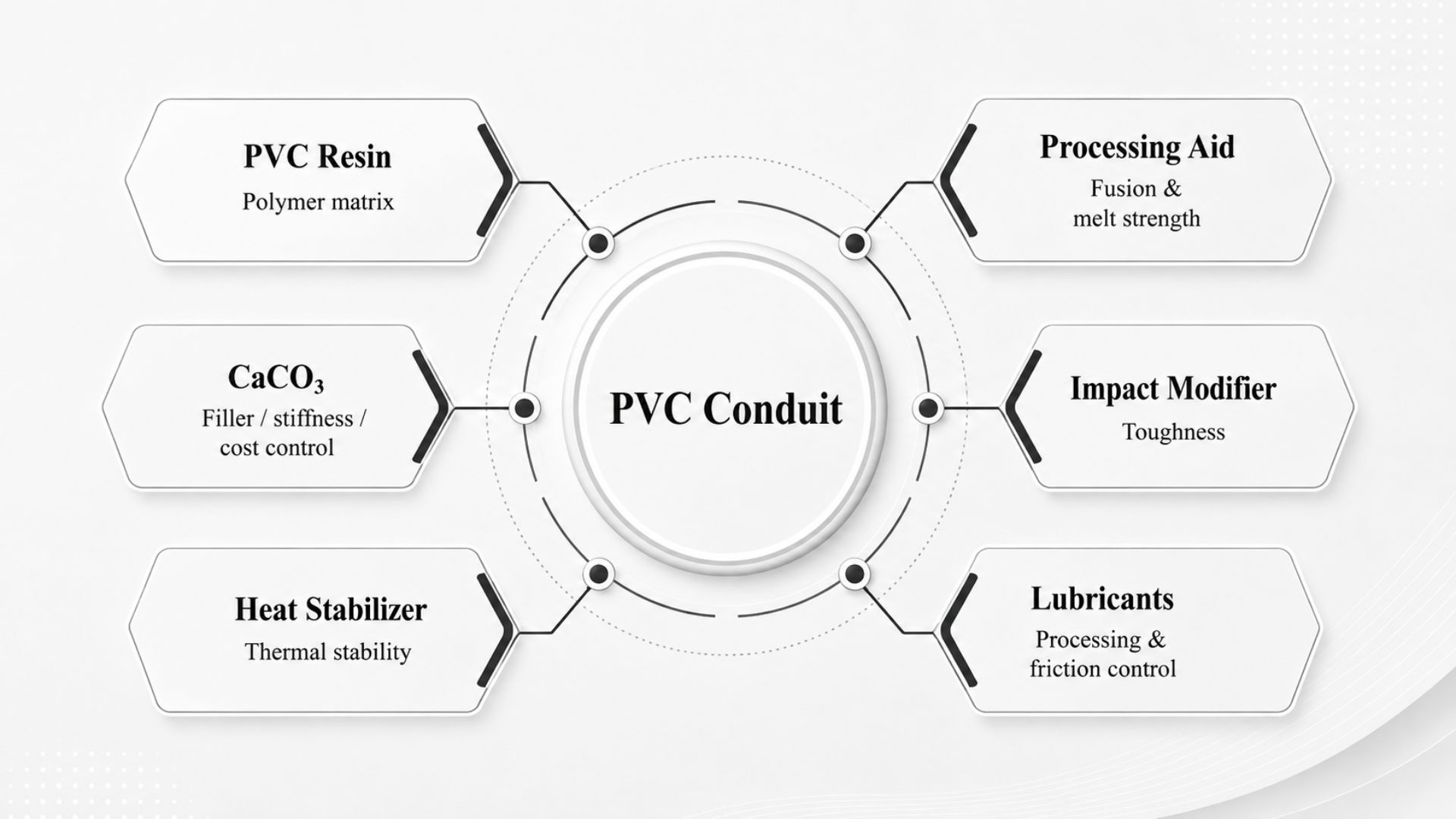
The performance of PVC conduit depends heavily on the compound formulation. PVC resin forms the main polymer matrix, while fillers and additives are used to adjust processing behavior, mechanical performance, cost, stability, and surface quality.
PVC Resin
PVC resin is the primary raw material used to manufacture rigid conduit. Suspension PVC grades are commonly used in extrusion applications because they provide an appropriate balance between processability and mechanical performance. Resin characteristics such as molecular weight, K-value, particle structure, bulk density, and porosity can influence fusion behavior during processing.
The resin must fuse sufficiently under extrusion conditions to produce a homogeneous melt. Poor fusion can result in weak mechanical properties, rough surfaces, or inconsistent product quality. The appropriate resin grade therefore depends on the processing equipment, formulation, conduit specification, and required physical properties.
Calcium Carbonate Filler
Calcium carbonate is frequently incorporated into rigid PVC compounds as a mineral filler. When properly selected and dispersed, calcium carbonate can contribute to formulation economics, stiffness, dimensional behavior, and processing characteristics.
Particle size, particle distribution, surface treatment, moisture content, and purity are important parameters. Fine coated calcium carbonate is often preferred where good dispersion and processing performance are required. Surface-treated particles may interact more effectively with the PVC compound and reduce excessive particle agglomeration.
However, filler loading should be controlled carefully. Excessive calcium carbonate can reduce impact strength and may negatively affect mechanical performance if the formulation is not properly balanced. Manufacturers therefore need to optimize filler content according to both production cost and the performance specifications expected from the final PVC conduit.
PVC Stabilizers
PVC can undergo thermal degradation when exposed to the temperatures required for extrusion. Heat stabilizers are therefore essential components of most conduit formulations. They help reduce degradation during mixing and extrusion and support more stable processing. Different stabilizer systems can be used depending on product requirements, regional regulations, processing conditions, and manufacturer preferences.
A suitable stabilizer system can help improve:
- Thermal stability
- Processing consistency
- Product color
- Surface quality
- Long-term material performance
Stabilizer dosage must be matched to the overall formulation because insufficient stabilization can cause discoloration or material degradation, while poor formulation balance may negatively affect fusion and lubrication.
Processing Aids
Processing aids are commonly used to improve the behavior of rigid PVC during extrusion. Many processing aids used in PVC applications are acrylic-based polymers. Their function is generally to promote fusion, improve melt homogeneity, enhance melt strength, and support stable processing. In PVC conduit manufacturing, a properly selected processing aid can contribute to smoother extrusion and more consistent surface appearance. It may also help improve the effectiveness of the extrusion process when relatively high filler levels or demanding processing conditions are used.
The optimum dosage depends on the resin, filler loading, stabilizer system, lubricant balance, extrusion speed, and equipment configuration.
Impact Modifiers
Rigid PVC can become vulnerable to cracking or brittle failure when exposed to mechanical impact, particularly under demanding conditions. Impact modifiers are incorporated into formulations when increased toughness is required. Depending on the formulation and application, manufacturers may use acrylic impact modifiers, chlorinated polyethylene, MBS-based systems, or other suitable technologies. An effective impact modifier helps the PVC matrix absorb and dissipate impact energy rather than allowing cracks to propagate rapidly through the material.
For PVC conduit intended for transportation, construction-site handling, underground installation, or environments where physical impact is likely, adequate impact performance can be particularly important. However, impact modifier dosage must be balanced carefully because excessive addition can affect stiffness, processing behavior, or production cost.
Lubricants and Other Additives
Lubricants help control friction between the PVC melt, formulation components, and metal surfaces inside processing equipment. Internal lubricants mainly influence interactions within the polymer melt, while external lubricants help reduce adhesion between the PVC compound and processing equipment.
The correct lubricant balance is critical. Too little lubrication can lead to excessive friction, overheating, or unstable extrusion. Too much lubrication may delay PVC fusion and reduce mechanical properties. Other additives may also be included depending on the conduit specification, such as pigments, titanium dioxide, UV stabilizers, flame-performance additives, or other functional materials. The formulation should therefore be treated as an integrated system rather than as a collection of independent ingredients.
Key Properties of PVC Conduit
PVC conduit is widely selected because several material characteristics are particularly suitable for electrical protection systems.
Electrical Insulation
One of the most important characteristics of PVC is its electrical insulation capability. Unlike conventional metallic conduit, PVC does not normally conduct electrical current. This characteristic can provide an additional insulating barrier around cables and reduce certain electrical risks associated with conductive enclosure materials. Electrical safety still depends on correct system design, cable selection, grounding requirements, fittings, installation methods, and compliance with applicable electrical codes.
The insulating nature of PVC should therefore be considered one feature of the complete electrical system rather than a replacement for proper electrical protection measures.
Corrosion and Chemical Resistance
PVC offers strong resistance to many corrosive environments. Unlike steel conduit, it does not rust when exposed to moisture. This makes it particularly useful in applications involving high humidity, soil contact, coastal environments, or exposure to selected chemicals. Chemical resistance varies according to chemical type, concentration, temperature, and exposure duration. For industrial applications, compatibility should therefore be checked against the actual service environment.
Nevertheless, corrosion resistance remains one of the major reasons PVC conduit is widely used in infrastructure and industrial electrical installations.
Impact and Mechanical Strength
Conduit must protect cables against mechanical forces that may occur during transport, installation, and operation. Rigid PVC provides useful stiffness, while formulation adjustments can improve impact resistance where necessary. Mechanical performance is influenced by many variables, including:
- PVC resin characteristics
- Filler type and dosage
- Impact modifier content
- Fusion quality
- Wall thickness
- Extrusion conditions
- Temperature
A poorly fused product can show significantly weaker mechanical performance even when the raw materials are technically suitable. For manufacturers, controlling the production process is therefore just as important as selecting the correct formulation.
Moisture Resistance
PVC has low water absorption and does not suffer from conventional metal corrosion when exposed to moisture. This property allows PVC conduit to perform effectively in many humid, underground, outdoor, and concrete-embedded applications. However, the overall electrical installation must still be designed to prevent unwanted water entry where required. Connections, junction boxes, fittings, seals, and installation methods all influence the moisture protection of the complete system.
Lightweight and Easy Installation
PVC conduit is significantly lighter than many metallic conduit systems of comparable dimensions. The lower weight can simplify transportation, handling, cutting, and installation on construction sites. PVC can also be cut using relatively simple tools, while fittings and solvent-based joining systems can make assembly efficient. Reduced weight can be especially valuable in large commercial or infrastructure projects where significant quantities of conduit must be transported and installed.
Fire and Flame Resistance
PVC contains chlorine within its polymer structure and generally has different combustion behavior from many common hydrocarbon-based plastics. Electrical conduit formulations can be designed to meet specified flame-performance requirements where required. Actual fire behavior, however, depends on the complete formulation, wall thickness, test method, and product standard. Manufacturers should therefore evaluate finished conduit according to the applicable flame or fire-performance test rather than assuming compliance based solely on the use of PVC resin.
What Is PVC Conduit Used For?
The combination of insulation, corrosion resistance, mechanical protection, and relatively simple installation makes PVC conduit suitable for a broad range of electrical and communication systems.
Residential Electrical Wiring
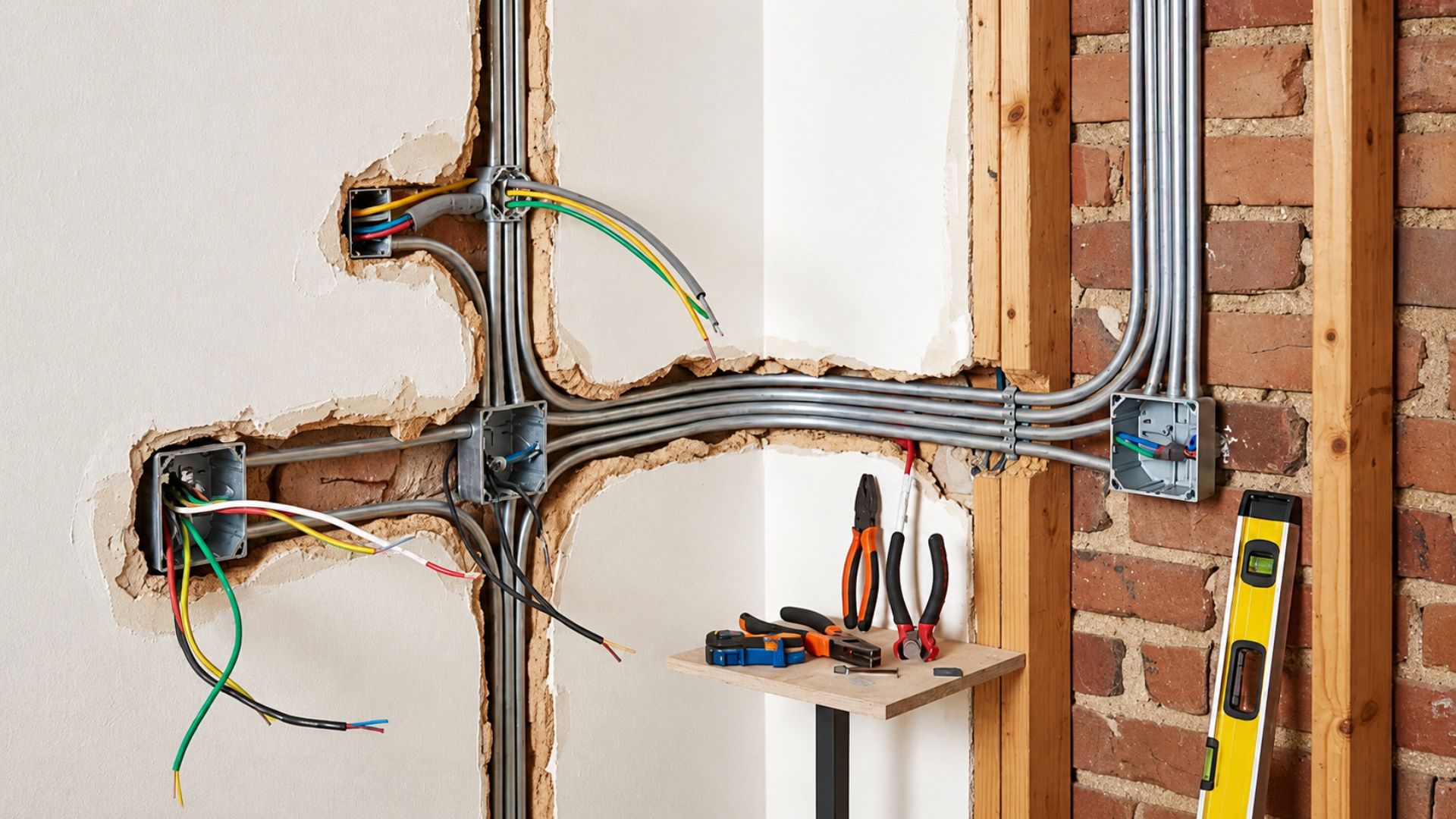
PVC conduit is commonly installed in houses and apartment buildings to route electrical wiring through walls, floors, ceilings, and concrete structures. It protects cables during construction and can help organize electrical circuits into defined pathways.
Depending on local construction practices, conduit may be embedded in concrete, installed inside walls, or routed through accessible service areas. Light weight and ease of cutting also make PVC particularly convenient for residential installation.
Commercial Buildings
Offices, shopping centers, hotels, hospitals, schools, warehouses, and other commercial buildings often contain extensive networks of electrical and communication cables. PVC conduit provides an organized pathway for these systems while protecting wiring from physical and environmental damage. Large projects can require considerable quantities of conduit in multiple diameters, so dimensional consistency and reliable fitting compatibility are important for efficient installation.
Industrial Electrical Systems
Factories and processing facilities frequently require conduit to protect power, control, instrumentation, and communication wiring. PVC can be especially useful where corrosion is a concern. For example, environments involving moisture, chemical vapors, or selected corrosive substances may create challenges for conventional metallic conduit. The suitability of PVC should still be evaluated according to operating temperature, mechanical loads, chemical exposure, and fire requirements.
Underground Cable Protection
PVC conduit is widely used as a protective pathway for underground electrical and communication cables. Buried conduit helps isolate cables from soil, moisture, rocks, construction activity, and certain mechanical stresses.
Depending on installation conditions, underground systems may require conduit with increased wall thickness, crush resistance, stiffness, or impact performance. Correct trench preparation, burial depth, fittings, and backfilling procedures also contribute to long-term system performance.
Telecommunications and Data Cables
Modern infrastructure requires extensive networks for internet, telecommunications, fiber optics, security systems, and data transmission. PVC conduit can provide dedicated pathways for these cables. Smooth internal surfaces are particularly beneficial because they reduce friction when long lengths of cable must be pulled through the conduit. Separating communication cables into organized conduit networks can also simplify maintenance and future system expansion.
Outdoor Electrical Installations
PVC conduit can be used outdoors when the product specification and formulation are suitable for the environment. Outdoor exposure introduces additional factors such as ultraviolet radiation, temperature variations, rain, and mechanical stress. UV stabilizers or appropriate pigments may therefore be included in formulations designed for prolonged sunlight exposure. Product selection should always take environmental conditions and applicable electrical standards into account.
Advantages of PVC Conduit
PVC conduit remains widely used because it offers a combination of technical and economic benefits.
Lower Installation Costs
The relatively low weight of PVC can reduce transportation and handling requirements compared with heavy metallic conduit. Cutting and assembly can also require fewer specialized tools. Together, these characteristics can reduce labor intensity and installation time in many projects. Material cost alone should not be used as the only comparison because total installed cost also depends on fittings, labor, project conditions, and regulatory requirements.
Long Service Life
PVC does not rust and has good resistance to moisture and many chemical environments. When the correct product is selected and installed properly, these characteristics can support long-term performance with relatively limited maintenance. Service life depends on several factors, including UV exposure, temperature, mechanical loading, formulation quality, and installation conditions.
Easy Cutting and Joining
PVC conduit can generally be cut using common construction tools. Various fittings allow installers to create bends, branch connections, changes in direction, and transitions between conduit sections. Depending on the system, joining may involve solvent cement, threaded fittings, push-fit components, or other connection methods. The relatively simple installation process is one reason PVC is commonly used in large wiring projects.
Low Maintenance Requirements
Because PVC does not require protection against conventional rust, maintenance requirements can be lower than those of metallic systems in corrosive environments. There is typically no need for periodic anti-corrosion coating solely to protect the conduit material from rust. However, complete electrical installations should still be inspected where required, particularly at fittings, exposed sections, supports, access points, and junction boxes.
PVC Conduit vs. Metal Conduit
Both PVC and metal conduit can provide effective cable protection, but their characteristics differ considerably. Selection should be based on the installation environment and required performance rather than on one material being universally superior.
Corrosion Resistance
PVC has a significant advantage in environments where moisture and corrosion are major concerns. Steel conduit can require coatings or additional protection to prevent corrosion, particularly in coastal, underground, chemical, or humid environments. PVC does not undergo conventional rusting, which can simplify long-term corrosion management. Metal conduit may still be preferred in environments where extreme mechanical protection or other specific electrical characteristics are required.
Weight and Installation
PVC conduit is substantially lighter than many metal alternatives. The lower weight makes long lengths easier to transport and position during construction. PVC is also relatively easy to cut and connect. Metal conduit may require bending tools, threading equipment, or additional labor depending on the system. As a result, PVC can offer advantages where rapid installation and reduced handling weight are important.
Mechanical Protection
Metal conduit typically provides very high mechanical strength and may be preferred where severe impact, crushing, or external mechanical damage is expected. Rigid PVC still provides substantial cable protection but its mechanical performance depends strongly on formulation, wall thickness, temperature, and conduit classification. Heavy-duty PVC conduit can improve resistance to mechanical loads, but the appropriate product must be selected for the actual installation environment.
Cost Comparison
PVC conduit can provide cost advantages through both material economics and lower installation complexity. Transportation costs may also be reduced because of its lower weight. However, project cost varies by region, conduit size, specification, metal prices, labor rates, and installation requirements. A meaningful comparison should therefore consider total installed cost rather than only the purchase price per meter of conduit.
Common Problems in PVC Conduit Production
Producing consistent conduit requires careful control of formulation and extrusion. Several common defects can arise when raw materials, additive balance, or processing conditions are not optimized.
Poor Surface Finish
A smooth external surface is important for both appearance and product consistency. Roughness, flow marks, die lines, or uneven surfaces can result from several causes, including poor fusion, inappropriate processing temperature, excessive filler, lubricant imbalance, unstable extrusion pressure, or contamination.
Processing aids can improve fusion and melt homogeneity in suitable formulations. Manufacturers should nevertheless investigate the complete process rather than attempting to solve every surface defect simply by increasing additive dosage.
Low Impact Strength
Low impact resistance can result in cracking during transportation, handling, installation, or testing. Common causes include excessive filler loading, insufficient impact modifier, poor fusion, unsuitable resin selection, incorrect processing temperature, or formulation imbalance.
Impact modifiers can substantially improve toughness when correctly selected. However, the required dosage should be determined according to the conduit specification and the other formulation components.
Difficult PVC Fusion and Processing
Rigid PVC does not behave like many conventional thermoplastics during processing. The particles must progressively fuse under heat and shear to form a homogeneous melt.
If fusion occurs too slowly, the finished product may have poor mechanical properties and inconsistent surfaces. If processing becomes too aggressive, excessive heat generation can increase the risk of degradation. Processing aids, lubricants, stabilizers, resin characteristics, and extrusion conditions all influence fusion behavior. A stable PVC conduit extrusion process therefore requires careful balance between fusion promotion, lubrication, thermal stability, and melt strength.
Dimensional Instability
Conduit must maintain accurate outside diameter, wall thickness, roundness, and straightness to ensure compatibility with fittings and installation systems. Dimensional problems can result from unstable extrusion output, inconsistent cooling, poor vacuum sizing, uneven die flow, inappropriate melt temperature, or formulation changes.
Cooling conditions are particularly important because the extruded tube must be stabilized before it leaves the sizing and cooling section. Continuous monitoring of extrusion pressure, line speed, cooling conditions, and product dimensions helps manufacturers maintain more consistent conduit quality.
How PVC Additives Improve Conduit Quality
PVC additives play a major role in balancing processing efficiency with final product performance. Processing aids can promote fusion and improve melt behavior. Impact modifiers can increase toughness. Stabilizers protect the polymer against heat degradation, while lubricants regulate friction and processing flow. Calcium carbonate can help control cost and modify stiffness when used at an appropriate loading.
The key point is that these materials work together. Increasing one additive does not necessarily improve the final product if the rest of the formulation is not adjusted accordingly. For example, increasing calcium carbonate may reduce formulation cost, but excessive filler can reduce impact resistance. More external lubricant may reduce equipment sticking, but excessive lubrication can delay fusion. Additional impact modifier can improve toughness, but unnecessary dosage may increase cost or affect stiffness. Successful PVC conduit production therefore depends on systematic formulation optimization rather than maximizing any individual component.
Conclusion
PVC conduit provides a practical combination of electrical insulation, corrosion resistance, mechanical protection, low weight, and ease of installation. These characteristics explain its widespread use in residential buildings, commercial projects, industrial facilities, underground cable networks, telecommunications systems, and outdoor electrical installations.
For manufacturers, the most effective formulation is one that balances processing stability, mechanical strength, dimensional consistency, surface quality, regulatory requirements, and production cost. Selecting suitable raw materials and maintaining proper extrusion conditions are therefore essential for producing reliable PVC conduit that meets the requirements of modern electrical and infrastructure applications.
TLD Vietnam provides a comprehensive range of raw materials and additives for PVC conduit manufacturing, including PVC resin, calcium carbonate, PVC stabilizers, processing aids, impact modifiers, lubricants, and other functional additives required to develop balanced conduit formulations. With an experienced technical team and in-depth knowledge of PVC processing and additive systems, TLD Vietnam supports manufacturers in selecting suitable materials based on their target specifications, processing conditions, and application requirements. Beyond material supply, our team provides professional technical consultation to help optimize formulation balance, improve extrusion stability, maintain consistent product quality, and achieve the required mechanical and processing performance. By combining reliable material supply with responsive technical support and professional service, TLD Vietnam provide manufacturers with practical solution for PVC conduit production.