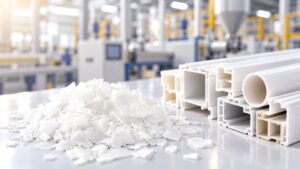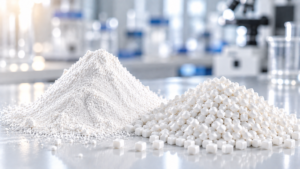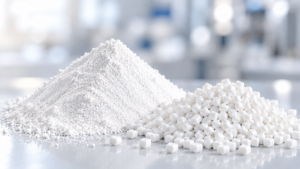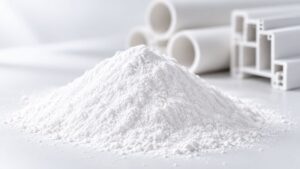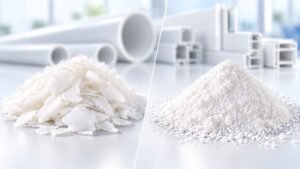

Polystyrene (PS) is commonly used for applications requiring consistent sheet formation, dimensional stability, and good surface characteristics. PS resin for sheet extrusion is processed into rigid and semi-rigid sheets through continuous extrusion, where resin grade and processing properties directly influence melt stability, sheet thickness, surface appearance, and final performance. In this article, TLD Vietnam explains how PS performs during sheet extrusion, the differences between major PS grades, important processing properties, and key considerations when selecting a suitable resin.
What Is PS Resin For Sheet Extrusion?
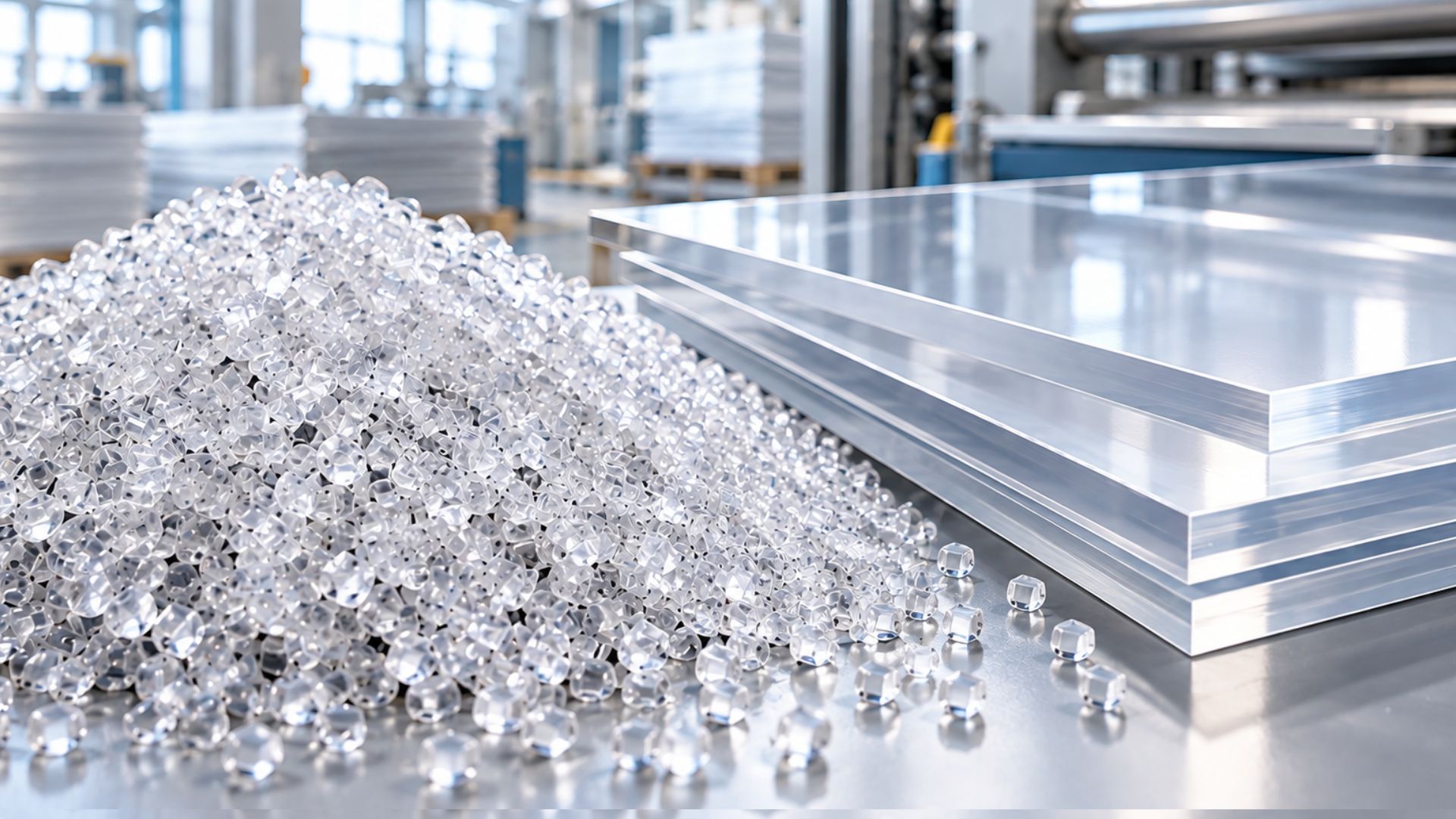
PS resin for sheet extrusion refers to PS grades designed or selected for processing through an extrusion line to produce continuous plastic sheets. During extrusion, PS pellets are fed into an extruder, heated until they form a homogeneous melt, passed through a flat die, and then cooled and calibrated into sheets with controlled dimensions.
The resulting PS sheet can be used directly or undergo secondary processes such as thermoforming, cutting, printing, or lamination. Depending on the required mechanical properties and appearance of the final product, manufacturers generally select either General Purpose PS (GPPS) or High Impact PS (HIPS).
How PS Works In Sheet Extrusion
PS is a thermoplastic material, which means it softens when heated and becomes rigid again after cooling. This behavior allows PS to move continuously through an extrusion system while being formed into a uniform sheet through a flat die and cooling rolls.
Stable melt behavior is particularly important for PS resin for sheet extrusion because variations in viscosity or temperature can affect thickness distribution and surface quality. Proper control of resin properties and processing parameters helps manufacturers achieve consistent output throughout continuous production.
Key Characteristics Required For Extrusion-Grade PS
A suitable extrusion-grade PS should provide stable melt flow, sufficient melt strength, dimensional consistency, and reliable thermal behavior. These characteristics influence how easily the material can be processed and how effectively the sheet maintains its shape after leaving the die.
Mechanical requirements depend on the final application. GPPS is generally selected where rigidity, clarity, and surface appearance are important, while HIPS is preferred where higher toughness and impact resistance are required.
Types Of PS Resin Used For Sheet Extrusion
GPPS and HIPS are the two principal types of PS resin for sheet extrusion. Although both are based on PS, their structures and performance characteristics make them suitable for different types of sheet products.
GPPS Resin For Sheet Extrusion
GPPS is characterized by high rigidity, good transparency, dimensional stability, and a smooth surface. These properties make GPPS suitable for applications where visual appearance and stiffness are more important than high impact resistance.
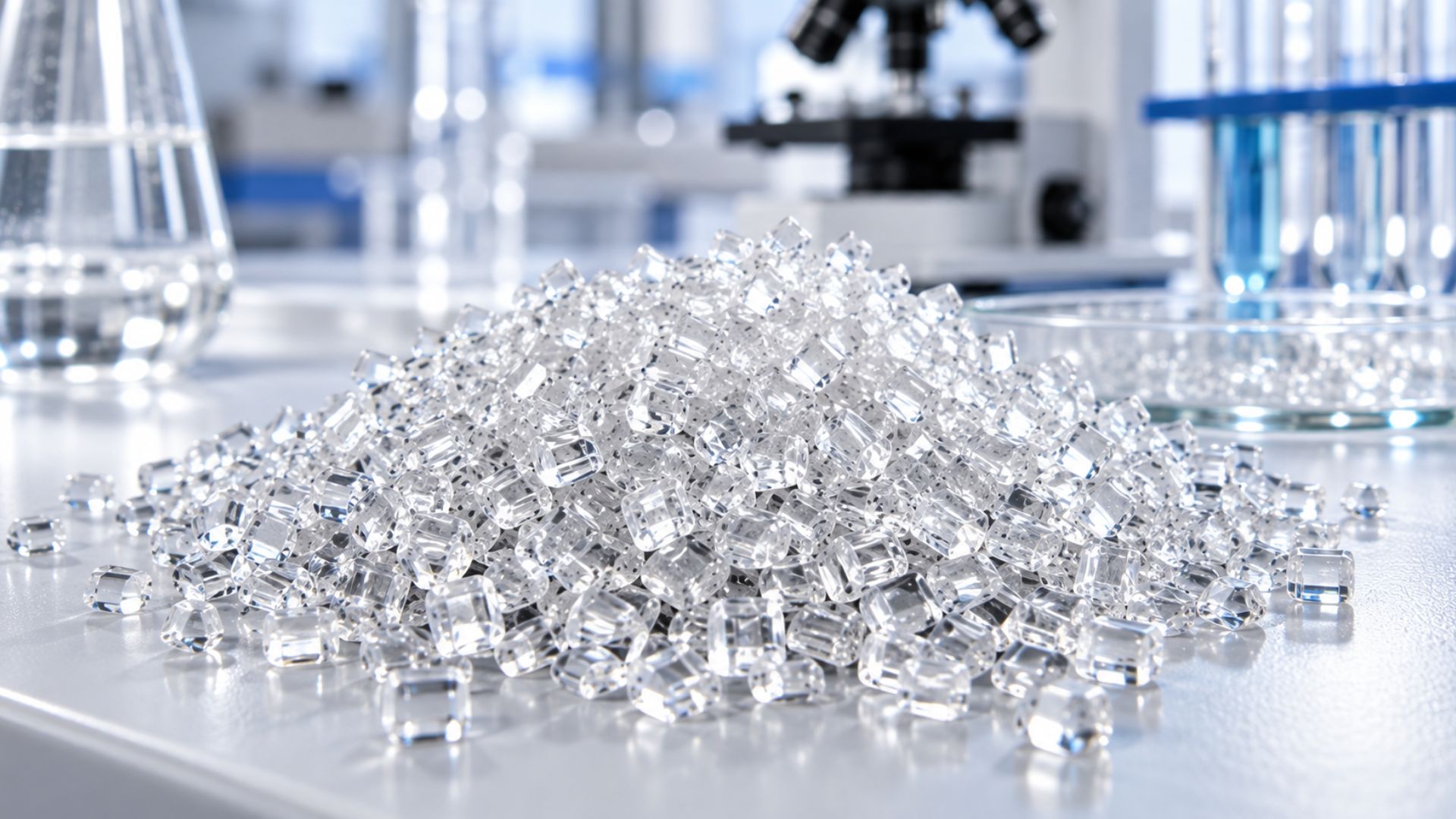
GPPS can be processed into transparent or rigid sheets for packaging, display products, stationery, and other formed products. However, its relatively brittle nature should be considered when the final sheet will experience repeated bending or mechanical impact.
HIPS Resin For Sheet Extrusion
High Impact PS is produced by modifying PS with a rubber component to improve toughness and impact resistance. Compared with GPPS, HIPS is generally less transparent but provides better mechanical durability, making it suitable for demanding sheet and thermoforming applications.
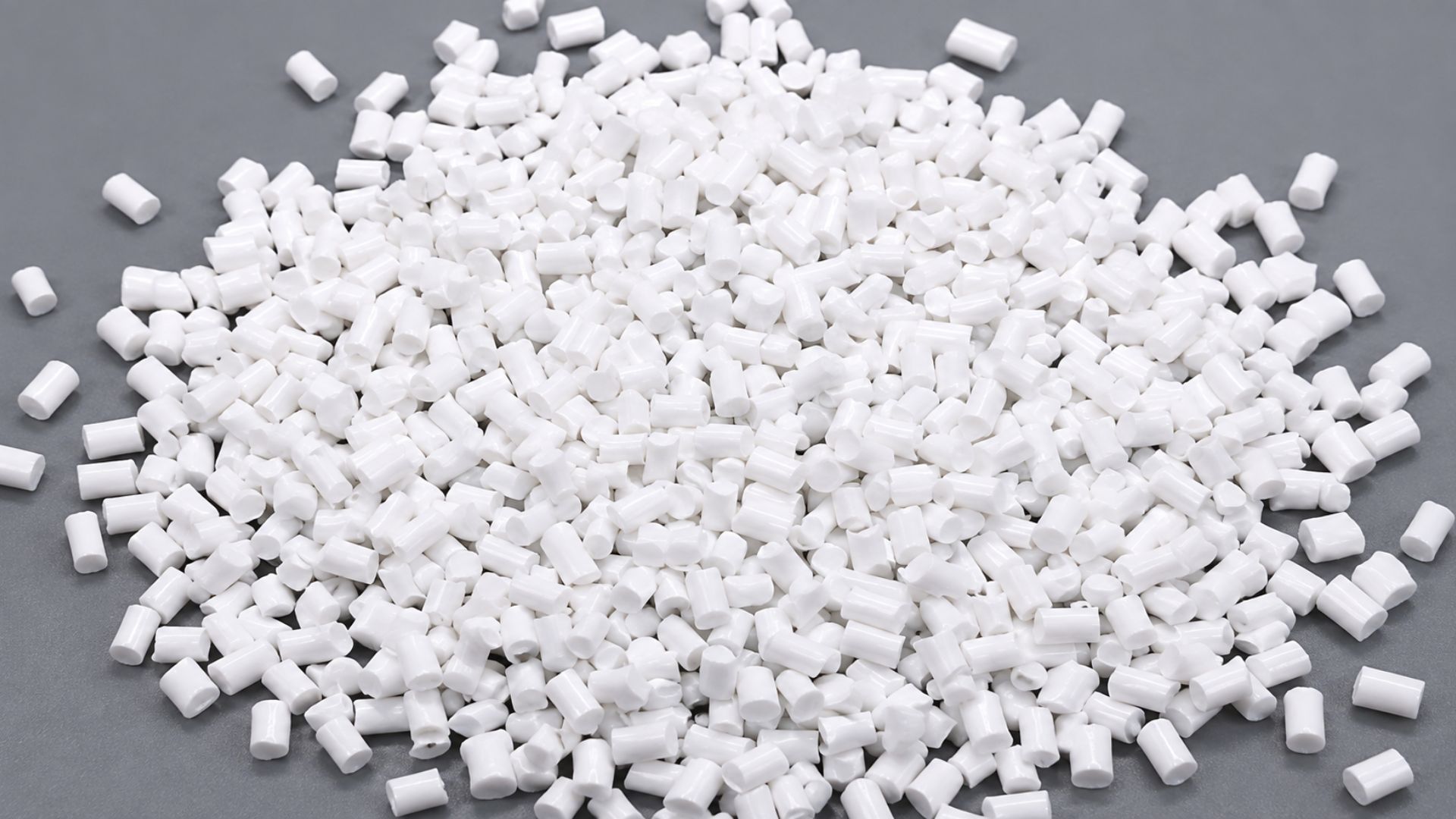
HIPS is commonly processed into sheets used for food trays, disposable containers, refrigerator liners, appliance components, and other thermoformed products. Its balance between rigidity, impact strength, and formability makes it an important material in PS sheet production.
GPPS vs HIPS For Extruded PS Sheets
The choice between GPPS and HIPS depends primarily on the performance required from the final sheet. GPPS is more appropriate when transparency, stiffness, and surface appearance are priorities, whereas HIPS is usually selected when toughness and resistance to cracking are more important.
For applications requiring a combination of properties, manufacturers may also evaluate material blends or specific commercial grades. Resin selection should therefore be based on the processing method, sheet thickness, thermoforming requirements, and expected conditions of use.
Key Properties Of PS Resin For Sheet Extrusion
Several resin properties directly influence extrusion stability and the quality of the finished sheet. Melt flow behavior, melt strength, impact resistance, rigidity, thermal characteristics, and dimensional stability should all be evaluated before selecting a PS grade.
Melt Flow Index
Melt Flow Index (MFI), also referred to as Melt Flow Rate (MFR), indicates how readily a thermoplastic material flows under specified test conditions. It provides useful information when comparing different PS grades, although it should not be used as the only criterion for resin selection.
For PS resin for sheet extrusion, the appropriate MFI depends on equipment design, extrusion speed, sheet thickness, and subsequent processing. A grade with unsuitable flow behavior can make thickness control and stable extrusion more difficult.
Impact Strength And Rigidity
Rigidity is one of the characteristic properties of PS and is particularly useful for packaging and structural sheet applications. GPPS provides relatively high stiffness but lower impact resistance, while HIPS improves toughness through rubber modification.
The required balance between these properties depends on the end product. Thin thermoformed packaging may require different mechanical behavior from thick sheets used for appliance components or industrial applications.
Transparency And Surface Finish
GPPS offers high clarity and can produce sheets with a clean, glossy surface when properly processed. This makes it suitable for applications where the product or printed graphics need to remain clearly visible.
HIPS is normally opaque or translucent because of its modified structure. Nevertheless, it can provide a consistent surface suitable for printing, coloring, thermoforming, and other secondary operations.
Thermal And Dimensional Stability
Consistent thermal behavior helps maintain stable sheet dimensions during extrusion and subsequent forming operations. Excessive temperature variations can change melt viscosity and influence sheet thickness, surface appearance, and dimensional accuracy.
Dimensional stability is also important during cooling. Effective control of die temperature, roll temperature, line speed, and cooling conditions helps minimize unwanted deformation in the finished sheet.
Processability And Melt Strength
Melt strength describes the ability of molten polymer to resist excessive deformation before solidification. Adequate melt strength contributes to stable sheet formation between the die and cooling system and becomes particularly relevant during downstream thermoforming.
Good processability also supports stable output over longer production runs. However, resin performance must always be considered together with machine configuration and processing conditions rather than as an isolated material property.
PS Sheet Extrusion Process
The PS sheet extrusion process begins with controlled feeding of resin into the extruder. Depending on the formulation and product requirements, PS may be processed together with approved colorants, additives, or other compatible materials before entering the melting and homogenization stages.
Inside the extruder, heat and mechanical shear convert the resin into a homogeneous melt. The molten material then passes through a flat sheet die that distributes the polymer across the required width before it reaches a series of cooling and polishing rolls.
These rolls cool the PS while controlling thickness, surface characteristics, and dimensional stability. The continuous sheet can then be trimmed and wound into rolls or cut into individual sheets for subsequent processing.
Stable temperature, screw speed, melt pressure, die conditions, cooling, and line speed are essential throughout the process. Their optimum values depend on the specific PS grade, equipment configuration, sheet dimensions, and final product requirements rather than on one universal extrusion setting.
Common Applications Of Extruded PS Sheets
PS resin for sheet extrusion serves a broad range of packaging, consumer, and industrial applications. GPPS is often selected for applications requiring stiffness and clarity, while HIPS is widely used when improved impact resistance and thermoformability are necessary.
Typical applications of extruded PS sheets include:
- Food trays, cups, lids, and disposable containers
- Thermoformed packaging and protective packaging
- Refrigerator and appliance liners
- Display, printing, and stationery sheets
- Industrial and general-purpose formed components
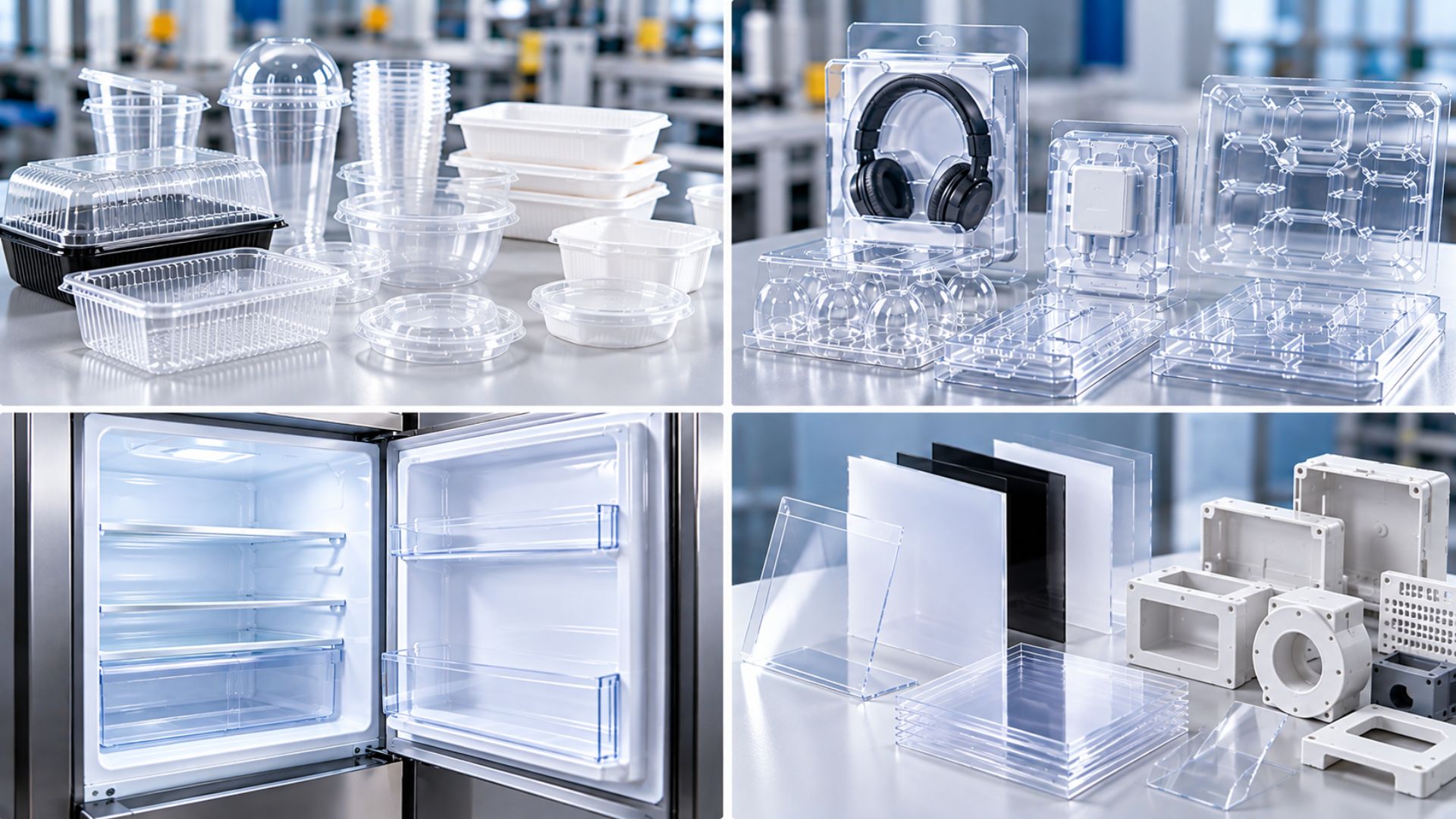
The suitability of PS for a particular application depends on factors such as sheet thickness, impact requirements, transparency, contact conditions, forming depth, operating temperature, and applicable regulatory requirements.
How To Choose The Right PS Resin Grade For Sheet Extrusion
Selecting PS resin for sheet extrusion should begin with the requirements of the finished product rather than with resin price alone. Manufacturers need to consider whether the sheet requires transparency, rigidity, impact resistance, thermoformability, dimensional stability, or a specific surface appearance.
Choosing Between GPPS And HIPS
GPPS is generally suitable when clarity, stiffness, and surface quality are the main requirements. HIPS should be considered when the finished product requires greater toughness, improved impact resistance, or better resistance to cracking during forming and use.
The decision should also account for downstream operations. A material that performs well during extrusion must still provide the required behavior during thermoforming, cutting, printing, assembly, and actual product use.
Selecting The Right MFI
MFI should be evaluated in relation to extrusion equipment and the target sheet specification. Higher or lower values are not inherently better because each extrusion line operates within a specific processing window.
Manufacturers should compare MFI together with melt strength, mechanical properties, thermal behavior, and the resin producer’s recommended processing conditions. Trial production may also be necessary when introducing a new grade or changing sheet specifications.
Matching PS Grades With Applications
A clear GPPS sheet and an impact-resistant HIPS sheet serve different technical purposes even though both belong to the PS family. Therefore, application requirements should be defined before comparing individual grades.
For thermoformed food packaging, for example, processors may prioritize forming behavior, toughness, surface consistency, and regulatory compliance. Appliance sheets may place greater emphasis on impact strength, dimensional stability, thickness, and surface quality.
Key Specifications To Check Before Purchasing
Before purchasing PS resin for sheet extrusion, processors should review the Technical Data Sheet and relevant compliance documentation. Important parameters may include MFI or MFR, tensile properties, flexural properties, impact strength, Vicat softening temperature, density, and recommended processing conditions.
Specifications should always be interpreted according to the relevant test methods because values obtained under different standards or test conditions may not be directly comparable. Consistency between resin batches is also important for continuous industrial extrusion.
PS Resin vs Other Materials For Sheet Extrusion
PS competes with several thermoplastic materials in sheet extrusion, particularly PP, PET, and PVC. There is no universally superior material because each polymer provides a different combination of mechanical, optical, thermal, processing, and economic characteristics.
PS vs PP sheet
PS generally offers good rigidity, dimensional stability, and straightforward processing, while polypropylene provides better chemical resistance and typically performs better at higher service temperatures. PP also has a lower density, which can be advantageous in applications where material weight is important.
The choice between PS and PP depends on the required stiffness, impact performance, heat resistance, appearance, forming conditions, and intended use of the finished product.
PS vs PET sheet
PET is widely used in transparent packaging because of its clarity, strength, and barrier characteristics. PS can offer simpler processing for certain applications and remains useful where stiffness, thermoforming behavior, and production economics meet the required product specification.
Material selection should therefore be based on the complete packaging or product system rather than optical appearance alone. Recycling infrastructure and applicable regulatory requirements should also be considered.
PS vs PVC sheet
PVC provides a broad range of properties that can be adjusted through formulation, from rigid sheets to flexible products. PS has a different processing and additive system and is commonly selected for rigid packaging, thermoformed products, and HIPS-based sheet applications.
The appropriate choice depends on mechanical requirements, chemical resistance, processing equipment, temperature conditions, regulatory considerations, and the intended service environment.
Conclusion
PS resin for sheet extrusion remains an important material for producing rigid and thermoformable sheets across packaging, appliance, display, and industrial applications. GPPS provides rigidity, clarity, and good surface characteristics, while HIPS offers improved toughness and impact resistance for applications requiring greater mechanical durability.
Effective resin selection requires more than choosing between GPPS and HIPS. Melt flow behavior, melt strength, mechanical properties, sheet dimensions, extrusion conditions, downstream forming, and final application requirements should be considered together to achieve stable processing and consistent product quality.
FAQs
- Which PS grade is best for sheet extrusion?
There is no single best grade for every application. GPPS is generally preferred for rigid and transparent sheets, while HIPS is more suitable when higher impact strength and toughness are required.
- Is GPPS or HIPS better for thermoforming?
HIPS is commonly selected for thermoforming when toughness and resistance to cracking are important. GPPS can also be thermoformed, particularly when rigidity and transparency are the main requirements.
- What MFI is suitable for PS sheet extrusion?
The suitable MFI depends on the extrusion line, sheet thickness, production rate, and specific resin formulation. The resin manufacturer’s Technical Data Sheet and processing recommendations should be checked before production.
- What temperature is used for PS sheet extrusion?
PS extrusion does not have one universal processing temperature. The appropriate barrel and die temperature profile depends on the specific PS grade, extruder design, throughput, and sheet specification.
- What are the main applications of extruded PS sheets?
Extruded PS sheets are commonly used for food packaging, thermoformed trays and containers, appliance liners, display products, stationery, and various industrial components.