
Zinc stearate for masterbatch is widely used as a functional processing additive in plastic formulations, particularly where good lubrication, filler or pigment dispersion, and stable extrusion are required. Its low affinity for water, lubricating properties, and compatibility with many plastic processing systems make it useful in filler, white, color, and additive masterbatches based on PE, PP, and other polymers.
However, the performance of Zinc stearate depends strongly on its dosage, particle characteristics, purity, and interaction with other formulation components. Using too little may provide limited processing benefits, while excessive addition can affect adhesion, surface properties, and the mechanical performance of the final plastic product. In this article, TLD Vietnam explains the properties, functions, applications, dosage considerations, and key quality parameters of Zinc stearate for masterbatch production.
What Is Zinc Stearate?
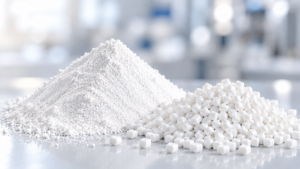
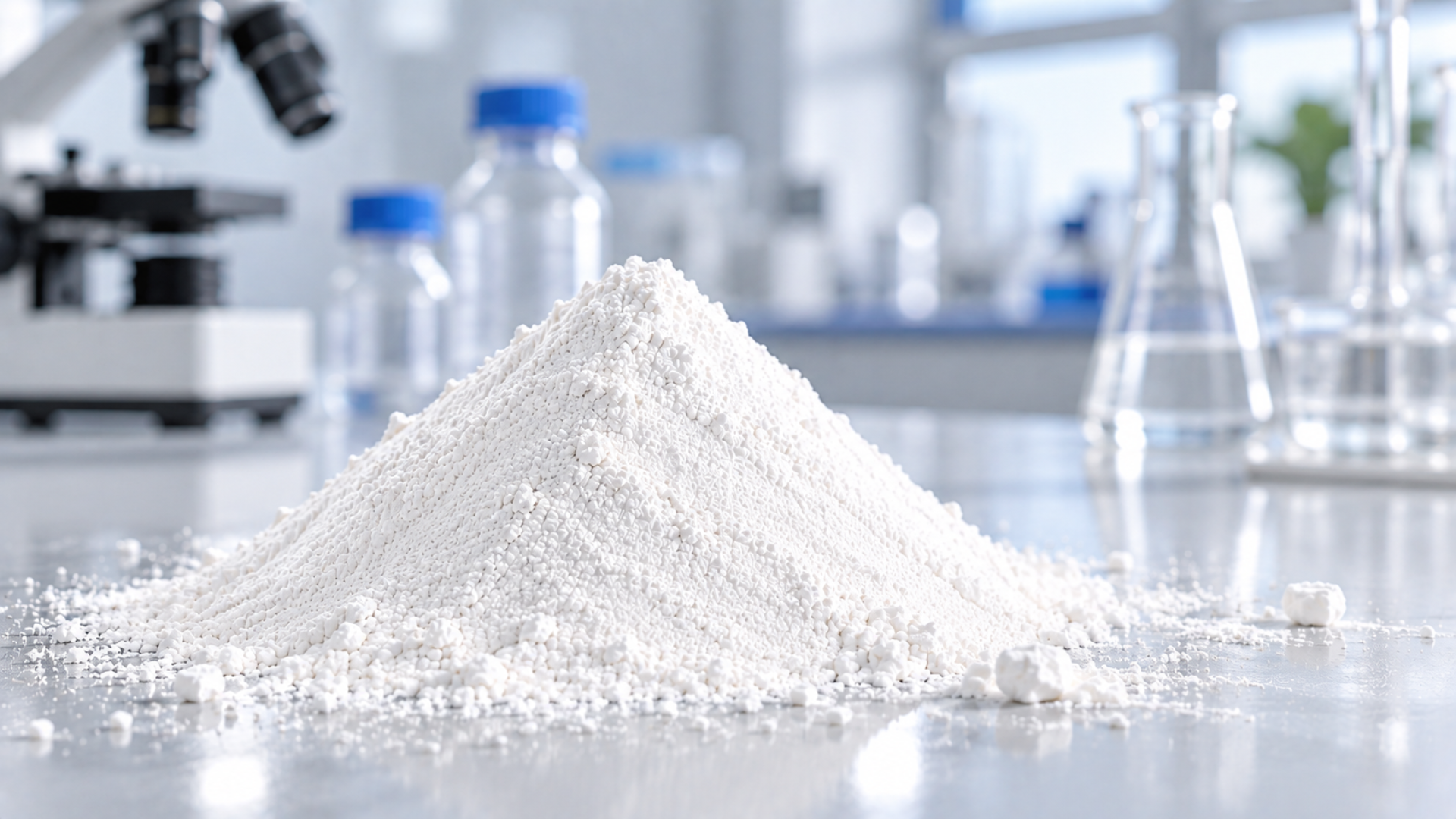
Zinc stearate is the Zinc salt of stearic acid, generally represented by the chemical formula Zn(C₁₈H₃₅O₂)₂. It belongs to the group of metallic stearates, which also includes calcium stearate, magnesium stearate, and aluminum stearate. Commercial Zinc stearate is fine white powder with a soft, hydrophobic character and very low solubility in water.
Chemically, Zinc stearate consists of a Zinc ion associated with long-chain stearate groups. The long hydrocarbon chains give the material its hydrophobic and lubricating characteristics, while the metallic component influences its thermal behavior and interactions with other materials. These characteristics explain why Zinc stearate is used in plastics, rubber, coatings, and other industrial formulations.
One important characteristic of Zinc stearate is its strong internal and external lubricating behavior. During polymer processing, it can reduce friction between solid particles, between the polymer melt and processing equipment, and among different components of a highly filled formulation. This becomes particularly relevant in masterbatch production, where large amounts of mineral filler or pigment must be incorporated into a relatively small amount of carrier resin.
Zinc stearate is also hydrophobic. This property is useful in formulations containing inorganic materials such as calcium carbonate, although Zinc stearate should not automatically be considered a direct replacement for dedicated surface-treatment agents. In CaCO₃ systems, for example, Stearic acid is commonly used to modify the mineral surface, while Zinc stearate may perform primarily as a lubricant, processing aid, and dispersion-supporting additive.
From a processing perspective, Zinc stearate does not function as a polymer carrier or primary filler. Instead, it is normally present at relatively low concentrations to modify interactions within the formulation and at the polymer-equipment interface. For this reason, the performance of Zinc stearate for masterbatch should be evaluated as part of the complete formulation rather than as an isolated ingredient.
The physical characteristics of commercial Zinc stearate are also important. Zinc content, free fatty acid, moisture, particle size, bulk density, melting behavior, and thermal stability can influence how easily the material is incorporated and distributed during mixing and extrusion. Two Zinc stearate grades with the same basic chemical identity can therefore perform differently in the same masterbatch formulation.
What Is Zinc Stearate Used For In Masterbatch?
The primary purpose of Zinc stearate for masterbatch is to improve processing behavior by controlling friction and interactions among polymer, filler or pigment, additives, and processing equipment. Its exact function varies according to the carrier resin, filler loading, pigment system, extrusion conditions, and other lubricants used in the formulation.
In highly filled masterbatch formulations, friction and poor distribution of solid particles can increase torque, processing temperature, and pressure. Zinc stearate can help reduce these problems when used at an appropriate concentration. It may therefore contribute simultaneously to lubrication, dispersion, release behavior, and process stability.
Lubricant
Lubrication is one of the most important functions of Zinc stearate for masterbatch. During compounding, polymer, mineral filler, pigment, and other additives experience considerable shear and friction inside mixers and extruders. This becomes particularly significant when the formulation contains a high proportion of CaCO₃, TiO₂, carbon black, or other inorganic solids.
Zinc stearate can reduce friction within the formulation and at metal surfaces. Lower friction can improve material flow through the processing equipment and reduce excessive resistance during mixing and extrusion. Depending on the formulation and equipment, this can contribute to more stable torque, pressure, and processing temperature.
Lubrication must nevertheless be balanced carefully. Masterbatch production requires sufficient shear to break down agglomerates and distribute particles throughout the carrier resin. Excessive lubrication can reduce effective shear or change the interaction between components, meaning that increasing Zinc stearate concentration does not necessarily result in better dispersion or processing.
Dispersing Aid
Masterbatch quality depends heavily on the distribution and dispersion of solid particles. Pigments and mineral fillers naturally tend to form agglomerates because of particle-particle interactions. These agglomerates must be broken down and distributed effectively during compounding to obtain a homogeneous concentrate.
Zinc stearate can act as a dispersion-supporting additive by reducing friction and particle interaction within the system. This may facilitate the distribution of CaCO₃, TiO₂, pigments, and certain other solid ingredients through the polymer carrier. Better dispersion can help reduce visible agglomerates and improve the consistency of the masterbatch.
However, Zinc stearate should not be treated as a universal dispersant. Its effectiveness depends on pigment chemistry, particle surface characteristics, polymer polarity, filler treatment, wax system, and processing conditions. In demanding color masterbatch formulations, specialized dispersants or waxes may still be necessary alongside Zinc stearate.
Mold Release And Anti-Sticking Agent
Zinc stearate has a relatively low affinity for many surfaces and provides lubricating action at material-metal interfaces. For this reason, it can help reduce sticking and material adhesion to certain processing surfaces during compounding and subsequent conversion.
In masterbatch extrusion, reduced adhesion can support smoother material movement through the processing line and may help limit deposits under suitable operating conditions. This function is particularly relevant when formulations contain high concentrations of mineral filler or pigments that increase friction and processing resistance.
The release effect should not be maximized without considering the downstream application. Excessive surface migration or lubrication may interfere with printing, coating, lamination, sealing, or adhesion of the finished plastic product. Zinc stearate dosage therefore needs to reflect both masterbatch processing requirements and final-product performance.
Benefits Of Zinc Stearate For Masterbatch Production
The benefits of Zinc stearate for masterbatch production result mainly from its ability to modify friction, particle interaction, and processing behavior. The magnitude of these benefits depends on formulation design, so Zinc stearate should be optimized together with carrier resin, filler or pigment, waxes, and other additives.
Improved Filler And Pigment Dispersion
Uniform dispersion is essential for producing consistent masterbatch. Poorly dispersed CaCO₃ can create agglomerates and surface defects, while poor TiO₂ or color pigment dispersion may cause uneven color, inconsistent opacity, or visible specks in finished products.
By improving lubrication and reducing undesirable particle interaction, Zinc stearate can assist the distribution of fillers and pigments throughout the carrier resin. The effect can be especially useful in highly filled systems where solid loading creates significant processing resistance.
Reduced Friction And Processing Resistance
High filler and pigment concentrations increase contact between solid particles and can create considerable resistance during compounding. Zinc stearate reduces friction within the formulation and between the material and processing equipment.
When properly formulated, this may help control extruder torque, melt pressure, and processing load. The actual improvement depends on equipment configuration, screw design, throughput, filler loading, carrier viscosity, and the complete lubricant package.
Improved Extrusion And Processing Stability
Stable extrusion requires controlled material flow, temperature, pressure, and shear. Significant fluctuations in any of these parameters can affect pellet quality and batch consistency.
Zinc stearate for masterbatch can contribute to smoother processing by reducing excessive friction and facilitating movement of the formulation through the extruder. This can support more consistent processing, particularly in formulations with high concentrations of inorganic solids.
Reduced Material Adhesion To Processing Equipment
Material accumulation on processing surfaces can interrupt production and increase cleaning requirements. Zinc stearate’s lubricating and release properties may reduce adhesion of certain formulations to metallic surfaces.
The effect depends strongly on the polymer and additive package. It should therefore be confirmed through production trials rather than assumed solely from Zinc stearate concentration.
Improved Surface Quality Of The Final Product
Poor dispersion, agglomerates, and unstable processing can contribute to roughness, visible particles, inconsistent appearance, and other surface defects. By supporting dispersion and stable processing, Zinc stearate can indirectly contribute to improved surface quality.
The relationship is not linear, however. Excessive Zinc stearate can migrate toward the surface or alter surface characteristics. Correct dosage is therefore important where the final product requires printing, lamination, coating, or other secondary processing.
Zinc Stearate Applications In Different Types Of Masterbatch
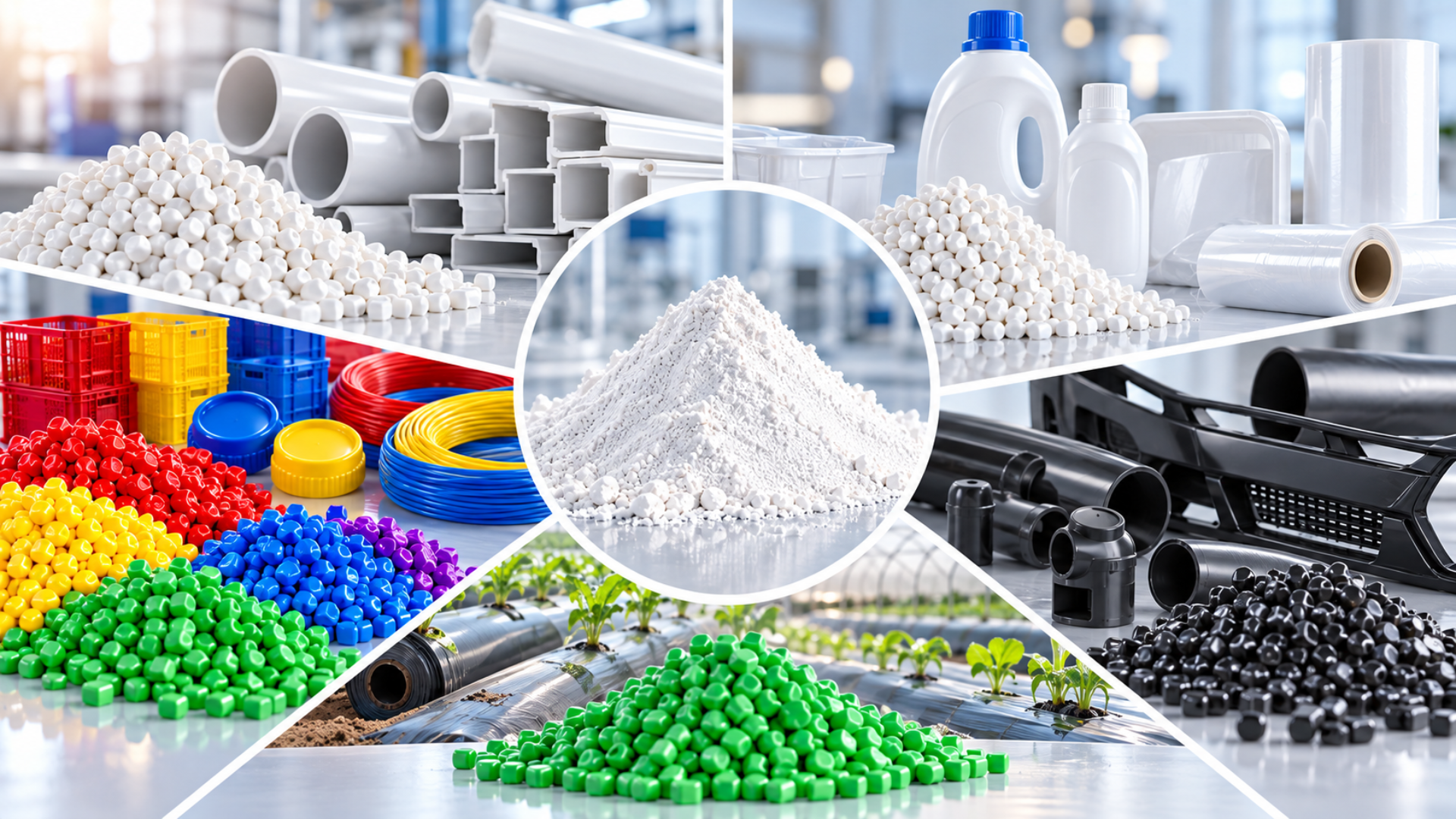
The function and required concentration of Zinc stearate for masterbatch vary according to the masterbatch type. Filler, white, color, and additive masterbatches have different solid contents, dispersion requirements, and interactions between ingredients.
Filler Masterbatch
Filler masterbatch is one of the most relevant applications for Zinc stearate. A typical CaCO₃ filler masterbatch contains a high proportion of calcium carbonate combined with PE or PP carrier resin and a processing package that may include waxes, fatty acids, metallic stearates, or other additives.
At high CaCO₃ loading, particle-particle and particle-equipment friction can become substantial. Zinc stearate for masterbatch can help control this friction, improve processability, and support more uniform distribution of mineral particles in the carrier resin.
Its function should be distinguished from CaCO₃ surface treatment. Stearic acid is widely used to modify CaCO₃ surfaces and increase hydrophobicity, whereas Zinc stearate is often selected primarily for lubrication and processing functions. Depending on the formulation, both materials may be present but serve different purposes.
White Masterbatch
White masterbatch commonly contains a high concentration of titanium dioxide, usually dispersed in a PE, PP, or application-specific carrier. TiO₂ has a high surface area and requires effective dispersion to achieve uniform whiteness, opacity, and tinting performance.
Zinc stearate may be incorporated into the lubricant and dispersion package to support processing and pigment distribution. Its use must be balanced with the selected TiO₂ grade, carrier resin, wax system, pigment concentration, and intended final application.
Color Masterbatch
Color masterbatch can contain organic pigments, inorganic pigments, or combinations of different colorants. Because pigment chemistries differ considerably in polarity, surface energy, thermal stability, and dispersibility, no single lubricant system is optimal for every formulation.
Zinc stearate for masterbatch can support lubrication and dispersion in selected color formulations. However, the dosage should be evaluated individually because some pigments require specialized waxes or dispersants, and excessive Zinc stearate may influence color development or downstream surface properties.
Additive Masterbatch
Additive masterbatches are designed to deliver functional ingredients such as UV stabilizers, antioxidants, antistatic agents, antiblocking agents, processing aids, or other additives into the final polymer.
In these systems, Zinc stearate may be used when additional lubrication or processing assistance is required. Compatibility must be checked carefully because additive masterbatches can contain chemically active components whose performance may be influenced by other ingredients.
Recommended Zinc Stearate Dosage In Masterbatch
There is no universal dosage of Zinc stearate for masterbatch that applies to every formulation. The optimum concentration depends on masterbatch type, carrier polymer, filler or pigment loading, particle characteristics, extrusion conditions, and the presence of other lubricants and dispersants.
Dosage should therefore be established through formulation trials and evaluated against measurable parameters such as torque, extrusion pressure, output rate, dispersion, pellet quality, surface behavior, and final-product performance.
Typical Dosage Ranges
In practical plastic compounding and masterbatch systems, Zinc stearate is generally used at relatively low concentrations compared with the carrier resin and filler or pigment. Depending on the formulation, concentrations may range from fractions of one percent to around 1% or somewhat higher in specialized systems.
This range should be treated as a formulation reference rather than a fixed recommendation. A highly filled CaCO₃ masterbatch may have different lubrication requirements from a concentrated organic pigment masterbatch, even when both use the same PE carrier resin.
Pilot or production-scale trials are preferable when establishing dosage. Laboratory mixing behavior alone may not accurately reproduce shear, residence time, pressure, and thermal conditions in a commercial extrusion line.
Factors Affecting Zinc Stearate Dosage
Carrier polymer is an important variable. PE and PP differ in rheological behavior, while individual grades can have significantly different melt flow rates. A formulation based on low-viscosity carrier resin may therefore require a different lubricant balance from one based on a higher-viscosity polymer.
Solid loading is another major factor. Increasing CaCO₃, TiO₂, or pigment concentration increases the amount of solid surface that must be wetted and dispersed. Particle size, surface treatment, morphology, and moisture can further change the required processing conditions.
The rest of the lubricant system must also be considered. PE wax, paraffin wax, stearic acid, calcium stearate, and other processing additives may overlap with some functions of Zinc stearate. Dosage should therefore be determined for the complete formulation rather than by evaluating each additive independently.
What Happens When Too Much Zinc Stearate Is Used?
Excess Zinc stearate can produce undesirable effects even though moderate amounts improve lubrication. Too much lubrication may reduce effective shear during compounding, which can compromise dispersion rather than improve it.
High concentrations may also increase the possibility of surface migration or alter the surface energy of the final plastic product. This can negatively affect printing, coating, lamination, adhesive bonding, or other secondary operations.
Mechanical and optical properties may also change depending on the formulation. For these reasons, the appropriate Zinc stearate level should be defined as the lowest concentration that achieves the required processing and dispersion performance without compromising downstream properties.
How To Choose Zinc Stearate For Masterbatch
Selecting Zinc stearate for masterbatch should not be based solely on price or the material name. Commercial grades vary in chemical composition and physical properties, and these differences can influence feeding, mixing, extrusion, dispersion, and product consistency.
A technical evaluation should therefore consider the supplier’s specification, certificate of analysis, consistency between production lots, and actual performance under the intended processing conditions.
Zinc Content And Purity
Zinc content is one of the fundamental parameters used to characterize Zinc stearate. It provides an indication of chemical composition and should remain within a controlled specification range.
Purity is equally important. Residual fatty acids, other metallic salts, inorganic impurities, or variations in raw materials can affect processing and thermal behavior. For masterbatch production, batch-to-batch consistency is often as important as achieving a particular nominal purity value.
Melting Point
The thermal behavior of Zinc stearate affects how it functions during mixing and extrusion. Its melting or softening characteristics should be compatible with the processing temperature of the masterbatch system.
A material with inconsistent thermal behavior may not provide the same lubrication profile from one production batch to another. This can contribute to variations in extrusion pressure, torque, dispersion, or pellet appearance.
Particle Size And Powder Fineness
Particle size affects mixing, feeding, distribution, and handling. A sufficiently fine and consistent powder can generally be distributed more readily throughout a dry blend before melting and extrusion.
Extremely fine powders can nevertheless create handling problems, including dust generation and poor flowability. The appropriate particle-size distribution should therefore balance dispersion requirements with practical feeding and industrial handling.
Moisture And Volatile Matter
Moisture and volatile matter should be controlled in masterbatch raw materials. Excessive moisture can contribute to processing instability, bubbles, voids, or surface defects, particularly in systems sensitive to water or volatile components.
For Zinc stearate for masterbatch, moisture specifications should be reviewed together with storage and packaging conditions. A suitable product can still absorb contamination or moisture if handled incorrectly after production.
Heat Stability
Masterbatch processing exposes additives to elevated temperatures and mechanical shear. Zinc stearate should remain sufficiently stable within the intended processing window and should not cause unacceptable discoloration, odor, or decomposition.
Heat stability becomes particularly important when processing temperatures are high or residence times are long. Evaluation should therefore reflect the actual extrusion conditions rather than relying only on room-temperature properties.
Dispersion Performance
Chemical specifications alone cannot fully predict performance. Two products with similar Zinc content and moisture values may behave differently because of particle size, morphology, free fatty acid content, manufacturing route, or other physical characteristics.
Dispersion and processing trials are therefore an important part of Zinc stearate selection. Relevant measurements can include extruder torque, pressure stability, output, screen residue, pigment dispersion, filler distribution, pellet appearance, and performance in the final plastic product.
Conclusion
Zinc stearate for masterbatch functions mainly as a lubricant and processing additive, while also supporting filler and pigment dispersion and reducing sticking during extrusion. Its performance depends on the overall formulation, including carrier resin, filler or pigment loading, wax system, processing conditions, and application requirements.
When selecting a grade, manufacturers should consider Zinc content, purity, particle size, moisture, thermal behavior, and actual dispersion performance. TLD Vietnam provides technical information on Zinc stearate and other raw materials for plastics and masterbatch production.