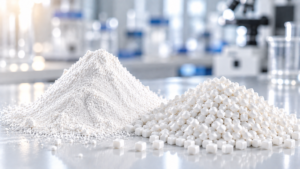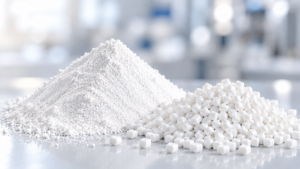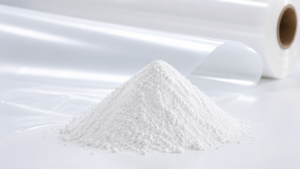

Polyethylene wax, or PE wax is widely used as a lubricant, dispersing aid, processing aid, and surface-modifying additive in diverse industrial applications. Among the available types, standard PE wax and oxidized PE wax are often compared because they have a similar polyethylene backbone but behave differently in formulation.
Understanding PE wax vs Oxidized PE wax is important when selecting a wax for a specific polymer system. These differences determine whether standard PE wax or oxidized PE wax is more suitable for specific applications. Read the TLD Vietnam blog to explore the technical differences between PE wax and oxidized PE wax and understand how to select the right wax for your formulation and processing requirements.
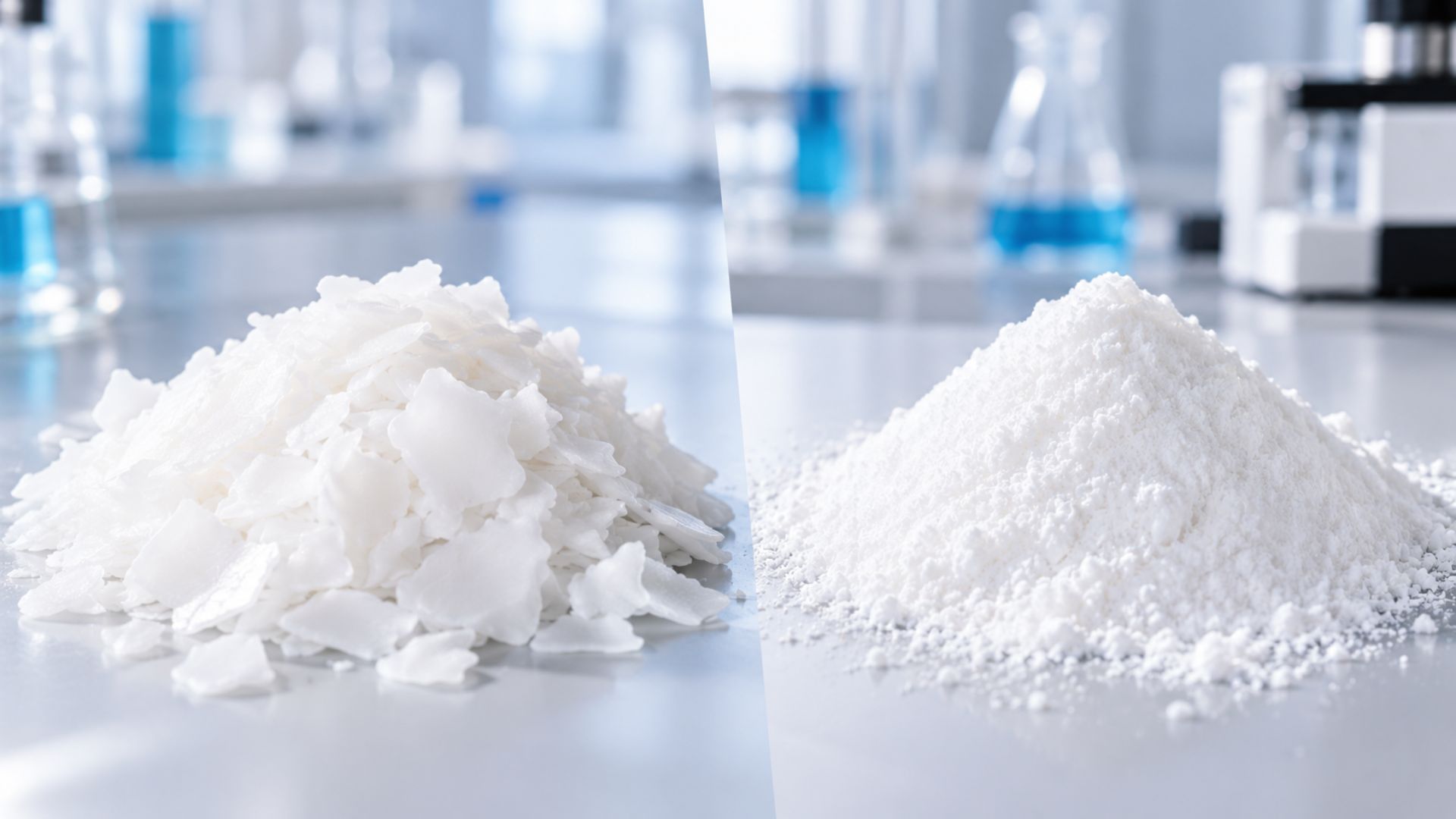
What Is PE Wax?
PE wax is a low-molecular-weight polyethylene material with a wax-like structure. Depending on the production method, it may be produced directly through polymerization or obtained from polyethylene processing streams. Its molecular structure is mainly composed of long hydrocarbon chains, giving the material very low polarity.
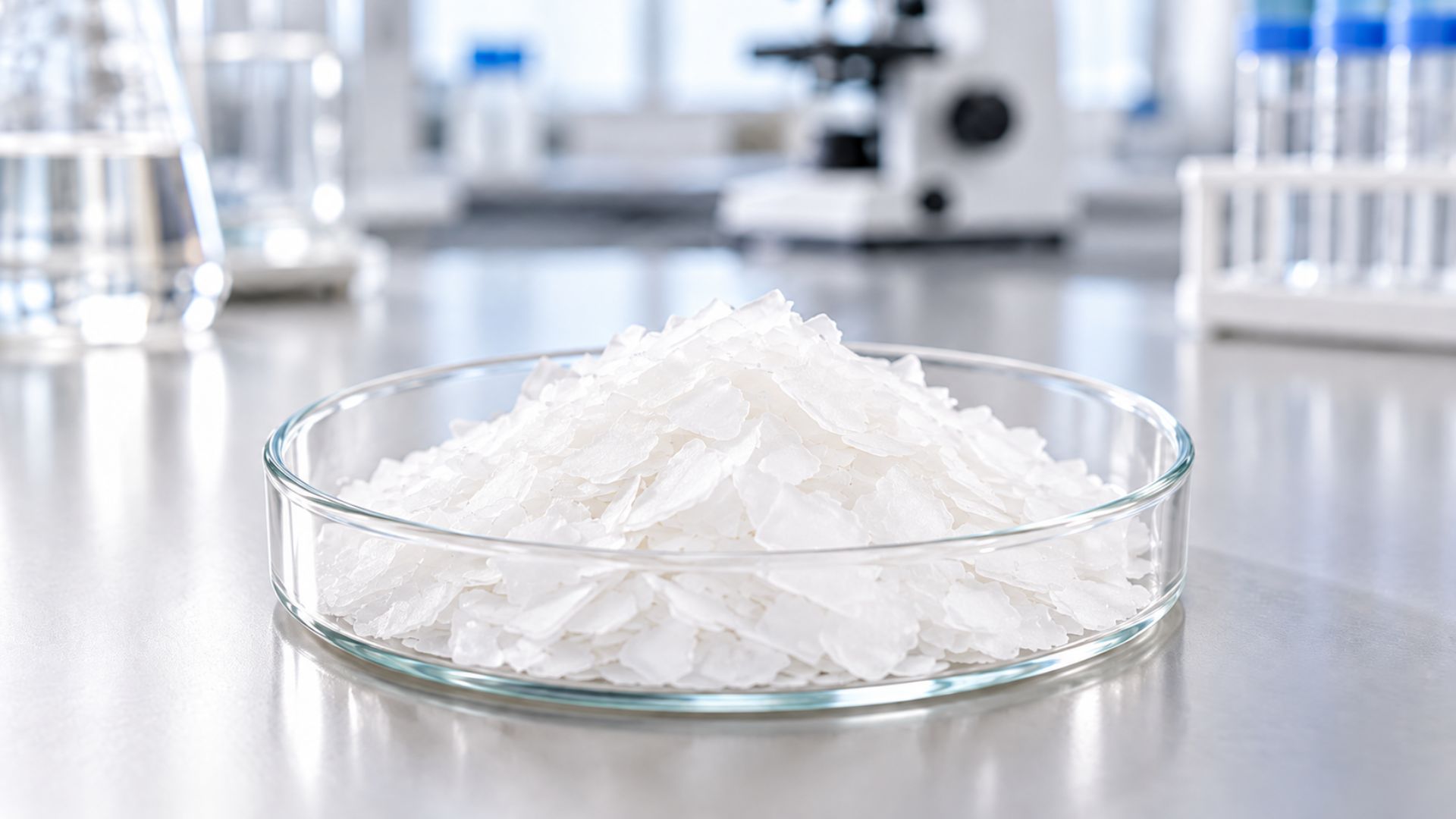
Because of this non-polar structure, PE wax has low surface energy, good lubricating properties, relatively low melt viscosity, and good thermal stability. These characteristics make it useful in polymer processing where reduced friction, improved flow, easier mold release, or better surface properties are required.
Key Properties Of PE Wax
PE wax is primarily characterized by its low polarity and low acid value. It generally has good heat resistance under normal polymer-processing conditions and can reduce friction between polymer melt, fillers, processing equipment, and metal surfaces.
Another important characteristic is its low melt viscosity compared with high-molecular-weight polyethylene. This allows the wax to migrate and distribute relatively easily during processing, which contributes to its role as a lubricant and processing aid.
Common Applications Of PE Wax
PE wax is commonly used in PVC processing, filler masterbatch, color masterbatch, rubber products, coatings, and printing inks. In plastics, it is especially valued for lubrication, flow improvement, mold release, and surface modification.
In masterbatch production, PE wax can also support pigment or filler dispersion by reducing melt viscosity and improving material flow during mixing. Its effectiveness, however, depends on the carrier resin, filler type, pigment surface, wax molecular weight, viscosity, and dosage.
What Is Oxidized PE Wax?
Oxidized PE wax is produced by introducing oxygen-containing functional groups into PE wax through controlled oxidation. This process creates polar groups, particularly carboxyl and other oxygen-containing functionalities, along the polyethylene structure while retaining much of the original hydrocarbon backbone.
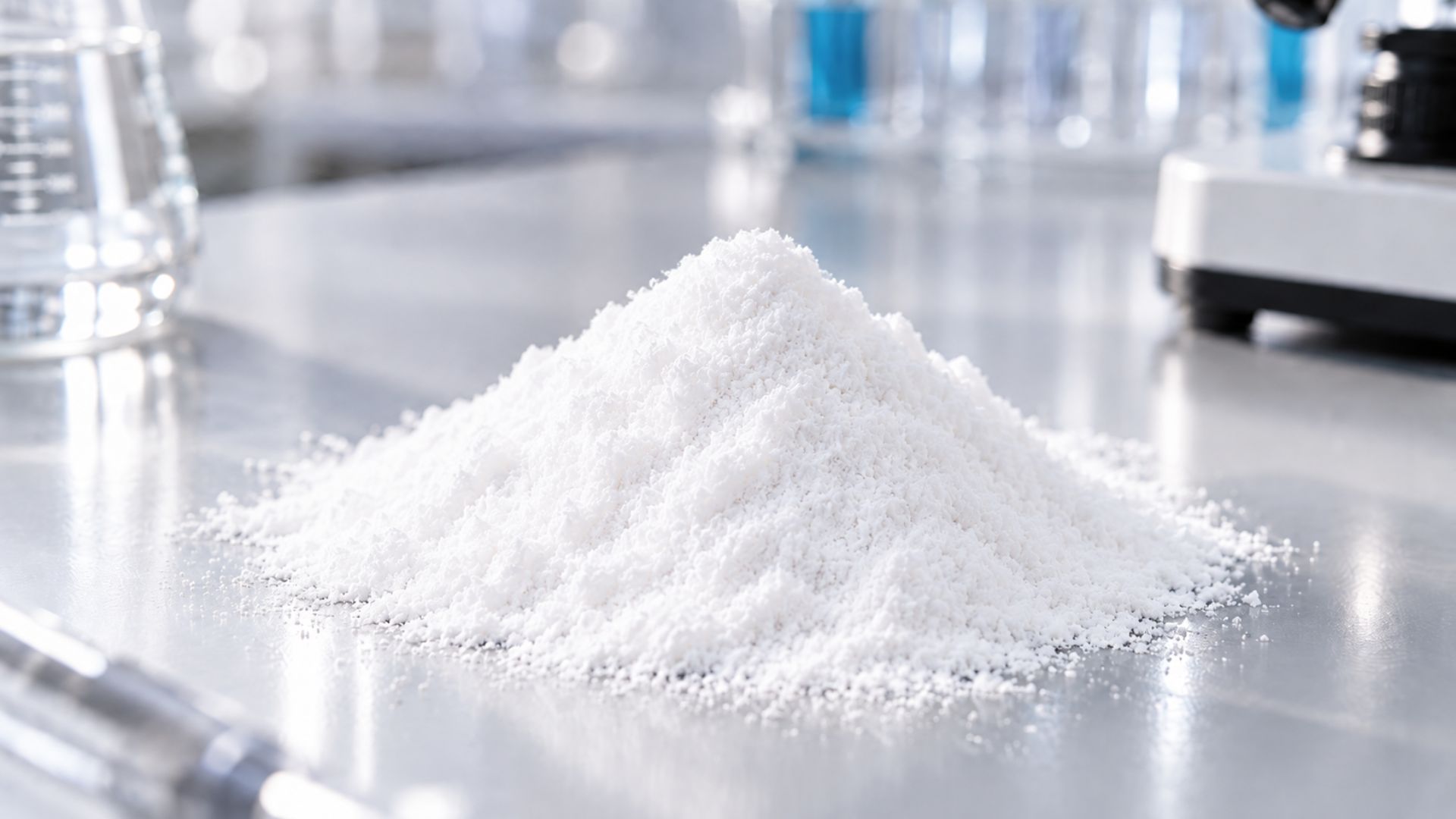
The oxidation process changes how the wax interacts with other materials. Compared with conventional PE wax, oxidized PE wax generally has higher polarity and a measurable acid value. These characteristics can improve its interaction with polar surfaces, pigments, mineral fillers, and certain resin systems.
Key Properties Of Oxidized PE Wax
The most significant properties of oxidized PE wax are its higher polarity and higher acid value compared with standard PE wax. These properties increase intermolecular interaction with polar materials and can improve wetting and dispersion of some pigments and inorganic fillers.
Oxidized PE wax can also provide lubrication, surface modification, and processing benefits. Because of its polar functional groups, it is easier to emulsify than conventional PE wax and is therefore frequently used in water-based wax emulsions and surface-treatment systems.
Common Applications Of Oxidized PE Wax
Oxidized PE wax is widely used in PVC processing, masterbatch, pigment dispersion, coatings, printing inks, wax emulsions, polishes, and surface-treatment formulations. Its combination of a polyethylene backbone and polar functional groups allows it to provide both wax-like lubrication and improved interaction with polar components.
The specific application depends strongly on properties such as acid value, molecular weight, viscosity, melting point, oxidation level, and formulation requirements. Oxidized PE waxes with different specifications can therefore behave quite differently even though they belong to the same product category.
PE wax vs Oxidized PE Wax: Major Differences
PE Wax vs Oxidized PE Wax: Chemical Structure And Polarity
Chemical structure is the fundamental difference in PE wax vs Oxidized PE wax. Standard PE wax consists mainly of hydrocarbon chains and is essentially non-polar or very weakly polar. This gives it good compatibility with non-polar materials such as polyethylene and polypropylene but relatively limited interaction with highly polar surfaces.
Oxidized PE wax contains oxygen-bearing functional groups introduced during oxidation. These groups increase surface polarity and allow stronger interaction with pigments, mineral surfaces, and polar formulation components. The polyethylene portion of the molecule remains present, so oxidized PE wax still retains many characteristics of conventional PE wax.
Higher polarity should not automatically be interpreted as better compatibility with every polymer. In non-polar PE or PP systems, standard PE wax can have very good compatibility with the polymer matrix, while oxidized PE wax may provide an advantage mainly at interfaces involving fillers or pigments.
PE Wax vs Oxidized PE Wax: Acid Value
Acid value is one of the clearest analytical differences between PE wax vs Oxidized PE wax. Conventional PE wax normally has a very low acid value because its molecular structure contains few acidic functional groups. Oxidation introduces carboxyl-containing groups, causing the acid value of oxidized PE wax to increase.
Acid value is commonly expressed as the amount of potassium hydroxide required to neutralize acidic groups in one gram of material. A higher acid value generally indicates a greater degree of oxidation, although acid value alone does not fully describe the performance of a wax.
This parameter is particularly relevant when evaluating interaction with polar surfaces, emulsification behavior, or formulation compatibility. However, the highest acid value is not necessarily the best choice. The appropriate value depends on the polymer, filler, pigment, processing conditions, and required balance between polarity and lubrication.
PE Wax vs Oxidized PE Wax: Compatibility
Compatibility is another important consideration when comparing PE wax vs Oxidized PE wax. Standard PE wax has a non-polar polyethylene structure, which generally provides good affinity with polyolefins such as PE and PP. It is therefore commonly used when lubrication and processing performance are required without introducing significant polarity.
Oxidized PE wax offers increased interaction with more polar formulation components. Its functional groups can improve interfacial interaction with materials such as inorganic fillers, pigments, and certain polar resins. This can be useful in formulations containing multiple components with very different surface properties.
The term compatibility should therefore be considered in relation to the entire formulation. Oxidized PE wax may have better interaction with a mineral filler while conventional PE wax may have better affinity with the surrounding polyolefin carrier. The optimal product is the one that provides the required balance between these interfaces.
PE Wax vs Oxidized PE Wax: Dispersion Of Pigments And Fillers
Dispersion is particularly important in masterbatch and highly filled compounds. In PE wax vs Oxidized PE wax, oxidized PE wax can offer an advantage when the formulation contains pigments or mineral fillers with relatively polar surfaces because its functional groups can improve surface wetting and interfacial interaction.
This can be relevant for calcium carbonate, titanium dioxide, carbon black, and various organic or inorganic pigments. Better wetting can help break down agglomerates and promote more uniform distribution during mixing, although actual dispersion performance also depends on particle treatment, particle size, specific surface area, mixer design, shear rate, carrier resin, and processing temperature.
Standard PE wax can also be an effective dispersing aid. By lowering melt viscosity and improving flow during processing, it can help pigments and fillers distribute through the polymer matrix. For this reason, the choice between the two waxes should be based on actual formulation requirements rather than assuming that oxidized PE wax always provides superior dispersion.
PE Wax vs Oxidized PE Wax: Lubrication Performance
Lubrication is one of the main reasons PE waxes are used in plastics processing. Standard PE wax is widely used as an external lubricant because of its low polarity, low surface energy, and limited affinity with some polymer systems. It can reduce friction between the polymer melt and processing equipment and help improve metal release.
Oxidized PE wax also provides lubrication, but its higher polarity changes its interaction with the polymer and other formulation components. In PVC formulations, this difference can influence fusion behavior, melt flow, metal release, and the balance between internal and external lubrication.
Therefore, PE wax vs Oxidized PE wax should not be reduced to the question of which product has “better lubrication.” The required wax depends on polymer type, stabilizer system, processing temperature, filler loading, equipment, desired fusion behavior, and the combination of other lubricants present in the formulation.
PE Wax vs Oxidized PE Wax: Emulsification Ability
Emulsification is one of the applications where the difference between the two materials becomes particularly clear. Conventional PE wax is highly non-polar and therefore relatively difficult to disperse into stable water-based systems without suitable emulsifiers and processing conditions.
Oxidized PE wax has polar functional groups that improve its ability to interact with emulsifying systems. As a result, it is commonly selected for wax emulsions used in coatings, polishes, textiles, paper treatment, release systems, and surface-protection applications.
For water-based formulations, oxidized PE wax is therefore generally more suitable than untreated PE wax. The acid value and oxidation level are important parameters because they influence how easily the wax can be emulsified and how the resulting emulsion behaves.
PE Wax vs Oxidized PE Wax: Different Applications
The practical difference between PE wax vs Oxidized PE wax becomes easier to understand when the materials are considered in specific applications. Neither material is universally superior; each provides a different balance of polarity, lubrication, compatibility, and interfacial behavior.
Selecting the correct wax therefore requires matching the wax characteristics with the polymer system, processing conditions, filler or pigment type, and required properties of the final product.
PE Wax vs Oxidized PE Wax: PVC Processing
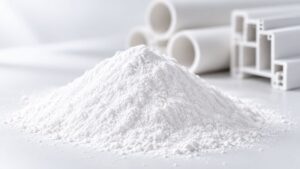
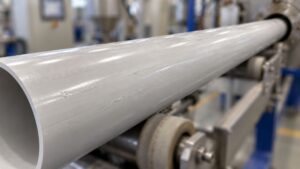
Both PE wax and oxidized PE wax are used in PVC processing, particularly in rigid PVC products such as pipes, profiles, sheets, and fittings. Their roles include lubrication, control of melt behavior, improved processing stability, and reduced adhesion to metal surfaces.
Standard PE wax is commonly associated with strong external lubrication. Oxidized PE wax, because of its increased polarity, interacts differently with PVC and other additives and can be used to adjust the lubrication and fusion balance of the formulation.
In practice, PVC formulations often use several lubricants rather than a single wax. The correct selection therefore depends on fusion time, processing torque, surface quality, output rate, thermal stability, filler level, and other additives present in the formulation.
PE Wax vs Oxidized PE Wax: Filler Masterbatch
In calcium carbonate filler masterbatch, waxes are used to improve processing, facilitate filler distribution, and control the rheology of highly filled mixtures. PE wax can reduce melt viscosity and improve flow, making it easier to process high concentrations of CaCO₃.
Oxidized PE wax can additionally provide stronger interaction with the relatively polar surface of calcium carbonate. This may improve wetting and dispersion under suitable formulation conditions, especially when filler loading is high or when dispersion quality is a major requirement.
However, the carrier resin in many filler masterbatches is PE or PP, both of which are non-polar. The selection in PE wax vs Oxidized PE wax therefore requires balancing filler interaction with compatibility with the polymer carrier. Surface-treated CaCO₃, wax viscosity, acid value, dosage, and extrusion conditions should all be considered.
PE Wax vs Oxidized PE Wax: Color Masterbatch
Color masterbatch requires uniform pigment distribution to achieve stable color strength, consistent appearance, and good processing behavior. Standard PE wax is commonly used to reduce viscosity and assist pigment distribution in PE- and PP-based systems.
Oxidized PE wax can improve wetting of certain pigments because of its higher polarity. This can be particularly useful for pigment surfaces that interact poorly with a completely non-polar dispersing medium.
The choice between PE wax vs Oxidized PE wax depends on the pigment chemistry, carrier resin, pigment loading, processing temperature, and required dispersion level. In many commercial formulations, wax performance is evaluated through dispersion tests rather than selected solely according to chemical classification.
PE Wax vs Oxidized PE Wax: Coatings and Inks
In coatings and inks, waxes are used to modify surface properties such as slip, rub resistance, abrasion resistance, blocking behavior, gloss, and surface feel. Both PE wax and oxidized PE wax can be used, depending on the formulation system.
Oxidized PE wax is particularly useful when greater polarity, pigment interaction, or water-based emulsification is required. Standard PE wax remains useful where low surface energy, lubrication, slip, or compatibility with non-polar components is more important.
Particle size, wax hardness, melting point, dispersion method, and formulation chemistry are particularly important in coatings and inks. The choice should therefore be based on the targeted surface property rather than oxidation status alone.
When Should You Use PE Wax?
PE wax is generally suitable when the formulation requires strong lubrication, reduced melt viscosity, improved flow, mold or metal release, and good compatibility with non-polar polymer systems. It is particularly common in PE, PP, PVC, masterbatch, compounds, rubber, and other melt-processing applications.
For formulations dominated by polyolefin resins, standard PE wax may provide a simpler compatibility profile because its chemical structure is similar to the polymer matrix. It can also be appropriate when there is no specific requirement for high polarity or water-based emulsification.
The final selection should consider molecular weight, viscosity, melting point, density, thermal stability, and dosage. Different grades of PE wax can provide significantly different processing behavior even when they belong to the same general product category.
When Should You Use Oxidized PE Wax?
Oxidized PE wax is generally preferred when greater polarity or interaction with polar formulation components is required. Typical situations include pigment and mineral filler dispersion, PVC processing, coatings, surface treatments, and applications requiring wax emulsification.
It can be particularly useful when the formulation contains interfaces between non-polar polymer phases and polar inorganic materials. The oxygen-containing groups can improve wetting or interfacial interaction, while the polyethylene backbone continues to provide wax-like processing and surface properties.
Selection should not be based on acid value alone. Oxidation level, viscosity, molecular weight, melting behavior, hardness, and compatibility with the complete formulation must also be considered.
PE Wax or Oxidized PE Wax: Which One Should You Choose?
The most suitable material depends on the function expected from the wax. PE wax vs Oxidized PE wax is therefore a formulation question rather than a simple comparison of which material is technically superior.
| Requirement | PE wax | Oxidized PE wax |
| Low polarity | More suitable | Less suitable |
| Compatibility with PE/PP | Generally high | Depends on oxidation level |
| External lubrication | Commonly used | Also used, formulation-dependent |
| Interaction with polar fillers | Limited to moderate | Generally stronger |
| Pigment wetting and dispersion | Effective in many systems | Often advantageous with polar surfaces |
| CaCO₃-filled systems | Commonly used | Can improve filler interaction |
| Water-based emulsification | More difficult | More suitable |
| PVC processing | Widely used | Widely used |
| Coatings and inks | Suitable | Particularly useful where polarity is required |
For polyolefin processing and applications where low polarity and lubrication are the primary requirements, conventional PE wax is often an appropriate choice. When stronger interaction with pigments, mineral fillers, polar components, or aqueous emulsification systems is needed, oxidized PE wax may provide additional functionality.
In many industrial formulations, laboratory or production-scale testing remains necessary. Changes in filler treatment, pigment chemistry, carrier resin, stabilizer package, processing temperature, or wax dosage can significantly alter the performance of both wax types.
Conclusion
PE wax is a non-polar wax mainly used for lubrication, flow control, and processing in non-polar polymer systems. Oxidized PE wax contains polar functional groups, making it more suitable for pigments, mineral fillers, PVC, and water-based formulations. For businesses, the choice should be based on the formulation, processing conditions, and required performance to achieve the right balance of compatibility, dispersion, lubrication, and cost.