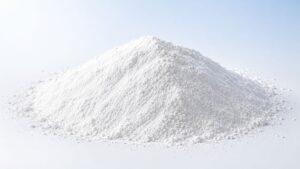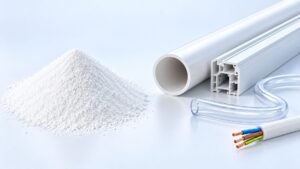

PVC thermal stability is a critical factor in determining how Polyvinyl chloride behaves at high temperatures, particularly during industrial processing. Unlike many thermoplastic polymers, PVC is susceptible to chemical degradation within its normal processing temperature range. Without adequate thermal stabilization, prolonged heat exposure can cause discoloration, Hydrogen chloride (HCl) release, structural changes, and deterioration of material properties. Understanding these reactions is essential for controlling processing conditions and maintaining consistent product quality. This article by TLD Vietnam examines the mechanisms of PVC thermal degradation, the factors that influence thermal stability, and the chemical principles behind effective stabilization methods.
What Is PVC Thermal Stability?
Definition of PVC Thermal Stability
PVC thermal stability refers to the ability of Polyvinyl chloride to resist chemical degradation when exposed to elevated temperatures for a specified period. It describes how effectively the polymer maintains its molecular structure and limits undesirable reactions, particularly the elimination of HCl (HCl) from its molecular chains.
Unlike thermal resistance, which generally concerns the ability of a material to retain its functional properties at elevated temperatures, PVC thermal stability primarily addresses chemical changes caused by heat. These changes may begin before significant deformation or mechanical failure becomes apparent.
The thermal stability of a PVC formulation depends on the characteristics of the polymer resin, the stabilizer system, other formulation components, and the conditions under which the material is processed. Consequently, thermal stability should be evaluated in relation to a defined temperature, exposure period, and processing environment rather than treated as a fixed property of PVC.
Why Is Thermal Stability Important in PVC Processing?
PVC is widely processed through extrusion, injection molding, calendering, and other thermoplastic manufacturing methods. These operations require sufficient heat and mechanical energy to transform PVC compounds into a processable state. However, the temperatures required for effective fusion and melt processing also increase the rate of chemical degradation.
Rigid PVC compounds are commonly processed at temperatures around 160-200°C, depending on formulation, equipment, and product requirements. At these temperatures, unstabilized PVC can undergo significant dehydrochlorination. Thermal stabilizers are therefore essential for controlling degradation during the residence time required for processing.
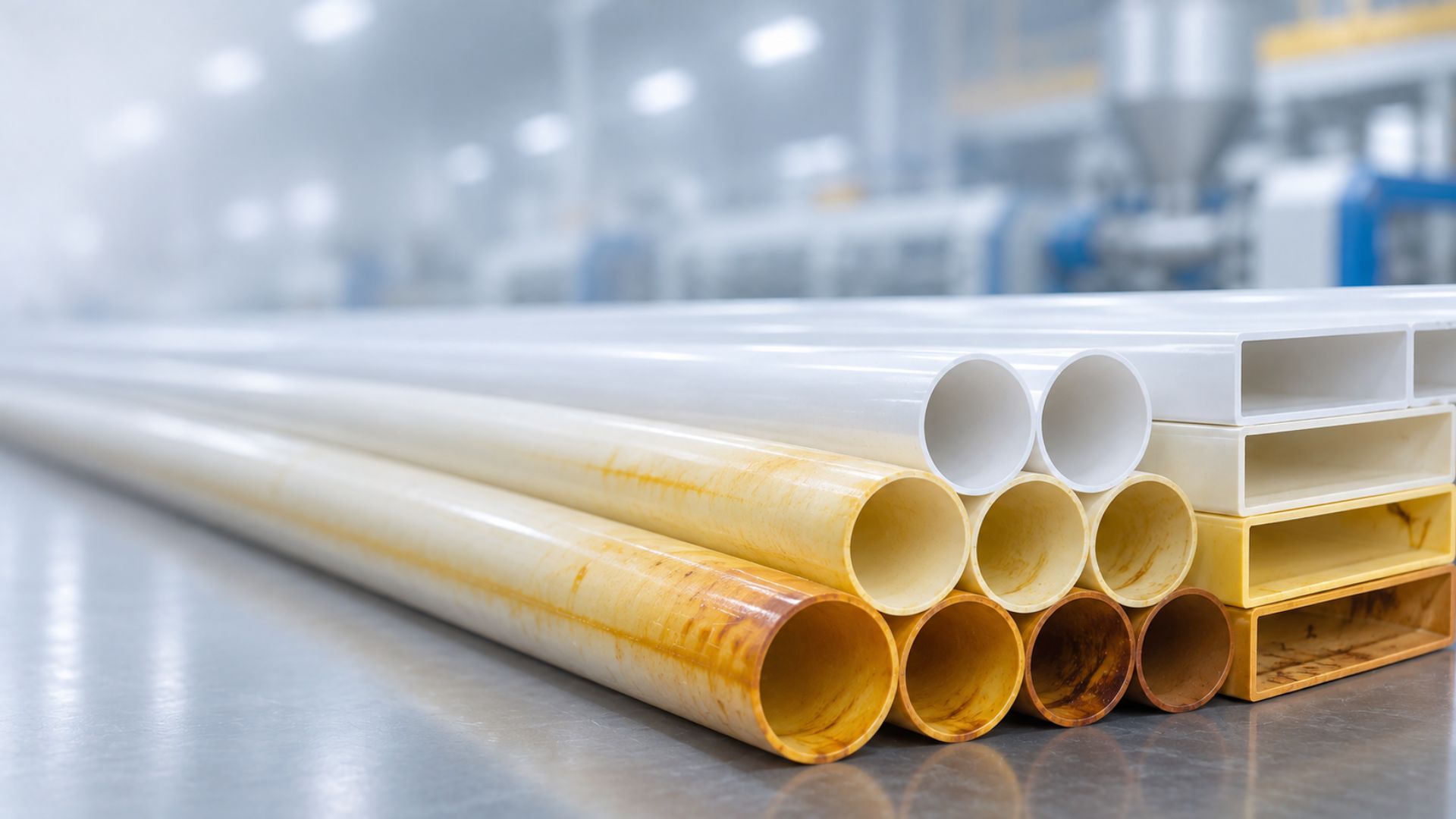
Insufficient PVC thermal stability can cause yellowing, dark streaks, surface defects, and variations in product appearance. More severe degradation may affect mechanical performance and increase the risk of material contamination within processing equipment. Adequate stabilization helps maintain a practical processing window in which the compound can achieve the required fusion and shaping characteristics without excessive chemical deterioration.
PVC Thermal Stability vs Heat Resistance
Although thermal stability and heat resistance both describe material behavior at elevated temperatures, they represent different properties. Thermal stability concerns the chemical integrity of PVC, whereas heat resistance describes its ability to retain physical properties, dimensions, or mechanical performance under thermal exposure.
For example, heat deflection temperature (HDT) measures the temperature at which a specimen reaches a specified deformation under load. Vicat softening temperature evaluates resistance to penetration by a standardized needle as the temperature increases. Neither measurement directly determines the rate of chemical degradation.
A formulation can demonstrate satisfactory PVC thermal stability during extrusion while having limited dimensional resistance under elevated service temperatures. Similarly, an increase in HDT does not necessarily indicate improved chemical stability. These properties require separate evaluation because they depend on different aspects of polymer behavior.
Understanding the Thermal Degradation Mechanism Of PVC
Why Is PVC Thermally Unstable?
Polyvinyl chloride consists of repeating units with the chemical structure –CH₂–CHCl–. The presence of chlorine atoms along the polymer backbone contributes to PVC’s characteristic properties but also creates pathways for chemical reactions when sufficient thermal energy is introduced.
In an ideal PVC structure, chlorine atoms are attached predominantly to secondary carbon atoms. However, commercial PVC contains small concentrations of structural irregularities formed during polymerization. These may include allylic chlorine groups, tertiary chlorine sites, and other defects that have lower thermal stability than regular repeating units.
These structural defects can initiate degradation at temperatures below those required for extensive decomposition of the regular polymer structure. Once degradation begins, additional reactive sites may develop along the molecular chains, allowing the reaction to propagate.
PVC thermal stability is therefore influenced not only by the strength of individual chemical bonds but also by the distribution of structural defects and the chemical reactions that follow the initial bond transformations.
Dehydrochlorination: The Primary Degradation Reaction
Dehydrochlorination is the principal chemical reaction responsible for the initial thermal degradation of PVC. During this process, a hydrogen atom and a chlorine atom are eliminated from neighboring carbon atoms in the polymer chain, releasing HCl and creating a carbon-carbon double bond.
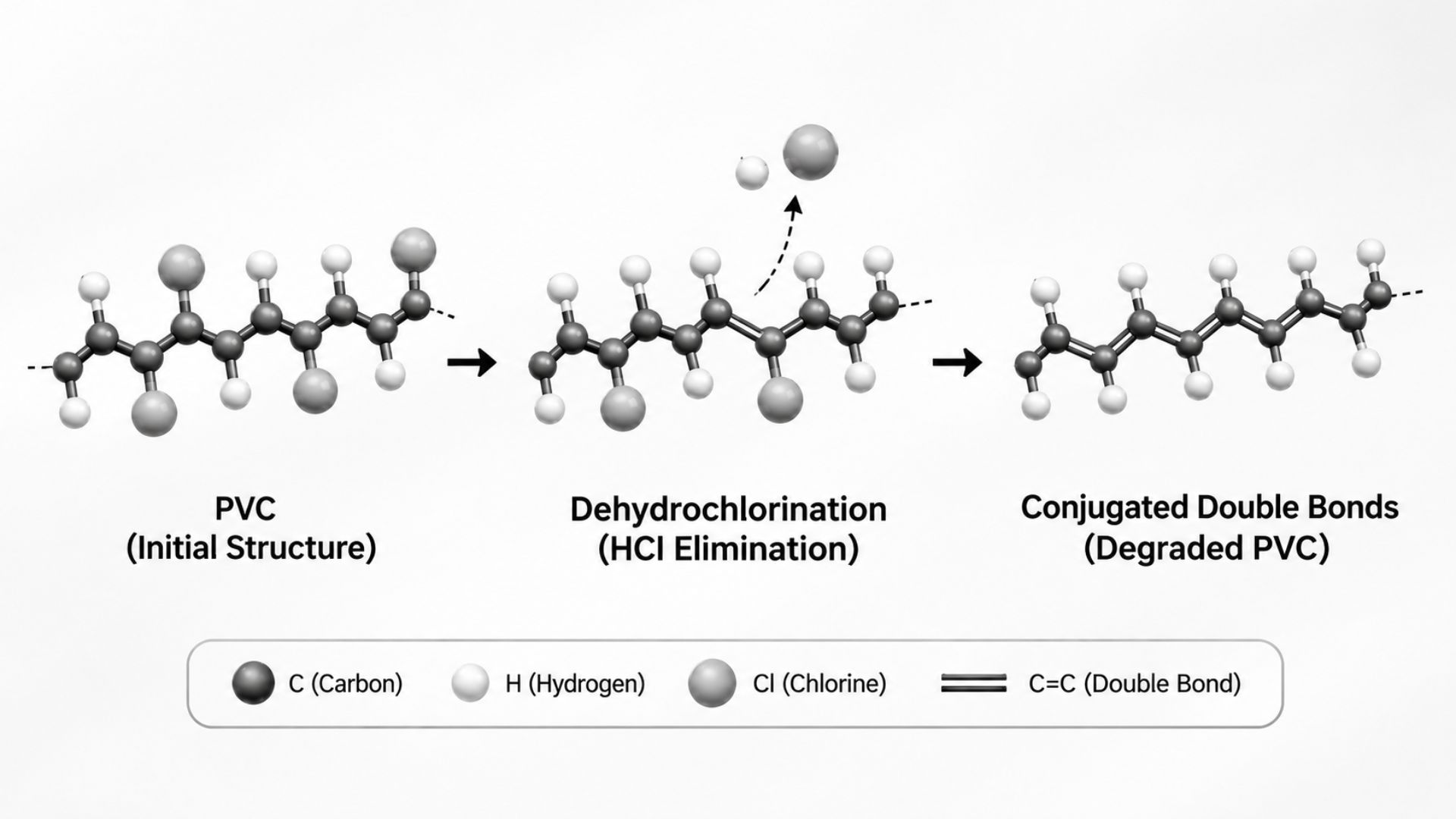
The reaction can be represented schematically as follows:
–CH₂–CHCl– → –CH=CH– + HCl
This representation illustrates the fundamental chemical transformation, although the actual reaction occurs within polymer chains through several possible molecular pathways. Dehydrochlorination often begins at thermally unstable structural sites. The formation of a double bond can create new reactive configurations that facilitate further elimination of HCl from adjacent units. Under favorable conditions, successive reactions produce increasingly extended unsaturated segments within the polymer backbone.
The reaction rate increases with temperature and depends strongly on exposure time, molecular structure, and the presence of stabilizing or catalytic substances. Since industrial PVC processing occurs within a temperature range where these reactions are relevant, preventing excessive dehydrochlorination is fundamental to PVC thermal stability.
Formation Of Conjugated Polyene Sequences
As dehydrochlorination progresses, successive carbon-carbon double bonds may form along the polymer backbone. When these double bonds alternate with single bonds, they create structures known as conjugated polyene sequences.
Conjugation changes the electronic structure of the polymer chain and allows certain wavelengths of visible light to be absorbed. As the conjugated sequences become longer and more abundant, noticeable changes in the color of PVC can occur.
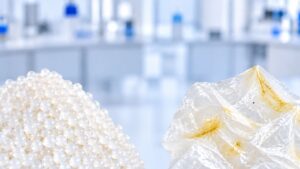
The development of relatively short conjugated sequences is associated with the early stages of discoloration. As degradation progresses, PVC may change from original appearance to yellow, orange, brown, and eventually dark brown or black. The precise color progression depends on the formulation, temperature, oxygen exposure, and secondary chemical reactions.
Color change is therefore an important practical indicator of thermal degradation, particularly when evaluating the initial color stability of PVC compounds. However, discoloration does not provide a complete measurement of the polymer’s chemical condition or remaining mechanical performance.
Autocatalytic Degradation And The Role Of HCl
One characteristic of PVC thermal degradation is that the reaction can accelerate after it begins. HCl generated during dehydrochlorination can participate in subsequent chemical pathways that promote additional degradation.
The detailed autocatalytic mechanism is complex and may involve ionic, molecular, and radical intermediates. Experimental studies have demonstrated that interactions involving HCl and conjugated polyene structures can contribute to the formation of additional thermally unstable sites.
As degradation progresses, the concentration of reactive species may increase, creating conditions in which the rate of HCl elimination becomes progressively higher. This behavior explains why PVC compound may maintain an acceptable appearance for a certain period before experiencing rapid discoloration.
Effective PVC thermal stability therefore requires more than delaying the first degradation reaction. Stabilization systems must also reduce the chemical processes that accelerate degradation after initiation, including reactions involving HCl and unstable chlorine-containing structures.
How Thermal Degradation Affects PVC Properties
Thermal degradation affects PVC through several interconnected chemical and physical changes. The most recognizable consequence is discoloration, which results primarily from the formation and transformation of conjugated unsaturated sequences.
At more advanced stages, secondary reactions may include chain scission, crosslinking, cyclization, and oxidation. These reactions can alter the molecular architecture of the polymer and change its rheological and mechanical behavior. Depending on the degradation conditions, the material may experience changes in viscosity, tensile properties, impact resistance, and long-term durability.
During processing, degradation may also produce localized defects such as dark particles, streaks, and surface irregularities. Material retained in stagnant regions of an extrusion system can experience prolonged thermal exposure and subsequently contaminate otherwise acceptable production.
The severity of these effects depends on the extent of degradation rather than temperature alone. PVC thermal stability must therefore be considered together with actual processing conditions and the performance requirements of the finished product.
Key Factors Affecting PVC Thermal Stability
Processing Temperature And Residence Time
Temperature is one of the most influential variables in PVC thermal degradation. Higher processing temperatures generally accelerate dehydrochlorination and increase the rate at which unstable molecular structures develop.
However, temperature cannot be evaluated independently of residence time. PVC compound exposed to a moderately elevated temperature for an extended period may experience greater degradation than a compound subjected briefly to a higher temperature.
This relationship is particularly important in extrusion, where material residence time depends on screw configuration, throughput, equipment geometry, and operating conditions. Low-flow regions and stagnant material can remain exposed to heat significantly longer than the main polymer stream. Maintaining PVC thermal stability requires a balance between sufficient thermal energy for proper fusion and the shortest practical exposure to conditions that accelerate chemical deterioration.
Shear Stress And Processing Conditions
Mechanical shear contributes to the heating and fusion of PVC compounds during processing. Friction between material particles, the screw, and the barrel can generate additional heat beyond that supplied by external heating systems.
Excessive mechanical energy may increase local material temperatures and create unfavorable thermal histories. However, insufficient shear can also be problematic because inadequate fusion may reduce the consistency and mechanical performance of the finished product.
The effect of shear therefore depends on its interaction with temperature, material viscosity, lubricant balance, and processing time. High shear does not automatically indicate poor thermal stability, but uncontrolled shear heating can accelerate degradation. Effective processing requires sufficient mechanical energy to achieve the desired degree of fusion while avoiding excessive temperature gradients and prolonged exposure to damaging conditions.
PVC Resin Structure And Polymerization Characteristics
PVC resins differ in molecular weight, particle morphology, porosity, and structural characteristics. These differences influence fusion behavior, processing requirements, and the response of the material to thermal exposure. Molecular weight, commonly represented in commercial PVC classifications by K-value, affects melt viscosity and processing characteristics. However, K-value alone does not determine the inherent thermal stability of a resin.
The concentration and distribution of unstable structural groups also influence degradation behavior. Polymerization conditions, residual impurities, and the chemical history of the resin can affect the number of reactive sites capable of initiating dehydrochlorination.
Consequently, PVC thermal stability may vary between resin grades even when similar stabilizer systems are used. Formulation adjustments should account for both the molecular characteristics of the resin and its behavior under actual processing conditions.
Effects Of Additives, Fillers, And Formulation Components
Commercial PVC compounds contain multiple ingredients, including stabilizers, lubricants, fillers, processing aids, pigments, and, in flexible formulations, plasticizers. These ingredients can influence thermal degradation directly through chemical interactions or indirectly by changing fusion and processing behavior.
Fillers such as calcium carbonate can affect heat transfer, rheology, and the overall processing characteristics of PVC compounds. Their influence on thermal stability depends on factors including particle size, surface treatment, impurity content, and interactions with other additives. Calcium carbonate should not be considered a direct replacement for a dedicated heat stabilizer.
Lubricants also influence processing behavior by controlling friction and material flow. Excessive or insufficient lubrication may alter fusion characteristics, which can change the temperature and mechanical energy experienced by the compound.
The effect of any individual additive should therefore be evaluated within the complete formulation. A component that performs effectively in one PVC compound may behave differently when the resin grade, filler loading, or processing system changes.
Oxygen Exposure And Processing
Oxygen can contribute to secondary degradation reactions during prolonged thermal exposure. Oxidation may introduce additional chemical groups into the polymer structure and alter the pathways through which degradation proceeds. The influence of oxygen depends on temperature, exposure conditions, and the accessibility of oxygen to the polymer. Degradation behavior under air may therefore differ from results obtained under nitrogen or other controlled atmospheres.
Processing history is another important consideration. PVC material that has previously experienced elevated temperatures may already contain unsaturated structures or other chemical changes, even when its appearance remains acceptable.
Repeated processing or extended holding periods can increase cumulative thermal exposure. For this reason, PVC thermal stability should be evaluated with consideration of the material’s complete thermal history rather than the conditions of a single processing stage.
How Do Heat Stabilizers Improve PVC Thermal Stability?
Heat stabilizers are chemical additives designed to reduce the rate of thermal degradation during PVC processing and, where relevant, subsequent thermal exposure. Their effectiveness depends on the ability of the stabilizer system to interfere with the chemical reactions responsible for dehydrochlorination.
Different stabilizer chemistries act through different mechanisms. Many commercial systems combine several ingredients because no single reaction pathway fully accounts for PVC degradation under all processing conditions.
HCl Scavenging
Another important stabilization mechanism involves reactions with HCl released during dehydrochlorination. Compounds capable of neutralizing or reacting with HCl reduce its accumulation within the PVC formulation.
HCl scavenging is important because HCl can contribute to degradation pathways that accelerate further polymer deterioration. Removing HCl from the reaction environment can therefore extend the period during which the material remains acceptably stable.
Metal carboxylates, basic inorganic compounds, and other stabilizer components may perform this function through different chemical reactions. However, HCl scavenging does not completely prevent the initiation of dehydrochlorination. Effective PVC thermal stability generally requires a combination of mechanisms that address both the initial formation of unstable structures and the subsequent propagation of degradation.
Inhibiting Polyene Formation And Discoloration
The formation of conjugated polyene sequences is closely associated with PVC discoloration. Stabilizers that reduce dehydrochlorination at its initiation sites can limit the development of these structures and improve initial color retention.
Some secondary stabilizers also interfere with reactions involving conjugated sequences or other reactive degradation intermediates. Their contribution depends on the chemistry of the stabilizer system and the conditions of thermal exposure.
Initial color stability and long-term thermal stability are related but distinct performance characteristics. A formulation may retain its initial color effectively but experience rapid degradation after extended heating. Another formulation may undergo some early color change while maintaining a slower subsequent degradation rate. For this reason, PVC thermal stability should be assessed using appropriate criteria for both early-stage discoloration and prolonged thermal exposure.
Synergistic Effects In Multi-Component Stabilizer Systems
Commercial heat stabilizers frequently contain several components that perform complementary chemical functions. This approach allows the formulation to address multiple degradation pathways simultaneously.
One component may react with unstable chlorine sites, while another neutralizes HCl or reacts with potentially harmful stabilizer byproducts. Additional ingredients may contribute to initial color retention, longer-term stabilization, or processing compatibility.
The effectiveness of a combined system is not necessarily equal to the sum of its individual components. Chemical interactions can improve performance when properly balanced, but unfavorable ratios may reduce thermal stability or create processing difficulties. Understanding these interactions is essential when selecting stabilizers for formulations with different resin grades, filler contents, and thermal processing requirements.
Common Heat Stabilizer Systems Used In PVC
Calcium-Zinc (Ca-Zn) Stabilizers
Calcium-zinc stabilizers are widely used in PVC formulations, particularly where lead-free stabilization is required. These systems typically combine calcium and zinc compounds with additional organic or inorganic ingredients to obtain suitable initial color retention and longer-term thermal stability.
Zinc stearate can react with certain thermally labile chlorine sites in PVC, helping delay the formation of conjugated polyene sequences. However, reactions involving zinc compounds may generate zinc chloride (ZnCl₂), which can accelerate dehydrochlorination.
This effect is associated with the phenomenon commonly described as zinc burning, in which PVC experiences rapid discoloration and degradation after an initial period of acceptable stability. Excessive zinc activity or an inadequately balanced formulation can increase this risk.
Calcium stearate contributes primarily through HCl scavenging and interactions with zinc-containing species. In suitable systems, calcium compounds can react with ZnCl₂, limiting its accumulation while regenerating part of the active zinc stabilizer through exchange reactions.
The performance of Ca-Zn stabilizers therefore depends on the balance between calcium and zinc components, as well as the presence of appropriate co-stabilizers. Calcium stearate and zinc stearate also possess lubricating characteristics, meaning their concentrations may influence both chemical stabilization and fusion behavior.
Lead-Based Stabilizers
Lead-based stabilizers have historically been used in rigid PVC applications because of their effective thermal stabilization and relatively broad processing tolerance. Depending on their chemical composition, lead can neutralize HCl and participate in reactions that reduce the rate of degradation. Commercial lead stabilizer packages may also contain lubricants and other ingredients that influence processing behavior.
Despite their technical performance, lead-based stabilizers present significant health and environmental concerns. Their use is restricted or subject to phase-out in many markets and applications, particularly where human exposure or environmental release may occur.
The selection of alternative stabilizer systems requires consideration of both regulatory requirements and the technical characteristics of the PVC formulation. Replacing a lead-based system with another chemistry often requires adjustments to the stabilizer package, lubrication balance, and processing conditions.
Organotin Stabilizers
Organotin stabilizers are another important category of heat stabilizers used in PVC processing. Certain organotin compounds are effective at replacing unstable chlorine atoms and limiting reactions associated with dehydrochlorination. Some organotin formulations provide excellent initial color retention and thermal stabilization, characteristics that are particularly relevant to applications requiring high clarity or controlled appearance.
However, organotin compounds differ considerably in their chemical composition and toxicological profiles. Their suitability depends on the specific compound, intended application, regulatory requirements, and potential exposure conditions. Organotin stabilizers should therefore be evaluated according to both technical performance and the applicable safety and compliance requirements rather than considered a single interchangeable class of additives.
Organic Co-Stabilizers and Secondary Stabilization
Organic co-stabilizers are frequently incorporated into PVC heat stabilizer systems to improve specific aspects of thermal performance. These compounds may react with degradation intermediates, contribute to initial color retention, or interact with metal-containing stabilizer components.
Examples include certain beta-diketones, polyols, phosphites, and other organic compounds selected according to their chemical functions. Epoxidized compounds may also contribute to stabilization through reactions involving HCl or other reactive species.
The performance of these additives depends on their compatibility with the primary stabilizer chemistry. Some ingredients improve initial color, while others are more effective at extending the induction period before rapid degradation occurs. The selection of secondary components is particularly important in Ca-Zn systems, where controlling zinc-related degradation and balancing initial color with longer-term performance are central formulation considerations.
How to Improve PVC Thermal Stability During Processing
Selecting The Appropriate Heat Stabilizer System
Improving PVC thermal stability begins with selecting a stabilizer system that corresponds to the resin characteristics, formulation requirements, and intended processing conditions. Different PVC applications may require different stabilization profiles. For example, continuous extrusion of rigid PVC profiles may involve different residence times, shear conditions, and appearance requirements from injection molding or flexible PVC processing.
Stabilizer selection should therefore consider initial color retention, resistance to prolonged thermal exposure, compatibility with other additives, and the required processing window. The most effective system is not necessarily the formulation containing the highest stabilizer concentration. It is the system that provides adequate chemical protection while maintaining the necessary fusion characteristics and finished product properties.
Optimizing Stabilizer Dosage And Formulation Balance
Stabilizer dosage must be sufficient to control the degradation reactions expected during processing. However, increasing dosage does not always produce a proportional improvement in performance. In multi-component systems, the ratio between ingredients can be as important as the total stabilizer concentration. This is particularly relevant to Ca-Zn formulations, where excessive zinc activity may contribute to premature degradation through ZnCl₂ formation.
The required dosage also depends on other formulation components, including fillers, lubricants, processing aids, and pigments. Changes in these ingredients may influence thermal exposure, fusion behavior, or interactions with the stabilizer system.
Formulation optimization should therefore rely on controlled comparisons in which stabilizer composition, processing conditions, and thermal performance are evaluated together.
Controlling Processing Temperature, Shear, And Residence Time
Processing conditions have a direct influence on the thermal history of PVC compounds. Even an appropriately stabilized formulation may degrade when exposed to excessive temperatures or unusually long residence times.
Temperature control should account for both externally heated equipment surfaces and heat generated through mechanical shear. Actual melt temperature can differ from barrel set temperatures, particularly when processing conditions change.
Residence time should also be controlled by maintaining suitable throughput and limiting material stagnation. Dead zones, extended shutdown periods, and prolonged exposure to heated equipment can increase the risk of localized degradation. Improving PVC thermal stability during processing therefore requires coordinated control of temperature, shear, material flow, and equipment operating conditions.
Balancing Thermal Stability, Lubrication, And Fusion
Thermal stabilization and lubrication are closely connected through their influence on PVC processing behavior. Although lubricants do not necessarily prevent dehydrochlorination through direct chemical reactions, they can alter the mechanical energy and thermal conditions experienced by the compound.
Internal lubricants generally influence friction and flow within the material, while external lubricants primarily reduce friction between the compound and processing equipment. The behavior of individual lubricants may overlap depending on their chemistry and concentration.
Excessive external lubrication can delay fusion, while insufficient lubrication may increase frictional heating and cause unstable processing conditions. Both situations can reduce the effective processing window.
A balanced formulation must therefore achieve the required fusion characteristics without unnecessary thermal exposure. PVC thermal stability is most effectively maintained when chemical stabilization, lubrication, and processing conditions are considered as an integrated system.
Conclusion
PVC thermal stability depends on polymer structure, degradation reactions, stabilizer chemistry, and processing conditions. Heat stabilizers control dehydrochlorination through HCl scavenging, chlorine-site replacement, and degradation control. Effective stabilization requires balanced formulations and controlled processing conditions to minimize degradation and maintain consistent material performance.
FAQs
1. At What Temperature Does PVC Start to Degrade?
PVC can undergo dehydrochlorination even below normal processing temperatures, particularly during prolonged heat exposure. Degradation becomes more significant within the typical processing range of 160- 200°C, depending on the resin formulation, stabilizer system, and exposure time.
2. Why Does PVC Turn Yellow or Brown When Heated?
Heat-induced dehydrochlorination releases HCl and forms conjugated polyene sequences in the PVC structure. These structures absorb visible light, causing progressive discoloration from yellow to brown and eventually darker shades as degradation advances.
3. What Is the Difference Between Static and Dynamic Thermal Stability?
Static thermal stability measures PVC resistance to heat under stationary conditions, typically through oven aging tests. Dynamic thermal stability evaluates resistance to degradation under combined heat and mechanical shear during processing.