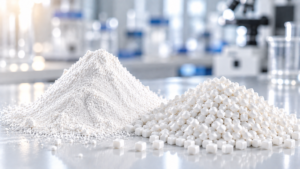

Polystyrene (PS) is widely used in thermoformed products such as food trays, disposable containers, lids, and consumer packaging. Its relatively high stiffness, good processability, and ability to form thin sheets make PS for thermoforming an important material option for packaging and other formed products.
However, selecting PS for thermoforming involves more than choosing a general PS resin. General Purpose Polystyrene (GPPS) and High Impact Polystyrene (HIPS) have different mechanical, optical, and processing characteristics. The appropriate material depends on the required stiffness, impact resistance, transparency, surface quality, sheet thickness, forming conditions, and final application.
This guide by TLD Vietnam explains how PS thermoforming works, the differences between HIPS and GPPS, the main properties that should be considered, and how to select a suitable PS grade for thermoforming applications.
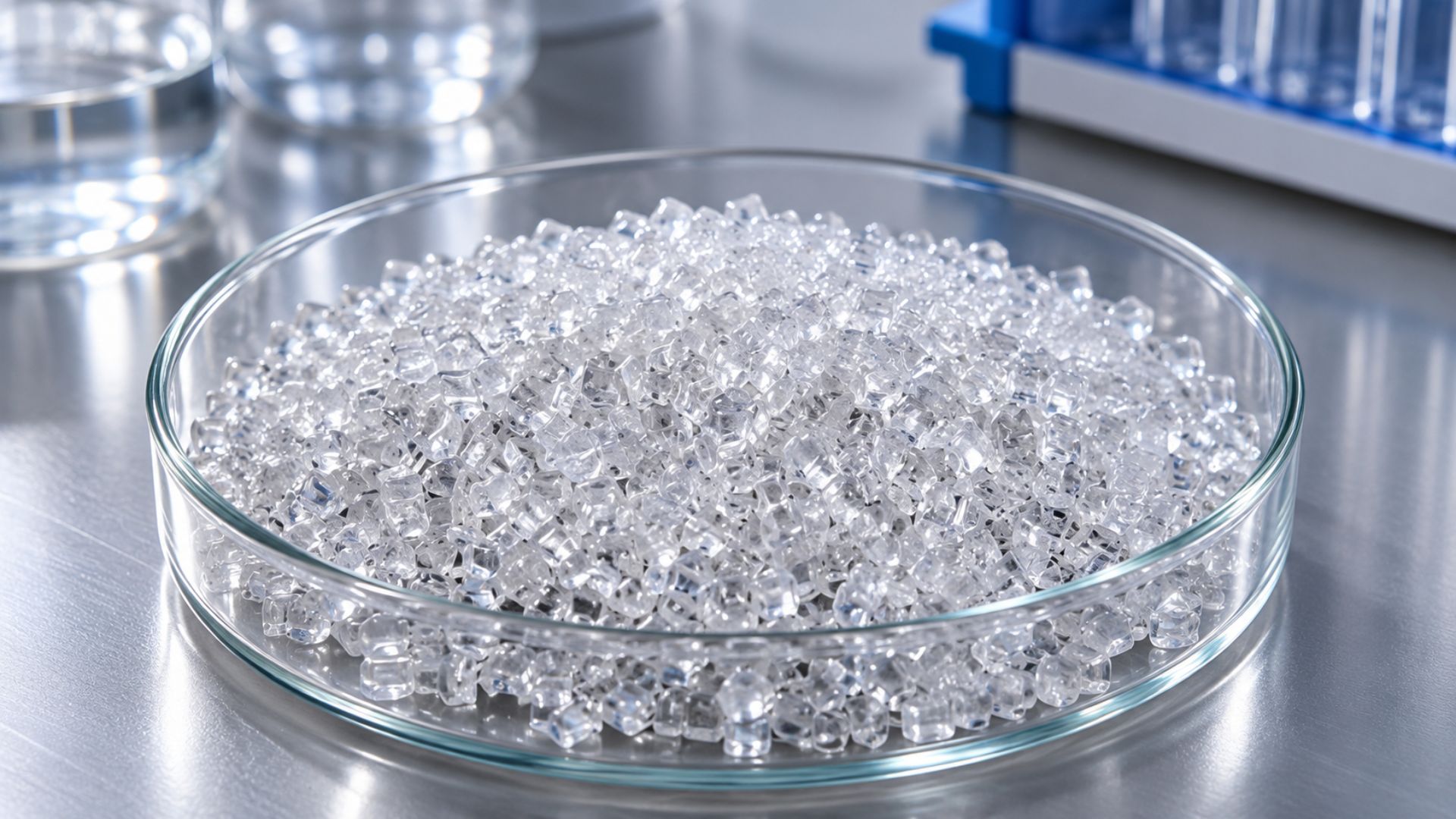
What Is PS Thermoforming?
PS thermoforming is a manufacturing process in which a PS sheet is heated until it reaches a formable state and then shaped against a mold using vacuum, pressure, mechanical force, or a combination of these methods. After forming, the material is cooled to retain the required geometry before the finished part is trimmed.
Unlike processes such as injection molding, thermoforming generally starts with a pre-extruded plastic sheet rather than feeding resin pellets directly into the forming stage. Therefore, the performance of PS for thermoforming depends on both the properties of the original resin and the characteristics of the extruded sheet.
How The PS Thermoforming Process Works
The PS thermoforming process generally consists of two main stages: sheet extrusion and thermoforming. PS resin pellets are first melted and extruded through a flat die to produce a sheet with controlled thickness. Depending on the production system, the sheet can be wound into rolls for subsequent processing or transferred directly to an integrated thermoforming line.
During thermoforming, the PS sheet is heated until it becomes sufficiently soft for forming. Vacuum, pressure, mechanical assistance, or a combination of these methods is then used to draw the heated sheet against a mold. The formed material is subsequently cooled to retain its shape before individual products are trimmed or cut from the surrounding sheet.
The basic production sequence consists of sheet extrusion, heating, forming, cooling, and trimming. Each stage places different demands on the material, from extrusion stability and sheet uniformity to controlled stretching and resistance to cracking during forming and trimming.
For this reason, selecting PS for thermoforming requires more than considering the properties of the finished product. The resin grade should also be compatible with sheet extrusion and provide suitable behavior during reheating, stretching, cooling, and trimming. These requirements are important when determining whether HIPS or GPPS, and which specific grade within each material family, is appropriate for a particular application.
Why PS Is Used For Thermoforming
PS combines several properties that are useful for thermoforming. It offers relatively high stiffness, good dimensional stability, ease of extrusion into sheet, and relatively efficient forming behavior. PS can also provide good surface appearance and is suitable for high-volume production of thin-wall products.
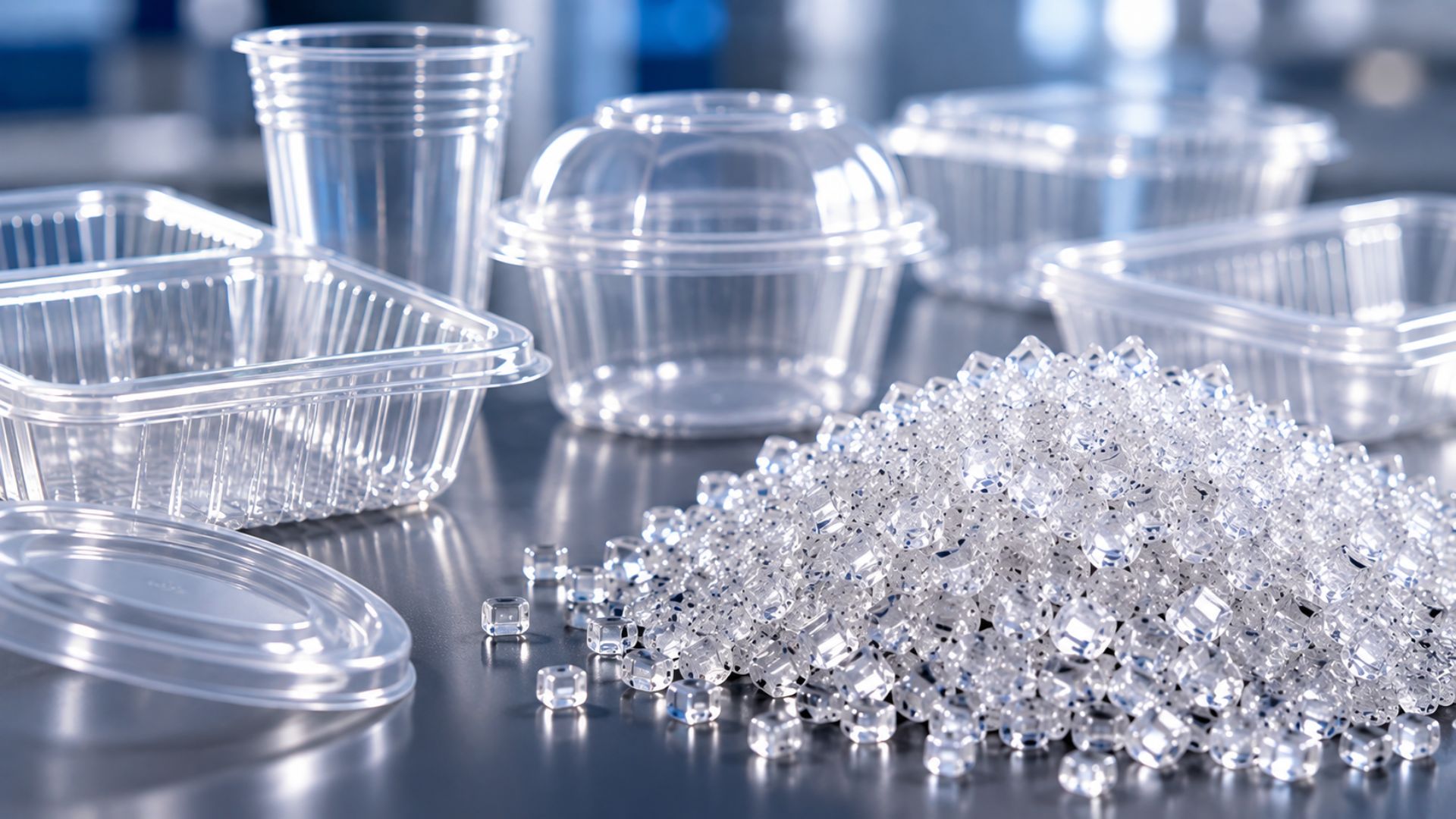
Another advantage is the availability of different PS types. GPPS provides high clarity and rigidity, while HIPS provides substantially better toughness and impact resistance because it is modified with a rubber phase. This allows manufacturers to select PS for thermoforming according to the mechanical and visual requirements of the final product.
The choice is therefore application-specific. A transparent product may benefit from GPPS, whereas a product exposed to handling, stacking, or mechanical stress may require the higher toughness of HIPS.
HIPS vs GPPS For Thermoforming
HIPS and GPPS are both PS materials, but their structures and resulting properties are different. Understanding this distinction is essential when selecting PS for thermoforming because the material must withstand extrusion, heating, stretching, cooling, trimming, and subsequent use.
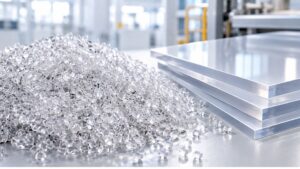
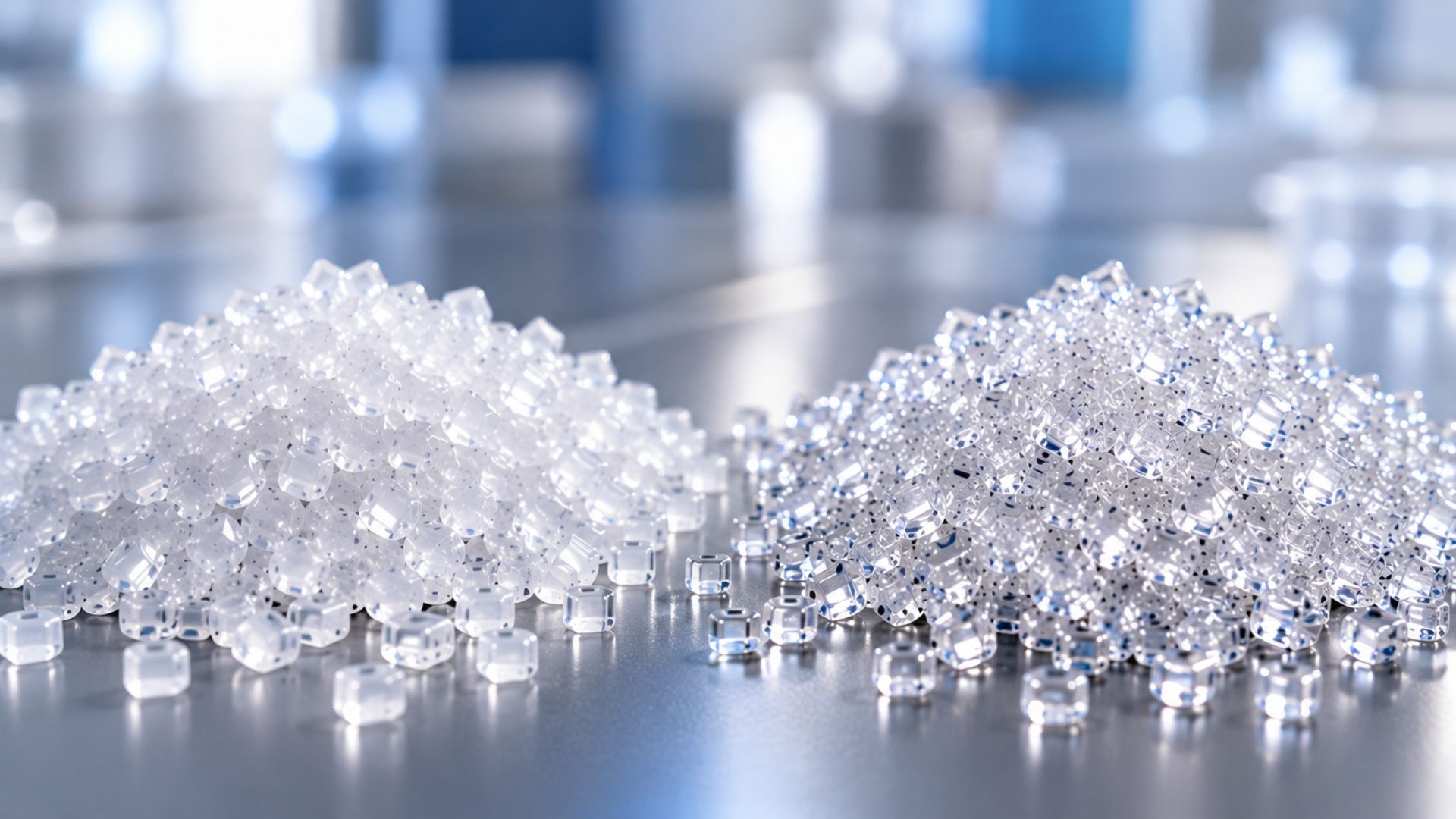
GPPS is an unmodified or general-purpose PS characterized by high rigidity, transparency, and relatively low impact resistance. HIPS is produced by modifying PS with a rubber phase, usually based on polybutadiene, which improves toughness but reduces transparency.
HIPS For Thermoforming
High Impact PS is frequently used when the thermoformed part requires a combination of stiffness and toughness. The rubber modification improves resistance to cracking and mechanical impact compared with GPPS, making HIPS suitable for products that may experience handling, transportation, stacking, or deformation during use.
HIPS generally produces opaque or translucent sheets rather than the clear appearance associated with GPPS. For applications where transparency is not essential, this trade-off can be acceptable because improved impact performance may reduce brittle failure during forming, trimming, and end use.
When selecting HIPS as PS for thermoforming, processors should still evaluate individual grades rather than assuming that all HIPS grades behave identically. Melt flow, impact strength, heat behavior, sheet extrusion performance, and surface requirements can differ significantly between grades.
GPPS For Thermoforming
General Purpose PS is characterized by high stiffness, good dimensional stability, surface gloss, and transparency. These characteristics make it relevant for applications where appearance, clarity, or rigidity is more important than high impact resistance.
The main limitation of GPPS is its relatively brittle mechanical behavior. Parts subjected to impact, bending, aggressive trimming, or rough handling can be more susceptible to cracking than equivalent HIPS products. Product geometry and sheet thickness therefore become particularly important when GPPS is considered.
GPPS can still be an effective PS for thermoforming when its properties correspond to the application. The selection should be based on actual performance requirements rather than treating HIPS as the default material for every thermoformed PS product.
Key Differences Between HIPS And GPPS
The fundamental difference is the balance between optical properties, stiffness, and toughness. GPPS generally provides better transparency and high rigidity, while HIPS sacrifices transparency in exchange for improved impact resistance and toughness.
| Property | GPPS | HIPS |
| Transparency | High | Low to opaque |
| Rigidity | High | High to moderate |
| Impact resistance | Relatively low | Higher |
| Toughness | Lower | Higher |
| Surface appearance | High gloss possible | Good surface quality |
| Thermoforming suitability | Application-dependent | Widely used |
| Main selection reason | Clarity and stiffness | Toughness and impact resistance |
These differences should be considered together with grade-specific technical data. The designation GPPS or HIPS is not sufficient to determine whether a particular resin will perform effectively under a specific sheet extrusion and thermoforming process.
How To Choose A PS Grade For Thermoforming
Selecting PS for thermoforming requires evaluation of both processing behavior and final-product performance. Resin properties influence extrusion stability, sheet quality, forming behavior, wall-thickness distribution, trimming performance, and the mechanical properties of the finished product.
A technical data sheet is therefore more useful than relying only on the commercial designation of a grade. Melt flow, impact strength, mechanical properties, thermal characteristics, and regulatory status are among the parameters that should be evaluated.
Melt Flow Index (MFI)
Melt Flow Index, also referred to as Melt Flow Rate (MFR), indicates the flow behavior of a polymer melt under specified test conditions. It is an important processing parameter, but a higher or lower MFI should not automatically be interpreted as better for thermoforming.
For PS for thermoforming, the selected melt flow should be compatible with sheet extrusion and the required forming behavior. A resin must flow sufficiently during extrusion while allowing the resulting sheet to maintain appropriate strength during heating and stretching.
Manufacturers should therefore compare MFI together with extrusion conditions, sheet thickness, equipment configuration, and supplier recommendations. Two PS grades with similar MFI values may still show different processing behavior because other molecular and formulation characteristics also affect performance.
Impact Strength
Impact strength is especially important for products that undergo handling, stacking, transportation, or mechanical stress. Low impact resistance can increase the risk of cracking during trimming or during the use of the finished product.
HIPS generally offers substantially higher impact strength than GPPS because of its rubber-modified structure. This is one of the principal reasons why HIPS is commonly considered for thermoformed packaging and other products where toughness is required.
However, the required impact level depends on the application. Excess mechanical performance is not necessarily beneficial if the product instead requires high transparency or specific stiffness. Selecting PS for thermoforming therefore requires balancing impact performance against other functional requirements.
Rigidity And Dimensional Stability
Rigidity PS thermoformed products retain their geometry during stacking, filling, transportation, and use. It is particularly important for thin-wall products because reducing material thickness can make the finished structure more susceptible to deformation.
GPPS provides high stiffness, while HIPS provides a different balance between rigidity and toughness. The appropriate choice depends on product geometry, wall thickness, ribs, edges, loading conditions, and the required resistance to deformation.
Dimensional stability must also be considered during cooling. Formed PS parts should retain the required dimensions after leaving the mold, making resin behavior, sheet uniformity, process temperature, and mold design interrelated factors.
Transparency And Surface Appearance
Optical requirements can directly determine whether GPPS or HIPS is appropriate. GPPS can provide high transparency and gloss, making it suitable where product visibility or a clear appearance is required. HIPS is generally opaque because of its rubber-modified structure.
For colored or opaque packaging, transparency may have little importance, allowing impact resistance and processability to receive greater emphasis. Surface quality, printability, coloration, and decorative requirements may instead become more relevant.
When evaluating PS for thermoforming, manufacturers should therefore define the visual specification before selecting the resin. Optical performance should be treated as a functional requirement rather than an isolated aesthetic property.
Food-Contact Requirements
A significant proportion of thermoformed PS products are used in food packaging, making regulatory compliance an important consideration. Not every PS grade should be assumed to be suitable for direct food contact simply because the base polymer is PS.
Manufacturers should verify the supplier’s declaration of compliance and applicable regulations for the intended market. Requirements can differ according to country, application, food type, contact conditions, temperature, and duration of contact.
Food-contact status should consequently be evaluated alongside mechanical and processing properties when selecting PS for thermoforming for trays, containers, lids, and other food-related products.
PS Thermoforming Applications
PS thermoforming is widely associated with packaging because the process can efficiently produce thin-wall parts in high volumes. Typical applications include food trays, meat and produce trays, dairy containers, takeaway containers, lids, disposable food-service products, inserts, display packaging, and various consumer-product packages.
HIPS is commonly relevant where the product needs greater toughness and resistance to cracking during forming, trimming, stacking, transportation, or use. GPPS can be considered where transparency, gloss, or higher rigidity is important and where the product design does not require the same level of impact resistance.
Outside food packaging, PS for thermoforming can also be used for consumer and industrial packaging, product inserts, protective trays, display components, and other formed sheet products. The exact material requirements vary considerably according to part geometry, sheet thickness, loading conditions, appearance, and expected service environment.
The application should therefore be defined before the resin grade is selected. Instead of asking whether HIPS or GPPS is generally better for thermoforming, processors should identify the mechanical, optical, processing, and regulatory requirements of the finished product and select the grade accordingly.
HIPS Or GPPS: Which One Should You Choose?
There is no universal choice between HIPS and GPPS for every thermoforming application. The appropriate material depends on the performance priorities of the finished product and the processing conditions used to manufacture it.
| Requirement | Material generally considered |
| High transparency | GPPS |
| High rigidity | GPPS |
| Higher impact resistance | HIPS |
| Greater toughness | HIPS |
| Opaque thermoformed packaging | HIPS |
| Clear thermoformed products | GPPS |
| Resistance to handling damage | HIPS generally has an advantage |
| High-gloss clear appearance | GPPS generally has an advantage |
For products where transparency is essential and mechanical impact is limited, GPPS may provide the required balance of clarity and stiffness. Where toughness, resistance to cracking, and handling durability are more important, HIPS is generally the more appropriate material family.
This comparison, however, is only the first stage of material selection. Once the polymer type has been identified, processors should compare individual grades based on MFI, impact strength, tensile and flexural properties, thermal characteristics, food-contact status where relevant, and recommendations for sheet extrusion or thermoforming.
Trial processing may also be necessary when changing grades or suppliers. Actual performance depends not only on resin properties but also on extrusion conditions, sheet thickness and uniformity, heating profile, mold geometry, draw ratio, forming method, cooling conditions, and trimming system.
For this reason, selecting PS for thermoforming should be treated as a combination of material selection and process compatibility. HIPS and GPPS provide different property profiles, while the final grade should be selected according to the technical requirements of the specific product and production line.
Conclusion
Choosing PS for thermoforming should begin with the requirements of the finished product. Transparency and high rigidity tend to favor GPPS, while greater impact resistance and toughness tend to favor HIPS. Neither material should be selected solely on the basis of its polymer designation.
The final decision should consider grade-specific properties such as melt flow, impact strength, rigidity, thermal behavior, regulatory compliance, and compatibility with the existing extrusion and thermoforming process. This approach provides a more reliable basis for selecting PS for thermoforming than treating all GPPS or HIPS grades as interchangeable.
FAQs
1. Is HIPS better than GPPS for thermoforming?
Not in every application. HIPS generally provides higher impact resistance and toughness, while GPPS provides better transparency and high rigidity. The appropriate choice depends on product design, processing conditions, appearance requirements, and mechanical performance.
2. Can GPPS be used for thermoforming?
Yes. GPPS can be used in suitable thermoforming applications, particularly where clarity, gloss, and rigidity are important. Its relatively low impact resistance compared with HIPS must be considered when designing and processing the finished product.
3. Why is HIPS commonly used for thermoforming?
HIPS combines the stiffness of PS with improved toughness from rubber modification. This can reduce susceptibility to brittle cracking and makes it useful for many thermoformed trays, containers, packaging products, and other parts that experience handling or mechanical stress.
4. What properties should be checked when selecting PS for thermoforming?
Important parameters include melt flow, impact strength, stiffness, thermal behavior, optical properties, sheet extrusion performance, and regulatory compliance where applicable. These properties should be considered together rather than evaluating a grade from a single data point.
5. Is PS thermoforming the same as PS injection molding?
No. Thermoforming typically shapes a previously extruded PS sheet after reheating it, whereas injection molding melts resin and injects it directly into a closed mold. The processes therefore impose different requirements on resin selection and processing behavior.
6. Can PS for thermoforming be used for food packaging?
Yes, suitable PS grades are widely used for food trays, containers, cuPS, lids, and related packaging. However, manufacturers must verify that the specific resin grade and finished article comply with the applicable food-contact requirements in the market where the product will be used.