
In PVC processing, Calcium stearate is often used as a lubricant. It can also influence fusion behavior, melt flow, thermal stability, filler dispersion, surface quality, and processing consistency. For PVC manufacturers, especially those working with rigid PVC, understanding Calcium stearate in PVC formulation is important for controlling both production efficiency and final product quality. This blog by TLD Vietnam explains the role of Calcium stearate in PVC and key factors for choosing the right grade.
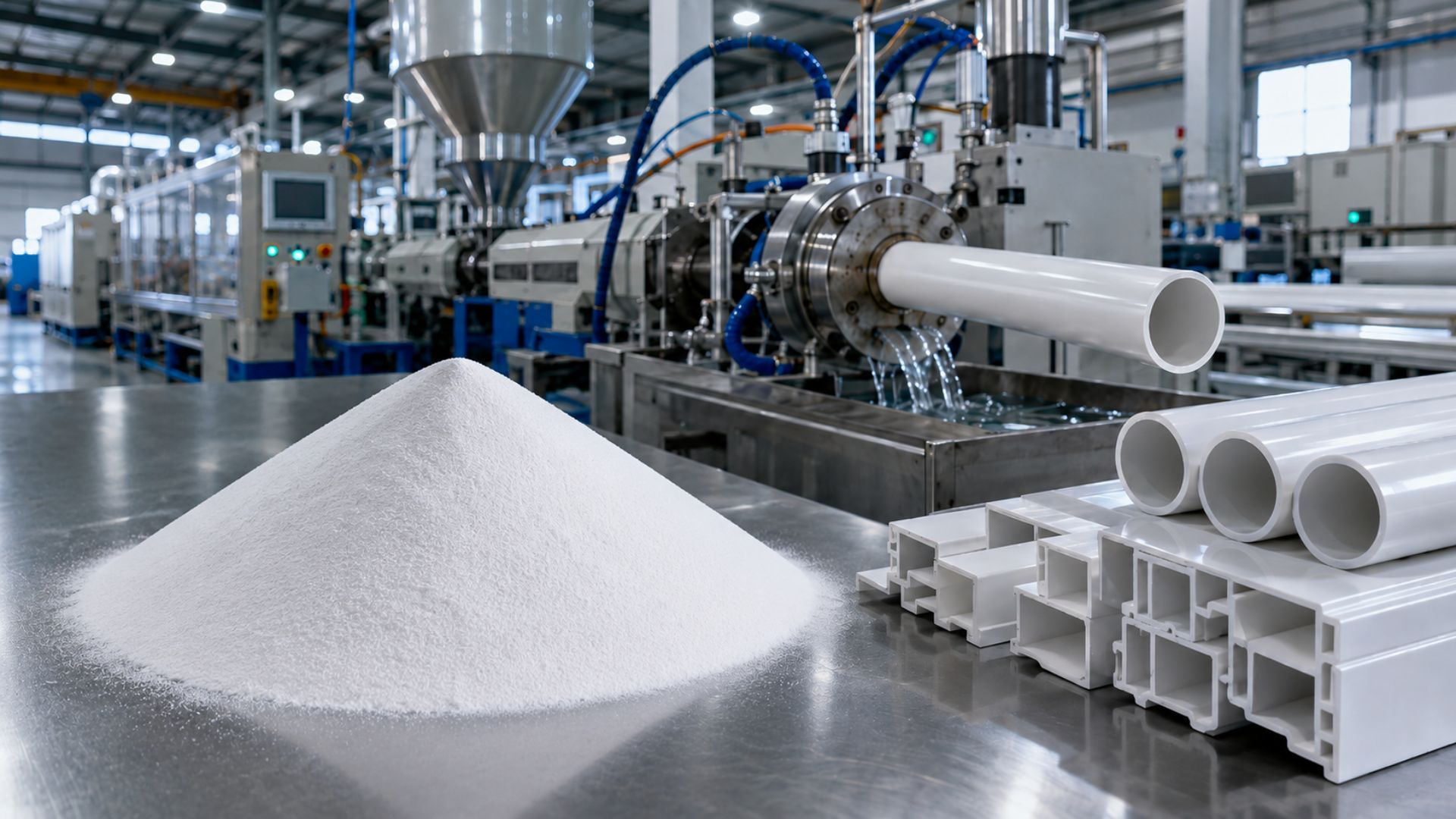
What Is Calcium Stearate?
Calcium stearate is the Calcium salt of Stearic acid, generally produced by the reaction between Calcium compounds and Stearic acid. Chemically, it belongs to the group of metallic soaps, which are widely used in plastics, rubber, coatings, construction materials, and other industrial applications.
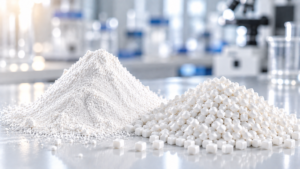
In physical form, Calcium stearate is a fine white powder. It is hydrophobic, has low solubility in water, and shows good compatibility with many polymer systems. In PVC, the most important value comes from the ability to act as a lubricant.
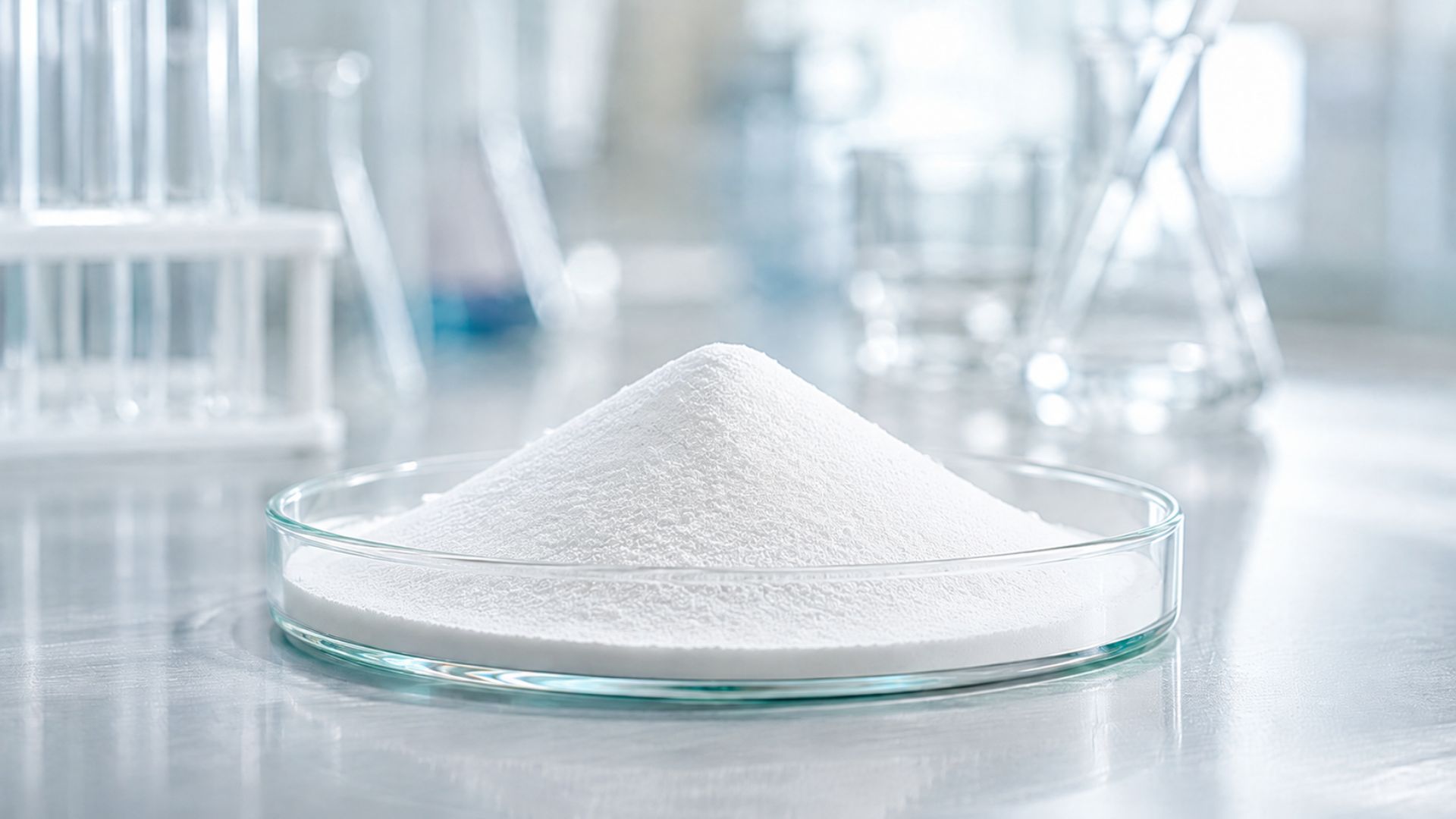
From a formulation perspective, Calcium stearate is not simply an inert powder added for processing convenience. It interacts with PVC resin, fillers, stabilizers, waxes, and other additives during compounding and melt processing. This is why the same Calcium stearate in PVC grade may perform differently in a pipe formulation, a profile formulation, a cable compound, or a highly filled sheet formulation.
Calcium stearate has a relatively high melting range compared with some organic lubricants. During PVC processing, it gradually becomes active as temperature increases and the material moves from dry blending to fusion and melt flow. Its particle size, bulk density, purity, moisture content, free fatty acid content, and metal content can all influence dispersion and performance.
Introduction To Calcium Stearate In PVC Processing
PVC is a heat-sensitive polymer. During processing, it must be exposed to heat and shear to achieve proper fusion, but excessive heat or residence time can lead to degradation. This poses a technical challenge: the formulation must allow the resin to process smoothly while preventing thermal breakdown, poor flow, equipment sticking, or surface defects.
Calcium stearate in PVC processing helps address part of this challenge. It supports lubrication between resin particles, fillers, additives, and metal surfaces inside processing equipment.
A typical rigid PVC compound may include PVC resin, Heat stabilizers, Calcium carbonate, Titanium dioxide, Impact modifiers, Processing aids, Internal lubricants, External lubricants, Pigments, and other specialty additives. In such a system, Calcium stearate must be evaluated not only as an individual material but as part of the full additive balance.
Key Functions Of Calcium Stearate In PVC Processing
Calcium stearate performs several functions in PVC processing. The most important are lubrication, heat stabilization support, acid scavenging, filler dispersion support, and processing stability improvement. These functions are connected, but they should not be treated as identical.
Internal lubrication
One of the main functions of Calcium stearate in PVC is internal lubrication. Internal lubricants reduce friction between polymer chains and between resin particles during fusion and melt flow. This can help the compound process more smoothly under heat and shear.
In rigid PVC, internal lubrication is especially important because the formulation often contains fillers such as Calcium carbonate. High filler loading increases internal friction and can make the compound harder to process. Calcium stearate helps reduce this friction, supporting more stable melt movement and reducing excessive shear heat.
However, internal lubrication must be controlled carefully. Too little lubrication may cause high torque, poor flow, and unstable processing. Too much lubrication may delay fusion or reduce melt strength. The correct dosage depends on the complete formulation and processing conditions.
Acid Scavenging
During PVC degradation, Hydrogen chloride can be released. This acid can accelerate further degradation if not controlled. Calcium stearate in PVC can help capture or neutralize part of this acidic material, reducing the autocatalytic degradation cycle.
In practical production, this acid scavenging role contributes to better color stability, lower risk of burning, and a wider processing window. The effect is formulation-dependent and strongly influenced by the primary stabilizer package, processing temperature, and residence time.
Dispersion
Calcium stearate in PVC can improve the dispersion of fillers and additives in PVC compounds. This is particularly relevant in formulations with Calcium carbonate, Titanium dioxide, Pigments, or other fine powders. Better dispersion can improve surface appearance, mechanical consistency, and processing stability.
Poor dispersion often leads to defects such as rough surface, uneven color, weak points, poor impact performance, or unstable extrusion pressure. Calcium stearate helps reduce agglomeration and improves the movement of particles within the polymer matrix during mixing and processing.
How Calcium Stearate Works in PVC Processing
Calcium stearate works through a combination of physical and chemical mechanisms. Physically, it modifies friction and flow behavior inside the PVC compound. Chemically, it can interact with acidic by-products. These mechanisms occur at different stages of processing, from dry blending to fusion and final shaping.
Behavior during dry blending
In dry blending, Calcium stearate is distributed among PVC resin particles and other powders. At this stage, good powder flow and uniform distribution are important. If the Calcium stearate in PVC grade has poor dispersion or contains excessive moisture, it may create inconsistent blending and later processing variation.
In high-speed mixing, temperature increases and additives begin to coat or interact with PVC particles. Calcium stearate can help improve powder flow and reduce sticking inside the mixer. Uniform distribution at this stage is important because poor dry-blend homogeneity can lead to inconsistent fusion and surface defects during extrusion or molding.
Influence on fusion and gelation
Fusion is one of the most important stages in PVC processing. During fusion, PVC particles soften, deform, and combine into a continuous melt structure. The speed and quality of fusion affect mechanical properties, surface appearance, dimensional stability, and processing behavior.
Calcium stearate in PVC influences fusion by reducing internal friction and modifying particle interaction. At the right level, it can help the compound process smoothly and avoid excessive torque. At excessive levels, it may delay fusion, leading to poor melt strength or weak physical properties.
This is why Calcium stearate should be adjusted together with processing aids, waxes, stabilizers, filler level, and processing temperature. A formulation that works well on one extruder may not perform the same way on another line if screw design, residence time, or shear intensity is different.
Effect on melt flow and friction
Once PVC reaches the melt stage, Calcium stearate in PVC helps control friction within the compound. Lower internal friction can improve flow and reduce energy consumption. It can also help stabilize extrusion pressure and reduce the risk of overheating caused by excessive shear.
However, PVC processing requires a controlled amount of friction. If the formulation becomes too lubricated, the melt may not develop enough strength, or fusion may remain incomplete. The goal is not to minimize friction completely, but to create the right balance between fusion, flow, and surface release.
Interaction with stabilizers and other lubricants
Calcium stearate does not work alone. It interacts with stabilizers, zinc stearate, stearic acid, PE wax, paraffin wax, oxidized wax, and other lubricants. These interactions can change fusion time, torque, color stability, surface finish, and plate-out tendency.
For example, Zinc stearate may provide strong lubrication and stabilizer interaction, but it can also contribute to zinc burning if the stabilizer balance is poor. PE wax and paraffin wax are more external in their lubrication behavior and may improve metal release but delay fusion if used excessively.
Benefits Of Calcium Stearate In PVC Manufacturing
The benefits of Calcium stearate in PVC manufacturing are mainly related to processing consistency. These benefits are most visible when the dosage is optimized and the grade is suitable for the end application.
More stable processing
Calcium stearate in PVC dosage can help reduce torque variation, improve melt flow, and create a more predictable processing window. This is valuable in continuous production, such as pipe extrusion, profile extrusion, sheet extrusion, and cable compounding.
Stable processing is not only about machine efficiency. It also affects product quality. Inconsistent melt behavior can lead to dimensional variation, surface roughness, internal defects, and higher scrap rates. Calcium stearate helps reduce some of these risks by supporting smoother material movement through the processing line.
Better surface quality
Calcium stearate can contribute to a smooth surface appearance by improving lubrication and filler dispersion. In applications such as PVC profiles, sheets, panels, and films, surface quality is commercially important because defects are visible and may affect downstream printing, lamination, or installation.
Surface quality depends on many factors, including resin quality, filler type, processing aids, stabilizers, pigments, die design, and cooling conditions. Calcium stearate is one part of this system. Its contribution is strongest when it helps the compound achieve proper fusion and stable flow without excessive deposits.
Calcium Stearate In PVC Applications
Calcium stearate is used across many PVC applications, but its role varies by product type. The processing method, end-use requirements, and formulation design determine how much Calcium stearate is needed and what performance should be expected.
PVC Pipes and Fittings
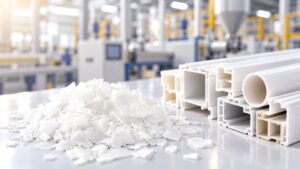
In PVC pipes and fittings, Calcium stearate helps support extrusion and molding stability. Pipe formulations often require good fusion, stable dimensions, smooth inner and outer surfaces, and reliable mechanical strength. Calcium stearate can improve processing flow and reduce friction, especially when Calcium carbonate is included.
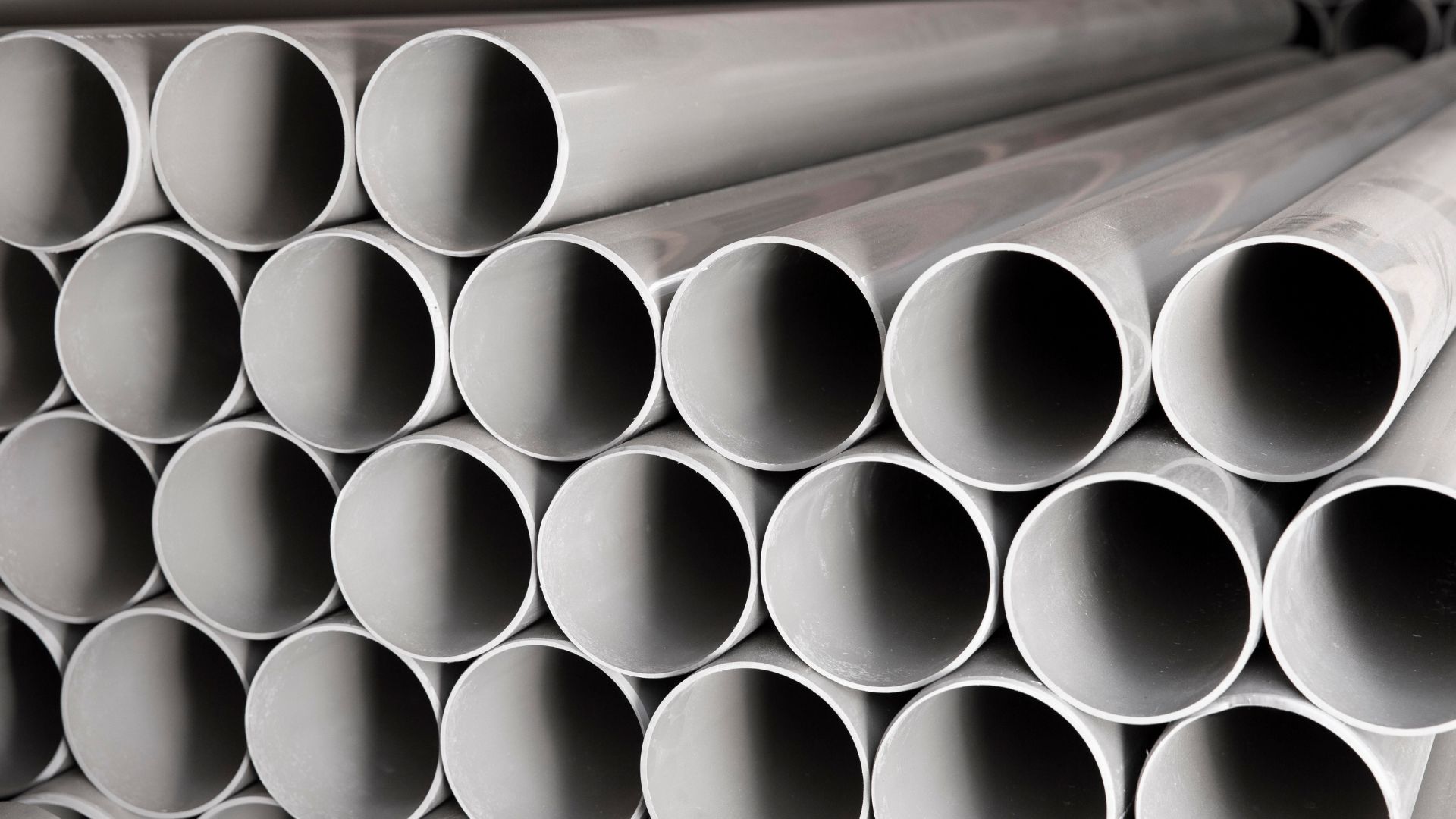
For pressure pipes, formulation control is more demanding because mechanical properties and long-term performance are critical. In such cases, Calcium stearate dosage should be carefully validated to avoid under-fusion or reduced impact strength. For non-pressure pipes, drainage pipes, conduits, and fittings, the formulation may allow more flexibility, but processing consistency remains important.
PVC Profiles and Window Frames
PVC profiles require a careful balance between fusion, surface finish, impact performance, weatherability, and dimensional control. Calcium stearate can help improve processing stability and reduce surface defects, particularly in formulations containing impact modifiers, titanium dioxide, and Calcium carbonate.
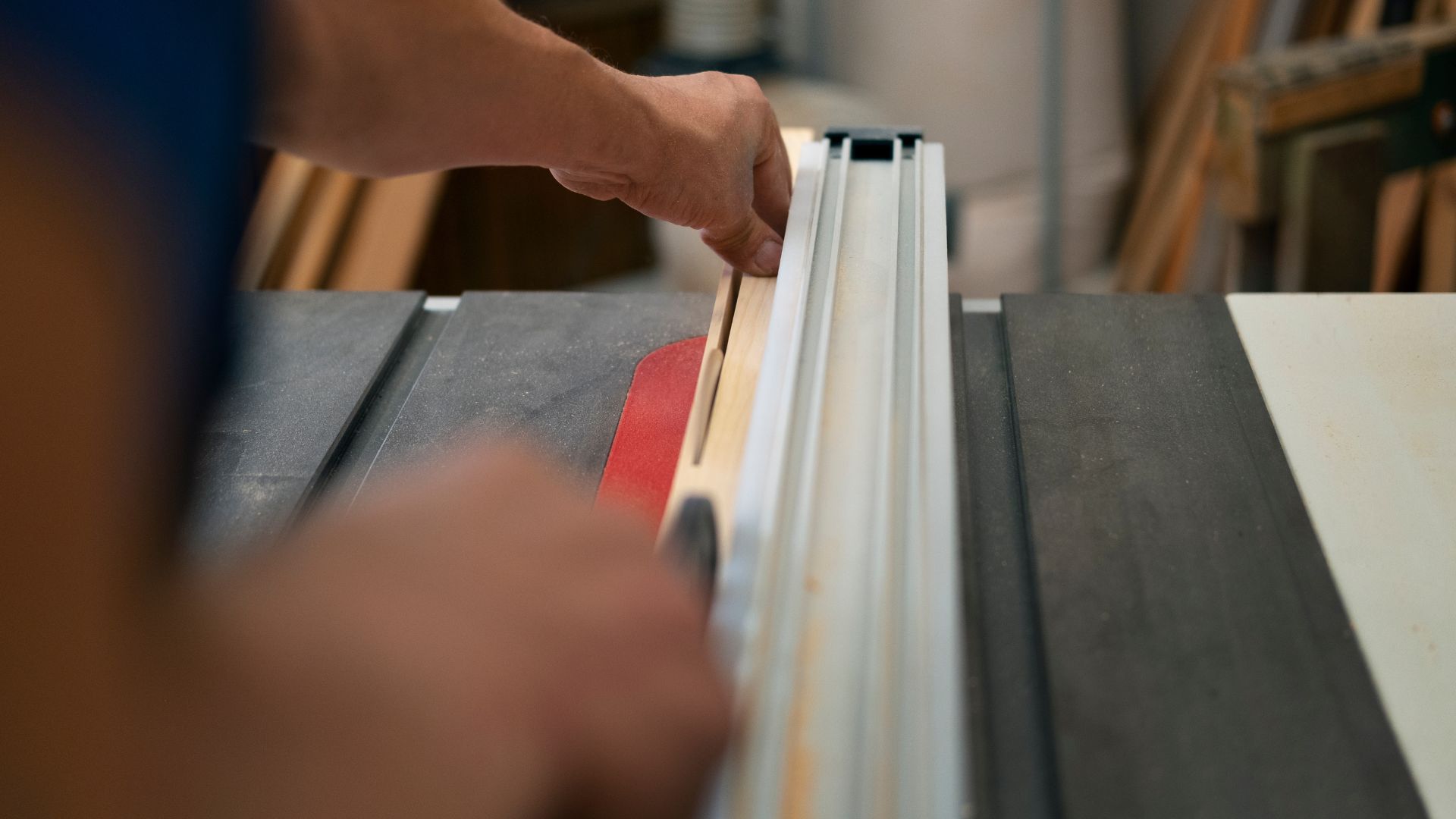
In profile extrusion, poor lubrication balance may cause die build-up, rough surface, unstable output, or poor corner quality. Calcium stearate must therefore be evaluated together with external waxes, processing aids, and stabilizer systems.
PVC Sheets, Boards, and Panels
PVC sheets, boards, and panels often contain fillers and pigments, and they may require smooth surfaces for printing, lamination, or decorative finishing. Calcium stearate can support filler dispersion and melt flow, helping reduce surface unevenness.
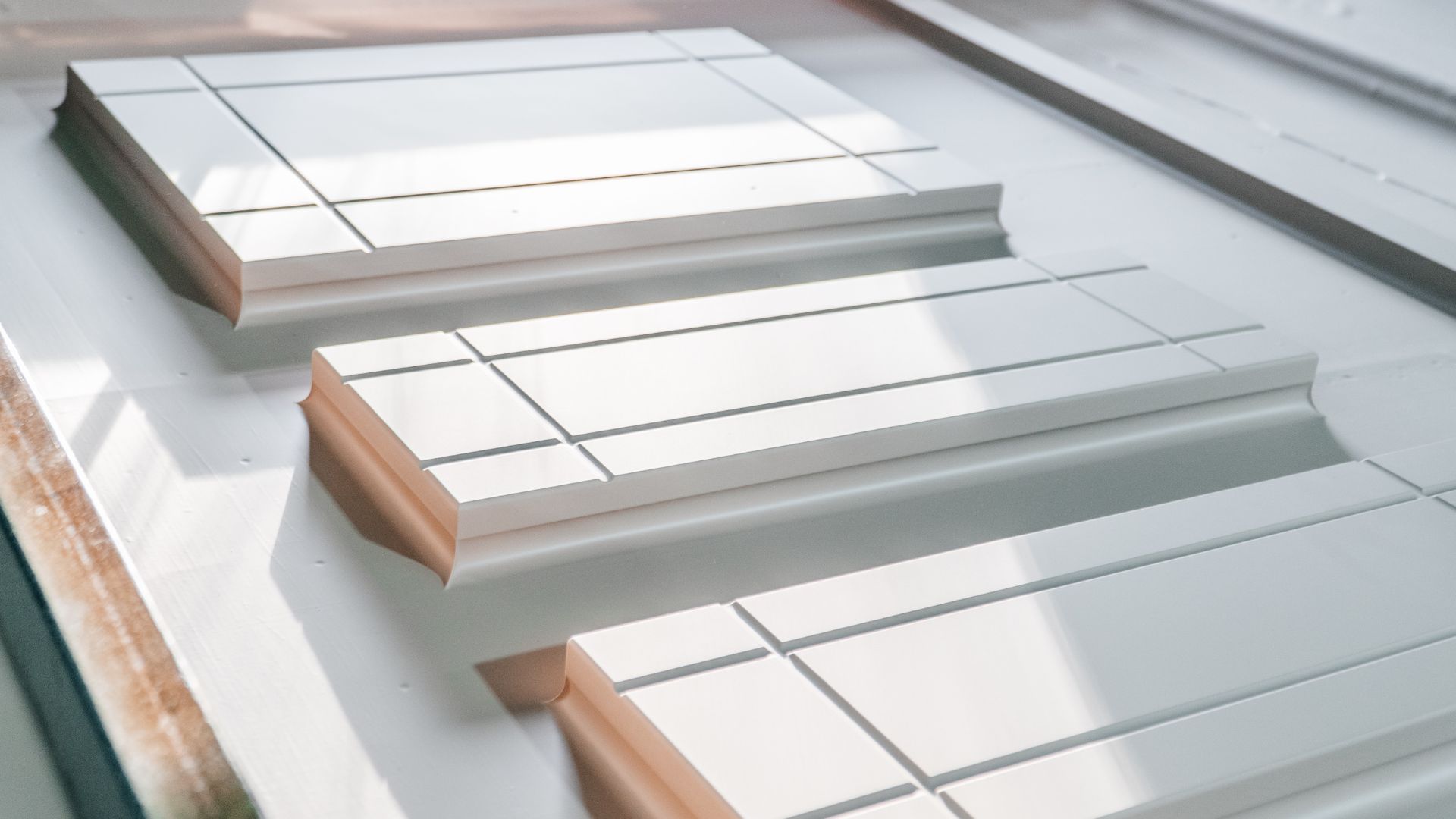
For foam boards, the role becomes more complex because lubrication can affect melt strength, cell formation, density, and surface skin quality. In these applications, Calcium stearate should be tested carefully with foaming agents, regulators, and processing aids.
PVC Cables and Flexible Compounds
In flexible PVC, Calcium stearate may be used to support processing, stabilization, and release behavior. Cable compounds often contain plasticizers, fillers, stabilizers, flame retardants, and pigments. Calcium stearate can help improve compound flow and reduce processing friction.

However, compatibility with plasticizers and other additives must be considered. Excessive or poorly dispersed Calcium stearate may affect surface quality, blooming behavior, or electrical properties in sensitive applications. For cable-grade PVC, formulation testing is especially important because safety and performance standards can be strict.
PVC Films and Artificial Leather
In PVC films and artificial leather, surface appearance, flexibility, and processing consistency are important. Calcium stearate may assist with lubrication and stabilization, but the dosage must be controlled to avoid surface haze, migration, or changes in feel.
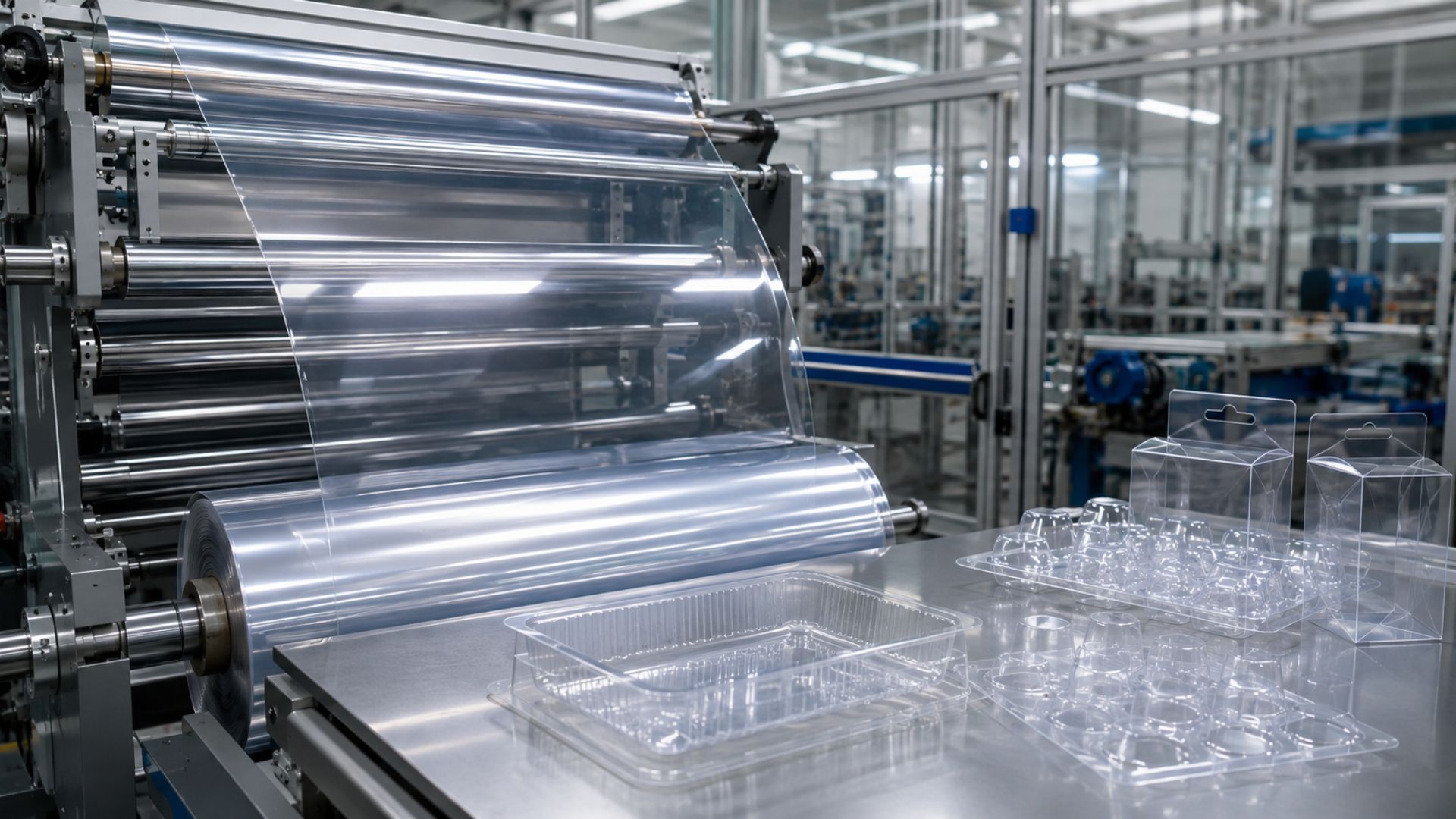
Thin products are often more sensitive to surface defects than thick molded products. Small changes in lubricant balance may become visible in the final film surface. Therefore, Calcium stearate selection should consider particle size, purity, compatibility, and dispersion quality.
Key Factors To Consider When Choosing Calcium Stearate In PVC Processing
Selecting Calcium stearate in PVC should not be based only on price or general product description. A suitable grade should match the formulation, production equipment, and final product requirements. Several technical factors should be reviewed before selection.
Purity and consistency
Purity affects color stability, odor, surface quality, and long-term formulation consistency. For white or light-colored PVC products, low impurity content is important because small variations may lead to discoloration. Consistent Calcium content and low free fatty acid variation also help maintain stable processing behavior.
Batch-to-batch consistency is especially important in continuous production. A Calcium stearate grade that performs well in one batch but changes significantly in the next can create processing instability, even if the product meets a broad technical specification.
Particle size and dispersion
Particle size influences how easily Calcium stearate disperses in PVC dry blends or compounds. Finer and more uniform particles generally support better distribution, but extremely fine powders may create handling challenges such as dusting or poor flow.
For high-speed mixing and rigid extrusion, good dispersion is essential. Poorly dispersed Calcium stearate can create localized lubrication differences, which may lead to inconsistent fusion, surface defects, or unstable torque.
Moisture content
Low moisture content is important for PVC processing. Excessive moisture can cause defects such as bubbles, poor surface finish, unstable extrusion, or reduced storage stability. This is especially relevant in applications with strict surface or dimensional requirements.
Storage conditions also matter. Calcium stearate should be kept in dry conditions to prevent moisture uptake and caking. Even a good grade can perform poorly if handled or stored incorrectly.
Dosage
There is no universal dosage that fits all PVC formulations. The correct level depends on resin type, filler loading, stabilizer package, product type, processing equipment, and target properties.
Overdosing Calcium stearate may delay fusion, reduce mechanical strength, increase plate-out risk, or create surface defects. Underdosing may lead to high torque, poor flow, sticking, or unstable processing. Practical optimization should be done through trial production, torque rheometer testing, fusion analysis, and product performance evaluation.
End-Product Requirements
The final product should guide Calcium stearate selection. A pipe formulation, a cable compound, a window profile, and a PVC film do not require the same balance of properties. Some products prioritize mechanical strength, others prioritize surface appearance, flexibility, weatherability, electrical performance, or cost control.
A technical grade that works well in one application may not be suitable for another. This is why Calcium stearate should be selected as part of a complete formulation strategy rather than as a generic lubricant.
Calcium Stearate vs. Other Lubricants in PVC
Each lubricant has a different function in PVC, and its performance depends on how it is combined.
Calcium Stearate vs. Zinc Stearate
Calcium stearate and Zinc stearate are both metallic soaps, but they behave differently in PVC. Zinc stearate generally has stronger lubrication and can contribute to early color performance in stabilizer systems. However, if the stabilizer balance is not controlled, Zinc compounds may contribute to rapid discoloration or zinc burning during PVC degradation.
Calcium stearate is generally more stable in this respect and is often used to support long-term processing stability. In Calcium-zinc stabilizer systems, both Calcium and zinc components are usually balanced to achieve suitable early color, long-term heat stability, and processing performance.
Calcium Stearate vs. Stearic Acid
Stearic acid is an organic fatty acid and can act as a lubricant in PVC, but it differs from Calcium stearate in chemical behavior and compatibility. Stearic acid may provide lubrication and surface effects, but it can also interact differently with fillers, stabilizers, and metal surfaces.
Calcium stearate is less acidic and more commonly used where a metallic soap function is needed. In many formulations, stearic acid and Calcium stearate are not direct substitutes. Their effects on fusion, flow, and stabilizer balance can be different.
Calcium Stearate vs. PE Wax
PE wax is typically used as an external lubricant in PVC. It helps reduce friction between the PVC melt and metal surfaces, supporting release from screws, barrels, dies, and calender rolls. Calcium stearate is more associated with internal lubrication and stabilizer support, although its behavior can overlap depending on the formulation.
Using too much PE wax may delay fusion and reduce melt homogeneity. Using too much Calcium stearate may also affect fusion, but through a different balance of internal lubrication and stabilizer interaction. In many rigid PVC formulations, both materials are used together to create a balanced lubricant system.
Calcium Stearate vs. Paraffin Wax
Paraffin wax is another external lubricant used to improve release and reduce metal adhesion. It is often cost-effective and useful in extrusion, but its compatibility and thermal behavior must be considered.
Compared with paraffin wax, Calcium stearate provides more chemical functionality because it can support acid neutralization and stabilizer performance. Paraffin wax mainly contributes to physical lubrication. Therefore, they are not equivalent even if both influence flow and processing.
Conclusion
Calcium stearate plays an important role in PVC processing. However, its performance depends on a proper balance within the entire PVC formulation, including resin type, stabilizers, waxes, fillers, and processing conditions. A suitable dosage can enhance surface quality and efficiency, while excessive use may cause fusion delays or surface defects. Therefore, Calcium stearate should always be evaluated as part of the complete PVC system through practical testing and quality control.