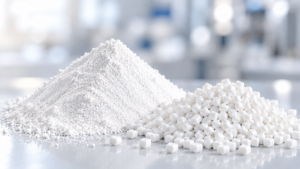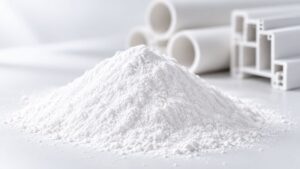

Acrylic modifiers (ACR) are used in rigid PVC to control processing behavior, melt strength, surface quality, and, depending on the grade, impact resistance. Although ACR is often used as a broad term for ACR, ACR processing aids and ACR impact modifiers perform different functions and should not be treated as interchangeable additives. This article explains how ACR works in rigid PVC, typical dosage ranges, and the factors that determine correct grade selection. Read the TLD Vietnam blog below to understand the technical role of ACR in rigid PVC formulations and how dosage influences processing and final product performance.
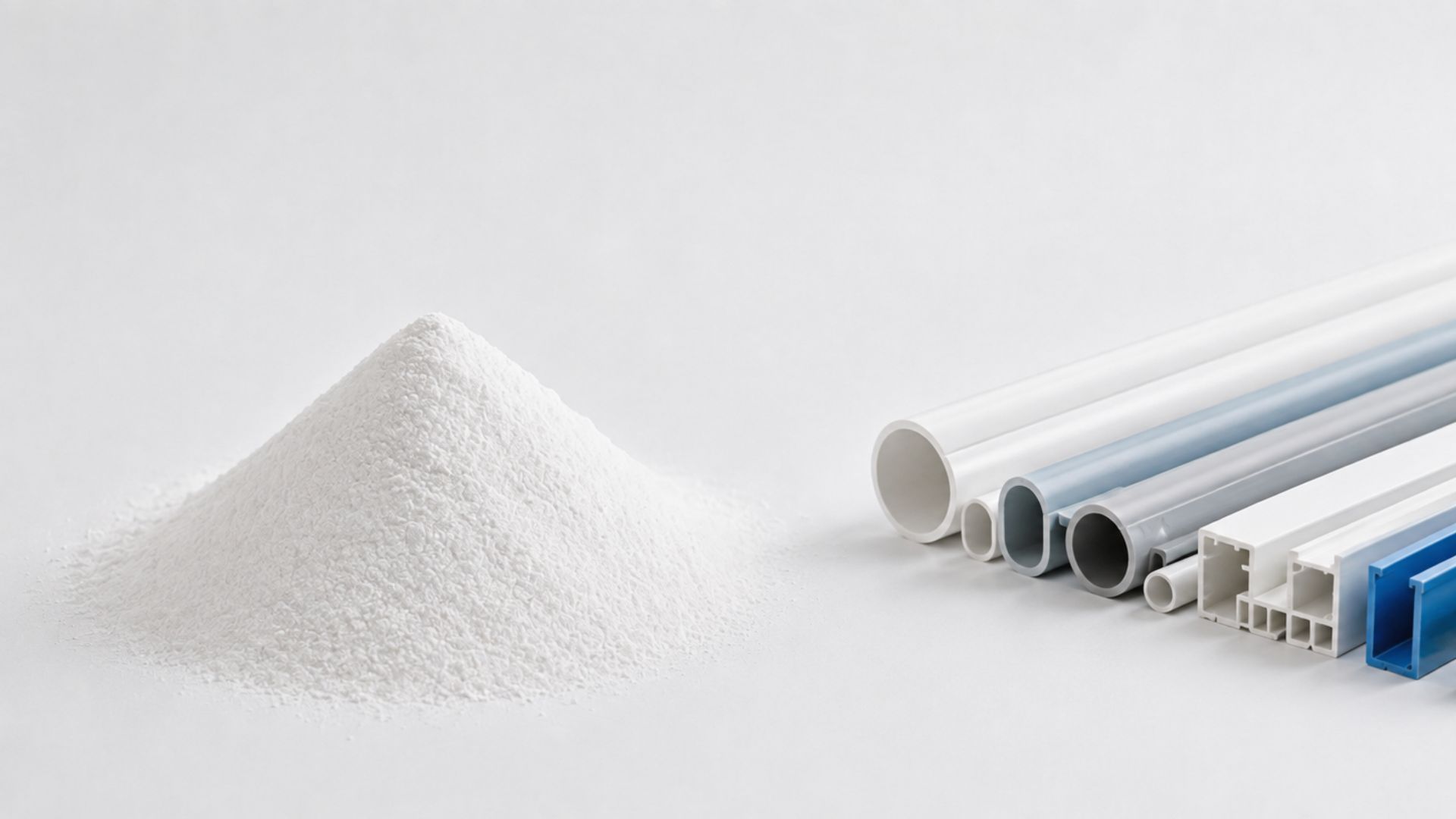
What Is ACR In Rigid PVC?
Definition Of ACR
In PVC compounds, ACR generally refers to Acrylic polymer modifiers based on Acrylate and/or methacrylate chemistry. The two major groups considered here are high-molecular-weight ACR processing aids and ACR impact modifiers.
For ACR in rigid PVC, these two groups have different structural designs and functions. Processing aids are primarily designed to modify PVC fusion and melt rheology. ACR impact modifiers are engineered to introduce a tough, energy-absorbing phase into the PVC matrix. Commercial ACR impact modifiers commonly use a core-shell polymer structure, while processing aids rely mainly on high molecular weight and compatibility with PVC to modify melt behavior.
Why ACR Is Used In Rigid PVC Formulations
Rigid PVC provides high stiffness, dimensional integrity and chemical resistance, but processing requires careful control of fusion, melt flow and thermal history. Depending on the product, unmodified rigid PVC may also require additional toughness.
ACR in rigid PVC is therefore selected according to a specific technical requirement: promoting fusion, increasing melt strength, stabilizing extrusion, improving surface formation or increasing impact resistance. The first step in selecting an ACR grade is to define which of these functions is required.
Main Types Of ACR Used In Rigid PVC
ACR Processing Aid
An ACR processing aid is generally a high-molecular-weight Acrylic copolymer compatible with PVC. It promotes more uniform fusion and increases melt elasticity and melt strength, allowing the PVC compound to behave as a more coherent melt during extrusion, calendaring or molding.
In ACR in rigid PVC formulations, medium- and high-molecular-weight grades are commonly used in dense profiles, siding, pipes, fittings and sheets. Ultra-high-molecular-weight grades are particularly important in cellular PVC because a foamed melt requires greater strength to retain gas and maintain the desired cellular structure. Commercial processing-aid grades are specifically designed for effects such as fusion promotion, melt-strength development, filler dispersion and surface improvement.
ACR impact modifier
An ACR impact modifier is structurally different from a conventional processing aid. Many commercial products use a core-shell structure containing an elastomeric phase capable of absorbing impact energy.
When properly dispersed, this type of ACR in rigid PVC increases toughness and reduces the tendency toward brittle failure. ACR impact modifiers are particularly relevant for outdoor building products such as window profiles, siding, fencing, decking, conduit and other applications where impact resistance must be retained during service. Kaneka describes its ACR impact modifiers as core-shell polymers developed specifically to improve the impact properties of rigid vinyl formulations.
How ACR Improves Rigid PVC Processing
Improving PVC Fusion
During processing, PVC powder particles must progressively fuse into a continuous and homogeneous melt. Incomplete or poorly controlled fusion can result in uneven mechanical properties, unstable extrusion and poor surface quality.
A processing-aid grade of ACR in rigid PVC promotes fusion by changing the rheological behavior of the compound and improving the transfer of shear through the PVC mass. Commercial ACR processing aids are specifically designed to increase gelation or fusion efficiency and melt homogeneity. However, the final fusion condition is still controlled by the complete formulation, lubrication balance, temperature profile, screw geometry and residence time.
Enhancing Melt Strength
After fusion, the PVC melt must have enough cohesive strength to pass through the die and maintain its required geometry.
High-molecular-weight ACR in rigid PVC increases melt elasticity and melt strength through additional polymer-chain interaction and entanglement. This function becomes especially important in free-foam and cellular PVC because the melt must retain gas generated by the blowing system while controlling cell growth. If melt strength is insufficient, cells can coalesce or collapse, leading to poor foam structure and uneven density.
Improving Surface Quality
Surface defects in extruded PVC can be associated with insufficient fusion, unstable melt flow, inappropriate lubrication, or poor dispersion of formulation components. ACR in rigid PVC can improve melt homogeneity and surface formation, resulting in smoother extrusion and more consistent gloss. The effect should not be considered independent of the rest of the formulation: stabilizers, lubricants, fillers, pigments and extrusion conditions all influence final surface quality. Both ACR processing aids and selected ACR impact modifiers are reported to improve surface appearance in rigid PVC applications.
Supporting Stable Extrusion
A stable extrusion process requires relatively consistent fusion, pressure, melt temperature and flow through the die. A properly selected processing aid can improve melt uniformity and help reduce processing instability such as surging. In commercial rigid PVC systems, better fusion control and melt strength can support more consistent output and dimensional control. At the same time, excessive process-aid loading may increase melt viscosity and torque, which is why dosage must be optimized rather than simply increased.
Benefits Of ACR In Rigid PVC Products
Better Impact Resistance
Impact resistance is primarily improved by ACR impact modifier grades rather than by standard ACR processing aids. In ACR in rigid PVC, the elastomeric domains of an ACR impact modifier absorb and dissipate impact energy, reducing rapid crack propagation through the PVC matrix. This can be particularly important at low temperatures, where rigid PVC becomes more susceptible to brittle fracture. Commercial ACR impact modifiers are designed to increase impact strength while retaining weatherability and acceptable dimensional properties.
Higher Surface Gloss And Smoothness
Certain ACR processing aids and impact modifiers can contribute to smoother extrusion surfaces and higher gloss. This effect is associated with better melt homogeneity, more controlled flow through the die and the compatibility of appropriate Acrylic modifiers with rigid PVC. Kaneka reports high-gloss surfaces for specific ACR impact modifiers, while Dow processing aids are designed to improve fusion, melt flow and surface appearance.
Improved Dimensional Stability
ACR does not inherently make PVC stiffer. Instead, correctly selected ACR in rigid PVC can improve melt uniformity, sizing behavior and dimensional consistency during processing. This distinction is important. Improved processing stability can help maintain profile dimensions, but excessive impact-modifier loading can reduce modulus and rigidity. Dimensional performance should therefore be evaluated together with impact strength rather than considered an automatic consequence of increasing ACR dosage.
More Consistent Processing Performance
Consistent fusion and melt rheology help control torque, extrusion pressure, surface quality and product dimensions. ACR in rigid PVC can therefore contribute to repeatable processing, particularly when resin quality, formulation and operating conditions are already well controlled. It cannot, however, compensate for major variation in PVC resin, filler particle size, lubrication, thermal stabilizer concentration or extrusion conditions.
Typical ACR Dosage In Rigid PVC Formulations
Dosage is normally expressed in phr, meaning parts by weight of additive per 100 parts by weight of PVC resin.
Dosage For ACR Processing Aid
For dense rigid PVC products, standard ACR processing aids are normally used at relatively low loading. Typical starting formulations published by Arkema include approximately 0.5-1.0 phr in window profiles and around 0.8-2.0 phr in several rigid sheet, bottle and profile systems. A practical evaluation range for standard ACR in rigid PVC is therefore often around 0.5-2.0 phr, although some formulations may require higher levels.
Foam products are different because significantly more melt strength is required. Arkema starting formulations show approximately 2-5 phr for foam-core pipe and around 6-12 phr for foam board or foam sheet, depending on the processing-aid grade and formulation. More efficient ultra-high-molecular-weight products may achieve the required melt strength at lower dosage. These values should be treated as starting ranges rather than universal specifications.
Dosage For ACR impact modifier
ACR impact modifiers are generally used at higher dosage than standard processing aids because their function depends on forming a sufficiently dispersed toughening phase. A practical starting level for ACR in rigid PVC impact modification is commonly around 4-7 phr for many profile-type formulations. The actual optimum depends on target impact strength, test temperature, wall thickness, PVC resin, filler concentration, product geometry, and processing conditions.
What Happens When ACR Dosage Is Too Low Or Too High?
Effects Of Insufficient ACR
If processing-aid dosage is too low, PVC may fuse too slowly or less uniformly. Melt strength may also be insufficient, which can contribute to unstable extrusion, poor surface formation or weak foam structure. If the formulation relies on an ACR impact modifier, insufficient ACR in rigid PVC can leave the product below its required impact specification and increase susceptibility to brittle cracking.
Effects Of Excessive ACR
Increasing ACR beyond the necessary level does not automatically improve the product. Excessive processing aid can increase melt viscosity, torque, and processing load. Excessive ACR impact modifier can reduce stiffness while adding formulation cost. In cellular PVC, excessive rheological modification can also alter expansion behavior and move foam density or cell structure away from the intended target. The correct dosage is therefore a performance optimum rather than a maximum.
Finding The Optimal ACR Dosage
The optimal level of ACR in rigid PVC is the lowest dosage that consistently provides the required processing window and finished-product properties. Formulation trials should change one major variable at a time. Useful parameters include fusion time, fusion torque, equilibrium torque, melt temperature, extrusion pressure, output rate, surface appearance, dimensions, density for foam products, impact strength, and modulus. This approach distinguishes whether a problem originates from insufficient ACR or from another component of the PVC formulation.
ACR Applications In Rigid PVC
ACR in rigid PVC is used across pipes and fittings, window and door profiles, siding and fencing, conduit, rigid sheets, boards and cellular PVC products. Dense pipes and profiles mainly use ACR processing aids to control fusion, melt homogeneity and surface quality, while products requiring higher toughness may additionally use ACR impact modifiers. Window profiles, siding and exterior building products frequently use weatherable ACR impact modifiers because impact strength and outdoor durability are important. Foam board, free-foam profiles and foam-core pipe generally require higher-molecular-weight processing aids because the PVC melt must support cell expansion and retain gas during extrusion.
How To Choose The Right ACR For Rigid PVC
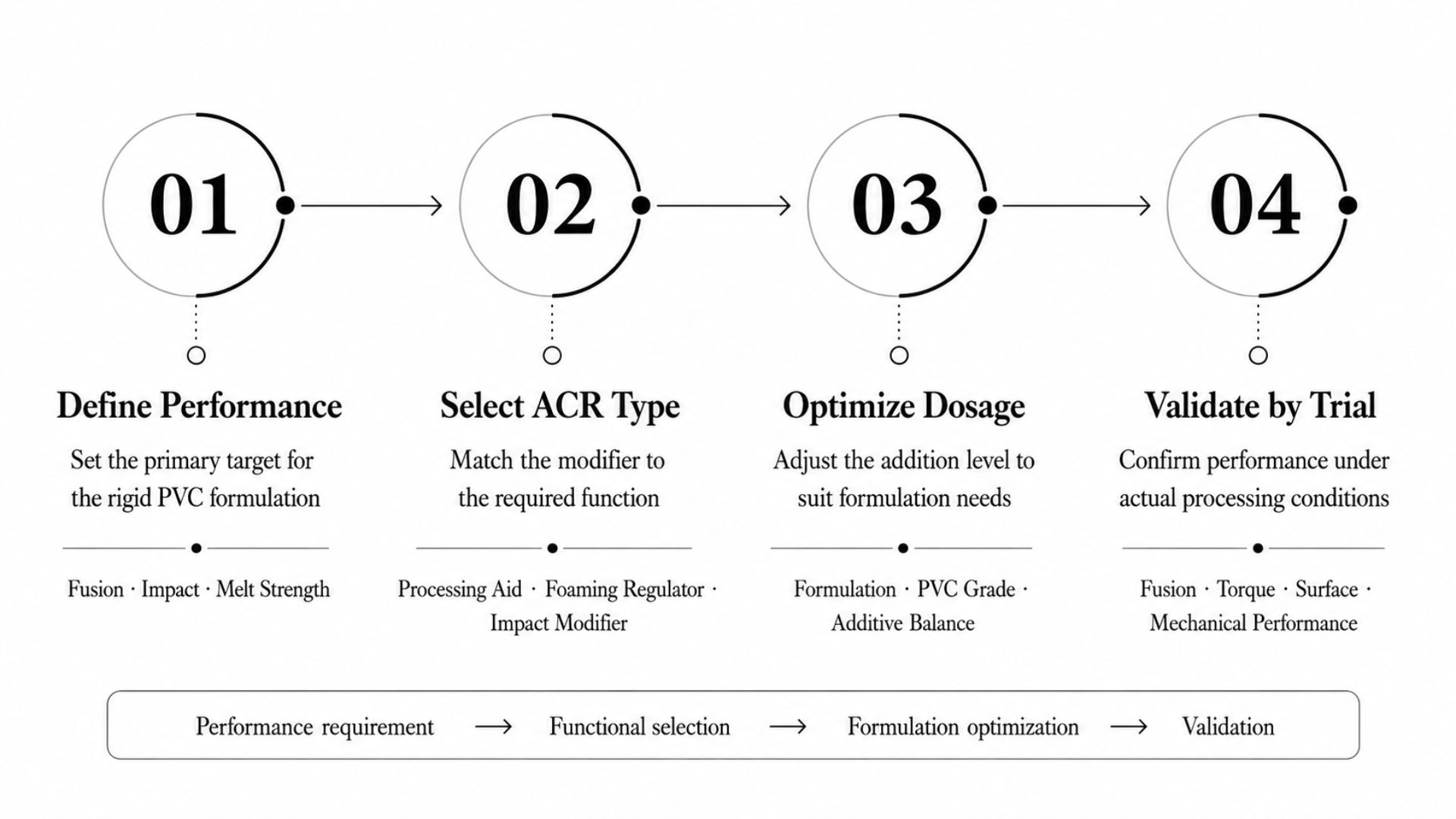
Match ACR Type To The Required Function
The first step is to identify the actual technical problem. If the target is faster or more uniform fusion, greater melt strength, smoother surface formation, or more stable extrusion, a processing-aid grade should be considered.
If the primary target is higher toughness and reduced brittle fracture, an ACR impact modifier is more appropriate. ACR in rigid PVC should therefore be selected according to function rather than only by the commercial description “ACR.”
Consider PVC Resin And Formulation
The performance of an Acrylic additive depends on the complete PVC formulation. PVC resin K-value, calcium carbonate content, stabilizer system, internal and external lubrication, TiO₂, other impact modifiers and processing aids can all influence fusion and melt rheology. Changing one component can therefore change the optimum ACR dosage.
Evaluate Processing Conditions
Extruder configuration, screw geometry, temperature profile, die design, output rate and residence time all affect PVC fusion and melt behavior. A grade and dosage that work well on one extrusion line may not produce identical results on another line. Laboratory evaluation should therefore be followed by trials under actual production conditions.
Balance Performance And Cost
The correct formulation is not the one containing the highest additive level. A technically efficient formulation should meet impact, extrusion, surface and dimensional requirements without unnecessary ACR loading. Once the target properties are reached, additional dosage should be justified by measurable improvement rather than assumed to provide greater performance.
ACR vs Other PVC Additives
ACR vs CPE
CPE, or chlorinated polyethylene, is another widely used impact modifier for rigid PVC. It should be compared specifically with ACR impact modifier, not with ACR processing aid, because CPE and processing aid have fundamentally different primary functions.
ACR impact modifiers are particularly established in applications requiring weatherable impact performance, smooth surfaces and high gloss. The most suitable system depends on required impact strength, service temperature, weather exposure, stiffness, formulation compatibility and economics. Neither material should be considered universally superior.
ACR Processing Aid Vs Impact Modifier
Both materials may be Acrylic polymers, but their polymer architecture and design objectives differ. An ACR processing aid primarily modifies PVC fusion, melt strength and rheology. An ACR impact modifier primarily creates an energy-absorbing dispersed phase that increases toughness.
For ACR in rigid PVC, replacing a processing aid with an impact modifier on an equal-phr basis, or vice versa, is therefore technically inappropriate unless the specific product has been intentionally designed to provide both functions. Some specialty ACR impact modifiers do provide secondary processing-aid behavior, but this is grade-specific.
Conclusion
ACR in rigid PVC is not a single-purpose additive. ACR processing aids are primarily used to control PVC fusion, melt strength, rheology and surface formation, while ACR impact modifiers are designed mainly to improve toughness and resistance to brittle failure.
Correct formulation requires three steps: identify the required function, select the appropriate Acrylic polymer architecture, and determine dosage through controlled processing and mechanical testing. Because PVC resin, fillers, lubrication, stabilizers, equipment and product geometry all influence performance, supplier dosage recommendations should be treated as starting points rather than fixed formulation rules.
FAQs
- Is ACR Necessary in every rigid PVC formulation?
No. The need for ACR depends on the processing method, product geometry, formulation and required mechanical properties. Some rigid PVC systems require only a processing aid, some require an impact modifier, some use both, and certain formulations may meet their targets without either.
- Can ACR Improve Impact Strength?
Yes, if the ACR is an ACR impact modifier. ACR impact modifiers are specifically engineered to improve toughness and impact resistance in rigid PVC. A standard ACR processing aid should not automatically be treated as an impact modifier, although some specialty grades may provide secondary impact benefits.
- Does ACR Affect PVC Fusion Temperature?
ACR processing aids affect PVC fusion behavior, including fusion rate, torque development, and melt homogeneity. As a result, measured fusion time and the conditions at which a homogeneous melt develops can change.
However, the effect is not controlled by ACR alone. Lubrication, stabilizers, PVC resin characteristics, temperature profile, shear and dosage all influence the observed fusion behavior.
- How Much ACR Should Be Added to PVC?
ACR dosage depends on the grade and PVC formulation. For rigid PVC, processing aids typically start at 0.5-2 phr, while impact modifiers are often used at 4-7 phr. High-molecular-weight ACRs for foam applications may require higher levels, commonly 6-12 phr.