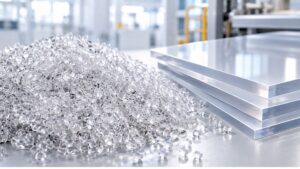

Internal and external lubricants in PVC impact melt flow, fusion behavior, and release from processing equipment. Although both improve processability, they act through different mechanisms and must be balanced within the formulation. Understanding their interactions helps PVC processors investigate production defects, maintain stable extrusion, and achieve consistent finished-product quality. Read this article by TLD Vietnam to explore their functions, key differences, and formulation considerations.
Why Lubrication Matters In PVC Processing
How Friction Influences PVC Fusion
During PVC processing, the compound undergoes heating, compression, and shear. These conditions promote the breakdown of the resin’s particulate structure and the development of a cohesive polymer melt, commonly described as fusion or gelation. The degree of fusion affects the compound’s processability and the performance of the finished product.
Friction contributes to the mechanical energy transferred to the compound, but excessive resistance can increase equipment load and generate unwanted heat. Conversely, excessive lubrication can reduce frictional interactions to the point that the compound receives insufficient mechanical work for the required fusion under a given set of processing conditions.
Internal and external lubricants in PVC help control these interactions. Their purpose is not simply to minimize friction, but to establish a suitable balance between material flow, fusion, and release from processing surfaces.
Why Lower Torque Does Not Always Indicate Better Processing
Torque and motor load provide useful information about the resistance experienced by processing equipment. However, a decrease in torque does not necessarily indicate that the compound has improved.
Lower torque may reflect reduced melt resistance, increased slip between the compound and metal surfaces, or changes in fusion behavior. These mechanisms can produce similar machine readings while affecting the finished product differently.
Processors should therefore interpret torque alongside fusion time, melt temperature, extrusion pressure, output stability, and product performance. A formulation is suitable only when it maintains stable processing and meets the requirements of the intended application.
How Internal Lubricants Work In PVC
Compatibility And Interaction With The PVC Matrix
Internal lubricants primarily reduce resistance within the PVC compound. Their interaction with the polymer-rich phase depends on molecular structure, chemical functionality, compatibility, and the composition of the complete formulation.
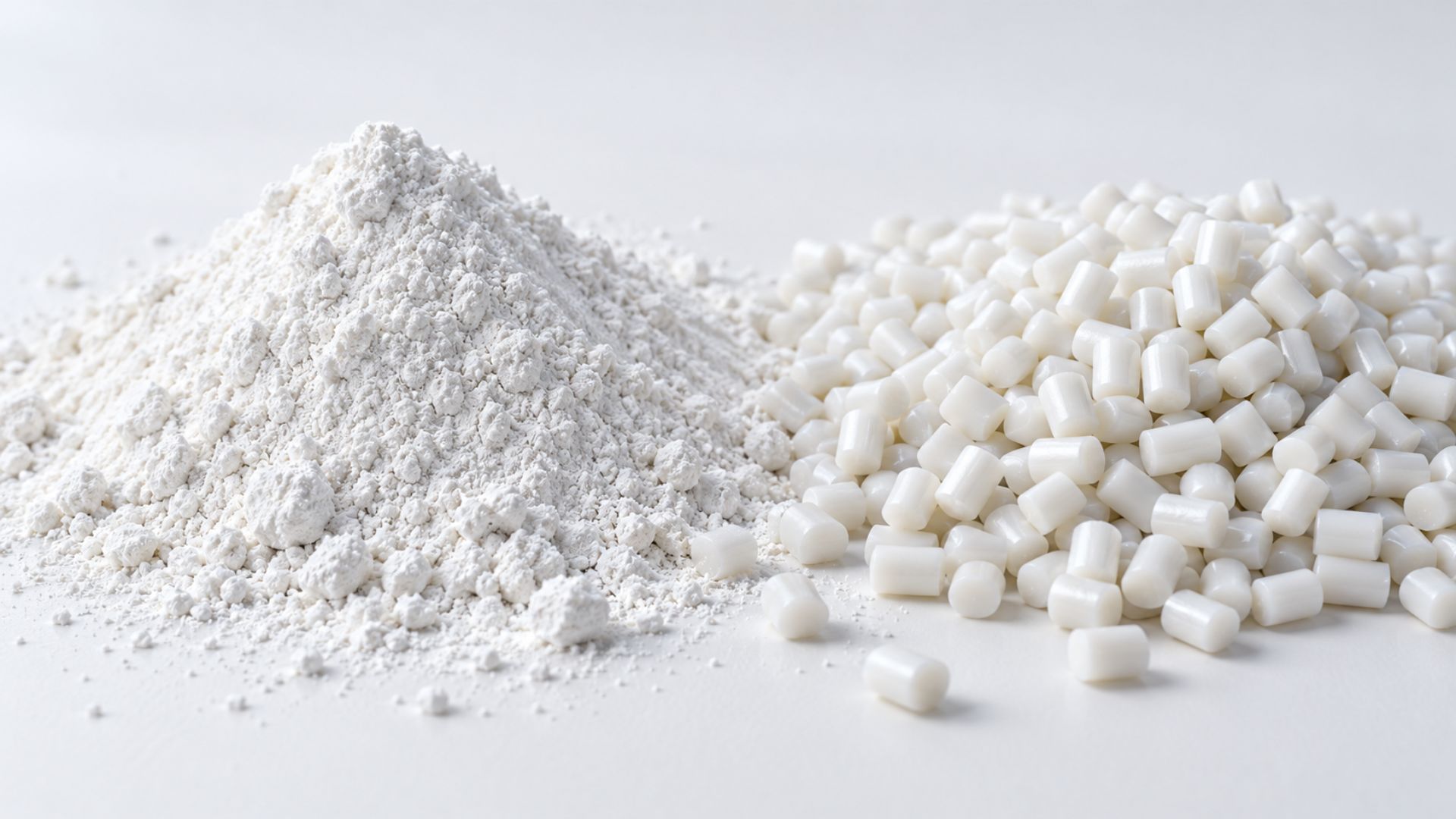
Many internal lubricants contain polar functional groups that influence their interaction with PVC. However, polarity alone does not determine compatibility or performance. Differences in molecular structure and product composition can lead to different effects even among lubricants belonging to the same broad chemical family.
This interaction helps explain why internal lubrication is generally associated with improved flow. By reducing resistance within the compound, a suitable lubricant can facilitate material movement under the relevant processing conditions.
Effects On Melt Viscosity And Flow Behavior
Internal lubricants can reduce melt viscosity under specified conditions, helping PVC move through equipment and die channels. This may be particularly useful when the formulation must pass through complex flow paths or produce sections with demanding dimensional requirements.
However, lower viscosity is not an independent measure of success. The result must be evaluated alongside fusion behavior, pressure stability, surface quality, and the mechanical requirements of the finished product.
Common Types Of Internal Lubricants
Selected fatty acid esters, glycerol esters, and fatty alcohols are used in PVC formulations to provide internal lubrication. Their performance depends on the individual grade, molecular characteristics, compatibility, and interaction with other additives.
Consequently, a chemical description such as “ester lubricant” is not sufficient to predict processing performance or determine whether one product can replace another. Formulators should review the technical data and recommended applications of each grade before conducting comparative trials.
How External Lubricants Work In PVC
Reducing Adhesion To Processing Equipment
External lubricants primarily reduce adhesion between the PVC compound and hot metal surfaces. They influence interactions with the screw, barrel, die, and other processing components, helping the material move through the equipment and release from the die.
Paraffin wax and polyethylene wax are common examples. Their performance depends on characteristics such as molecular structure, melting behavior, and viscosity, as well as the temperature and composition of the PVC compound.
A compound can exhibit acceptable flow while still sticking excessively to the die. Conversely, satisfactory release from metal does not establish that the PVC has achieved the fusion required for the finished product. These functions must therefore be evaluated separately.
How External Lubrication Affects Fusion
External lubricants can delay PVC fusion by reducing frictional interactions involved in the transfer of mechanical energy to the compound. The extent of this effect depends on lubricant chemistry, dosage, the rest of the formulation, and processing conditions.
A moderate delay may be manageable within the operating window of a particular formulation. Excessive external lubrication, however, can prevent the compound from reaching the required fusion state within the available processing time.
Increasing processing temperature may change the fusion response, but it also affects thermal exposure and material stability. Processors should evaluate temperature adjustments together with residence time, output, equipment conditions, and finished-product quality rather than treating temperature as a universal solution.
Choosing Between Different External Wax Grades
Paraffin waxes and polyethylene waxes may serve similar broad functions, but they do not necessarily provide equivalent release behavior or fusion characteristics. Differences in molecular structure and physical properties can influence their operating ranges and interactions with the complete additive package.
When comparing external lubricants in PVC, formulators should consider both metal release and the effect on fusion. Research on tin-stabilized PVC pipe compounds also illustrates why wax structure, concentration, and processing temperature must be considered together. Findings from a specific formulation should not automatically be generalized to every PVC stabilizer system.
Internal Vs External PVC Lubricants
The primary distinction between internal and external lubricants in PVC is their dominant effect within the compound or at the interface between the compound and processing equipment. Internal lubricants mainly support movement within the material, while external lubricants mainly reduce adhesion to metal surfaces.
| Property | Internal Lubricants | External Lubricants |
| Dominant action | Reduce resistance within the compound | Reduce adhesion to processing surfaces |
| Relative compatibility with PVC | Generally higher | Generally lower |
| Main processing benefit | Support melt flow | Support metal release |
| Potential effect on fusion | Depends on grade and formulation | Can delay fusion |
| Common examples | Selected fatty acid esters and glycerol esters | Paraffin wax and polyethylene wax |
These distinctions describe typical behavior rather than absolute chemical boundaries. Some products provide both internal and external lubrication, and their overall effect depends on the balance between interactions within the compound and at metal interfaces.
A combined lubricant may simplify formulation or provide useful processing characteristics, but it should not automatically be considered a direct replacement for a two-component lubricant package. Its suitability must be established through controlled trials under the intended processing conditions.
How Lubricant Balance Affects PVC Processing Stability
Interpreting Fusion Time And Torque Together
Fusion time indicates how quickly a compound develops a cohesive structure under defined test conditions. Torque reflects the resistance experienced by the rotating equipment. When interpreted together, these measurements help reveal how lubricant changes affect the compound’s response to heat and mechanical work.
Consider a comparative trial in which a lubricant adjustment reduces torque but increases fusion time. This combination does not establish whether the change is beneficial. The lower torque may indicate reduced flow resistance, while the longer fusion time may suggest that the compound requires more time or mechanical work to reach the desired fusion state.
The processor should compare the full torque curve, melt temperature, output, and finished-product properties against a reference formulation. If fusion becomes inadequate or product performance deteriorates, the lower torque reading should not be treated as an improvement.
Evaluating Extrusion Pressure And Output Stability
Extrusion pressure reflects the resistance encountered as the compound moves through the equipment and die. Lubricant adjustments can change this resistance, but pressure is also influenced by melt temperature, output rate, die geometry, and fusion behavior.
A lower pressure reading is meaningful only when the comparison accounts for these variables. For example, pressure may decrease because production output has fallen rather than because lubrication has improved.
A reliable evaluation should record pressure alongside output, melt temperature, and relevant equipment settings. The objective is to maintain stable production at the intended output while meeting product specifications, rather than optimizing an isolated machine parameter.
Connecting Processing Conditions With Finished-Product Quality
Lubricant balance can affect surface appearance, dimensional consistency, and the processing characteristics needed for subsequent operations. However, visual quality alone cannot establish whether the compound has achieved suitable fusion or retained the required mechanical properties.
Excessive or poorly compatible lubricant additions may contribute to surface haze, deposits, or additive migration. Baerlocher identifies high concentrations of external lubricants as a potential cause of haze or exudation in certain formulations.
Products intended for printing, bonding, welding, or other secondary operations require additional evaluation. A surface that appears acceptable immediately after extrusion may not provide the required performance during subsequent processing or storage.
How To Know Common PVC Lubrication Problems
Delayed Fusion And Excessive Slippage
Delayed fusion may result from excessive external lubrication, but insufficient heating, inadequate mechanical work, and other formulation changes can produce similar symptoms.
The investigation should begin by comparing the current process with a proven reference. Review recent changes to lubricant grade, dosage, stabilizer package, resin characteristics, and machine settings. Fusion behavior should then be evaluated alongside torque, temperature, output, and finished-product properties.
Where possible, change one variable at a time. This makes it easier to determine whether the observed response is attributable to the lubricant adjustment or another process variable.
Sticking To Metal And Surface Defects
PVC sticking to the screw or die may indicate insufficient effective metal release under the operating conditions. However, equipment contamination, damaged surfaces, unsuitable temperatures, and inconsistent material flow may also contribute.
Before increasing external lubricant dosage, inspect the affected equipment and confirm that operating conditions remain within the established range. An unnecessary increase in lubrication can delay fusion or introduce additional surface problems without resolving the original cause.
Surface defects should also be recorded according to their location, appearance, and development over time. Defects that emerge only after extended production may require a different investigation from those that appear immediately after startup.
Plate-Out, Exudation, And Haze
Plate-out, exudation, and haze describe different observations and should not be treated as interchangeable symptoms.
Plate-out refers to deposits accumulating on processing equipment. Exudation describes material migrating to the product surface. Haze is a loss of clarity that may arise from several causes, including formulation compatibility, dispersion, fusion, or excessive additive levels.
| Observation | Possible Lubrication-Related Cause | Recommended Checks |
| Fusion becomes slower | Excessive external lubricating action | Compare dosage, grade, and fusion behavior against the reference |
| PVC sticks to metal | Insufficient effective metal release | Inspect equipment surfaces and confirm operating conditions |
| Deposits build up on equipment | Unsuitable or excessive additive package | Examine deposits and review recent material changes |
| A film develops on the product surface | Additive migration or limited compatibility | Check when the film appears and whether it changes during cooling or storage |
| Transparent PVC becomes hazy | Poor compatibility, dispersion issues, or excessive addition | Evaluate fusion, dispersion, and individual additive contributions |
These observations provide starting points for investigation rather than definitive diagnoses. Deposits may contain several formulation components, and similar visual symptoms may have different causes. Where practical, identifying the deposited material or comparing controlled trials is more reliable than repeatedly changing lubricant levels without isolating the cause.
How To Select And Optimize PVC Lubricants
Evaluate The Complete Formulation
A lubricant package should be selected as part of the complete PVC compound rather than as an independent additive. Resin characteristics, stabilizer chemistry, filler loading, other additives, and processing conditions all influence the final response.
Stabilizer packages and metal soaps may already contribute lubricating effects. Formulators should therefore review the composition of the existing additive package before introducing or increasing a separate lubricant. Otherwise, the total lubricating contribution may be underestimated.
The baseline formulation should be documented before adjustments begin. Relevant information includes lubricant grades and dosage, resin and stabilizer systems, processing temperatures, output, fusion behavior, and the quality requirements of the finished product.
Compare Lubricant Grades And Dosage Under Controlled Conditions
Dosage alone does not determine lubricant performance. Two grades added at the same phr can differ in compatibility, melting behavior, molecular structure, and their effects on fusion and metal release.
A controlled comparison should begin with the existing formulation as a reference. Change one lubricant grade or dosage at a time while maintaining the remaining variables as consistently as practical. Record fusion time, torque behavior, extrusion pressure, melt temperature, output, and finished-product quality.
The acceptance criteria should be established before testing. A candidate formulation should demonstrate repeatable processing behavior and meet the relevant product specifications, not merely deliver a lower torque or pressure reading during a single trial.
Match The Lubricant Package To The PVC Application
Different PVC products impose different processing and performance requirements. A lubricant package suitable for one application may not deliver the same results in another.
Rigid PVC Pipes
Pipe formulations require stable extrusion and adequate fusion, together with the mechanical and dimensional properties specified for the finished pipe. Lubricant evaluation should consider fusion behavior, output stability, die release, and the applicable pipe performance tests.
PVC Profiles
Profiles with complex cross-sections require consistent material flow and dimensional control. Evaluation should consider surface quality, profile geometry, and the processing characteristics needed for any subsequent welding or joining operations.
PVC Sheets And Films
Sheet and film formulations may require particular attention to surface uniformity, dimensional consistency, and, where applicable, optical clarity. Lubricant compatibility and additive migration should be assessed against the requirements of the finished material.
Flexible PVC Compounds
Flexible PVC formulations differ from rigid PVC systems in plasticizer content and overall composition. Lubricant selection must account for these differences rather than transferring assumptions from rigid PVC applications without validation.
In every case, the final choice should be based on the intended product, complete formulation, operating conditions, and relevant performance tests.
How To Validate A PVC Lubricant Formulation
A systematic validation process helps determine whether a lubricant adjustment improves processing performance without compromising finished-product quality. The existing formulation should serve as a reference, with its lubricant package, machine settings, processing behavior, and product properties documented before testing begins.
During comparative trials, processors should evaluate one lubricant grade or dosage change at a time while keeping other formulation and processing variables consistent wherever practical. Fusion time, torque behavior, melt temperature, extrusion pressure, and output should be recorded under comparable conditions to identify changes in processing behavior. The finished product should also be assessed for dimensional consistency, surface quality, mechanical performance, and any application-specific requirements.
A lubricant adjustment should only be accepted after its performance has been verified under representative production conditions. Comparing the results with the reference formulation and confirming repeatability helps distinguish genuine improvements from temporary changes in machine response while reducing the risk of introducing new defects.
Conclusion
Internal and external lubricants in PVC serve complementary functions in controlling melt flow, fusion behavior, and release from processing equipment. Internal lubrication primarily supports movement within the compound, while external lubrication primarily reduces adhesion to metal surfaces and can delay fusion when its effect is excessive.
Selecting a suitable lubricant package requires consideration of the complete formulation, processing conditions, and finished-product requirements. By evaluating torque, fusion behavior, pressure, output, and product quality together, PVC processors can make more informed formulation decisions and establish stable, repeatable processing conditions.
For lubricant selection or formulation optimization, CVN PLASTICS can support discussions around additive requirements and application-specific evaluation. The appropriate lubricant package should be confirmed through technical review and controlled trials using the intended PVC formulation and processing conditions.