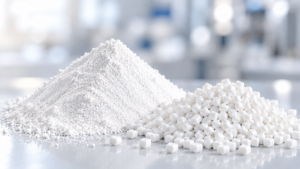

Polyethylene (PE) is one of the most widely used polymers in film extrusion because it offers a useful combination of mechanical strength, flexibility, moisture resistance, and cost efficiency. However, PE is not a single material with identical performance. Different PE grades, including low-density polyethylene (LDPE), linear low-density polyethylene (LLDPE), and high-density polyethylene (HDPE), can produce films with significantly different properties. Understanding these differences is essential when selecting PE for film extrusion for packaging, agriculture, industrial, construction, and other applications.
In this guide, we examine how PE behaves during film extrusion, the key properties that determine film performance, and how to select an appropriate PE type for different film requirements. For more technical insights into polyethylene, polymers, and plastic materials, readers can also explore the TLD Vietnam blog.
What Is PE For Film Extrusion?
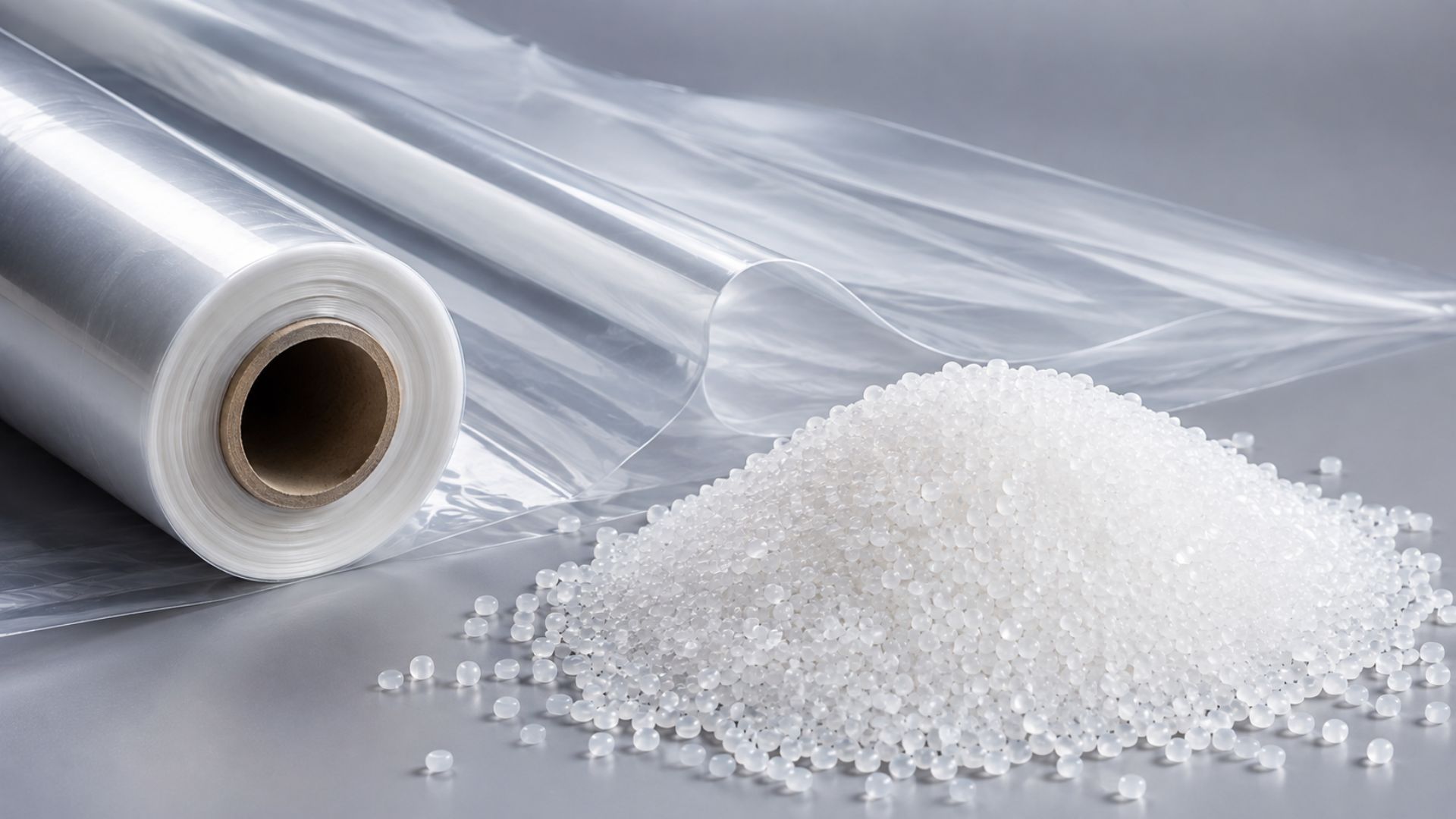
PE for film extrusion refers to PE resin specifically processed into thin plastic films through an extrusion process. During film extrusion, PE pellets are melted, homogenized, and formed into a continuous film through either blown film extrusion or cast film extrusion.
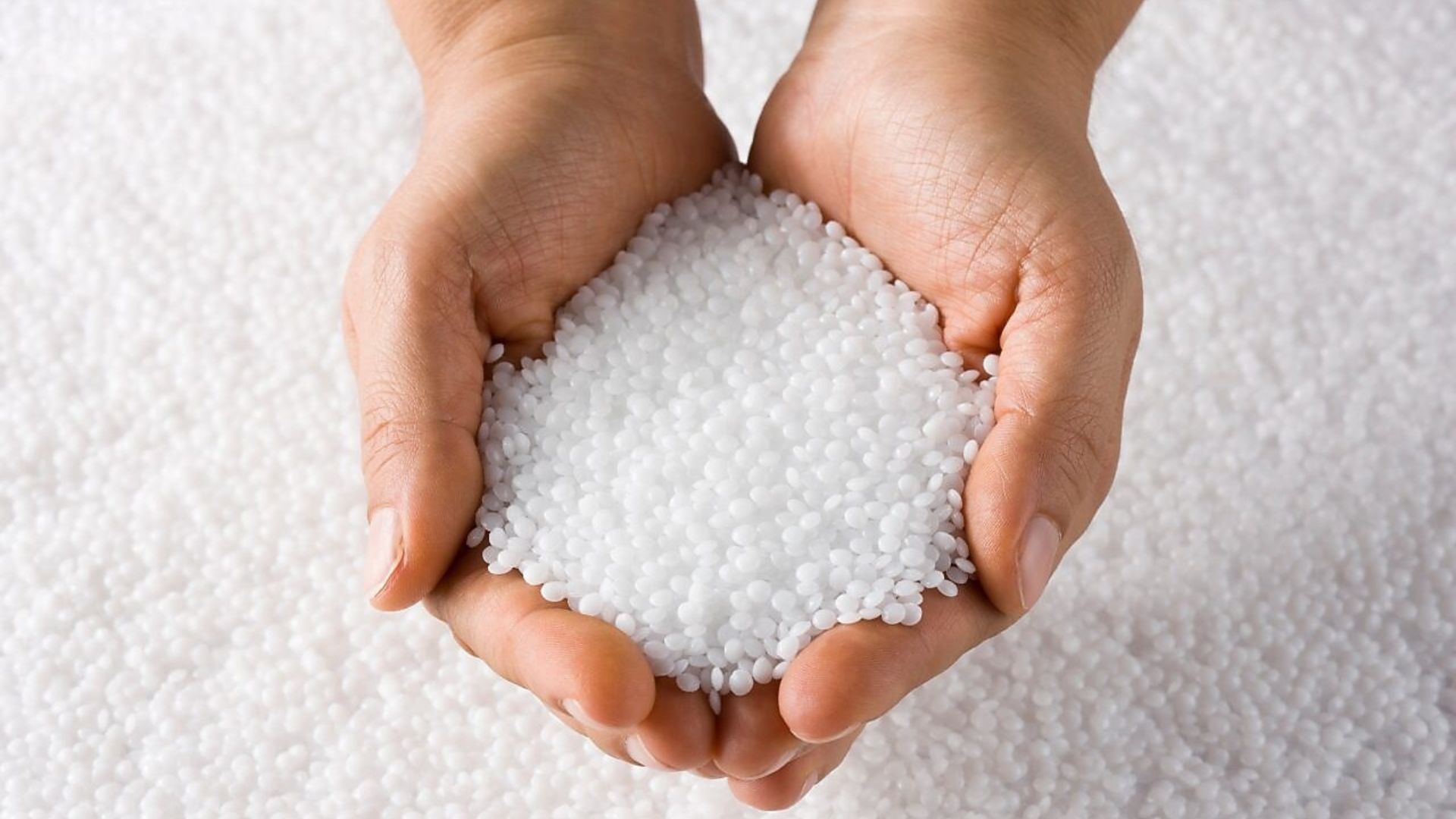
The molecular structure and density of the PE resin strongly influence its processing behavior and the final properties of the film. Factors such as molecular weight, molecular weight distribution, branching, density, and melt flow rate determine how easily the polymer can be processed and how the resulting film behaves under mechanical and thermal stress.
Unlike rigid PE products such as pipes or containers, film applications require the polymer to form a thin, continuous structure while maintaining sufficient strength and dimensional stability. Consequently, selecting the appropriate PE for film extrusion requires consideration of both processing requirements and the intended end use.
What Makes PE Suitable For Film Production?
PE is particularly suitable for film production because the thermoplastic structure allows it to soften when heated and solidify when cooled without undergoing irreversible chemical changes during normal processing. PE also provides good resistance to moisture, many chemicals, and low temperatures. Depending on the grade, it can produce films ranging from highly flexible and transparent materials to relatively stiff and strong films. Another important advantage is its ability to be processed using different extrusion technologies. LDPE, LLDPE, and HDPE can all be used in film production, although their processing conditions and resulting film characteristics differ.
How PE Resin Behaves During Film Extrusion
During extrusion, PE pellets are fed into the extruder and transported through a heated barrel by a rotating screw. The resin gradually melts and becomes a homogeneous polymer melt. The melt is then pushed through a die to form the film. In blown film extrusion, the polymer exits through an annular die and is expanded into a bubble using air. The bubble is cooled, collapsed, and wound into rolls. In cast film extrusion, the molten polymer passes through a flat die and is rapidly cooled on a chill roll.
During these processes, the resin experiences temperature, shear, stretching, and cooling. The molecular characteristics of the polymer, therefore, affect melt strength, bubble stability, drawability, thickness uniformity, and the mechanical properties of the final film.
Key Properties Of PE For Film Applications
Important properties of PE film resin include melt flow rate, tensile strength, elongation, tear resistance, puncture resistance, clarity, haze, stiffness, flexibility, and heat-sealing behavior. The required balance depends on the application. A stretch film, for example, requires high flexibility and controlled strength, while a shopping bag may require greater stiffness and tensile strength. Agricultural films may additionally require long-term resistance to ultraviolet radiation and environmental exposure. Therefore, there is no single PE grade that is optimal for every film application.
Types Of PE Used In Film Extrusion
The three major PE types commonly considered for film extrusion are LDPE, LLDPE, and HDPE. Although all three are based on PE, differences in molecular structure and density result in different processing and performance characteristics.
LDPE
LDPE is widely used in blown film extrusion because its melt strength can help maintain bubble stability during processing. Films produced from LDPE generally have good flexibility, impact resistance, and optical properties. LDPE is commonly used in packaging films, general-purpose bags, agricultural films, and other flexible film applications. However, compared with some LLDPE grades, LDPE may provide lower tensile strength at an equivalent film thickness.
LLDPE
LLDPE has a predominantly linear molecular backbone with short-chain branches. Its molecular structure provides a combination of flexibility and mechanical strength that is particularly useful for film applications. LLDPE is widely used when high tensile strength, puncture resistance, and tear resistance are required. It is therefore commonly found in stretch films, packaging films, agricultural films, and heavy-duty bags. LLDPE can also be blended with LDPE to balance mechanical performance and processing behavior. In many blown film applications, the combination of the two materials allows processors to achieve a desirable balance between melt strength, toughness, processability, and film performance.
HDPE
HDPE has a more linear molecular structure and higher density than LDPE and LLDPE. The relatively low degree of branching allows polymer chains to pack more efficiently, resulting in greater stiffness and strength. HDPE film is generally less flexible than LDPE film but can provide good tensile strength, stiffness, and resistance to many chemicals. It is commonly used for shopping bags, carrier bags, liners, packaging films, and industrial applications. HDPE is also capable of producing relatively thin films while maintaining useful stiffness and strength, which can be advantageous when material reduction is an important consideration.
How LDPE, LLDPE And HDPE Compare For Film
LDPE is generally associated with flexibility, good melt strength, and ease of processing. LLDPE provides a strong combination of tensile strength, puncture resistance, and flexibility. HDPE generally provides better stiffness and tensile strength but lower flexibility.
The choice, therefore, depends on the desired film characteristics rather than simply the polymer name. In many practical applications, blends of different PE types are used to achieve a more balanced property profile. For example, LDPE may be incorporated into an LLDPE formulation to improve processing and melt strength, while LLDPE can contribute toughness and puncture resistance. The appropriate formulation depends on the extrusion equipment, film structure, thickness, and end-use requirements.
Key Properties To Consider When Selecting PE Resin For Film Extrusion
Selecting PE for film extrusion requires more than identifying the polymer type. Resin specifications should be evaluated against the mechanical, optical, thermal, and processing requirements of the finished film.
Melt Flow Rate And Processability
Melt flow rate (MFR), commonly reported in grams per 10 minutes, indicates the flow behavior of a thermoplastic under specified test conditions. It provides an indication of processability but should not be considered a complete description of extrusion performance.
A resin with a higher melt flow rate generally flows more easily under the specified test conditions, while a lower melt flow rate generally indicates greater resistance to flow. For film extrusion, the appropriate MFR depends on the extrusion process, die design, film thickness, output rate, and desired mechanical properties. Melt strength is also important, particularly in blown film extrusion, where the molten polymer must maintain a stable bubble.
Tensile Strength And Tear Resistance
Tensile strength measures the resistance of the film to breaking when subjected to tensile force. Tear resistance describes the ability of the film to resist the propagation of an existing tear. LLDPE is often selected for applications where high toughness and mechanical resistance are required. Molecular structure, density, resin grade, film orientation, and processing conditions can all impact the final tensile and tear properties.
Film Clarity And Haze
Optical properties are important when the film must provide product visibility or a specific appearance. Film clarity describes how clearly objects can be viewed through the material, while haze represents the percentage of transmitted light that is scattered and therefore appears diffuse. The optical performance of PE film depends on polymer structure, crystallinity, cooling conditions, film thickness, and additives. Faster cooling can influence the development of crystalline structures and therefore affect film appearance.
Sealability And Heat-Sealing Performance
Many packaging films must be heat-sealed to form bags, pouches, or other enclosed structures. Heat-sealing performance depends on the temperature range required to form a reliable seal, seal strength, hot tack, and processing conditions. Different PE grades have different sealing characteristics. In multilayer films, the sealing layer may be selected specifically for its ability to form strong seals at suitable temperatures while other layers provide mechanical or barrier properties.
Stiffness And Flexibility
Stiffness determines how strongly a film resists bending or deformation, whereas flexibility describes its ability to bend without cracking or failing. LDPE and LLDPE are generally preferred when flexibility and toughness are important. HDPE generally provides higher stiffness. The appropriate balance depends on the application. A carrier bag may benefit from stiffness, while a stretch film requires substantial flexibility and elongation.
How To Choose The Right PE For Film Extrusion
The selection of PE for film extrusion should begin with the requirements of the final film rather than with the resin alone. Film application, thickness, extrusion method, mechanical requirements, sealing requirements, and whether the structure is monolayer or multilayer should all be considered.
Choosing PE Based On Film Application
Packaging films may require a balance of clarity, toughness, sealability, and processability. Stretch films typically require high elongation and resistance to puncture and tearing. Agricultural films may require flexibility, mechanical strength, and resistance to prolonged environmental exposure. For shopping bags and carrier bags, stiffness and tensile strength may be more important. Industrial films may require higher mechanical resistance depending on the load and environment.
Balancing Strength, Flexibility And Processability
Increasing one property does not necessarily improve overall film performance. A very stiff material may not be appropriate where flexibility is required, while a highly flexible film may not provide sufficient load-bearing capacity. For this reason, film manufacturers often select a resin or blend that provides a practical balance between strength, flexibility, toughness, and processing stability.
Selecting PE Based On Film Thickness
Film thickness has a major influence on mechanical performance and material consumption. Thinner films require efficient use of polymer properties because there is less material available to withstand mechanical loads. When downgauging a film, the resin may need to provide higher strength and puncture resistance to maintain performance at reduced thickness. However, processing stability and thickness uniformity also become increasingly important.
Monolayer vs. Multilayer Film Requirements
Monolayer films must obtain most, or all, required properties from a single polymer formulation. Multilayer films provide greater flexibility because different layers can perform different functions. For example, one layer may provide mechanical strength, another may improve sealing, and another may contribute barrier performance. PE can therefore be combined with other polymers or functional materials in multilayer structures. The choice of PE for film extrusion should consequently consider the role of the PE layer within the complete film structure rather than evaluating the resin in isolation.
Common Applications Of PE Films
PE films are used across packaging, agriculture, retail, construction, and industrial applications because the material can be tailored to different combinations of flexibility, strength, thickness, and processing behavior.
Packaging Films
Packaging is one of the largest applications for PE film. PE films can be used for bags, liners, flexible packaging structures, and protective packaging. Depending on the application, LDPE, LLDPE, HDPE, or blends may be selected to obtain the required combination of mechanical strength, flexibility, sealability, and optical performance.
Stretch And Shrink Films
Stretch films require high elongation, toughness, and resistance to puncture and tearing. LLDPE is widely used because its mechanical properties are suitable for films that undergo significant stretching during application. Shrink films require controlled shrinkage when exposed to heat. Their performance depends on polymer structure, orientation, processing conditions, and formulation.
Agricultural Films
Agricultural films include greenhouse films, mulch films, silage films, and other products used in farming. These materials may require flexibility, mechanical strength, moisture resistance, and resistance to ultraviolet exposure. The required properties depend strongly on the agricultural environment and expected service life.
Industrial And Construction Films
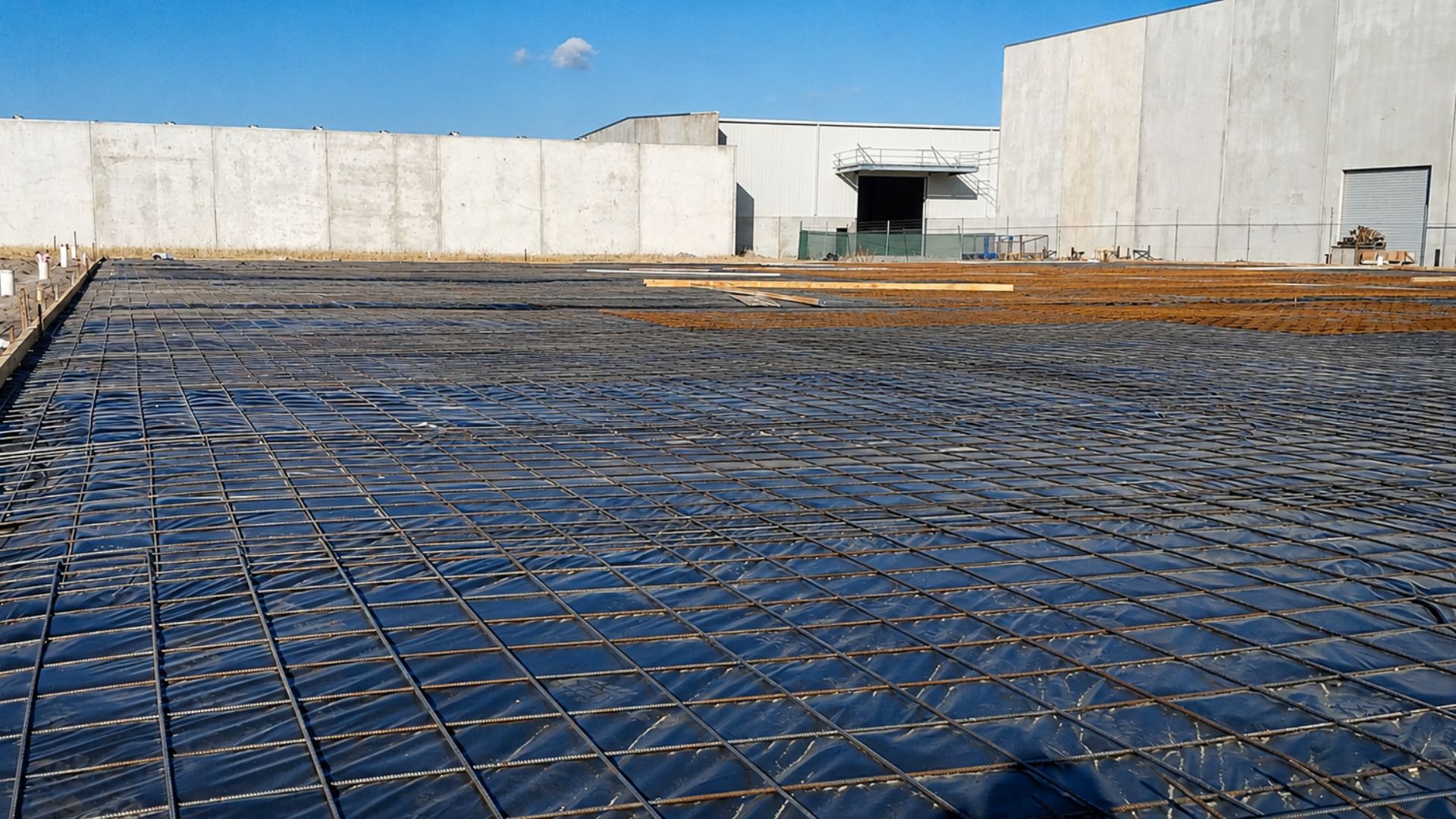
Industrial and construction films are often used as protective covers, liners, vapor barriers, temporary enclosures, and packaging materials. These applications may prioritize puncture resistance, tensile strength, thickness stability, and environmental resistance over optical properties.
Common Film Extrusion Problems And Their Causes
Even when the correct PE for film extrusion has been selected, processing conditions can strongly influence the final film. Common defects may result from resin characteristics, extrusion parameters, cooling, die conditions, or equipment stability.
Poor Film Strength
Poor mechanical strength may result from an unsuitable resin grade, insufficient film thickness, excessive orientation, poor cooling control, or inappropriate processing conditions. The first step is to distinguish whether the problem originates from the resin specification or the extrusion process.
Film Breakage
Film breakage can occur because of unstable bubble formation, uneven thickness, contamination, excessive drawdown, unsuitable melt temperature, or inadequate melt strength. In blown film extrusion, stable bubble control is particularly important because fluctuations in air cooling, haul-off speed, or extrusion output can affect film stability.
Poor Sealing Performance
Weak or inconsistent seals can result from unsuitable sealing-layer resin, incorrect sealing temperature, insufficient pressure, inadequate dwell time, or contamination at the sealing interface. For multilayer films, the properties of the sealing layer should be evaluated separately from those of the structural layers.
Surface Defects
Surface defects can include gels, die lines, roughness, fish eyes, streaks, and other visible imperfections. Possible causes include resin contamination, degraded polymer, poor mixing, die deposits, or inappropriate processing conditions. Maintaining clean equipment, stable processing conditions, and appropriate resin handling is therefore essential for consistent film quality.
Additives Used In PE Film Extrusion
PE film formulations may contain additives designed to improve processing, surface characteristics, durability, or application performance. The type and concentration of the additive should be selected according to the final film requirements and processing conditions.
Slip and Antiblock Additives
Slip additives reduce the coefficient of friction between film surfaces, helping film layers move more easily during winding, handling, and packaging operations. Antiblock additives reduce the tendency of film surfaces to adhere to each other. This is particularly useful for thin films that are stored or processed in rolls.
UV Stabilizers
Films exposed to sunlight can undergo degradation caused by ultraviolet radiation. UV stabilizers are therefore commonly used in agricultural and outdoor films where extended service life is required. The appropriate stabilization system depends on the polymer, exposure conditions, expected lifetime, and film thickness.
Antioxidants
Antioxidants help protect PE from oxidative degradation during processing and service. This is particularly important because PE is exposed to elevated temperatures and oxygen during extrusion. Primary and secondary antioxidant systems can be used to provide protection through different mechanisms, depending on the formulation.
Processing Aids
Processing aids can improve melt processing, reduce surface defects, decrease die buildup, or facilitate more stable extrusion under certain conditions. Their effectiveness depends on the polymer grade, extrusion equipment, processing temperature, and target film characteristics.
How Additives Improve PE Film Performance
Additives should not be viewed as substitutes for selecting an appropriate PE resin. Instead, they are generally used to modify or enhance specific properties. For example, a UV stabilizer can improve weatherability, while a slip additive can improve surface handling. Antioxidants protect the polymer during processing, and antiblock additives improve film-to-film handling. The overall formulation should therefore be designed around the required end-use performance rather than maximizing the concentration of individual additives.
Conclusion
Selecting the right PE resin depends on factors such as melt flow rate, melt strength, mechanical properties, optical performance, sealing behavior, film structure, and processing conditions. Ultimately, the right grade should provide a balanced combination of processability, film performance, durability, and cost. For additional technical articles covering PE, PP, PVC, calcium carbonate, masterbatch, and other polymer materials, readers can explore the TLD Vietnam blog for further information.