
Polyvinyl Chloride (PVC) is one of the most widely processed thermoplastics in construction and infrastructure applications, but it has an important limitation: its thermal stability is relatively low at typical processing temperatures. During extrusion, PVC can begin to degrade if heat, residence time, and shear are not properly controlled. For this reason, heat stabilization is a fundamental part of rigid PVC formulation.
Lead stabilizer for PVC extrusion is one of the traditional heat stabilization systems used to improve the thermal resistance of PVC during processing. Lead-based systems have historically been associated with rigid PVC products because of their relatively strong heat stability and broad processing window.
This article by TLD Vietnam explains the chemistry behind PVC degradation, how lead stabilizers function during extrusion, their main benefits and applications, and the formulation factors that influence stabilizer dosage.
What Is Lead Stabilizer For PVC Extrusion?
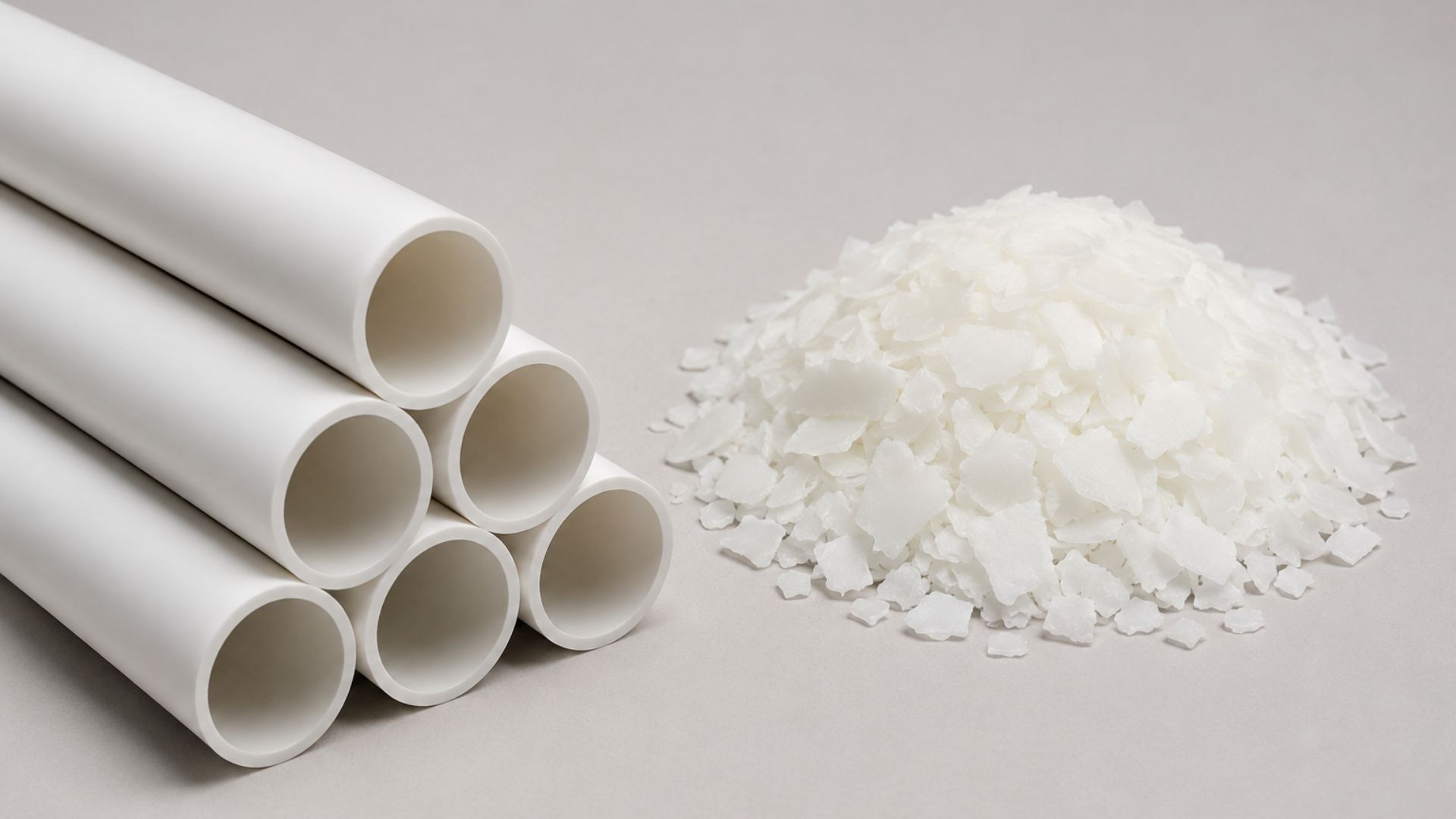
Lead stabilizer for PVC extrusion is a heat stabilizer system containing lead-based compounds designed to reduce or delay the thermal degradation of polyvinyl chloride during melt processing. PVC contains Chlorine atoms along its polymer backbone. At high temperatures, particularly under extrusion conditions, some structurally unstable sites in the polymer can begin to eliminate hydrogen chloride, or HCl. Once this degradation process starts, it may accelerate unless an effective stabilization system is present.
A lead-based PVC stabilizer typically performs several functions at the same time. It can react with acidic degradation products, reduce the catalytic effect of released HCl, and help maintain the thermal stability of the PVC compound throughout the processing cycle.
The term lead stabilizer for PVC extrusion usually refers to stabilizer systems developed primarily for rigid PVC extrusion rather than flexible PVC processing. They may be formulated as individual lead compounds or, more commonly in industrial applications, as integrated stabilizer packages containing stabilizing components together with lubricants and other processing additives.
Historically, lead stabilizer systems have been widely associated with rigid PVC because extrusion of pipes and profiles often requires sustained exposure to elevated temperatures. The stabilizer must therefore provide sufficient protection not only during initial melting but also throughout transport, compression, homogenization, and die forming.
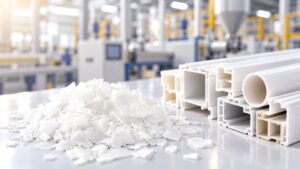
Typical rigid PVC applications include pressure pipes, drainage pipes, electrical conduits, window profiles, door profiles, siding, construction profiles, and other extruded products.
Why Does PVC Need Heat Stabilization During Extrusion?
PVC differs from many common thermoplastics because the temperature required to process it is close to the temperature range in which thermal degradation can become significant. The extrusion process, therefore, has to balance two competing requirements. The material must receive enough thermal and mechanical energy to fuse and flow properly, while excessive exposure to heat and shear must be avoided.
Without appropriate stabilization, PVC color, melt behavior, and physical properties may deteriorate during processing.
Thermal Degradation Of PVC
One of the principal degradation mechanisms in PVC is dehydrochlorination. During this reaction, HCl is eliminated from the PVC chain. The loss of HCl creates unsaturated structures within the polymer backbone. As degradation continues, increasingly long sequences of conjugated double bonds can form. These conjugated structures absorb visible light and are responsible for the characteristic color change observed when PVC undergoes thermal degradation.
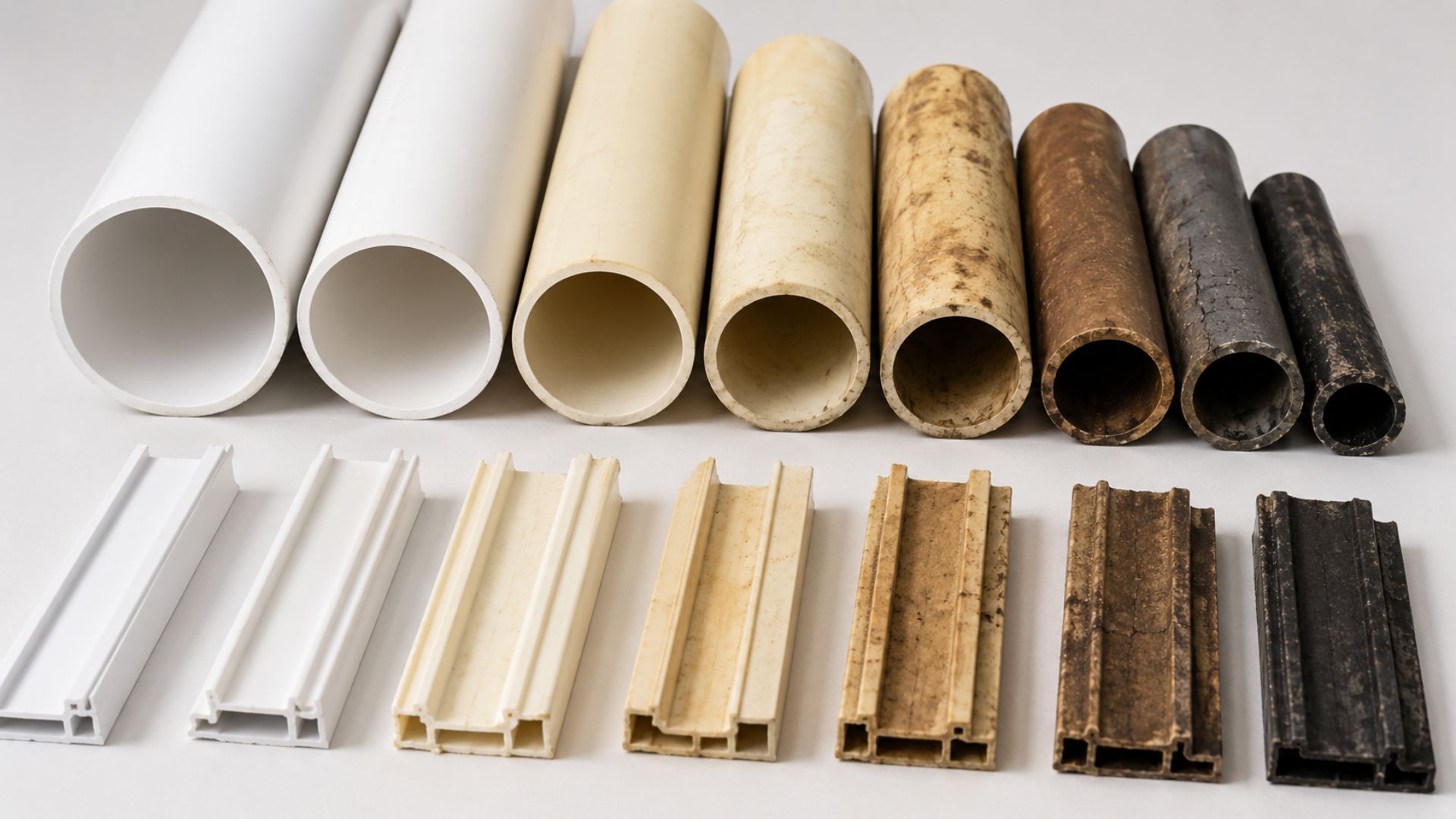
The progression commonly follows a sequence such as: PVC initially appears white or close to its original formulation color. As degradation develops, the material can become yellow, then brown, and under severe conditions, eventually dark brown or black. Color development is therefore often used as one practical indication of thermal degradation during laboratory heat-stability testing. The released HCl is also important because it can promote further dehydrochlorination. PVC degradation can consequently become autocatalytic: degradation generates HCl, and the presence of HCl can accelerate additional degradation. Lead stabilizer for PVC extrusion is designed in part to interrupt or reduce this degradation cycle.
Processing Conditions That Accelerate Degradation
PVC degradation is not determined by only temperature. Several processing conditions can influence the rate at which degradation occurs. Processing temperature is one of the most direct factors. Higher melt or metal temperatures generally increase the rate of chemical reactions associated with PVC degradation.
Residence time is equally important. Even when the processing temperature remains within the normal operating range, PVC that stays in the extruder or die for an extended period receives a larger total thermal exposure. Shear also contributes to the processing of the compound. High mechanical shear can generate additional frictional heat and can change the thermal conditions experienced by the material.
Repeated processing can further reduce stability because the polymer has already undergone a previous heat and shear history. Equipment conditions also matter. Dead zones, material accumulation, poor temperature control, contamination, or inefficient screw and die design may increase local residence time or produce local overheating. For this reason, heat stabilization should be considered together with extrusion conditions rather than as an isolated formulation variable.
How Lead Stabilizers Work In PVC Extrusion
The main function of a Lead stabilizer for PVC extrusion is to increase the period during which PVC can tolerate processing conditions before unacceptable degradation occurs. Lead stabilizers do not make PVC completely resistant to heat. Instead, they slow important degradation pathways and provide a more practical processing window.
Neutralization Of HCl
As PVC begins to degrade, HCl can be released from unstable sections of the polymer chain. Lead used in stabilization systems can react with this HCl and convert it into less reactive lead chloride species. By reducing the amount of free HCl present in the PVC melt, the Lead stabilizer helps limit one of the major factors that can accelerate further degradation. This acid-scavenging effect is an important part of the overall heat stabilization mechanism.
However, HCl neutralization alone does not fully explain the performance of a stabilizer system. PVC stability also depends on how the stabilizer interacts with unstable chlorine sites, formulation ingredients, and the thermal history of the compound.
Suppression Of Autocatalytic Degradation
The autocatalytic nature of PVC degradation is particularly important in extrusion. When HCl is generated, it can facilitate further dehydrochlorination. Additional HCl is then released, which can further increase the degradation rate. A properly formulated lead stabilizer for PVC extrusion reduces the concentration and activity of acidic degradation products and therefore helps slow this accelerating reaction sequence. The result is not complete prevention of degradation. Instead, the stabilizer delays the point at which degradation becomes rapid enough to cause unacceptable discoloration, processing instability, or deterioration of the final product.
Heat Stability And Processing Window
One of the practical reasons Lead-based systems became widely used in rigid PVC processing is their relatively strong long-term heat stability. During extrusion, PVC may remain exposed to high temperatures for several minutes while passing through the screw channels, compression zones, adaptor, die, and calibration system. The Lead stabilizer for PVC extrusion helps extend the thermal stability of the compound throughout this processing period.
A wider processing window can make the extrusion process less sensitive to moderate variations in temperature, shear, residence time, and throughput. This does not eliminate the need for correct machine settings. Poor extrusion conditions can still cause PVC degradation even when an effective stabilizer is present.
Interaction With Other Formulation Components
PVC extrusion compounds normally contain more than resin and stabilizer. The behavior of a lead stabilizer for PVC extrusion, therefore, depends partly on the formulation. Lubricants influence fusion, melt flow, metal release, surface quality, and friction within the processing equipment. An excessive or insufficient lubricant level can change the apparent effectiveness of the stabilization system. Processing aids can influence fusion behavior and melt strength. Changes in fusion characteristics may alter the thermal and mechanical history experienced by the PVC during extrusion.
Fillers such as Calcium carbonate can affect rheology, heat transfer, density, mechanical properties, and lubricant demand. High filler loading may therefore require adjustments to the overall stabilization and lubrication system. Pigments may also influence heat absorption and formulation behavior, while other stabilizer components can contribute complementary functions such as acid scavenging, initial color control, or lubrication. For this reason, the performance of Lead stabilizer for PVC extrusion should always be evaluated as part of the total compound rather than only by considering the stabilizer concentration.
Key Benefits Of Lead Stabilizers In PVC Extrusion
Lead stabilizers play an important role in maintaining the durability, processing stability, and long-term performance of PVC products. By improving resistance to heat and light exposure, they help minimize degradation and preserve the material’s physical properties.
- Heat Stabilization: During PVC processing, high temperatures can trigger thermal degradation and affect the material’s structure. Lead stabilizers help control this degradation by capturing reactive species generated during thermal decomposition and supporting the stability of the PVC matrix. This function is particularly important in extrusion and molding, where PVC is subjected to sustained heat and shear. By improving thermal stability, lead-based systems help maintain consistent processing performance and reduce the risk of discoloration and material deterioration.
- Light Stabilization: Prolonged exposure to UV radiation can gradually damage PVC, resulting in discoloration, embrittlement, and reduced mechanical performance. Lead stabilizers can contribute to the protection of PVC against light-induced degradation, helping the material retain its appearance and functional properties during outdoor use. This is relevant for applications such as window profiles, siding, pipes, and other PVC products exposed to sunlight over extended periods.
From a technical perspective, the stabilization mechanism involves interactions between lead compounds and degradation products generated within the PVC during processing and exposure. These reactions help suppress degradation pathways and improve the material’s resistance to thermal and environmental stresses. As a result, properly formulated lead stabilizer systems can support the durability and performance requirements of PVC products under demanding operating conditions.
Applications Of Lead Stabilizers In PVC Extrusion
The use of a lead stabilizer for PVC extrusion has historically been concentrated in rigid PVC products that require sustained heat stability during continuous processing.
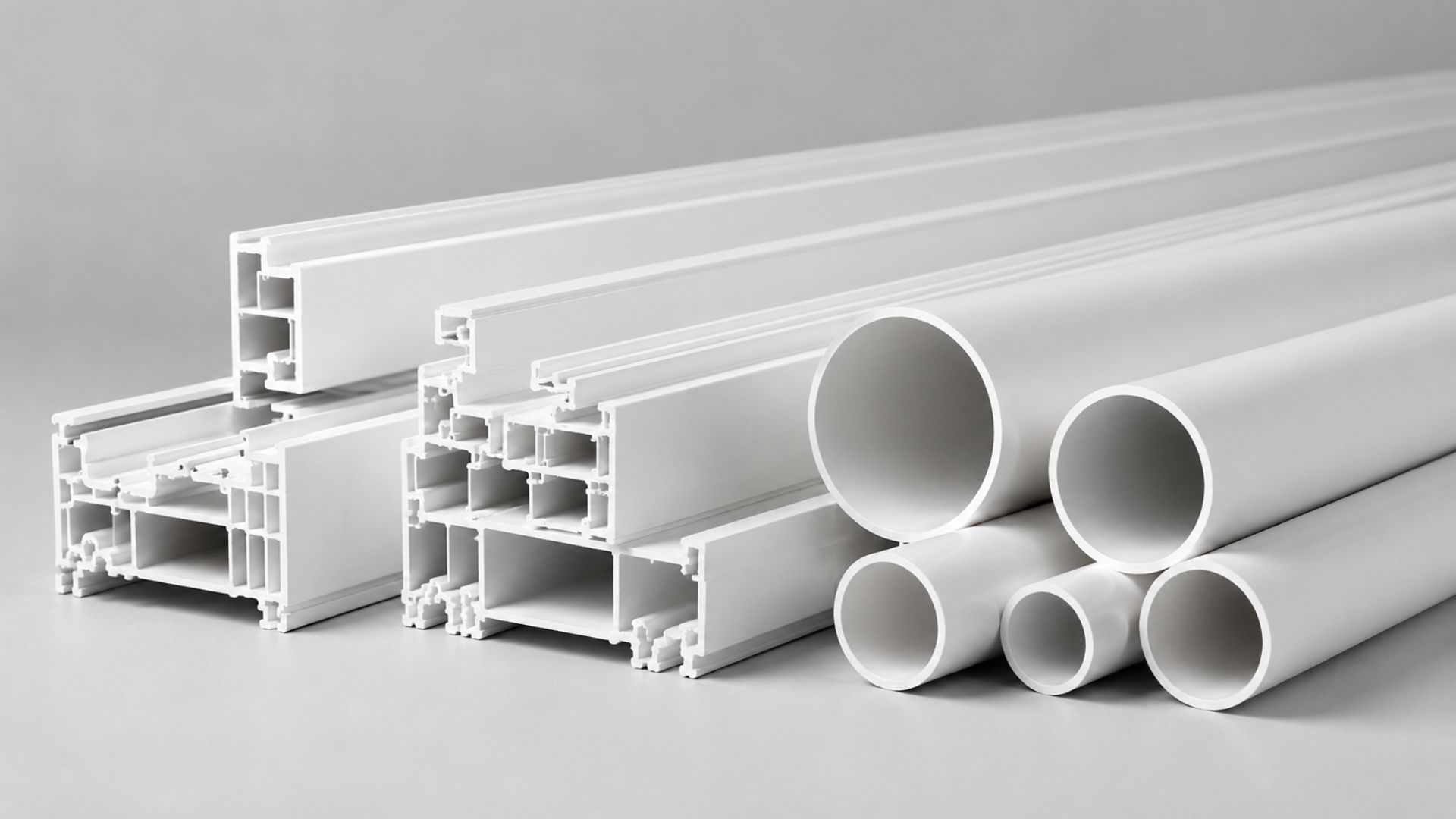
PVC Pipes
Rigid PVC pipes are among the best-known applications. PVC pipe compounds must fuse sufficiently in the extruder while maintaining dimensional stability and resisting excessive thermal degradation during continuous production. Lead stabilizer systems have therefore been used in products such as pressure pipes, drainage pipes, sewer pipes, and electrical conduit pipes. Pressure pipe formulations generally require a carefully controlled balance between fusion, lubrication, thermal stability, and mechanical properties.
Drainage pipes may use somewhat different filler levels and processing conditions, but thermal stability remains important because the compound still passes through a continuous extrusion process. Electrical conduit pipes are another typical rigid PVC application where processing stability and dimensional consistency are required. In these products, Lead stabilizer for PVC extrusion normally operates together with lubricants, fillers, processing aids, pigments, and other formulation components.
PVC Profiles
Rigid PVC profiles represent another important application category. Window profiles, door profiles, wall profiles, cable-management profiles, and other construction profiles often have more complex cross-sectional geometries than simple pipes. The compound may therefore experience significant shear and residence time as it flows through the die.
Lead stabilizer for PVC extrusion can help maintain the required thermal stability during this process, particularly in formulations designed for continuous profile production. Profile formulations must also balance stabilization with fusion behavior, surface quality, dimensional accuracy, impact performance, weathering requirements, and pigment systems. For this reason, the stabilizer used for a window profile may not necessarily have the same composition as a stabilizer designed for PVC pipe production.
Lead Stabilizer vs Calcium Zinc Stabilizer for PVC Extrusion
Lead-based and Calcium-zinc stabilization systems can both be used for rigid PVC, but their chemistry and formulation behavior differ. Lead stabilizer for PVC extrusion relies primarily on lead-containing compounds to provide heat stabilization. Calcium-zinc systems typically use combinations of calcium and zinc soaps together with co-stabilizers, acid scavengers, antioxidants, polyols, hydrotalcites, or other supporting components.
Lead systems have historically been known for strong long-term thermal stability and relatively robust processing performance in rigid PVC extrusion. Calcium-zinc systems, however, have become increasingly important as alternatives where lead-containing stabilizers are restricted, voluntarily phased out, or avoided for environmental and regulatory reasons.
The behavior of calcium-zinc systems cannot always be treated as a direct replacement for lead stabilizers. Differences may occur in initial color, long-term heat stability, lubrication balance, plate-out behavior, fusion characteristics, and interactions with fillers or pigments. Consequently, changing from a lead stabilizer for PVC extrusion to a calcium-zinc system may require reformulation rather than simply replacing the stabilizer at the same dosage.
Lubricant levels, processing aids, filler loading, extrusion temperatures, and other parameters may need to be reviewed during the conversion. The preferred system, therefore, depends on the product specification, processing equipment, regulatory environment, regional market requirements, and the complete PVC formulation.
Lead Stabilizer Dosage And Formulation Considerations
There is no single universal dosage for a lead stabilizer for PVC extrusion. The appropriate dosage depends on several interacting factors, including PVC resin grade, extrusion conditions, stabilizer composition, lubricant system, filler loading, pigment package, processing aids, and the required level of thermal stability. PVC resin grade is relevant because molecular weight, K-value, particle morphology, porosity, and residual components can influence processing behavior.
Extrusion conditions are equally important. A high-output production line with substantial shear may require a different stabilization and lubrication balance from a lower-output process operating at a different screw geometry or melt temperature. Stabilizer composition must also be considered. A concentrated stabilizer containing a high proportion of active stabilizing compounds cannot be compared directly with a one-pack product containing stabilizers, lubricants, fillers, and processing additives.
Filler loading can significantly influence formulation balance. Calcium carbonate affects rheology, density, heat transfer, lubrication demand, and mechanical performance. Increasing filler content may therefore change the amount or type of stabilizer-lubricant system required. The lubricant system is particularly important in rigid PVC. Internal and external lubrication influence fusion time, melt viscosity, metal release, surface quality, and extrusion torque.
An effective lead stabilizer for PVC extrusion should therefore be evaluated together with the lubricant package rather than optimized independently. Laboratory testing is commonly used to compare formulations before production-scale trials. Relevant methods may include static heat stability, dynamic heat stability, torque rheometry, fusion testing, color measurement, extrusion trials, and assessment of final-product properties.
The objective is to identify a formulation that provides adequate processing stability without unnecessarily increasing additive loading or negatively affecting fusion and product performance.
Practical Factors When Selecting Lead Stabilizer For PVC Extrusion
Selection should begin with the intended PVC application. A pipe formulation, window profile formulation, electrical conduit formulation, or general construction profile may require different stabilization and lubrication characteristics. The expected processing temperature and residence time should also be considered. If the PVC compound is exposed to a relatively demanding thermal history, longer-term heat stability may be more important.
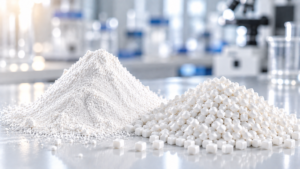
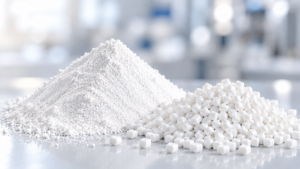
Filler level is another key factor. Highly filled compounds can behave differently from low-filled formulations, particularly in terms of fusion, torque, lubrication, and melt flow. The physical form of the stabilizer may also affect handling and dispersion. Commercial stabilizer systems can be supplied as powders, flakes, granules, pellets, or other forms depending on the manufacturer and intended processing method. Finally, regulatory requirements must be considered. The use of lead-containing stabilizers is restricted or phased out in a number of markets and applications. Manufacturers should therefore evaluate the applicable regulations and customer specifications for the country in which the PVC product will be produced, sold, or used.
Conclusion
PVC requires heat stabilization because its processing temperature can trigger dehydrochlorination and thermal degradation. A lead stabilizer for PVC extrusion helps suppress these degradation reactions, reduce the effects of acidic by-products, and extend the compound’s thermal processing window. However, stabilizer type and dosage should be determined through formulation-specific evaluation rather than a universal dosage.