
Polypropylene (PP) is one of the most widely used thermoplastic polymers in modern manufacturing. The PP melting point is an essential reference for understanding PP, but it should not be seen as a single answer to every processing or heat-resistance question. It describes the melting behavior of the crystalline phase of a semi-crystalline polymer, usually within the range of about 160°C to 170°C for many commercial PP grades. However, only the melting point is not enough to determine the overall heat resistance or processing suitability of PP in real manufacturing conditions. This blog by TLD Vietnam will give you detailed information.
Why The PP Melting Point Matters?
PP, commonly known as PP, is one of the most widely used thermoplastic polymers in modern manufacturing. It appears in packaging, household products, fibers, automotive components, medical-related items, pipes, sheets, and many other applications where low density, chemical resistance, processability, and reasonable heat resistance are required. However, PP is not a single fixed material. It includes homopolymer PP, random copolymer PP, impact copolymer PP, and many modified grades containing fillers, stabilizers, nucleating agents, pigments, glass fiber, or other additives.
For that reason, the PP melting point should not be understood as a number that applies equally to every PP product. It is better to see it as a technical reference point that helps manufacturers understand when the crystalline phase of PP begins to lose its structure. The PP melting point is commonly around 160°C to 170°C, although the exact value can vary depending on molecular structure, crystallinity, and formulation.
This distinction matters because many production problems are not caused simply by choosing a material with the wrong melting point. They are often caused by confusing the PP melting point with the processing temperature, the service temperature, or the maximum short-term temperature that a finished product can tolerate.
What Is The PP Melting Point?
Melting behavior in a semi-crystalline polymer
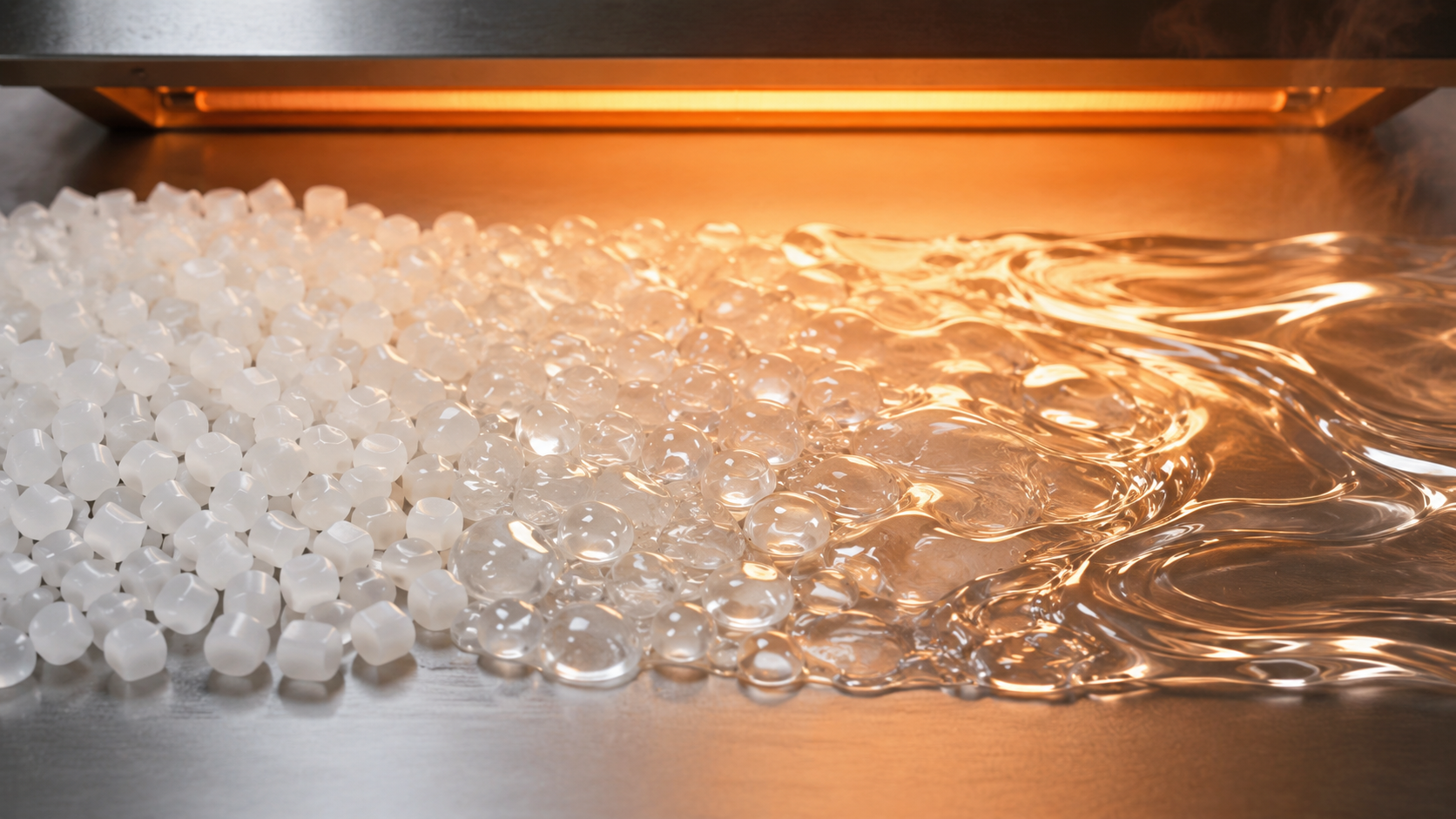
PP is a semi-crystalline polymer. This means that part of the molecular structure forms ordered crystalline regions, while another part remains amorphous and less ordered. When exposed to heat, the amorphous regions soften first, while the crystalline regions require more energy before they melt. The PP melting point is mainly associated with the melting of these crystalline regions.
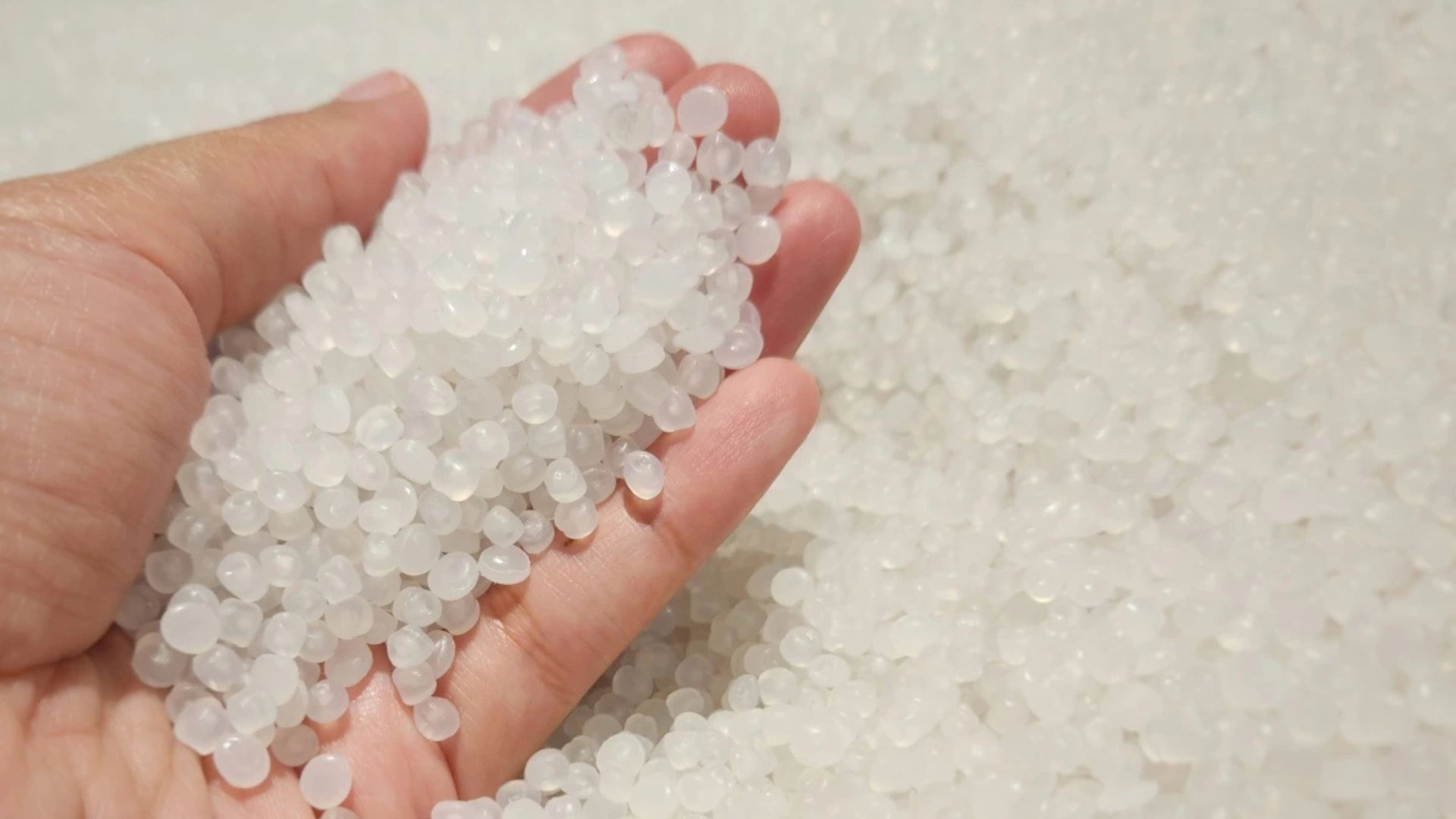
Unlike some simple substances that melt sharply at a single temperature, PP normally shows a melting range. Differential scanning calorimetry may show a melting peak rather than a perfectly fixed point. This is because PP contains crystallites of different sizes and degrees of perfection. A highly crystalline PP grade may show a slightly higher melting behavior, while a random copolymer grade may melt at a lower temperature because comonomer units disrupt crystal formation.
Therefore, when engineers discuss the PP melting point, they are usually referring to a practical range rather than an absolute number. This range provides useful guidance, but it does not replace actual testing under the intended processing and application conditions.
Difference between melting point and processing temperature
A common misunderstanding is to assume that PP should be processed exactly at the PP melting point. In real production, this is not sufficient. The material must be heated above the melting range to achieve stable flow through the screw, die, runner, gate, or mold cavity. Depending on the grade and process, barrel or melt temperatures may often be set significantly above this thermal transition range.
This does not mean that the higher temperature is always better. Excessive temperature can reduce viscosity and improve short-term flow, but it may also increase the risk of oxidation, discoloration, odor, molecular degradation, and loss of mechanical properties. The practical challenge is to use enough heat to obtain complete melting and proper flow, while avoiding unnecessary thermal history.
The PP melting point is therefore a baseline, not the final processing setting. It tells the processor where melting begins, but process optimization still depends on melt flow index, part geometry, mold temperature, cycle time, screw design, residence time, and the presence of fillers or additives.
Why The PP Melting Point Matters In Manufacturing
Consistent melting and mold filling
In injection molding, blow molding, extrusion, thermoforming, and fiber spinning, stable melting is essential. If the polymer is not fully melted, unmelted particles or uneven viscosity may appear in the melt stream. These defects can lead to poor surface appearance, weak weld lines, incomplete filling, internal stress, dimensional variation, and inconsistent mechanical performance.
The PP melting point gives manufacturers a starting reference for setting the thermal profile of the equipment. When the heating zones are properly adjusted, the material reaches a uniform melt state before entering the mold or die. This improves repeatability because each production cycle begins with a more predictable melt condition.
In practice, consistency is often more important than simply reaching a high temperature. A well-controlled process around this melting range and above it produces fewer variations in shrinkage, warpage, gloss, and part weight. For manufacturers supplying technical components, this stability can be more valuable than chasing the fastest possible cycle time.
Mechanical strength and crystallization after cooling
The PP melting point is also connected to the way the material crystallizes after processing. When molten PP cools, crystalline regions reform. The cooling rate, mold temperature, nucleating agents, and grade structure affect the final degree of crystallinity. This final structure influences stiffness, impact strength, heat deflection temperature, chemical resistance, and dimensional stability.
If the processing temperature is too low, melting may be incomplete, and the final product may show weak points or internal inconsistency. If the processing temperature is too high, the polymer may degrade or experience excessive thermal history. Both situations can reduce the reliability of the finished product.
This is why the melting behavior of PP should be considered together with the cooling behavior. A product does not gain its final properties only during melting. It gains them through the complete thermal cycle of melting, flow, packing, cooling, and crystallization. For this reason, experienced processors do not treat the melting point as a simple number on a datasheet. They treat it as one part of a broader processing window.
Relationship Between PP Melting Point and Heat Resistance
Melting point is not the same as temperature
One of the most important technical clarifications is that the PP melting point is not the same as the maximum temperature of a finished PP product. A PP container, automotive part, or electrical component does not need to reach the melting range before it begins to lose stiffness or dimensional stability. Under load, PP can deform at temperatures far below its melting point.
This is why heat resistance must be evaluated using additional indicators such as heat deflection temperature, Vicat softening temperature, long-term aging performance, and dimensional stability under stress. A material with a melting point around 165°C may still be unsuitable for continuous use at much lower temperatures if the part is thin, mechanically loaded, poorly supported, or exposed to chemicals.
The melting point helps define the upper thermal nature of the polymer, but it should not be used alone to approve a product for high-temperature use. For engineering applications, the real question is not simply whether the material melts, but whether it retains sufficient stiffness, strength, shape, and safety margin throughout its intended service life.
Influence of fillers and additives
Fillers and additives can change how PP behaves under heat. Calcium carbonate, talc, glass fiber, mineral fillers, antioxidants, UV stabilizers, and nucleating agents may influence stiffness, shrinkage, crystallization rate, dimensional stability, and thermal aging. However, they do not always raise the true melting point of PP in a direct way.
For example, mineral fillers may improve rigidity and reduce shrinkage, but they can also affect impact resistance and processing flow. Nucleating agents can accelerate crystallization and may improve stiffness or heat deflection behavior, but this should not be confused with a large increase in the melting point itself. Additives modify performance around the polymer matrix; they do not completely change the fundamental melting behavior of PP.
This is especially important when evaluating filled PP compounds. A compound may feel more heat-resistant in use because it is more dimensionally stable, even though the polymer phase still melts in the typical PP range. Correct material selection requires looking at the full datasheet rather than relying only on one thermal parameter.
Processing Risks When Temperature Is Poorly Controlled
Underheating and incomplete melting
If PP is processed too close to or below the required melt temperature, the polymer may not reach a homogeneous molten state. In injection molding, this may produce short shots, flow marks, weak weld lines, or visible unmelted particles. In extrusion, it may cause unstable pressure, poor surface smoothness, thickness variation, or die lines.
Underheating is sometimes difficult to identify because the machine may still appear to run. The material can pass through the equipment, but the melt quality may be poor. The PP melting point helps processors recognize that reaching a flowable state requires more than surface softening. The entire melt stream must be thermally uniform before it can produce reliable parts.
Overheating and thermal degradation
The opposite problem is excessive temperature. When PP is exposed to high heat for too long, especially in the presence of oxygen or long residence time, the polymer chains may degrade. This can reduce molecular weight, lower impact strength, cause brittleness, or lead to discoloration.
In many cases, degradation is not caused by one dramatic temperature mistake. It develops gradually through a combination of excessive barrel temperature, long residence time, dead zones in the screw or hot runner, repeated reprocessing, and insufficient stabilization. The melting point provides the lower reference for melting, but processors must also define the upper safe limit of the process.
A stable process is not one that simply exceeds the melting point. It is one that maintains a controlled temperature window, avoids unnecessary overheating, and keeps the material’s residence time within a safe range.
Choosing The Right PP Grade
Packaging and consumer products
For packaging and consumer goods, the PP melting point is useful because it helps determine processing conditions and expected thermal behavior. Thin-wall containers, caps, closures, houseware, and reusable items all depend on stable molding, dimensional accuracy, and acceptable heat resistance. In these applications, the grade selection must balance stiffness, impact strength, clarity, cycle time, and cost.

Random copolymer PP may be selected when clarity and toughness are important, while homopolymer PP may be preferred for stiffness and higher heat resistance. Impact copolymer PP may be used when toughness at lower temperatures is required. Each choice has a different thermal and mechanical profile, so the melting point should be interpreted alongside the grade’s complete performance data.
Automotive, electrical, and technical parts
In automotive and electrical applications, the melting point becomes part of a more demanding engineering discussion. Components may be exposed to heat, vibration, chemicals, mechanical stress, and long-term aging. A part may not melt during service, but it may still creep, warp, or lose strength if the material is not suitable.

For this reason, technical PP compounds are often reinforced or stabilized. Talc-filled PP may be used for dimensional stability and stiffness. Glass-fiber-reinforced PP may be used where strength and heat deflection resistance are more important. Flame-retardant systems may be required for electrical applications. In all cases, the melting point remains relevant, but it is only one parameter within a larger design and validation process.
Conclusion
In production, the melting point helps define the starting point for melting and thermal control, but processing temperatures must be optimized according to grade, equipment, product design, and cycle requirements. In application, the melting point gives insight into the material’s thermal nature, but service performance must also consider heat deflection, load, aging, additives, fillers, and long-term dimensional stability.
For manufacturers, the most practical lesson is simple: use the PP melting point as a technical guide, not as a standalone specification. PP performs well when the material grade, processing window, and product design are aligned. When these factors are understood together, the result is not only better processing stability but also more reliable product performance in real use.