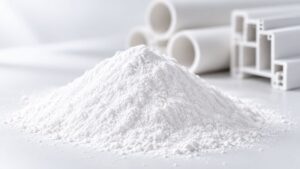

PE shrink film (Polyethylene shrink film) is a PE-based packaging material designed to contract under heat, providing tight wrapping, moisture resistance, and mechanical protection. Its performance depends on resin composition, film structure, and processing conditions, making proper material selection essential for stable and efficient packaging across different industrial applications. Read the full article on the TLD Vietnam blog to explore the technical structure, production process, properties, and applications of PE shrink film in detail.
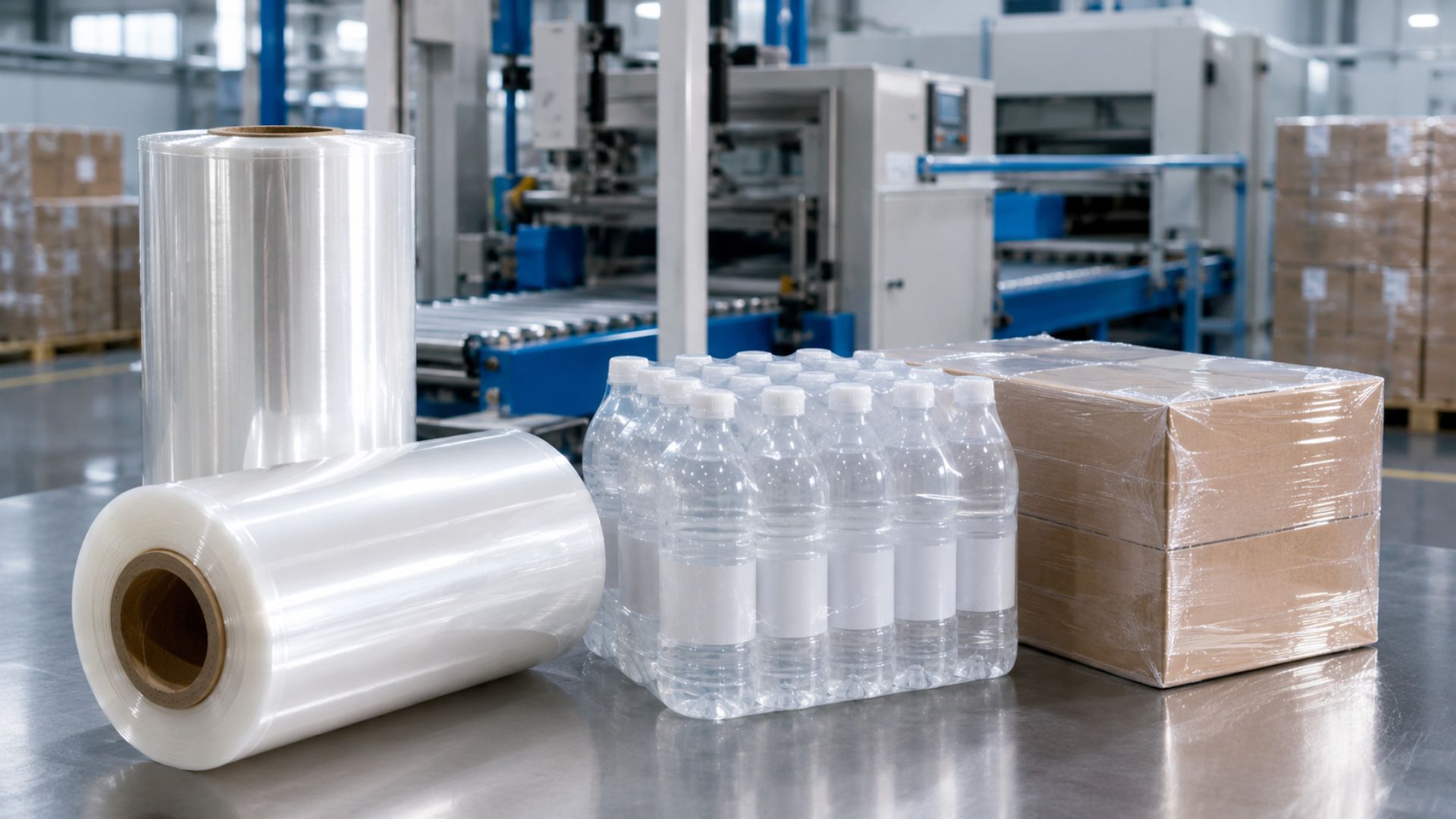
Understanding PE Shrink Film
PE shrink film is a thermoplastic packaging film produced mainly from PE resin. Depending on the required performance, the formulation may include LDPE, LLDPE, HDPE, metallocene PE, or a combination of these materials. The defining feature of PE shrink film is its ability to contract when exposed to controlled heat. After the film is used around a product, heat causes the polymer chains to recover from their stretched orientation, allowing the film to shrink tightly around the packaged item. This shrink behavior creates a protective layer that helps reduce movement, surface contamination, moisture exposure, and mechanical damage during logistics.
Compared with ordinary PE film, PE shrink film is designed with a more specific balance of shrink force, puncture resistance, tear strength, optical clarity, and sealing performance. This balance is important because industrial packaging does not only require coverage. It also requires dimensional stability, load retention, controlled shrinkage, and compatibility with packaging equipment.
Material Composition Of PE Shrink Film
PE as the base polymer
The main component of PE shrink film is PE, a polymer formed from ethylene monomers. PE is valued in packaging because it has good chemical resistance, moisture resistance, flexibility, and processability. These properties allow PE shrink film to perform reliably across many packaging environments.
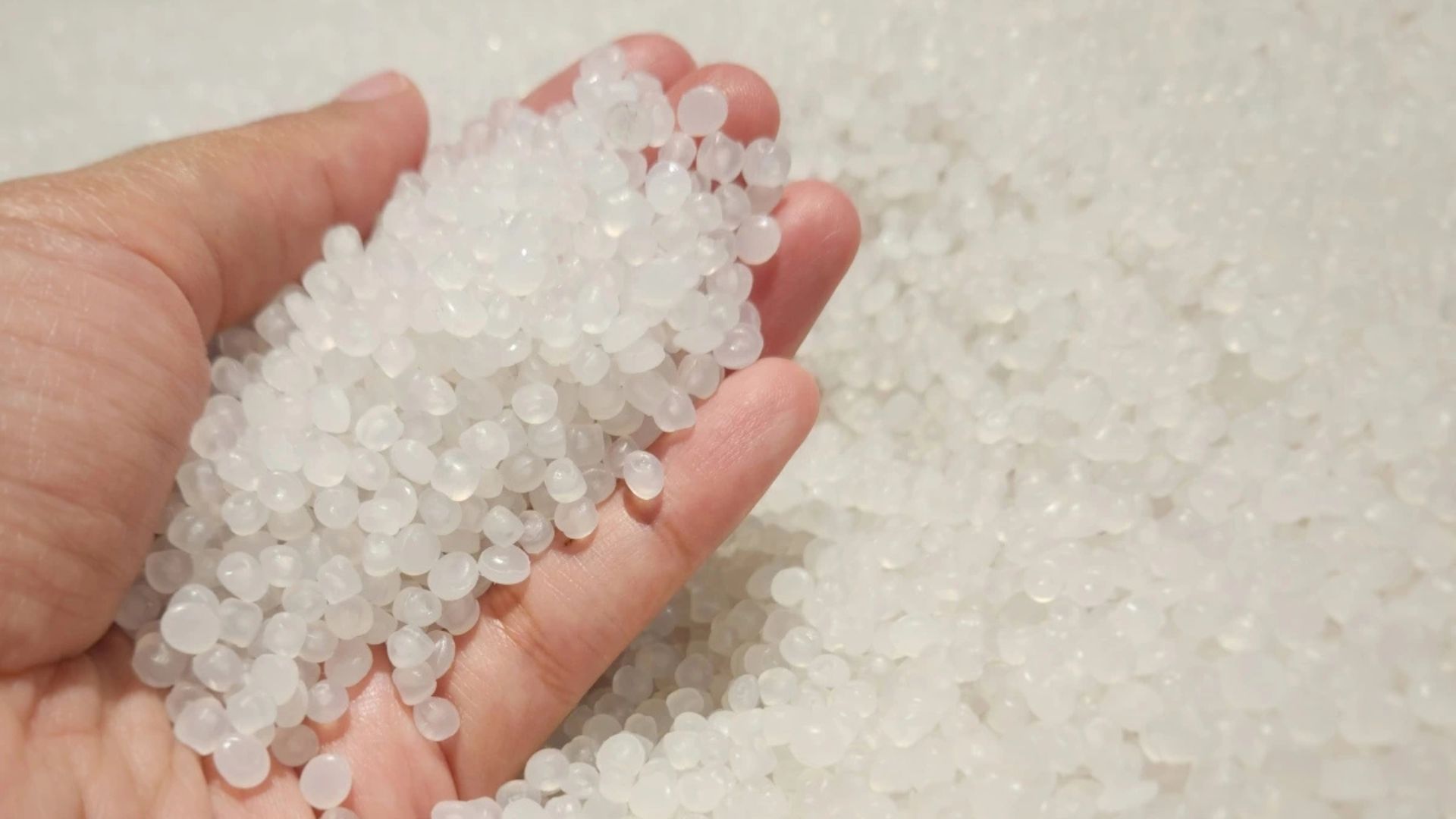
LDPE is often used when flexibility, sealability, and transparency are required. LLDPE contributes higher tensile strength, puncture resistance, and toughness. HDPE can improve stiffness and heat resistance, although excessive HDPE content may reduce clarity and flexibility. In advanced formulations, metallocene PE may be added to enhance seal strength, downgauging potential, and mechanical performance.
A well-designed PE shrink film formulation does not rely on PE alone. Additives may be included to improve processing stability, slip behavior, anti-blocking performance, UV resistance, anti-static properties, and optical appearance. The type and dosage of additives should be controlled carefully because excessive additive loading may affect sealing, shrink uniformity, and food-contact suitability.
Role of polymer orientation
The shrink performance of PE shrink film is closely related to polymer orientation. During film production, the molten polymer is stretched in machine and transverse directions. This stretching aligns polymer chains within the film structure. When heat is applied later, the oriented polymer chains tend to return toward a less stretched state, which causes shrinkage.
Production Process Of PE Shrink Film
Resin preparation and formulation control
The production of PE shrink film begins with the selection and preparation of PE resin. Resin grades are chosen according to the target application, required film thickness, shrink percentage, seal strength, clarity, and mechanical resistance. In industrial production, the resin may be blended with additives to achieve specific properties such as anti-blocking, slip, UV stability, or improved heat-sealing behavior.
Before extrusion, raw materials should be checked for moisture, contamination, melt flow index, density, and compatibility. Formulation control is important because small changes in resin ratio can influence shrink force, film softness, sealing window, and resistance to tearing.
Extrusion and melt filtration
After preparation, the polymer blend is fed into an extruder and melted under controlled temperature. The exact processing temperature depends on the resin system and equipment design. In general, PE is processed under conditions that allow complete melting without thermal degradation.
Melt filtration is often used to remove unmelted particles, gels, foreign matter, or degraded material. This step is important for PE shrink film because surface defects, gels, or weak points can lead to tearing, poor appearance, inconsistent shrinkage, and unstable sealing.
Film blowing and bubble stabilization
Many types of PE shrink film are produced by blown film extrusion. In this process, the molten polymer exits through an annular die and forms a tubular bubble. Air is introduced inside the tube to expand the bubble, while cooling air solidifies the film. The blow-up ratio, cooling rate, frost line height, and drawdown ratio influence thickness uniformity, mechanical properties, and shrinkage behavior.
Bubble stability is particularly important in PE shrink film production. If the bubble is unstable, the film may develop gauge variation, wrinkles, uneven orientation, or inconsistent shrink response. These defects can reduce packaging efficiency and lead to an uneven appearance after heat shrinking.
Cooling, flattening, and winding
After the film is cooled, it is collapsed into a flat tube or slit into sheets, depending on the application. The film is then wound into rolls under controlled tension. Winding quality affects downstream performance because excessive tension can cause blocking, deformation, telescoping, or uneven roll hardness.
For PE shrink film, stable roll quality is essential for automatic packaging lines. Poor winding may lead to machine stoppage, inconsistent unwinding, sealing problems, and material waste.
Key Technical Properties Of PE Shrink Film
Thickness and gauge control
Thickness is one of the most important specifications of PE shrink film. Film thickness affects mechanical strength, puncture resistance, shrink force, transparency, and cost efficiency. Thicker PE shrink film generally provides better resistance to tearing and impact, while thinner film can reduce material consumption if the formulation and processing quality are sufficient.
In industrial packaging, thickness selection should not be based only on product weight. It should also consider sharp edges, pallet configuration, transportation distance, handling intensity, storage conditions, and whether the product requires bundling, surface protection, or load stabilization.
Gauge uniformity is equally important. Even if the average thickness meets the specification, excessive variation can create weak areas during shrinking or sealing. A high-quality PE shrink film should have controlled thickness distribution across the roll.
Shrink percentage and shrink force
The shrink percentage of PE shrink film describes how much the film contracts when exposed to heat. Shrink behavior may differ between the machine direction and the transverse direction. Balanced shrinkage is preferred when the package requires a uniform appearance, while directional shrinkage may be useful for specific packaging formats.
Shrink force is another key parameter. It refers to the force generated by the film as it contracts around the product. High shrink force can improve package tightness and load containment, but excessive shrink force may deform lightweight products, crush cartons, or distort labels. For this reason, PE shrink film selection should match the strength and shape of the packaged goods.
Tensile strength and elongation
PE shrink film must resist stretching, tearing, and deformation during application and transportation. Tensile strength indicates how much stress the film can withstand before breaking. Elongation indicates how much the film can stretch before failure.
A suitable PE shrink film should provide enough elongation to absorb impact and enough tensile strength to maintain package integrity. However, high elongation alone does not guarantee good packaging performance. The film must also maintain tear resistance, puncture resistance, and sealing strength.
Puncture and tear resistance
Puncture resistance is critical when PE shrink film is used for products with corners, edges, or irregular surfaces. Construction materials, metal components, furniture parts, and heavy cartons often require stronger film structures because sharp contact points may damage the film during handling.
Tear resistance is also important. Once a tear begins, poor-quality film may split rapidly and compromise the package. A good PE shrink film formulation should resist both initial puncture and tear propagation.
Moisture resistance and surface protection
PE has naturally low water absorption, so PE shrink film provides effective protection against moisture exposure. This property is useful in logistics, warehousing, and export packaging, especially when goods may be exposed to humid environments or temporary outdoor conditions.
However, PE shrink film should not be understood as a complete barrier against all environmental risks. It can reduce moisture contact, dust accumulation, and surface contamination, but long-term outdoor storage, high UV exposure, and extreme temperature variation may require additional protection or specially formulated film.
Optical properties
Transparency, gloss, and haze are relevant when PE shrink film is used for retail packaging or product display. Higher clarity allows the product, label, or carton graphics to remain visible. Lower haze improves shelf appearance and inspection efficiency.
For industrial packaging, optical clarity may be less important than mechanical performance. In these cases, PE shrink film may be selected primarily for strength, shrink behavior, and load protection rather than visual appearance.
Heat-sealing performance
Heat sealing is essential for many PE shrink film applications. The film must form strong seals within the operating window of the packaging equipment. Poor sealing can lead to package opening, product contamination, or film failure during shrinking.
Seal strength depends on resin type, film thickness, sealing temperature, dwell time, pressure, and contamination at the seal area. PE shrink film used on high-speed packaging lines must provide stable sealing performance under continuous operation.
Applications Of PE Shrink Film
Industrial bundling and transportation packaging
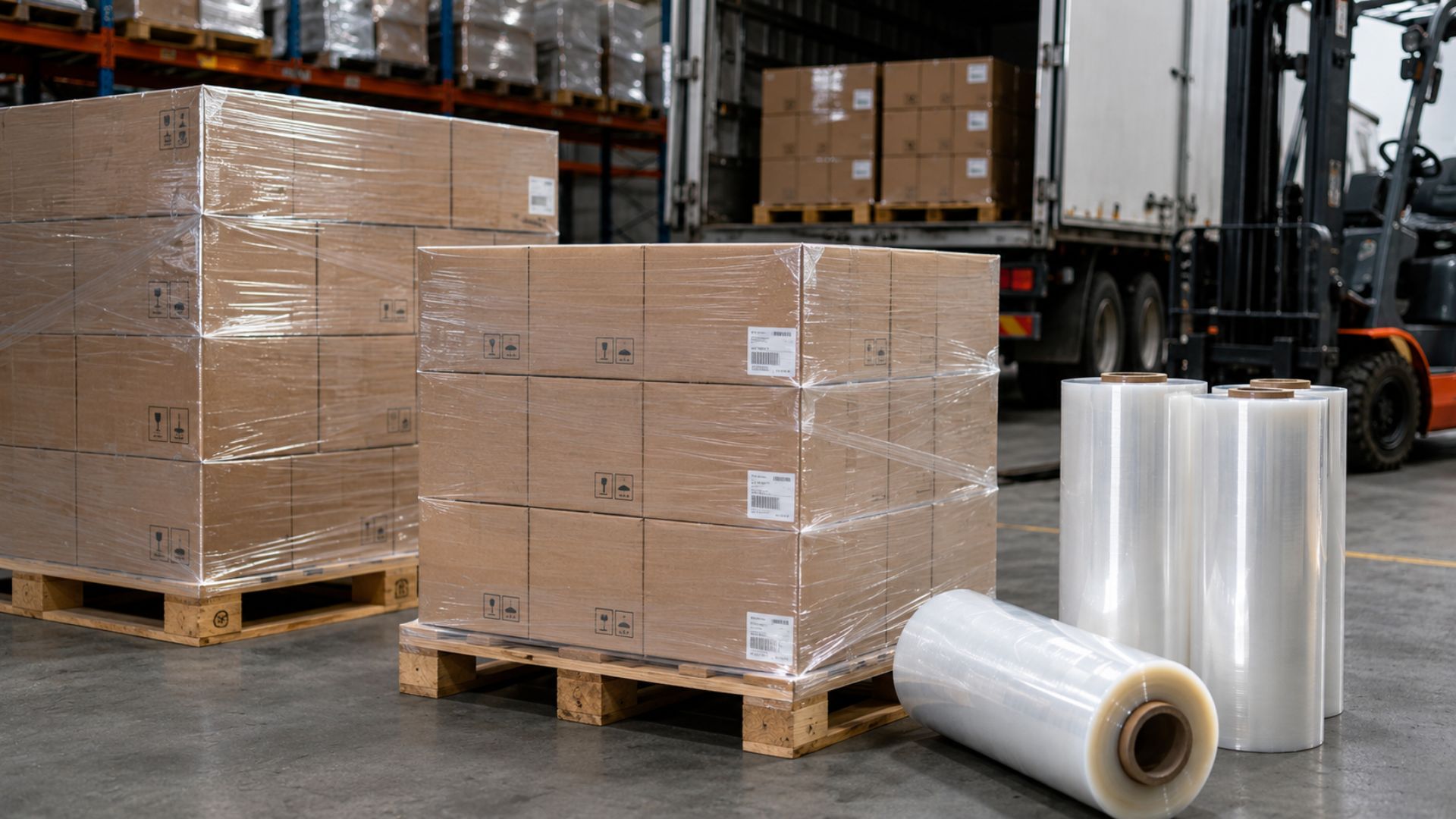
One of the most common uses of PE shrink film is industrial bundling. Products such as beverage bottles, cans, cartons, tiles, pipes, profiles, and building materials are often grouped together using shrink packaging. After heating, the PE shrink film tightens around the package and helps keep units stable during transportation.
Pallet protection and load stabilization
PE shrink film may be used for pallet covering or pallet shrink wrapping. In this application, the film provides a protective outer layer around stacked goods. This can be useful for products that require additional stability or environmental protection during long-distance transport.
However, PE shrink film should be distinguished from stretch film. Stretch film stabilizes pallets mainly through elastic recovery after stretching, while PE shrink film stabilizes the package through heat-induced contraction. The choice between these two films depends on equipment availability, product type, packaging speed, cost structure, and required protection level.
Food and beverage packaging
PE shrink film is used in food and beverage packaging, especially for multipacks, trays, and secondary packaging. Its moisture resistance, toughness, and sealability support efficient handling and distribution. When used for food-related applications, the film formulation must comply with relevant food-contact regulations.
It is important to note that not every PE shrink film is automatically suitable for direct food contact. Food packaging applications require controlled raw materials, approved additives, clean production conditions, and documentation that confirms compliance with applicable regulations.
Agricultural and protective applications
In agriculture, PE films are used for covering, moisture control, greenhouse protection, and temporary enclosure. PE shrink film can be applied in selected protective uses where shrink behavior, coverage, and resistance to moisture are needed.
For outdoor or agricultural environments, UV stability becomes important. Standard PE shrink film may degrade under prolonged sunlight exposure. If the film is expected to remain outdoors, UV-stabilized formulations should be considered.
Furniture, household goods, and surface protection
PE shrink film is also used for furniture, appliances, household goods, books, printed materials, and other products that require protection from dust, scratches, and moisture during handling. The film can provide a tight external layer while still allowing visual inspection of the product if optical clarity is sufficient.
In this application, the film should shrink uniformly without excessive force. Excessive shrink tension may deform delicate surfaces, press into soft materials, or create marks on sensitive products.
The Difference Between PE Shrink Film And Ordinary PE Film
Functional difference
The main difference between PE shrink film and ordinary PE film is heat response. PE shrink film is engineered to contract when exposed to heat, while ordinary PE film may not have controlled shrink performance. Ordinary PE film can be used for lining, covering, bag production, lamination, or general protection, but it is not necessarily suitable for shrink packaging.
PE shrink film must deliver predictable shrinkage, stable sealing, and adequate strength after heat exposure. Ordinary PE film may share the same polymer family, but its processing conditions and formulation are usually optimized for different functions.
Difference from stretch film
PE shrink film is sometimes confused with stretch film. This confusion should be avoided because the two materials operate through different mechanisms. Stretch film is applied by mechanical stretching and relies on elastic recovery to hold products together. PE shrink film is applied with heat and relies on thermal contraction to wrap tightly around the product.
Stretch film is common in pallet wrapping because it is fast, flexible, and does not require a shrink tunnel. PE shrink film is preferred when the package requires a tighter enclosure, better surface coverage, or a specific shrink appearance.
Difference in elongation and shrinkage behavior
Stretch film usually has much higher elongation than PE shrink film because it must be stretched significantly during application. PE shrink film, in contrast, is designed for heat shrinkage rather than extreme mechanical stretching. Its elongation, shrink force, and shrink percentage must be balanced to suit the packaged item.
This distinction is important when selecting film for heavy goods, retail multipacks, export cartons, or irregular shapes. The wrong film type may cause poor load stability, film breakage, excessive material use, or unsatisfactory packaging appearance.
Common Limitations Of PE Shrink Film
Heat sensitivity of packaged goods
PE shrink film requires heat to shrink. This creates a limitation for products that are sensitive to temperature. Certain foods, electronics, printed materials, labels, or soft products may be affected if the shrink temperature is too high or the exposure time is too long.
In these cases, the shrink process must be carefully controlled. Lower-temperature shrink films, adjusted tunnel settings, or alternative packaging methods may be needed.
Risk of over-shrinking
Over-shrinking can cause wrinkles, distortion, seal failure, or product deformation. The risk is higher when the shrink temperature is excessive, the film thickness is unsuitable, or the shrink force is not matched with the product.
A good PE shrink film application requires balance. The film should contract enough to secure and protect the product, but not so much that it damages the package or reduces visual quality.
Performance variation by formulation
PE shrink film is not a single fixed material. Performance can vary significantly depending on resin composition, extrusion technology, thickness, additives, and quality control. For this reason, technical data should always be reviewed according to the specific film grade rather than assuming that all PE shrink film products behave the same way.
Conclusion
PE shrink film is a packaging material that provides heat shrinkability, moisture resistance, and mechanical strength. Its performance depends on polymer composition, film structure, and processing conditions. Proper selection according to application and logistics requirements ensures stable protection and efficient packaging performance throughout the supply chain.