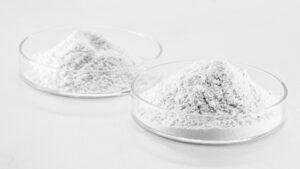


LDPE sheets are widely used in packaging, construction, agriculture, and many other industrial applications as they offer a practical combination of flexibility, moisture resistance, chemical resistance, and low weight. Rather than serving as a structural material, they are primarily valued for protection and surface coverage. To explore their properties, applications, and selection criteria in more detail, read the full article on the TLD Vietnam blog.
Material Definition And Structural Characteristics
What Is LDPE?
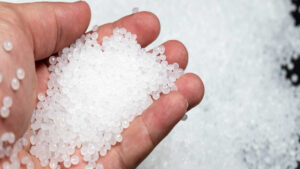
LDPE is a thermoplastic polymer produced from the polymerization of ethylene under high-pressure conditions. Its molecular structure contains a relatively high degree of branching, which distinguishes it from higher-density polyethylene grades. This branching reduces the packing efficiency of polymer chains and results in lower density, lower crystallinity, greater flexibility, and a softer physical feel compared with materials such as HDPE.
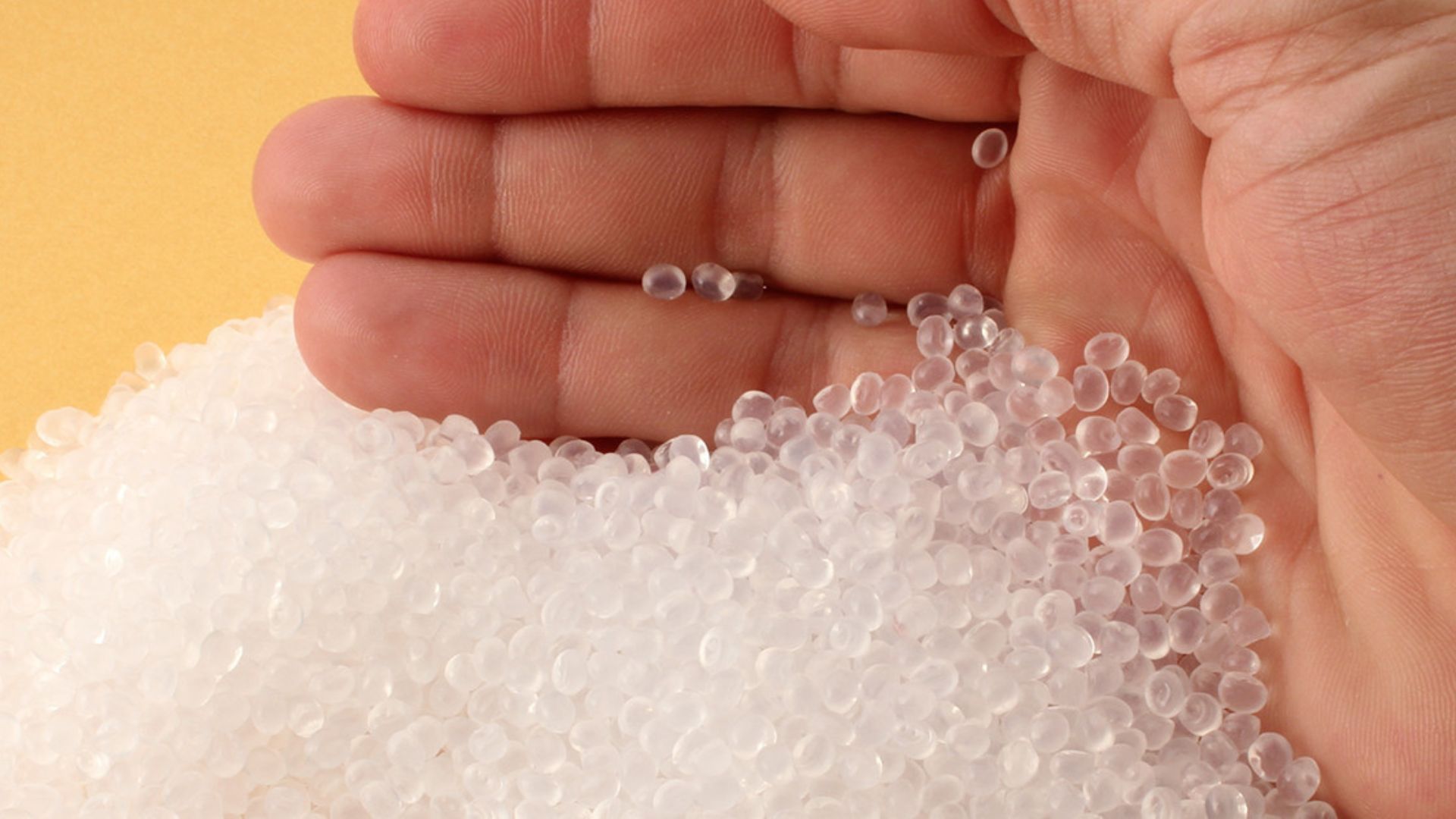
In sheet form, LDPE is typically manufactured through extrusion processes that produce continuous films or sheets in a range of thicknesses. Depending on the formulation and intended use, the material may be supplied as a natural, transparent, translucent, pigmented, recycled-content, UV-stabilized, or additive-modified sheet. The end-use performance is therefore determined not only by the polymer family itself, but also by sheet thickness, processing quality, additive package, and environmental exposure conditions.
Key physical and functional properties
The functional value of LDPE sheets is closely linked to a set of core material properties. First, LDPE has high flexibility and elongation, allowing the sheet to bend, drape, and conform to uneven surfaces without cracking under normal service conditions. This makes it suitable for wrapping, lining, and covering applications where rigid materials would be impractical.
Second, LDPE has strong resistance to water and water vapor penetration in many routine applications. Although it is not a universal barrier material for all gases or chemicals, it performs effectively as a moisture barrier in floor protection, pond lining, temporary weather shielding, and packaging for moisture-sensitive goods. The hydrophobic character is one of the reasons it is extensively used in environments where direct contact with water or humid conditions is expected.
Third, LDPE provides useful resistance to many acids, alkalis, salts, and a range of common industrial chemicals. This does not mean it is chemically inert in every situation, but it does mean that it can perform reliably in contact with many non-oxidizing substances encountered in construction, agriculture, and industrial handling. This property supports its use as a liner, separator, or protective layer in chemically exposed areas.
Fourth, the material is lightweight and easy to handle. Large-area coverage can be achieved without significant transport burden or labor difficulty. In practical terms, this reduces installation time, simplifies storage, and lowers handling costs in large-volume projects.
Finally, LDPE is generally cost-effective relative to many alternative sheet materials. For applications that do not require high mechanical rigidity, extreme heat resistance, or advanced barrier performance, LDPE offers an economically efficient solution with acceptable durability.
Performance Advantages In Industrial Use
Flexibility and conformability
One of the most significant technical advantages of LDPE sheets is their ability to adapt to irregular geometries. In industrial practice, many protective and containment tasks involve surfaces that are not uniform, such as stacked goods, uneven construction substrates, machinery contours, or earth-formed ponds. A material with limited flexibility may wrinkle excessively, crack under tension, or fail to maintain continuous coverage. LDPE performs well in these contexts because it accommodates movement and shape variation more easily than rigid sheet materials.
This flexibility also contributes to installation efficiency. Operators can cut, fold, wrap, or stretch the material into place with relatively simple tools and minimal specialized equipment. For temporary or semi-permanent coverage, this handling advantage is often a decisive factor in material selection.
Moisture resistance and surface protection
Moisture control is one of the most common reasons for using LDPE sheets. In construction, the material may be used beneath flooring systems, over curing concrete, or as temporary protection during plastering, painting, or tile installation. In packaging, it helps prevent direct exposure of products to dampness, splashes, or dirty storage surfaces. In agriculture, it assists in maintaining soil moisture and reducing evaporation losses.
LDPE sheets also act as an effective physical barrier against dust, debris, and incidental contamination. This role is particularly important in logistics and warehouse management, where exposed surfaces, machinery, or packaged goods must be protected during storage and transit.
Chemical resistance under routine conditions
The resistance of LDPE to many common chemical agents expands its utility in industrial settings. It can be used in environments where incidental contact with diluted acids, alkalis, fertilizers, cleaning agents, or process residues may occur. This makes it a practical material for agricultural covers, storage separation layers, laboratory support applications, and certain factory floor protection systems.
However, chemical resistance should always be understood in a qualified rather than absolute sense. Exposure concentration, temperature, contact duration, and mechanical stress all influence actual field performance. For this reason, LDPE is best as a chemically resistant general-purpose material rather than a universal chemical containment solution.
Applications Of LDPE Sheets In Construction

Moisture barriers and protective layers
Construction is one of the most important sectors for LDPE sheet consumption. The material is frequently used as a moisture barrier beneath concrete slabs, screeds, or flooring systems where ground moisture migration must be reduced. In such applications, the sheet functions as a separation layer between the substrate and the upper structural or finishing components.
LDPE is also commonly used to protect walls, floors, and windows. During painting, plastering, and tiling, temporary plastic coverage helps reduce contamination, rework, and cleaning time.
Temporary site enclosures and material wrapping
On active construction sites, LDPE sheets may be used as temporary shielding against dust, rain, and surface contamination. Materials awaiting installation can be wrapped to reduce exposure to dirt or moisture. Work zones may be isolated with plastic sheeting to contain debris or protect adjacent finished spaces.
In these applications, thickness selection is important. Thin films may be sufficient for short-duration dust protection, while heavier-gauge sheets are more suitable where puncture resistance, repeated handling, or extended exposure is expected. The service environment, therefore, determines whether a standard sheet, a heavy-duty sheet, or an additive-modified sheet should be specified.
Applications Of LDPE Sheets In Packaging

Primary and secondary packaging functions
LDPE has a well-established role in packaging because it combines flexibility, low weight, sealability, and clarity in certain grades. In sheet or film form, it is used for wrapping, bag production, shrink applications, inner liners, and protective overwrap. It is especially useful when the goal is not rigid containment, but protective enclosure and moisture isolation.
In secondary packaging, LDPE sheets may be used to wrap grouped products, palletized loads, or machinery components. The material helps stabilize the load, protect against surface abrasion, and reduce exposure to dust and humidity during transport or storage. In primary packaging, it may also be selected where softness and flexibility are preferred over stiffness.
Printability and commercial utility
Another reason LDPE remains relevant in packaging systems is its compatibility with conversion processes. It can be produced in colored, opaque, or transparent formats and may be printed, laminated, perforated, or fabricated into customized packaging structures. While this article does not focus on branding or visual communication, it is technically relevant that LDPE can support a wide range of downstream packaging operations without excessive complexity.
Its limitations should also be acknowledged. LDPE does not provide the highest barrier performance against gases, aromas, or high-temperature conditions. For that reason, it is often selected as part of a packaging structure suited to moisture protection and mechanical flexibility rather than premium barrier packaging.
Applications In Agriculture And Aquaculture

Soil moisture management and crop support
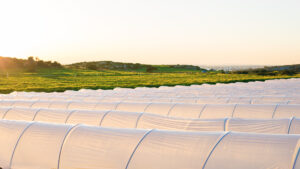
In agricultural use, LDPE sheets are employed in mulching systems, nursery bed covering, greenhouse-related applications, and soil protection. Their ability to limit moisture loss and reduce weed emergence makes them useful in crop systems where water conservation and temperature moderation are important. The material can also create a cleaner interface between produce and soil, which may improve operational hygiene in specific cultivation environments.
These functions are especially relevant in regions where water availability, evaporation control, and field management efficiency directly affect crop performance. In such cases, LDPE acts less as a structural material and more as a micro-environment management tool.
Pond lining and water retention
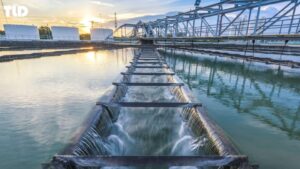
In aquaculture and water management, LDPE sheets may be used as liners or auxiliary lining materials for ponds and water-retention structures. Their hydrophobic nature helps reduce seepage and supports better water retention than unlined soil systems. For fish farming and water storage applications, this can contribute to lower refill frequency and more stable operating conditions.
The suitability of LDPE for such use depends on sheet thickness, installation quality, and environmental exposure. For longer-term outdoor service, UV stability and puncture resistance become critical. Inadequate specification may result in premature degradation even when the base polymer is otherwise suitable.
Limitations And Technical Considerations
Thermal and mechanical constraints
Despite its versatility, LDPE is not suitable for all environments. Its relatively low stiffness and limited high-temperature performance restrict its use in applications involving heavy structural loads, sharp abrasion, or prolonged heat exposure. Under elevated temperatures, the material may soften and lose dimensional stability more readily than more rigid polymers.
Mechanical puncture is another consideration. Although flexible, LDPE sheets are not inherently resistant to sharp objects unless sufficient thickness is provided. Construction debris, rough substrates, or poorly prepared surfaces can damage the sheet if the specification is too light for the duty condition.
Environmental exposure and service life
Outdoor exposure introduces additional risks such as ultraviolet degradation, temperature cycling, and weather-driven wear. Standard LDPE sheets may not perform adequately in long-term sunlight unless UV stabilizers are incorporated. Therefore, selection based solely on initial price can be misleading if service life is critical.
The environmental profile of LDPE also requires balanced treatment. The material is recyclable in principle and can be manufactured with recycled content in some grades, but actual sustainability performance depends on collection systems, contamination levels, and end-of-life management infrastructure. A technically accurate discussion should therefore avoid simplistic claims and instead evaluate recyclability within the context of practical waste management systems.
Selecting The Right LDPE Sheet
Conclusion
LDPE sheets remain an important industrial material as they offer a practical balance of flexibility, moisture resistance, chemical resistance, light weight, and cost efficiency. Their performance makes them suitable for a wide range of applications, especially where protection, lining, separation, and surface coverage are required. However, effective use of LDPE sheets depends on selecting the right thickness, formulation, and specification for actual service conditions.