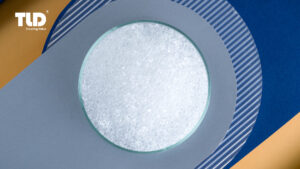

Polypropylene is one of the most widely used plastic materials in modern manufacturing. Across industries such as packaging, construction, textiles, automotive, and agriculture, Polypropylene is a practical solution for manufacturers.
The long-term importance of Polypropylene extrusion comes from the combination of two strengths. The first is the adaptability of Polypropylene resin itself, which offers low density, chemical resistance, and reliable performance. The second is the efficiency of the extrusion process, which allows manufacturers to produce films, sheets, pipes, fibers, and profiles at high output rates with consistent quality. When these two factors work together, Polypropylene extrusion becomes one of the most valuable manufacturing methods for large-scale industrial applications. For more insights, explore the latest articles from TLD Vietnam.

What Is Polypropylene Extrusion?
Polypropylene extrusion is a manufacturing process in which Polypropylene resin is melted and forced through a specially designed die to produce continuous shapes of a defined profile. Depending on the die design and downstream equipment, the extruded material can be turned into pipes, films, sheets, filaments, or structural profiles. After the melt exits the die, it is cooled, sized, and either cut into lengths or rolled for storage and transport.
In practical terms, Polypropylene extrusion is valued for its efficiency, scalability, and versatility. It allows manufacturers to process large volumes of material continuously while maintaining control over shape, thickness, and surface quality. Because of this, Polypropylene extrusion is used not only for commodity plastic products but also for technical applications that require more precise material performance.
Why Polypropylene Is Suitable For Extrusion
Not every polymer performs equally well in an extrusion line. Polypropylene is particularly suitable for extrusion because it offers a strong balance between processability and end-use performance. It has relatively low density, good chemical resistance, useful fatigue resistance, and cost advantages compared with many alternative materials. These properties make it attractive for manufacturers that need practical performance without excessive raw material cost.

Another reason Polypropylene extrusion is so widely used is the flexibility of PP resin formulations. Manufacturers can choose different resin grades or modify the resin with fillers, stabilizers, elastomers, or other additives, depending on the final application. This means the same general Polypropylene extrusion process can be adapted for rigid products, flexible products, impact-resistant parts, and materials designed for outdoor or high-temperature use.
The Basic Polypropylene Extrusion Process
Although product designs vary, the basic process usually follows several core stages. Each stage affects output stability, product quality, and overall production efficiency.
Material Blending
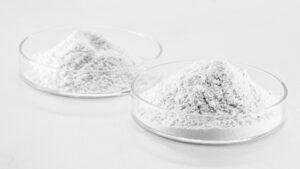
In many applications, standard PP resin is not enough to achieve the required mechanical, thermal, or processing characteristics. Before extrusion begins, manufacturers often blend the base resin with additives or modifiers. Common examples include calcium carbonate, talc, or glass fibers to improve stiffness and dimensional stability, elastomers to improve impact resistance, flame retardants for safety-related applications, and UV stabilizers for outdoor exposure.
The blending stage is critical in Polypropylene extrusion because material uniformity directly affects melt behavior. Poor dispersion can lead to unstable flow, visible surface defects, and inconsistent product performance. Excessive filler loading may also reduce flowability and make the extrusion process less stable. For this reason, proper mixing ratios and uniform blending are essential.
Feeding and Melting
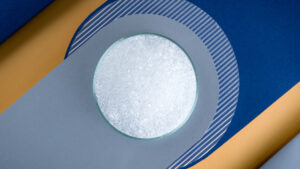
Once the material is prepared, it is fed into the extrusion machine through a hopper. Inside the barrel, a rotating screw transports, compresses, and gradually melts the Polypropylene granules. The barrel is divided into different heating zones so that temperature can be controlled step by step during the melting process.
This stage is one of the most important parts of Polypropylene extrusion because the quality of the melt determines everything that follows. If the material is not melted evenly, the flow through the die will be unstable. If the temperature is too high, the polymer may degrade. If the temperature is too low, the melt may remain inconsistent and difficult to shape. Proper control during feeding and melting helps create a smooth and homogeneous melt for continuous production.
Extrusion Through the Die
After melting, the polymer is pushed through a die that defines the shape of the final product. The die may be designed for pipes, sheets, films, filaments, or other profiles, depending on the target application. At this point, uniform melt flow is essential. Any imbalance can lead to problems such as uneven thickness, warping, or poor dimensional accuracy.
In Polypropylene extrusion, die design and melt consistency work closely together. Even a well-designed die cannot deliver high product quality if the resin formulation is unstable or the melt is not properly controlled. This is why successful extrusion depends not only on machinery but also on resin quality and processing discipline.
Cooling and Sizing
Once the molten material exits the die, it must be cooled and stabilized quickly enough to retain its intended shape. Depending on the product, manufacturers may use air cooling, water baths, or cooling rolls. Calibration and sizing tools are then applied to maintain dimensional precision.
Cooling is a major factor in Polypropylene extrusion because different product forms respond differently to temperature reduction. Thin films often require rapid cooling, while thicker profiles may need more controlled cooling to prevent internal stress or distortion. A well-managed cooling system supports better surface finish, stronger dimensional stability, and more reliable product quality.
Haul-Off and Cutting
After cooling, the extruded product is pulled forward at a controlled speed by haul-off equipment. This step must stay synchronized with the extrusion rate to avoid stretching or deformation. The product is then cut into specific lengths or rolled for transport and storage.
Although this is often seen as a downstream step, it still plays an important role in Polypropylene extrusion. Poor speed control at this stage can damage the dimensions and appearance of the final product, even if the melting and die stages were properly managed.
Key Process Parameters In Polypropylene Extrusion
The efficiency of Polypropylene extrusion depends heavily on process control. Several parameters must be monitored carefully to maintain stable output and consistent product quality.
Temperature Settings
Extrusion barrels are usually divided into multiple heating zones. For Polypropylene, processing temperatures often fall within a range of about 180°C to 250°C, depending on the formulation and final application. The temperature must be high enough to ensure smooth melting but not so high that it causes degradation. Careful control protects the polymer’s properties and supports steady melt flow.
Screw Speed and Pressure
Screw speed affects throughput, melt mixing, and internal pressure. If the screw speed is too high, the material may overheat. If it is too low, the melt may remain poorly mixed and less uniform. Stable pressure inside the barrel is equally important because it influences output consistency and die performance. In extrusion, balancing screw speed and pressure is necessary for efficient production and product uniformity.
Die Temperature
The die temperature is often maintained slightly higher than the barrel temperature to support smooth flow at the exit point and reduce the risk of premature solidification near the die edges. In the process, poor die temperature control can quickly lead to surface defects, unstable flow, and dimensional inconsistency.
Cooling Efficiency
Cooling systems must be selected according to product type. Films and thin sheets usually require faster cooling, while thicker profiles often benefit from more gradual cooling. In extrusion, cooling efficiency influences not only production speed but also surface quality and internal stress distribution in the final product.
Types Of Polypropylene Used In Extrusion
The success of the process depends strongly on the resin grade selected for the application. Different types of Polypropylene provide different balances between stiffness, clarity, flexibility, and impact resistance.
Homopolymer Polypropylene is known for higher stiffness and strength. It is often used for rigid packaging, industrial parts, and applications where structural performance is important.
Copolymer Polypropylene includes additional monomers, usually ethylene, to improve impact resistance and flexibility. Random copolymer grades can improve clarity and softness, while impact copolymer grades provide better toughness, especially in more demanding service conditions.
Modified Polypropylene is formulated with additives such as fillers, UV stabilizers, flame retardants, or elastomers. These materials allow the extrusion process to meet more specific technical requirements while still keeping the economic benefits of PP as a base resin.
Industrial Applications Of Polypropylene Extrusion

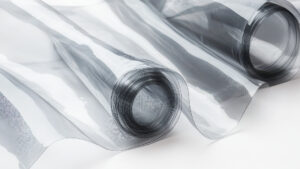
One of the main reasons Polypropylene extrusion remains important is the wide range of industrial applications. In packaging, it is used to produce flexible films, food containers, and protective sheets. In construction, it supports the production of pipes, fittings, insulation materials, and structural profiles. In textiles and fiber markets, it is used for nonwoven fabrics, industrial fibers, and geotextiles. In automotive manufacturing, it is used in interior parts and other functional plastic components.
Advantages Of Polypropylene Extrusion
Polypropylene extrusion offers several important advantages for manufacturers. It supports continuous, high-volume production and can be adapted to many product forms. It also works well with a wide range of PP grades and modified formulations, making it suitable for both standard and technical applications.
Another major benefit of Polypropylene extrusion is cost efficiency. Polypropylene itself is a relatively economical thermoplastic, and the extrusion process is designed for productivity and consistency. When high-quality resin is used, manufacturers can achieve better surface finish, more stable processing behavior, stronger mechanical performance, and lower defect rates. This improves not only product quality but also operational efficiency and overall competitiveness.
Conclusion
Polypropylene extrusion is important in modern manufacturing. It allows manufacturers to produce films, sheets, pipes, fibers, and profiles with consistent quality across a wide variety of industrial sectors.
As industries continue to demand materials that are versatile, durable, and cost-effective, the manufacturing process of Polypropylene is still one of the most reliable plastic processing methods available today.