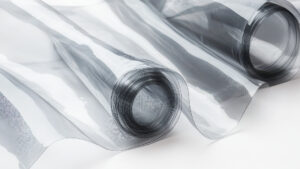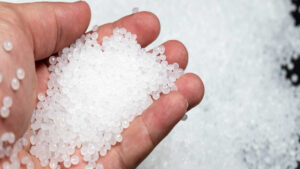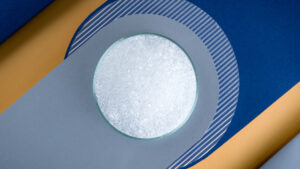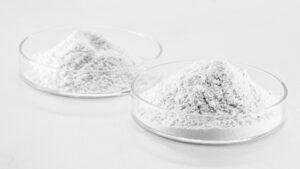

High Impact Polystyrene (HIPS) is a modified form of Polystyrene developed to improve the brittleness of conventional Polystyrene materials. By incorporating rubber particles into the polymer matrix, the material achieves significantly greater impact resistance. This article by TLD Vietnam provides an overview of the material, including composition, key properties, and typical industrial applications.
What Is HIPS?
HIPS is a modified form of Polystyrene developed to overcome the brittleness typically associated with conventional Polystyrene materials. Standard Polystyrene, often referred to as General Purpose Polystyrene (GPPS), offers good rigidity and clarity but tends to fracture easily under mechanical stress.

To address this limitation, manufacturers incorporate rubber particles, commonly polybutadiene, into the polymer matrix during polymerization.
The resulting material contains dispersed rubber phases that absorb energy during mechanical loading. This structure significantly improves impact resistance while maintaining the typical advantages of Polystyrene, such as ease of processing, dimensional stability, and cost efficiency.
Because of this balance of properties, the material is widely used across industrial sectors where a combination of toughness, lightweight structure, and manufacturability is required. It can be processed using techniques such as extrusion, thermoforming, and injection molding, making it suitable for high-volume manufacturing.
In many applications, this polymer serves as an intermediate solution between low-cost commodity plastics and higher-performance engineering polymers.
Composition And Structure Of HIPS
HIPS is essentially a two-phase polymer system composed of a rigid Polystyrene matrix and dispersed rubber particles. The rubber component, typically polybutadiene, is incorporated during the polymerization process. As the polymer forms, the rubber phase separates into small particles embedded throughout the Polystyrene structure.
This morphology creates a material that behaves differently from pure Polystyrene. The rigid matrix provides stiffness and shape stability, while the rubber domains function as energy-absorbing centers when the material experiences mechanical stress.
The interaction between these phases allows this resin to resist crack propagation. When stress is applied, the rubber particles deform and dissipate energy, preventing the formation of brittle fractures that are common in GPPS.
The performance of this polymer can be influenced by several formulation variables, including:
- Rubber content and particle size
- Degree of rubber dispersion
- Molecular weight of the Polystyrene matrix
- Processing conditions during polymerization
These parameters are adjusted by manufacturers to produce grades with different mechanical and processing characteristics, allowing HIPS to meet diverse industrial requirements.
Key Properties Of HIPS
HIPS has a combination of mechanical and processing properties that make it suitable for a broad range of manufacturing applications.
Impact resistance
The most distinctive feature of HIPS is the improved toughness compared to standard Polystyrene. The rubber phase significantly increases the material’s ability to absorb energy during impact, reducing the likelihood of sudden brittle failure.
This property makes HIPS suitable for products that may be subjected to mechanical handling, vibration, or minor collisions during use.
Ease of processing
HIPS is known for excellent processability. It melts and flows easily during processing, allowing manufacturers to produce complex shapes using common plastic processing methods such as:
- Injection molding
- Extrusion
- Thermoforming
- Vacuum forming
The relatively low processing temperature also helps reduce energy consumption during manufacturing.
Dimensional stability
The rigid Polystyrene matrix provides good dimensional stability. Components made from HIPS generally maintain their shape under normal operating conditions, which is important for products that require consistent structural integrity.
Cost efficiency
Compared with many engineering plastics, HIPS remains a cost-effective material. The combination of moderate performance characteristics and relatively low raw material costs makes it attractive for mass production applications where price sensitivity is a significant consideration.
Advantages Of Using HIPS
One of the key advantages is its mechanical durability relative to standard Polystyrene. While it does not reach the strength levels of engineering plastics such as polycarbonate or ABS, it provides sufficient impact resistance for many consumer and industrial products.
Another advantage is the compatibility with thermoforming processes. HIPS sheets can be easily heated and formed into different shapes without significant loss of structural integrity. This makes the material particularly suitable for packaging and appliance housings.
HIPS also offers good surface characteristics. It can be easily printed, painted, or laminated, allowing manufacturers to apply decorative finishes or protective coatings depending on product requirements.
Additionally, the material is lightweight, which helps reduce transportation costs and overall product weight. In applications such as packaging or consumer goods, this can contribute to improved logistics efficiency.
Common Applications Of HIPS

Some common applications include:
Packaging Products
This thermoplastic is frequently used in thermoformed packaging such as trays, blister packs, and protective inserts. The material’s stiffness allows it to maintain structural integrity, while its impact resistance helps protect packaged products during transportation and handling.
Household Appliances
Many internal and external components of household appliances are manufactured from HIPS. Refrigerator liners, control panels, and appliance housings often use this material because of the balance of durability and processability.
Electronic Casings
This polymer is also used in the production of casings for consumer electronics. Its dimensional stability and ease of molding allow manufacturers to create precise components that meet design specifications.
Disposable Food Containers
Thermoformed food containers, cups, and trays may use HIPS due to its lightweight nature and relatively low cost. In these applications, the material provides adequate structural support for single-use packaging.
Toys and Consumer Goods
Various consumer products, including toys, storage containers, and office supplies, are produced using HIPS. The material’s impact resistance helps extend the lifespan of products that may experience frequent handling.
HIPS vs General Purpose Polystyrene (GPPS)
Although both HIPS and GPPS are derived from Polystyrene, their performance characteristics differ significantly.
GPPS is a rigid, transparent plastic with a glass-like appearance. It offers good stiffness and surface finish but tends to be brittle when subjected to impact or sudden stress. Because of its clarity, GPPS is often used in applications where transparency is required.
In contrast, HIPS sacrifices transparency in exchange for improved toughness. The presence of rubber particles within the material results in an opaque appearance but significantly enhances impact resistance.
From a processing perspective, both materials can be processed using similar manufacturing techniques. However, HIPS is generally preferred for applications where mechanical durability is more important than optical clarity. The choice between the two materials depends largely on the functional requirements of the final product.
Manufacturing Process Of HIPS
This thermoplastic is typically produced through a polymerization process in which styrene monomers are polymerized in the presence of dissolved rubber, usually polybutadiene. During polymerization, the rubber phase separates from the forming Polystyrene matrix and forms discrete particles dispersed throughout the material. The final morphology is critical to achieving the desired balance of stiffness and toughness.

After polymerization, the material is pelletized and distributed as plastic resin. These pellets are then processed by manufacturers using conventional plastic forming techniques. Processing conditions such as temperature, shear rate, and cooling speed influence the final properties of molded HIPS products. Manufacturers must carefully control these parameters to ensure consistent product quality.
Recycling And Environmental Considerations Of HIPS
Like many thermoplastics, this polymer can be mechanically recycled. Post-industrial and post-consumer HIPS waste can be collected, reprocessed, and reintroduced into manufacturing streams. However, recycling rates vary depending on local waste management infrastructure and product design. In some cases, this polymer may be blended with virgin material to maintain consistent mechanical properties.
From an environmental perspective, manufacturers are increasingly exploring ways to improve recyclability and reduce the overall environmental impact of Polystyrene-based materials. This includes developments in recycling technologies, improved product design for material recovery, and the integration of recycled content into new products.
Conclusion
HIPS is an important material in the plastics industry. Compared with standard Polystyrene, the improved impact resistance allows it to perform reliably in a wide range of manufacturing applications. For businesses in plastic manufacturing and product design, the resin offers a practical material solution for applications that require durability, consistent processing performance, and competitive production costs.
FAQs
1. Why does HIPS have higher impact resistance than GPPS?
HIPS contains rubber particles in its structure, which absorb energy during impact and significantly reduce brittleness compared to GPPS.
2. Why is HIPS widely used in packaging and consumer products?
Because it offers a strong balance of impact resistance, lightweight structure, and cost efficiency, making it ideal for high-volume applications.
3. What are the key physical properties of HIPS?
HIPS has a relative density of around 1.04–1.06 g/cm³ and a heat deflection temperature of approximately 70–84°C. It also offers good resistance to water and diluted chemicals, making it suitable for various industrial and packaging applications.