
Wood Plastic Composite (WPC) plastic additives play a decisive role in determining processability and final product quality. Among them, PE Wax represents only a small percentage of the formulation but carries significant technical importance. Without this, stable industrial-scale WPC production is almost impossible. Read the full article on the TLD Vietnam blog to explore how PE Wax in WPC enhances processing efficiency and overall material performance.

Introduction To WPC And Additive Systems
WPC is a composite material produced by combining wood flour or natural fibers with thermoplastic resins such as polyethylene (PE), polypropylene (PP), or polyvinyl chloride (PVC). Thanks to this hybrid structure, WPC offers the aesthetic appeal of wood together with the durability, moisture resistance, and dimensional stability of plastics. It is widely used in decking, fencing, wall cladding, door frames, and various outdoor construction applications.
However, manufacturing high-performance WPC products is not simply a matter of mixing wood powder and plastic resin. The formulation must be carefully balanced with a range of additives, including coupling agents, stabilizers, impact modifiers, lubricants, and processing aids. These additives play a crucial role in improving dispersion, processing stability, surface quality, and long-term performance.
Among these additives, PE wax stands out as a key processing aid that significantly influences melt flow behavior, lubrication efficiency, and the final surface appearance of WPC products. In many modern formulations, PE Wax in WPC systems is considered essential for maintaining stable extrusion and consistent product quality.
What Is PE Wax?
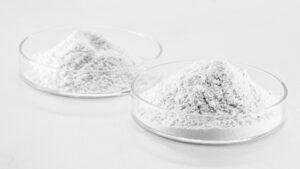
PE Wax is a polyethylene wax with a lower molecular weight than conventional polyethylene resin. At processing temperatures, PE Wax melts earlier and exhibits low viscosity. This allows it to deliver lubrication effects from the very beginning of processing.
PE wax is typically characterized by:
- Low molecular weight
- Controlled melting point
- Good thermal stability
- Excellent lubricating properties
- Low viscosity in the molten state
In WPC additive systems, PE Wax is classified as an external lubricant. It does not chemically interact with the polymer matrix. Its primary function is to control friction and melt flow inside extrusion equipment, which explains the increasing importance of PE Wax in WPC manufacturing processes.
Why PE Wax Is Essential In WPC Wood Formulations
WPC production involves blending a high percentage of wood flour (often 50-70%) with thermoplastic resin. This high filler loading increases internal friction during extrusion, making processing more demanding compared to conventional plastics.
PE wax plays a critical role in addressing these challenges by:
- Reducing friction between polymer chains and metal surfaces in processing equipment
- Improving melt flow and material homogeneity
- Minimizing torque and energy consumption during extrusion
- Enhancing surface smoothness and reducing defects such as melt fracture or rough texture
Without proper lubrication, WPC materials may suffer from poor dispersion, unstable extrusion pressure, surface imperfections, and increased wear on machinery. By optimizing lubrication balance, PE wax ensures stable processing, improved product consistency, and enhanced overall performance. This is why the role of PE Wax in WPC formulations is widely recognized across the industry.
For manufacturers aiming to produce high-quality WPC decking or profiles, selecting the appropriate PE wax is therefore not optional; it is a fundamental component of an efficient and reliable formulation, particularly when optimizing PE Wax in WPC processing systems.
The Functions Of PE Wax In WPC Processing

In WPC production, processing performance is one of the most critical factors affecting product quality, efficiency, and cost. Due to the high wood flour content and the difference in polarity between wood fibers and thermoplastic resin, internal friction and poor flow behavior can easily occur during extrusion. PE wax plays a multifunctional role in optimizing these processing conditions.
Internal and external lubrication
PE wax acts as both an internal and external lubricant in WPC formulations.
- Internal lubrication reduces friction between polymer chains and improves melt mobility. This facilitates better fusion and dispersion of wood particles within the plastic matrix.
- External lubrication minimizes friction between the melt and metal surfaces of screws, barrels, and dies. This helps prevent material sticking, reduces wear on equipment, and ensures smoother extrusion.
A balanced lubrication system is essential. Excessive lubrication may weaken fusion strength, while insufficient lubrication can lead to high torque and unstable processing. Proper PE wax dosage helps maintain this balance and maximize the performance of PE Wax in WPC production.
Improving melt flow and dispersion
WPC compounds often contain 50 – 70% wood flour, which significantly increases viscosity. Without adequate flow modification, the melt can become difficult to process.
PE wax lowers melt viscosity, enhancing flow behavior during extrusion or injection molding. This improves the uniform dispersion of wood fibers within the polymer matrix, reducing agglomeration and weak points in the final product. In many cases, optimized PE Wax in WPC formulations significantly improves compounding efficiency.
Better dispersion leads to improved mechanical properties, more consistent density, and reduced internal defects.
Enhancing surface finish and appearance
Surface quality is a key factor in WPC decking, fencing, and decorative profiles. Poor lubrication can cause rough surfaces, sharkskin defects, or uneven textures. PE wax contributes to:
- Smoother surface finish
- Improved dimensional stability
- Reduced surface cracks or melt fracture
- Enhanced aesthetic appearance
A well-lubricated melt flows more uniformly through the die, resulting in cleaner edges and better replication of surface patterns.
Reducing torque and energy consumption
High filler loading in WPC significantly increases mechanical resistance during processing. This leads to higher torque, greater energy consumption, and increased equipment stress.
By reducing internal friction and improving flow, PE wax helps:
- Lower torque levels
- Reduce motor load
- Improve extrusion stability
- Increase production efficiency
In large-scale manufacturing, this translates into lower operational costs and extended equipment lifespan, further highlighting the value of PE Wax in WPC processing systems.
Recommended Dosage And Formulation Considerations
The recommended dosage of PE wax in WPC formulations typically ranges between 0.3% and 1.0% of the total compound weight, depending on the polymer system, wood flour loading, and processing conditions. Several factors should be considered when determining the optimal dosage:
Wood flour content
Higher wood loading increases internal friction during processing. In such cases, slightly higher PE wax levels may be required to maintain stable melt flow and prevent excessive torque.
Polymer matrix type
Different thermoplastics, such as PE, PP, or PVC, have different processing characteristics. The compatibility between the wax and the polymer matrix should be evaluated to ensure effective lubrication.
Processing equipment and temperature
Extrusion parameters, screw design, and processing temperatures can influence the lubrication requirement. Proper adjustment of PE wax dosage helps maintain stable extrusion pressure and product consistency.
Balance with other additives
WPC formulations often include coupling agents, stabilizers, and processing aids. The interaction between these additives must be considered to ensure the overall formulation remains balanced.
Selecting the appropriate dosage helps manufacturers achieve efficient processing without compromising the mechanical properties of the final product in PE Wax in WPC applications.
Common Processing Issues And How PE Wax Helps Solve Them
WPC processing presents several challenges due to the high filler content and the complex interaction between wood fibers and thermoplastic resins. Without proper lubrication, manufacturers may encounter a variety of processing issues, which further emphasizes the importance of PE Wax in WPC formulations.
One common issue is high torque and unstable extrusion pressure. The presence of large amounts of wood flour increases internal friction within the melt, which places additional stress on processing equipment. PE wax reduces friction and improves melt mobility, helping stabilize the extrusion process in PE Wax in WPC manufacturing.
Another frequent challenge is poor dispersion of wood particles. When wood flour is not evenly distributed, the final product may exhibit inconsistent mechanical properties and surface defects. By lowering melt viscosity and enhancing flow characteristics, PE wax promotes more uniform dispersion of fillers throughout the compound.
Manufacturers may also experience rough surfaces or extrusion defects, especially when producing profiles with complex shapes. In such cases, PE wax improves lubrication at the interface between the melt and the metal surfaces of the processing equipment, resulting in smoother product surfaces and more consistent profiles. These advantages clearly demonstrate the technical value of PE Wax in WPC processing.
Through these functions, PE wax plays an important role in improving both processing efficiency and product quality in WPC manufacturing.
Choosing The Right PE Wax In WPC Applications
Selecting the appropriate PE wax is essential for achieving stable processing and high-quality WPC products. Different types of PE wax offer varying levels of lubrication performance, compatibility, and cost efficiency.
When choosing PE wax for WPC applications, manufacturers typically consider several factors.
- Melting point and viscosity: A suitable melting point ensures that the wax performs effectively within the processing temperature range. Low melt viscosity allows the wax to distribute evenly throughout the compound.
- Molecular weight distribution: Consistent molecular weight contributes to stable lubrication performance and predictable processing behavior.
- Compatibility with the polymer system: The wax must be compatible with the chosen polymer matrix to ensure efficient dispersion and balanced lubrication.
- Processing stability: High-quality PE wax provides consistent performance during long production runs, helping maintain product uniformity and reduce processing fluctuations.
By carefully selecting the appropriate PE wax grade, manufacturers can optimize both production efficiency and the performance characteristics of WPC materials when implementing PE Wax in WPC formulations.
Future Trends In WPC Additives And Performance Optimization
As the global demand for WPC products continues to grow, manufacturers are increasingly focused on improving production efficiency, sustainability, and product performance. Additives such as PE wax will continue to play a vital role in achieving these objectives.
One emerging trend is the development of high-performance wax additives designed to provide improved lubrication efficiency at lower dosage levels. This helps reduce formulation costs while maintaining processing stability.
Another important trend is the increasing emphasis on sustainable materials and environmentally responsible production. Manufacturers are exploring additive solutions that support energy-efficient processing and enhance the durability of WPC products used in outdoor environments.
Additionally, advancements in compounding technology and extrusion systems are driving the need for more precise additive formulations. Optimized additive systems, including PE wax, will help ensure consistent processing conditions and higher-quality composite products. These innovations will further expand the role of PE Wax in WPC manufacturing.
These developments highlight the growing importance of advanced additive solutions in the future of WPC manufacturing.
Conclusion
Within WPC additive systems, PE Wax is a small component with a decisive impact. It reduces friction, improves wood flour dispersion, and increases extrusion speed. At the same time, surface quality and mechanical strength are significantly enhanced.
Selecting the right PE Wax helps manufacturers optimize production costs. Equipment efficiency and die service life are also greatly improved. For these reasons, PE Wax is regarded as an indispensable additive in modern WPC manufacturing, and the role of PE Wax in WPC will continue to expand as the industry evolves.