
In industrial manufacturing, performance is often determined not just by the main raw materials, but by small functional additives that quietly stabilize processes and reduce operational risk. Magnesium stearate is one such material. This article by TLD Vietnam examines key industrial application areas of Magnesium stearate uses across multiple manufacturing sectors.

What Is Magnesium Stearate?
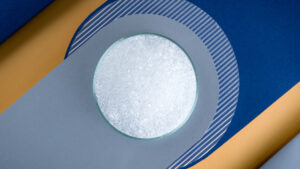
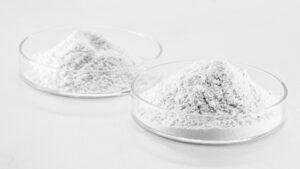
Appearing as a fine white powder, Magnesium stearate is widely used across pharmaceuticals, food processing, cosmetics, plastics, and surface coating systems. The significance of Magnesium stearate uses lies not in changing the core formulation but in improving how materials behave during manufacturing.
Chemically classified as a metallic soap derived from stearic acid, Magnesium stearate is valued for its lubricating, anti-caking, moisture-resistant, and surface-modifying properties. These characteristics make Magnesium stearate uses particularly effective in addressing recurring production challenges such as sticking, poor powder flow, inconsistent demolding, surface defects, and handling instability during storage and transport.
Industrial Applications Of Magnesium Stearate?
Pharmaceuticals and Nutraceuticals

In pharmaceutical and nutraceutical manufacturing, tablet and capsule production is highly sensitive to powder behavior under compression. The strategic use of Magnesium stearate helps mitigate issues such as sticking to punches and dies, inconsistent tablet weight, lamination, or excessive machine downtime, all of which can significantly affect batch quality and throughput.
Flow agent in tablet manufacturing
In tablet manufacturing, one of the most common Magnesium stearate uses are as a flow agent that prevents ingredients from sticking to equipment during compression. Without Magnesium stearate uses, manufacturers face a higher risk of uneven dosage and frequent downtime caused by machine stoppages.
The compound forms a thin lubricating layer that allows powders to compress smoothly into tablets, ensuring uniform weight and proper hardness throughout production.
Capsule and powder formulations
Magnesium stearate is widely used in capsule and powder-based formulations. This makes it a critical component in nutraceuticals and dietary supplements. Therefore, capsules are filled evenly, and the powders blend seamlessly, which maintains the accuracy of dosage and the stability of these products over time.
The trust of customers largely hinges on quality and safety for nutraceutical companies. Magnesium stearate proves to be a dependable solution in this industry.
Food Processing

In food manufacturing, especially in dry and powdered systems, the primary challenge is maintaining free-flowing behavior during processing, packaging, and storage. Moisture uptake, particle cohesion, and compaction can lead to caking, which disrupts production efficiency and compromises product quality. Proper Magnesium stearate uses help address these issues.
Anti-caking agent
The compound is added to powdered items like spices, salt, sugar, or flour mixes. This helps in preventing them from getting clumped as a result of moisture absorption. These features keep the products free-flowing, which makes them easier to process and pack for storage. Manufacturers benefit from greater efficiency on the production line and better quality of end products for consumers.
Food-Grade additive
As a food-grade additive, Magnesium stearate extends the shelf life of packaged goods. It serves as a stabilizer, which helps in maintaining the texture and freshness of various products over time. This is particularly valuable for food manufacturers who deal with large-scale distribution, as quality retention is critical in these situations.
Cosmetics and Personal Care

In cosmetic formulations, consumer perception is closely tied to texture, application feel, and visual uniformity. Magnesium stearate uses are widespread in decorative cosmetics and personal care products, helping formulators achieve these performance attributes while maintaining formulation stability.
Smooth texture and feel
The smoothness that Magnesium stearate provides to different formulations makes it a valued ingredient in cosmetics. It is commonly used in pressed powders, foundations, and creams. The compound enhances the spreadability of these products, which makes the skin soft and silky.
Magnesium stearate improves the performance of cosmetics and enhances their overall usage. This makes the applications feel more luxurious. The consistency in texture and easy blending of different ingredients make it suitable for beauty-conscious consumers.
Moisture resistance
Magnesium stearate also works as a reliable moisture-resistant agent. It’s used in different formulations for personal care products. The compound prevents clumping and hardening, which keeps powders or creams stable.
Due to this stability, products enjoy better shelf life, and retain the standard quality even in different environmental conditions. For brands, this means fewer complaints from customers and stronger trust.
Plastics and Rubber

In plastics and rubber manufacturing, Magnesium stearate is commonly used as an internal and external lubricant, as well as a processing aid that improves mold release and surface quality.
Lubricant and release agent
Magnesium stearate reduces friction during processing, which minimizes the wear on machinery and helps materials to flow more smoothly. This enhances the efficiency of production and ensures that finished products are easily released from molds. This goes a long way in preventing defects or surface damage.
The reduced downtime in the process significantly benefits manufacturers. They also benefit in terms of better operational efficiency.
Stabilizer in manufacturing
Magnesium stearate improves the durability of plastics and rubber products. It prevents degradation and supports the efficiency of processes, ensuring that the materials are dispersed uniformly. This ensures that the quality remains consistent across every batch.
Manufacturers, therefore, can maintain strict performance standards. As the compound enhances both stability and reliability, it helps in creating stronger automotive components, industrial goods, and consumer applications that offer better durability. Rather than serving as a universal dispersant or suspending agent, Magnesium stearate is used in selected coating, ink, and powder systems to modify surface properties and improve handling behavior.
Paints and Coatings

In specific coating formulations, Magnesium stearate can be used to enhance slip, reduce blocking, and contribute to matting or surface feel. Its effectiveness depends strongly on the resin system, solvent balance, and dosage level.
Rather than directly driving pigment dispersion, Magnesium stearate’s role is more aligned with surface modification and post-application performance, such as improved scratch resistance or smoother tactile properties.
Printing Inks

In printing inks and powder coatings, Magnesium stearate may be used to improve powder flow, reduce caking during storage, and support consistent application. These benefits help maintain print quality and surface uniformity, particularly in high-throughput or automated processes.
Actual performance outcomes depend on formulation design and should be validated through application-specific testing rather than assumed as a universal effect.
Conclusion
Across industries, Magnesium stearate delivers value not by altering end-product identity, but by improving how materials behave during manufacturing. Whether reducing sticking in tablet presses, preventing caking in powdered foods, enhancing cosmetic texture, supporting polymer processing, or improving surface characteristics in coatings, its contribution is fundamentally operational.
At TLD Vietnam, our experienced technical team deeply understands Magnesium stearate applications and provides tailored technical consultation to support customers in selecting the right solutions for their production needs.